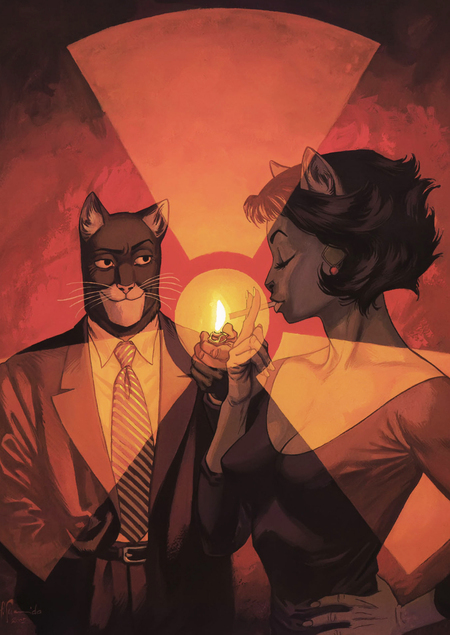

Introduction // Concept
Animals in costumes, chatty birds, mice, foxes, and dogs with human habits—all of this is usually associated with cartoons and children’s stories. But in comics, an animal appearance rarely guarantees something harmless. Hidden behind them can be politicians, criminals, victims of violence, and people with their own distinctly human weaknesses. This creates a strange contradiction: we are looking at a drawn creature, yet the story it inhabits is far from funny.
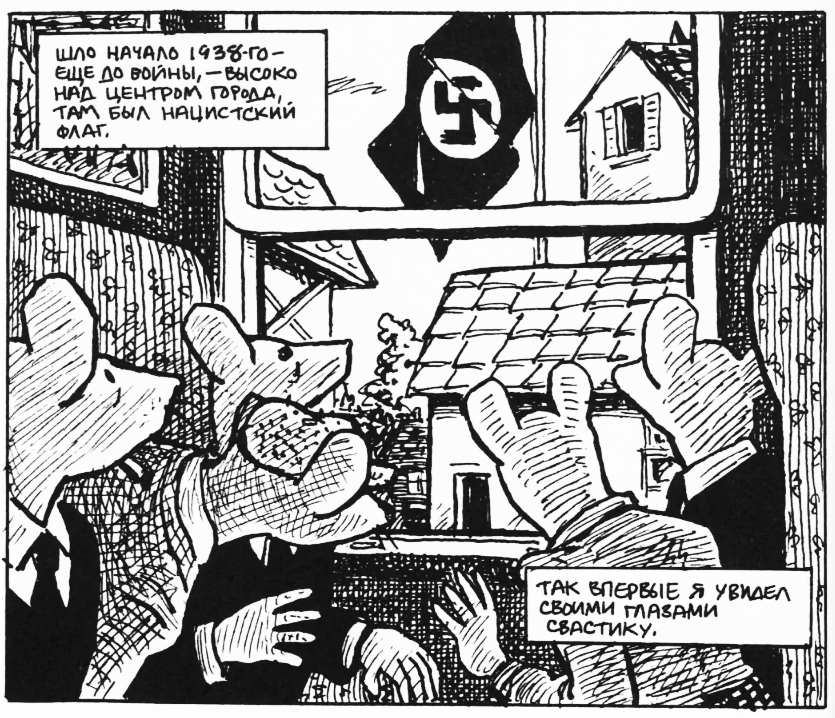
Fragment from «Mouse» // Art Spiegelman
It was this contrast that intrigued me. Why do authors choose animals for plots where ordinary humans could function? What changes when a private detective turns out to be a black cat, when political satire plays out among bog dwellers, or when the story of the Holocaust is told through the figures of mice and cats? Intuitively, such a device should simplify the narrative. However, in practice, everything turns out to be more complex: animal figures sometimes help convey unpleasant and heavy subjects even more expressively than a realistic depiction of a person.
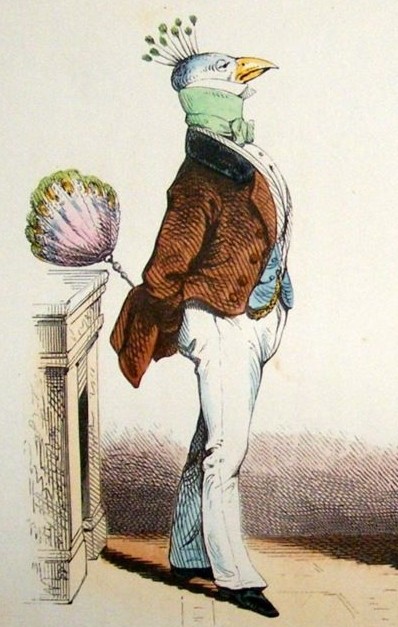
Anthropomorphism predates the advent of the comic strip. In fables, caricatures, and satirical illustrations, animals served as a kind of reflection of human society. Through them, greed, foolishness, hypocrisy, and the abuse of power were ridiculed. The comic strip continued this tradition but developed its own set of expressive tools. Here, not only the choice of animal matters, but also its facial expression, silhouette, behavior, placement in the panel, and even how it interacts with the text.The primary material for this study consisted of four works: Walt Kelly’s Pogo, Art Spiegelman’s Maus, Juan Díaz Canales and Juancho Guarnido’s Blacksad, and Brian Talbot’s Grandville.
«Mouse» // Art Spiegelman; «Pogo Possum» // Walt Kelly; «Blacksad» // Juanjo Guarnido; «Granville» // Bryan Talbot
In my selection process, I focused on comics where the animal appearance of the characters is not limited to a decorative or purely comedic function. All four works address politics, violence, prejudice, and human relationships in distinct ways. They differ markedly from one another: Pogo grew out of the tradition of newspaper satire and was intended for a broad audience, Maus engages with family and historical memory, while Blacksad and Grandville employ anthropomorphism within a crime narrative. It is precisely these differences that make the comparison interesting.
When I refer to adult comics in this context, I do not mean exclusively those with age restrictions, but rather stories that tackle serious social and moral issues.
I am particularly interested in the dissonance between the characters' appearance and the gravity of the events. Sometimes a whimsical drawing coexists with quite dark political satire. In other instances, the conventional animal faces become part of a story about historical tragedy. Yet, the reader quickly grows accustomed to the characters' unusual appearance and begins to perceive them as people.
The structure of this research will be as follows:
- Anthropomorphic Animals in the Western Comic Tradition
- Between Humor and Tragedy: The Genre Potential of Anthropomorphism
- Animal Figures as a Means of Social and Political Critique
- Visual Techniques for Creating Anthropomorphic Characters
- Conclusions
Key Research Question: How do anthropomorphic animals influence the perception of serious social, political, and moral themes in Western comics, and why do creators employ this device instead of depicting ordinary people?
Research Hypothesis posits that anthropomorphism helps authors modulate the emotional distance between the reader and the unfolding events. Animal characteristics can soften unpleasant themes through humor and convention, but sometimes the effect is entirely opposite—it can heighten anxiety, underscore cruelty, or prompt reflection on the injustice of conventional social divisions. It is hypothesized that this effect depends less on the specific animal species and more on how its portrayal integrates with the genre, artistic style, and narrative content.
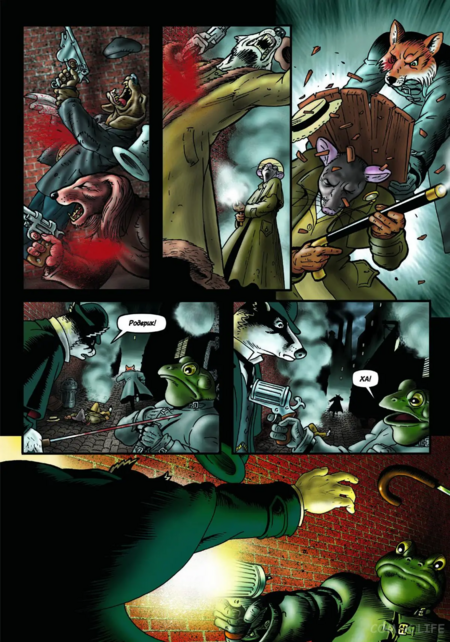
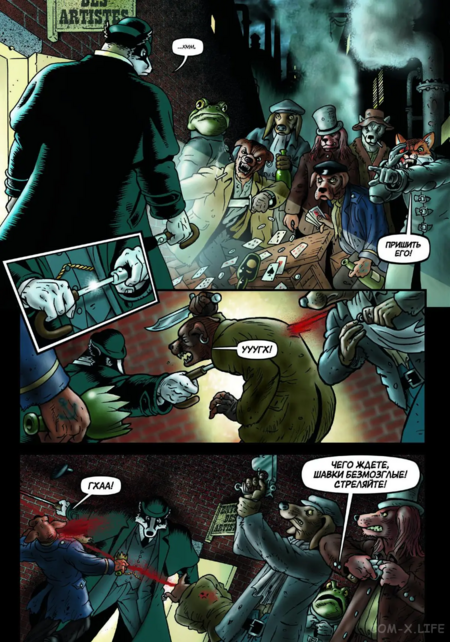
Excerpts from «Granville» // Brian Talbot // 2009
Anthropomorphic Animals in Western Comic Tradition
Animal figures with human characteristics emerged long before modern comics. In fables and caricatures, they served to satirize social norms and human vices. The animal appearance made the characters recognizable, and at times, intentionally absurd.
«Metamorphoses of the Day, ” Plate 25 // Jean Inyes Isidore Gérard (Granville) // 1829
In the «Metamorphoses of the Day» series, Granville depicts animals in fashionable 19th-century costumes. They dance, converse, and behave like people. This results in a peculiar caricature of society, where human manners coexist with the habits of animals. A similar principle is later found in comic strips.
In the American comic tradition, funny animals—stories featuring amusing anthropomorphic animals—have become widespread. However, a comical appearance did not necessarily mean the content was equally lighthearted.
«Pogo,» Newspaper Strip from August 5, 1951 // Walt Kelly // 1951
In Pogo, characters constantly argue, play tricks, and find themselves in absurd situations. Their round shapes, expressive faces, and exaggerated emotions create a friendly world. Yet, beneath this superficial simplicity, Kelly often hides rather pointed observations about politics and human frailty.
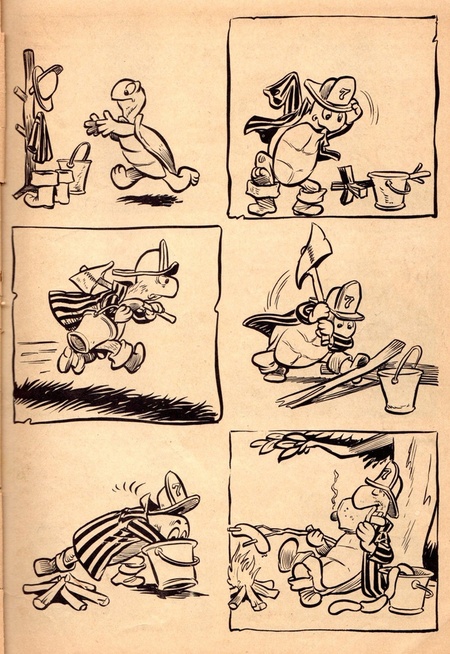
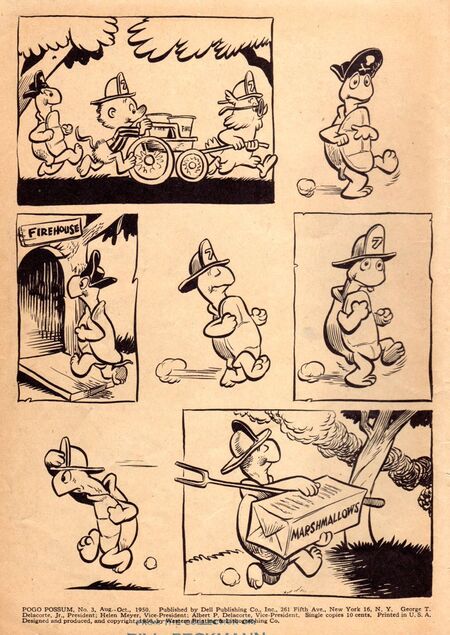
Fragments from «Pogo» // Walt Kelly
Over time, anthropomorphic characters have become commonplace, even in works where humor is virtually absent. One of the most well-known examples is Art Spiegelman’s Maus—a graphic novel about the Holocaust and family memory.
Fragment from «Mouse» // Art Spiegelman
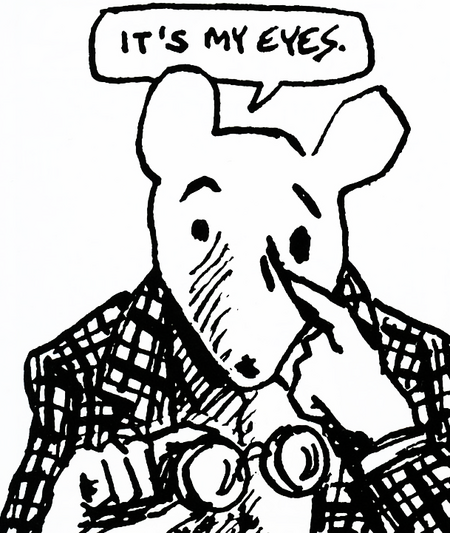
The mouse faces here are drawn very simply, without detailed expressions or realistic human features. Nevertheless, the characters do not feel faceless. Their fear, fatigue, and despair are conveyed through their dialogue, gestures, and the circumstances they find themselves in.
In Blacksad, anthropomorphism becomes the foundation of an entire criminal world. Juanjo Guarnido merges animal anatomy with the aesthetics of classic noir.
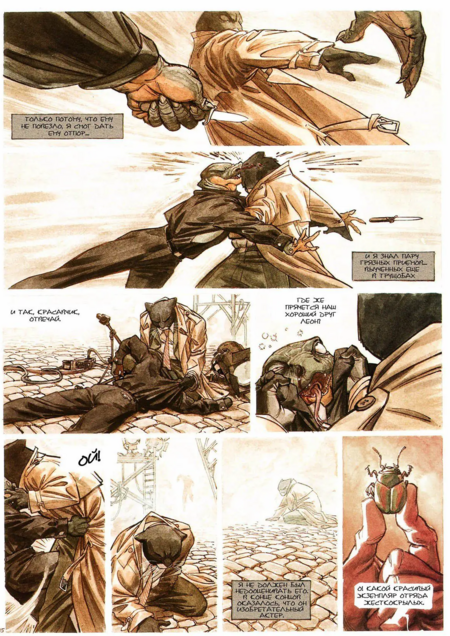
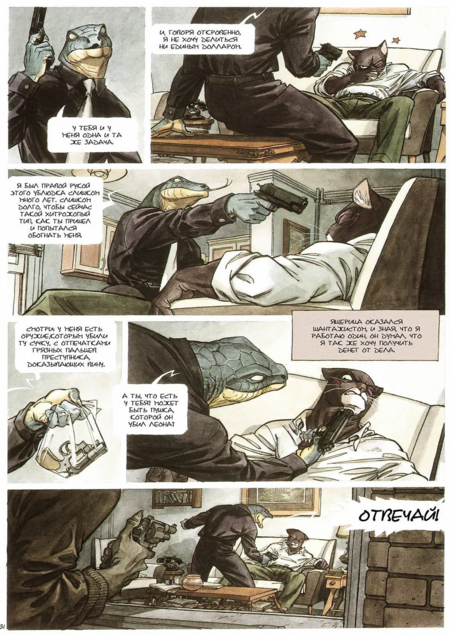
Fragments from «Blacksad» // Juan Díaz Canales, Juanjo Guarnido // 2000
Heroes in cloaks, suits, and hats look like they stepped out of an old detective film. The animal faces never detract from the serious nature of the events. Gradually, you stop noticing that what stands before you is a cat or a dog, and you begin to see the character’s essence first.
«Blacksad» Series Characters // Juan Díaz Canales, Juancho Guarnido
Between Humor and Tragedy: Genre Possibilities of Anthropomorphism
An animalistic appearance does not define a comic’s genre. The same technique can be used in a comedy, a detective story, or even a narrative of mass violence. It all depends on how the author connects the illustration with the unfolding events.
In Pogo, Walt Kelly often embeds social criticism within seemingly harmless humor. A prime example is the special strip for Earth Day in 1971, which addressed environmental pollution.
«Pogo, ” Special Strip for Earth Day // Walt Kelly // 1971