Concept
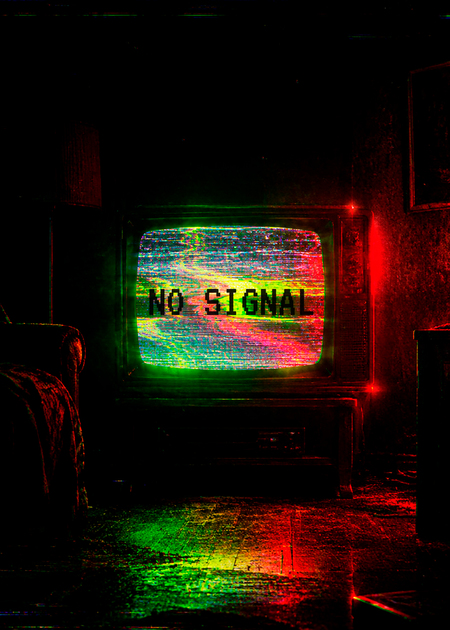
NO SIGNAL — a web tool for generating audio interference and glitches. It is an old television operator that seems to be catching a signal on the airwaves: sometimes it loses it, sometimes it finds it again, sometimes it hears only noise.The tool is built on the opposition between a pure signal and interference. The user is not playing a melody; they are controlling the state of the airwaves—that is, adding pulsation, shifting into noise, catching a glitch, and returning back.
Tool Design
Visual language—CRT aesthetics. Scan lines, noise, pixelated fonts, the feeling of an old television’s dashboard. The interface looks like a tuning instrument, not a toy.
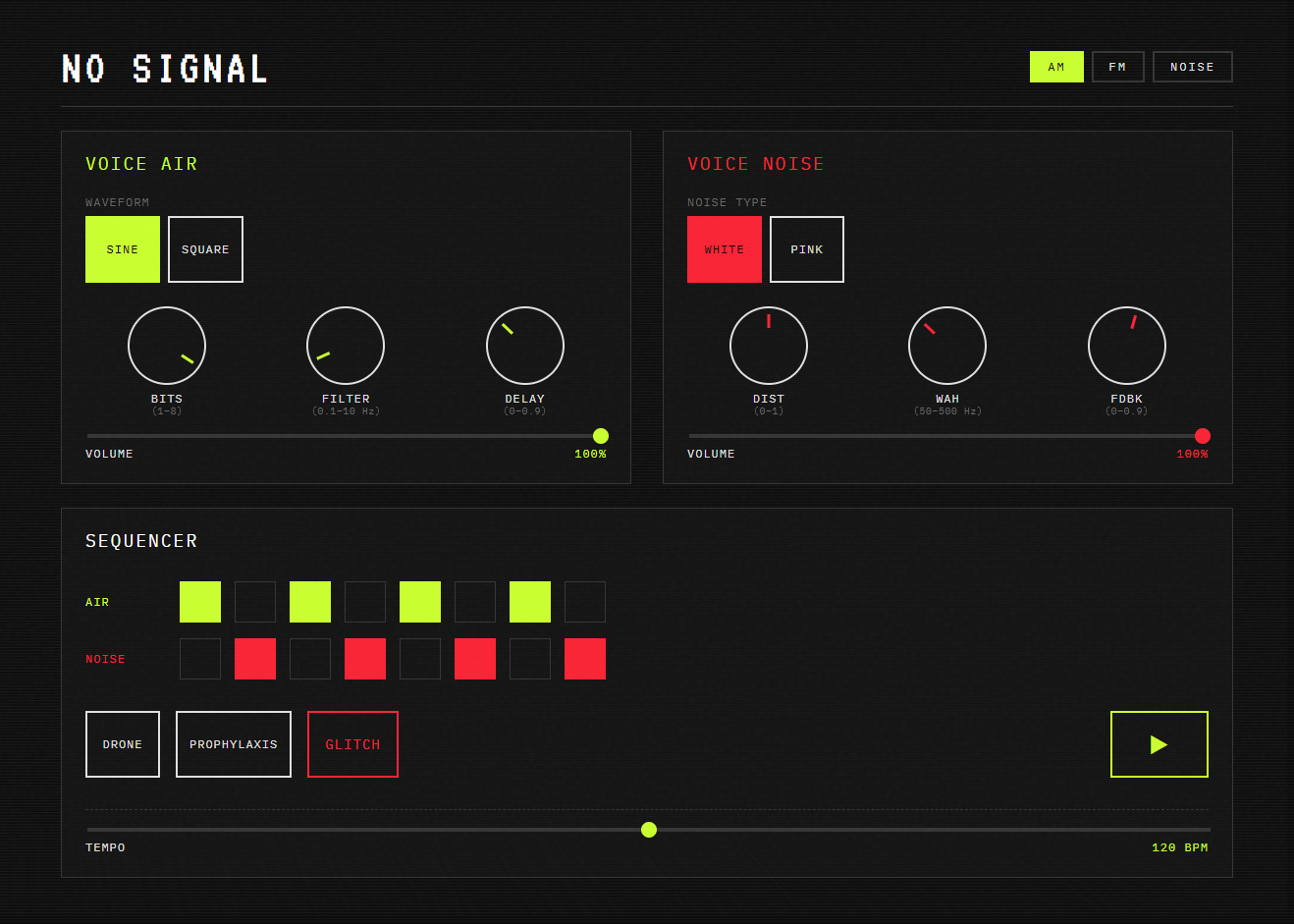
At the core are two independent voices, each with its own effect chain and output channels.
**VOICE AIR: ** Synth + Noise → BitCrusher → AutoFilter → PingPongDelay → Channel
**VOICE NOISE: ** NoiseSynth + MetalSynth + AmbientNoise → Distortion → AutoWah → FeedbackDelay → Channel
The Sequencer—8 steps, 2 rows. Air plays the melodic notes, while Noise handles the hits of noise and metal.
Three stations shift the entire character of the sound:
- AM — warm, soft
- FM — metallic, bright
- NOISE — chaos, glitch
Additional mechanics:
- DRONE — ambient hum
- PROPHYLAXIS — television hiss
- GLITCH — parameter failure
Screencast
Use of Neural Networks
Authorship: concept, design, interface, layout, mechanics, sound structure (which voices, effects, and how they relate). Developed the logic: how the stations operate, what DRONE, PROPHYLAXIS, and GLITCH do, how clicking a step alters the sound, and how the sequencer pulses in time.With the DeepSeek neural network: synthesizer settings, effects chains, channel panning, sequencer logic, code structure (modules for voices, a separate effects handler file), debugging.
Module Completion Plan
- debug adaptive version
- add effect under the TV
- prepare presentation
- record final screencast