Research Concept
Minecraft is a unique phenomenon of contemporary culture. In an era of photorealistic graphics and complex narratives, a game composed of simple cubes captivates millions of people worldwide. The secret to its appeal lies more in its creative mode, but I want to focus on an element of the survival mode—the cycle of day and night. When the sun sets, the safe world changes its rules, and hostile entities emerge. For a new player, a genuine test begins. It is this first night, full of panic and the search for shelter, that becomes the emotional core around which the entire subsequent experience is built.The relevance of this topic stems from the fact that millions of adults voluntarily experience the fear of the dark in digital space. However, research tends to describe this experience through technical mechanics rather than as a return to archaic forms of play. The distinguishing feature of my approach is to examine the first night in Minecraft through the lens of childhood hide-and-seek—the most ancient practice in which humans learn to manage fear through play. The theoretical significance of this work lies in testing classic philosophical and psychological ideas on contemporary material, and the practical significance lies in understanding how sandbox games can function as a safe training ground for overcoming anxiety.
Key Art Minecraft. Mojang. 2026
The object of this study is the Minecraft gameplay loop: the arrival of night, the appearance of monsters, the search for shelter, survival, and the dawn. I deliberately focus on the novice’s experience—the player who is not yet familiar with the hidden mechanics. For an adult who has been playing the game for a long time, coexisting with zombies is routine. But for someone sitting down to play for the first time, the first night becomes an unforgettable adventure, full of panic and curiosity. The visual material includes screenshots from the game, as well as images of children playing hide-and-seek, which vividly illustrates the connection between physical and digital reality.First, I will examine hide-and-seek as an ancient game with its strict rules and roles, drawing upon historical and philosophical context. Next, I will turn to psychology to understand why adults begin to fear the dark again when playing the game. Then, I will show how the rules of physical hide-and-seek are transferred into Minecraft’s digital code. A dedicated chapter will be devoted to the philosophy of in-game mistakes and deaths (the Ludus concept), and in the conclusion, I will analyze how the morning sun, which burns the monsters, symbolizes the triumph over fear and returns the player to creativity.
Dawn in Minecraft. Pinterest. 2026
The theoretical foundation will draw upon the works of Johan Huizinga, Roger Caillois, Lev Vygotsky, and Eugen Fink. For the contemporary context, I incorporate relevant online articles on game design. The analysis is built upon juxtaposing classical theories with real-world gaming experiences. The central research question is: why is the first night in Minecraft experienced by a novice as a rite of childhood hide-and-seek, and how does the game help overcome the fear of darkness through practical exploration of the world?
My hypothesis is that Minecraft reproduces the archaic structure of hide-and-seek, transforming the fear of darkness into a safe, interactive experience. Night forces the novice to seek shelter through trial and error. Morning, conversely, becomes a moment of catharsis: monsters burn away from the sunlight, and the player receives visual confirmation that their actions were correct and that the darkness has retreated. The game functions as a simulator, allowing one to experience primal terror under complete control.
We will assume that the hypothetical player under discussion is unfamiliar with the game’s rules and does not consult online walkthroughs.
Hide-and-Seek: A Historical Analysis of the Rules
Before diving into Minecraft, it is essential to understand hide-and-seek as a cultural and philosophical phenomenon. This game has accompanied humanity for many centuries. The earliest written references date back to antiquity: the ancient Greek writer Julius Pollux described a game called apodidraskinda in the 2nd century, the rules of which are practically identical to modern ones—one player closes their eyes or stands still, while the others search for hiding spots. Archaeological findings and wall paintings in Herculaneum also confirm that this diversion was popular throughout the Roman Empire.
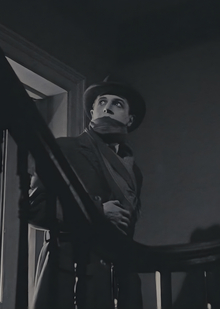
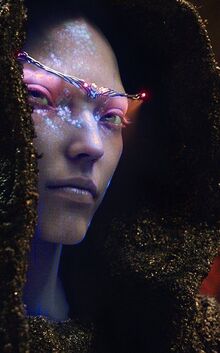
I attempted to create a historical reconstruction of the game apodidraskinda using neural networks. ChatGPT. 2026
However, hide-and-seek is far from a mere pastime. It is a rigorously structured system with its own set of laws. Johan Huizinga, when analyzing the nature of play, emphasized that every game takes place within a specific space, which he termed the «magic circle.» He wrote: «Every game takes place and exists within the boundaries of a playing area, marked out in advance, whether materially or mentally, intentionally or taken for granted…»
The arena, the card table, the magic circle, the temple, the stage, the screen, the tennis court, the courtroom—all of them are play spaces in form and function; that is, forbidden, isolated, fenced-off, or consecrated places where specific rules apply. They are all temporary worlds within the mundane world.
In hide-and-seek, this «magical circle» is established through a clear division of roles and space. The seeker and those hiding agree on boundaries: where one can hide and where one cannot, and where the «home» (base) is—the spot one must reach to be safe. Ethnographic records of Russian folk games confirm this: before starting the game, participants invariably agreed on «where hiding was forbidden, ” and then used a counting chant to determine the seeker. This creates the very „zone where special laws operate, temporarily suspending reality, ” as Huizinga described.
Modern kids play hide-and-seek. Pinterest. 2026
Philosopher Roger Caillois, in his work «Games and People, ” delineated the category of Mimicry (imitation, camouflage), describing games where a person „temporarily forgets, conceals, and casts off their own identity to feign another’s.“ The hiding player does not merely conceal themselves physically; they temporarily attempt to become „invisible, ” adopting the role of an object that does not exist for the seeker. Caillois emphasized that this metamorphosis has an almost instinctive, organic nature, connecting humans to the world of insects, where mimicry is a means of survival.
From a psychological perspective, hide-and-seek serves a crucial function in a child’s development. Lev Vygotsky noted that by hiding in the dark, a child learns to manage their fear, testing the boundaries of their own courage.
The reflexive process of a child closing their eyes in fear is quite common. Upon encountering a hazardous object, the body attempts to eliminate the visual stimulus. Nick Fedirko / shutterstock / fotodom. 2022
And so, hide-and-seek is an ancient ritual based on strict rules: the presence of a seeker (the threat), a hider (the victim), and a safe «home» (the refuge). It is this structure, established as the foundation of the game millennia ago, that will be the key to understanding what happens to the player on the first night in Minecraft.
Dark Psychology
In real life, an adult rarely fears the dark. They know there are no monsters under the bed, based on life experience. Even though there are many different animals in reality that enjoy hiding in the dark and can harm a person, a conceptual fox still seems much less dangerous to us than imaginary monsters. If it’s dark in a room at home, it’s enough to turn on a light or pull out a smartphone with a flashlight. Our fear of the dark is almost atrophied by everyday knowledge. But when we first launch Minecraft, we have no map, no weapons, no understanding of the rules—and most importantly, no precise knowledge or experience upon which to rely. The game deliberately places us in the position of a child left in the dark.
The appearance of an imaginary creature that scares children in the dark. A frame from the animated film «Monsters, Inc.». Disney / Pixar. 2001
At this point, the psychology of children’s play comes into play. The essence of play—as Lev Vygotsky noted—is the creation of a «fictional situation, ” where imagination allows us to manipulate reality. In a typical game of hide-and-seek, a child, afraid of the dark, hides because, in their imagination, they become invisible and invulnerable. A player in Minecraft experiences a similar scenario. Finding themselves in an unfamiliar world at night, they don’t know how to survive by the rules, but they instinctively start digging a hole or building walls of dirt around themselves. They are acting not based on instructions, but on intuition, creating that very fictional situation of safety for themselves.
Minecraft Survival Tips for Your First Night from the Developers. Mojang. 2023
An adult who logs into Minecraft for the first time undergoes a rapid evolution: from panic in the face of the unknown to understanding the basic laws of survival. When the player walls themselves in with a few blocks and hears monsters prowling outside, yet they never manage to reach them, fear transforms into exhilaration. The game functions as a psychological trainer—it allows us to feel like children again, to be scared of the dark, but this time to conquer it through simple actions, logic, and experimentation without real-life health consequences or threats to life (at least, that’s how it felt when we were kids).
First Night in Minecraft: Hide and Seek with Monsters
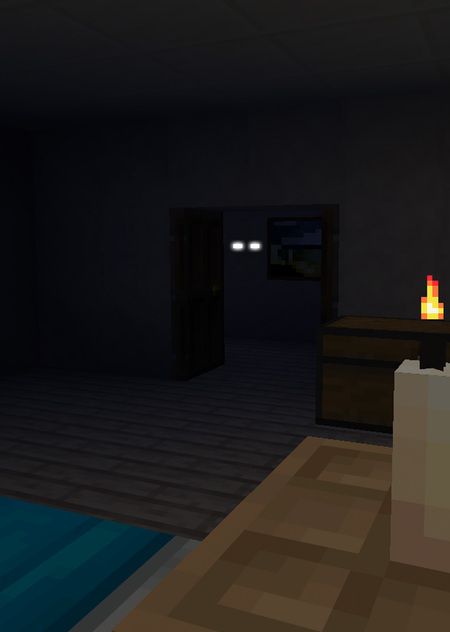
If we look closely at what happens to a newcomer on their first night, we see the classic structure of hide-and-seek. In the traditional game, there are always three elements: the seeker; the hider; and the «home”—a safe spot you need to reach. In Minecraft, this structure comes alive when darkness falls. Monsters become those very „seekers“ that roam around. And the player themselves turns into the one desperately searching for shelter.
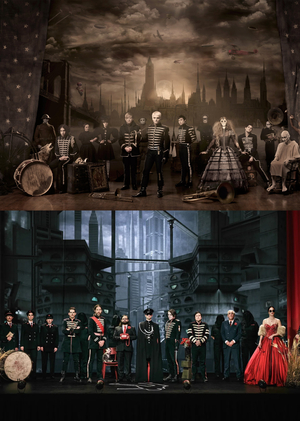
The game features many different «lead» characters, each with unique abilities. Minecraft YouTube Channel. 2026
In real life, shelter is a physical location—a bush, a shed, or a closet. In Minecraft, a block and anything built from it becomes the shelter. The player constructs their own security by altering the landscape or erecting structures. But a crucial nuance lies here: the novice doesn’t know the rules. They lack the innate understanding that monsters cannot pass through walls. They discover this empirically. At first, they simply run away; then, driven by desperation, they dig a hole, place a block of dirt overhead, and wait in complete darkness. This is a primal, instinctive act that connects the player to a child crawling under the covers. But the game goes further—it provides the novice with tools that change the rules of the hiding game.
The player waits out the night by climbing a tree. YouTube. 2026
For instance, a bed. In the physical world, a bed is simply a piece of furniture for an adult, yet it can be a powerful tool against fear for a child. In Minecraft, a bed is precisely the power that allows one to literally skip the night and thus avoid trouble. A player who finds this item in the open world or manages to craft it themselves discovers the ability to bypass hide-and-seek entirely (even if it means forfeiting rewards like monster-slaying loot). It turns out that hiding under the covers isn’t so useless after all.Doors in the game function as barriers that only the player can pass through. Furthermore, the weapons and armor that one can theoretically obtain by the first night have the potential to completely turn the game on its head. An equipped protagonist becomes capable of offering physical resistance.
The player goes to sleep, and it immediately gets lighter outside the window. Tenor / Zedklan. 2022