1. Concept
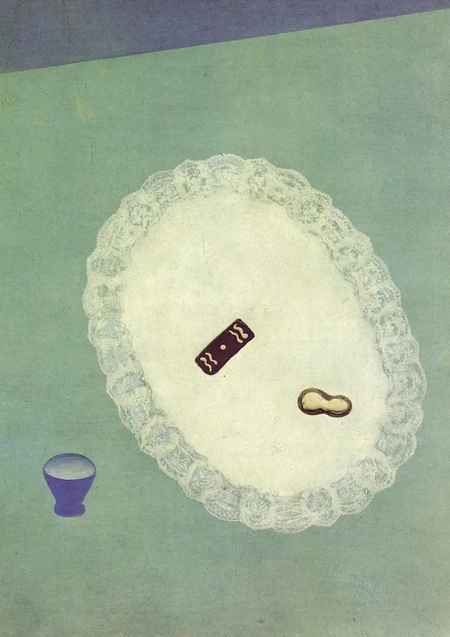
David Sternberg was a Soviet painter and graphic artist, one of the significant figures of early 20th-century avant-garde art.He is known for his «flat» still lifes, which merged two artistic movements: Cubism and Expressionism.

Self-Portrait of David Sternberg, 1930
This project was created to investigate the potential of generative AI in interpreting the artistic language of David Sternberg’s still lifes. The goal is to train a model to create new pictorial images based on the artist’s characteristic features in his painting: the representation and form of domestic or edible objects within a plane, and the ability to work with blocks of color.
2. Source Images
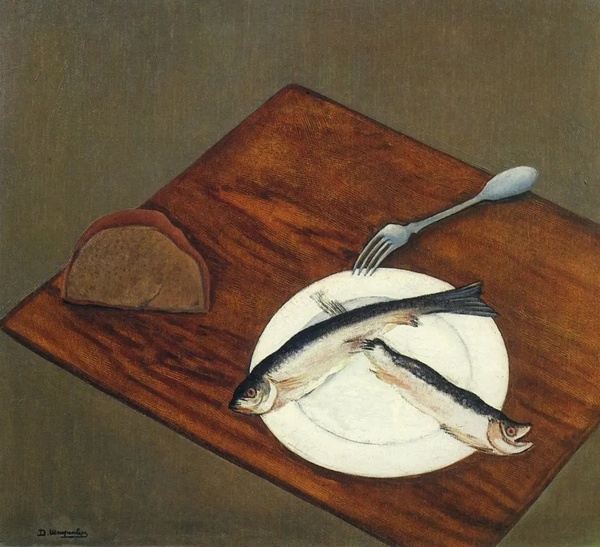
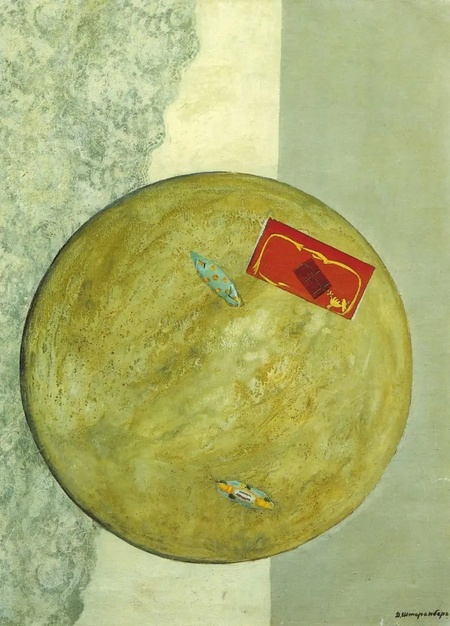
Paintings by D. Sternberg: «Herrings, ” 1917–1918, and „Still Life with Candies, ” 1919.
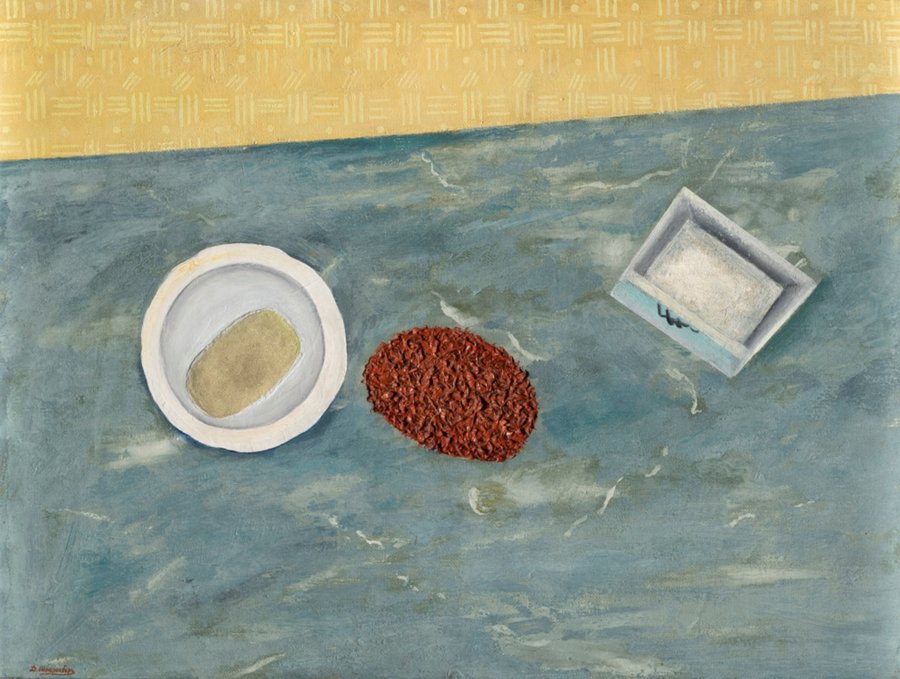
D. Sternberg’s painting «Sponge and Soap,» 1919.
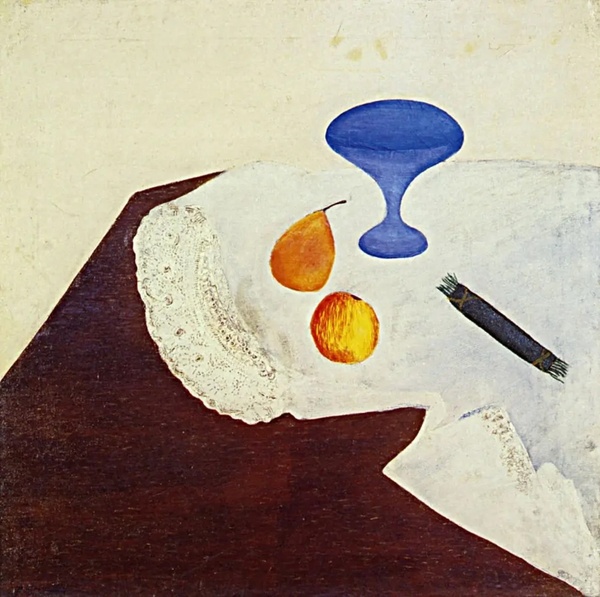
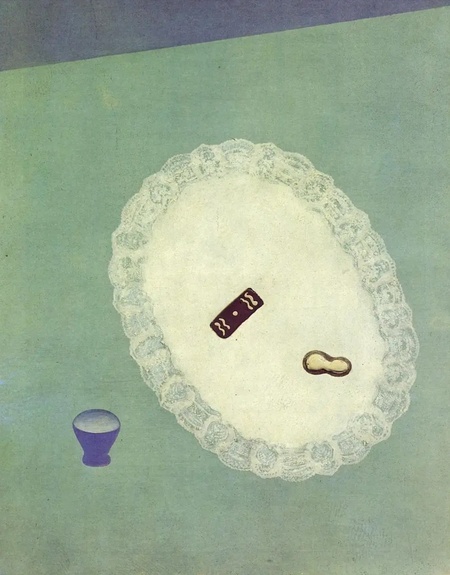
Paintings by D. Sternberg, «Still Life with Blue Vase, ” 1919, and „Pastry, ” 1919.

Painting by D. Sternberg: «Still Life with Pomegranates, ” 1920.
3. Series Outcome
«Sardine and Cherry»
«Still Life: Pear with Spoon on a Plate»
«Apples»
«On the Yellow Table»
«Still Life with Bread»
«Grape»
4. Detailed Commentary on Results
The project is based on the Stable Diffusion XL model, which was fine-tuned using the LoRA method on a dataset of 43 still life images by David Sternberg.This training allows the model to adapt to the selected visual material without complete retraining. Afterward, images are generated based on text prompts using the special identifier shterenberg_stilllife.
5. Technical Implementation
The model was conceived to serve as a tool for artistic experimentation; it allows for the creation of new variations of still lifes, the exploration of composition, unique color combinations, and even, to some extent, the position of avant-garde creativity. Generation is viewed as a form of interaction between the creator and the original artistic material, mediated by algorithmic interpretation.
6. Description of Generative Model Application