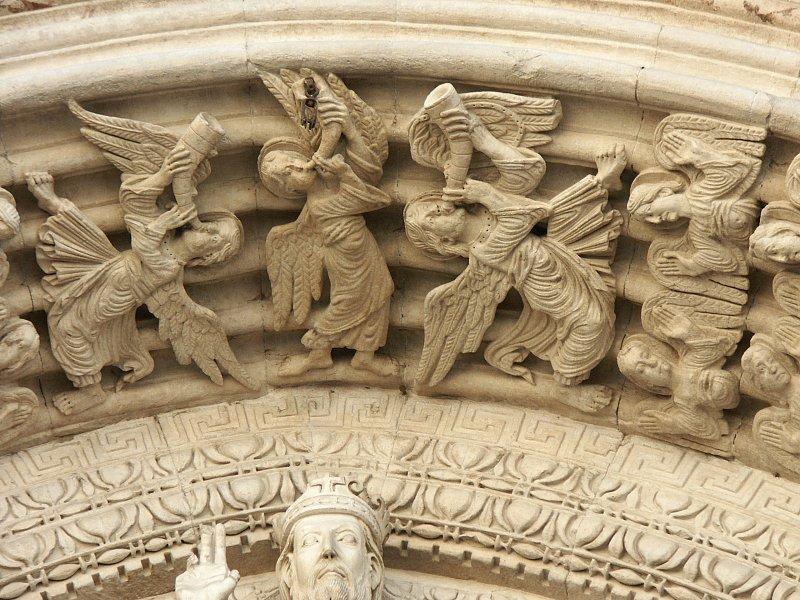
Образ божественного посланника в мировой архитектуре: от Древнего Египта до XIV века
Кто охранял священные пространства в разные века
Navigation
I. Research Concept II. Ancient Egypt III. Early Christian Architecture IV. Romanesque Architecture V. Gothic Architecture before the 14th Century VI. Conclusion
Research Concept
Sacred architecture has always held profound significance and required substantial resource investment. Throughout history, people have paid close attention to both the exterior appearance and the interior decoration of religious structures. One of the fundamental components of religious architecture is the deified being—entities that serve as a bridge between the earthly and celestial realms, amplifying the spiritual connection between humanity and faith. In the conventional understanding, such beings are angels—figures in white robes with wings and a halo above their heads. However, they were not always, nor in all cultures, depicted in this specific manner. Their appearance varies depending on religious traditions and cultural specifics.These images can be found in frescoes adorning temple walls and ceilings, icons, decorative elements, and sculptures.
The method of representing the symbol is not as important as its placement: before the entrance—serving as protectors; in the arches and domes—acting as intermediaries between the material and the spiritual, reflecting the celestial realm.
This demonstrates a clear connection between the placement of the artistic image in space and its function.
This is why it is interesting to analyze how the changing imagery of divine messengers relates to a person’s perception of their connection to the divine world.
This is the central question of my research, and to answer it, I will examine the transformation of the symbol’s role in sacred architecture and the evolution of its external appearance—from anonymous and unemotional to more anthropomorphic and expressive. Furthermore, I will investigate the patterns in the depiction of the image across different sections of the temple—what determined these patterns and what function they served.From this question, the following hypothesis is proposed:
The symbolism of divine figures restructured from a temple guardian protecting the sacred furnishings and the soul of a deceased ruler or saint, to an autonomous artistic image that reinforced humanity’s perception of the transcendent world.
The source material was selected primarily based on the presence of deified beings within the architecture of sacred spaces across different cultures. By examining the traditions and tenets of various religions, a comprehensive visual-comparative analysis can be conducted to identify similarities and differences in the meaning embedded within the architectural language of temples. Furthermore, artistic depictions of angels and mythological figures will be studied to draw parallels between different modes of their representation.The research is structured chronologically: beginning with Ancient Egypt, where zoomorphic creatures were depicted instead of familiar angels, and moving through to the Gothic period of the 14th century, characterized by the predominance of anthropomorphic sculptures. This progression allows for an understanding of the cultural context as interpreted through sacred imagery.The textual sources utilized include academic articles, books, and online resources dedicated to the history of religious architecture and the history of world art.
Ancient Egypt
Sphinx of Khafre, Old Kingdom, 26th century BCE, 4th Dynasty, Giza.
The Sphinx of Khafre, Old Kingdom, c. 2559 BCE
Monumental sculpture is situated near the funerary pyramid of Khafre, whose likeness is depicted on the sphinx. The lion’s body by the statue serves both as a guardian for the nearby tombs and as a memorial to the wise and powerful personality of the pharaoh.
Avenue of Sphinxes, 380–362 BCE
Along both sides of the Luxor Avenue, statues of sphinxes are lined up—the body of a lion with the head of a man or a ram, personifying the sun god. This avenue symbolizes the «god’s path,» where the sense of approaching the sacred grew as one neared the Sekhmet.
Tomb of Nefertari, 13th–12th Century BCE
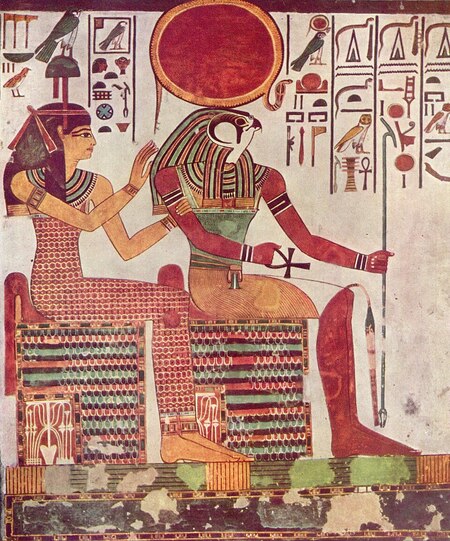
Роспись Бог Ра-Хорахти и богиня Хатхор, XIII–XII века до н. э.
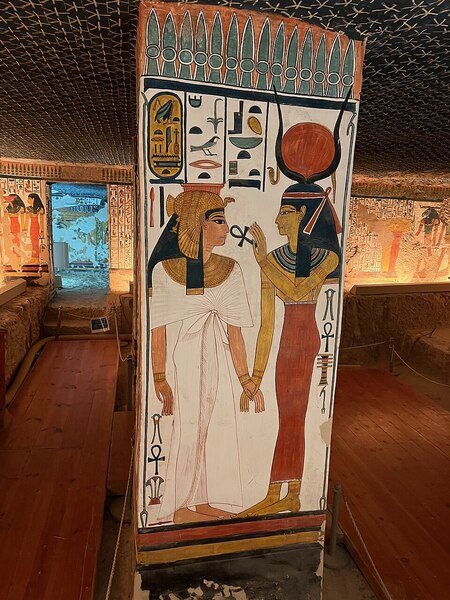
Роспись Нефертари и богиня Хатхор, XIII–XII века до н. э.
Nefertari’s tomb is decorated with murals depicting the queen surrounded by gods—her soul journeys toward resurrection. Cobras, symbolizing the protection of royal power, are also depicted.
The Temple of Horus at Edfu, 237–57 BCE
Ptolemy III Portal, 3rd Century BCE
Above the entrance to the Temple of Horus and over the Ptolemaic III portal, a winged disk is visible, serving a protective function for the temples.
It can be concluded that in ancient Egypt, sculptures and images of deified beings often served as protectors of deceased souls.
Early Christian Architecture
«Good Shepherd.» 200–300. Crypt of Lucinus. Crypts of Domitilla, Rome
Добрый пастырь. Роспись свода кубикулы в Катакомбах Присциллы, Рим. Вт. пол. III в.
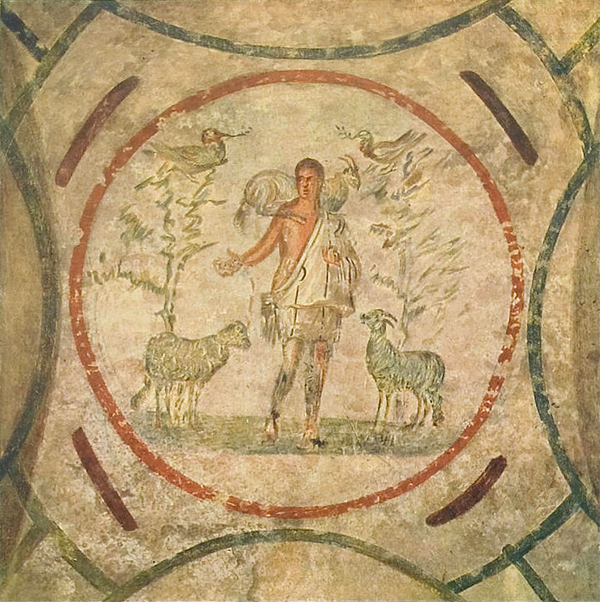
«Добрый пастырь» из катакомб Домитиллы. 300—350 г. г.
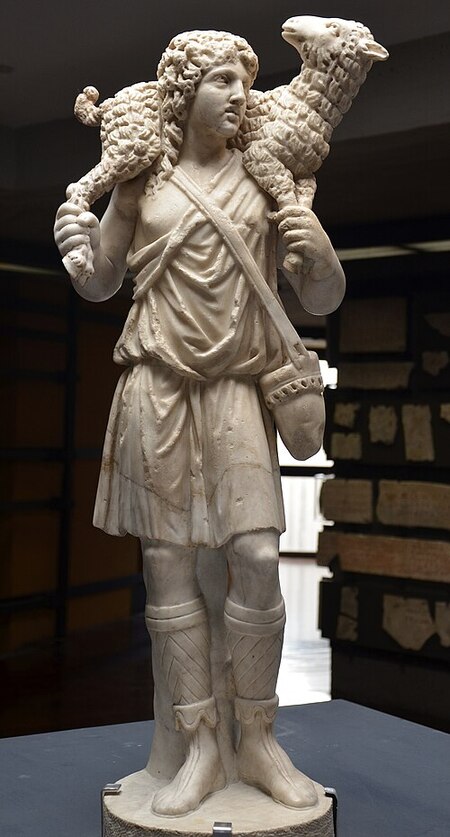
Behind the image of the Good Shepherd lies the depiction of Christ. This interpretation was understood by the people of that era, strengthening their connection with God and giving them hope for salvation. The placement of the Shepherd image on the vault symbolizes the closest connection to celestial space.
Fragment of an 8th-century chalice from a church in Italy
Mosaic with peacocks. Byzantine church in Nagari, 6th century CE.