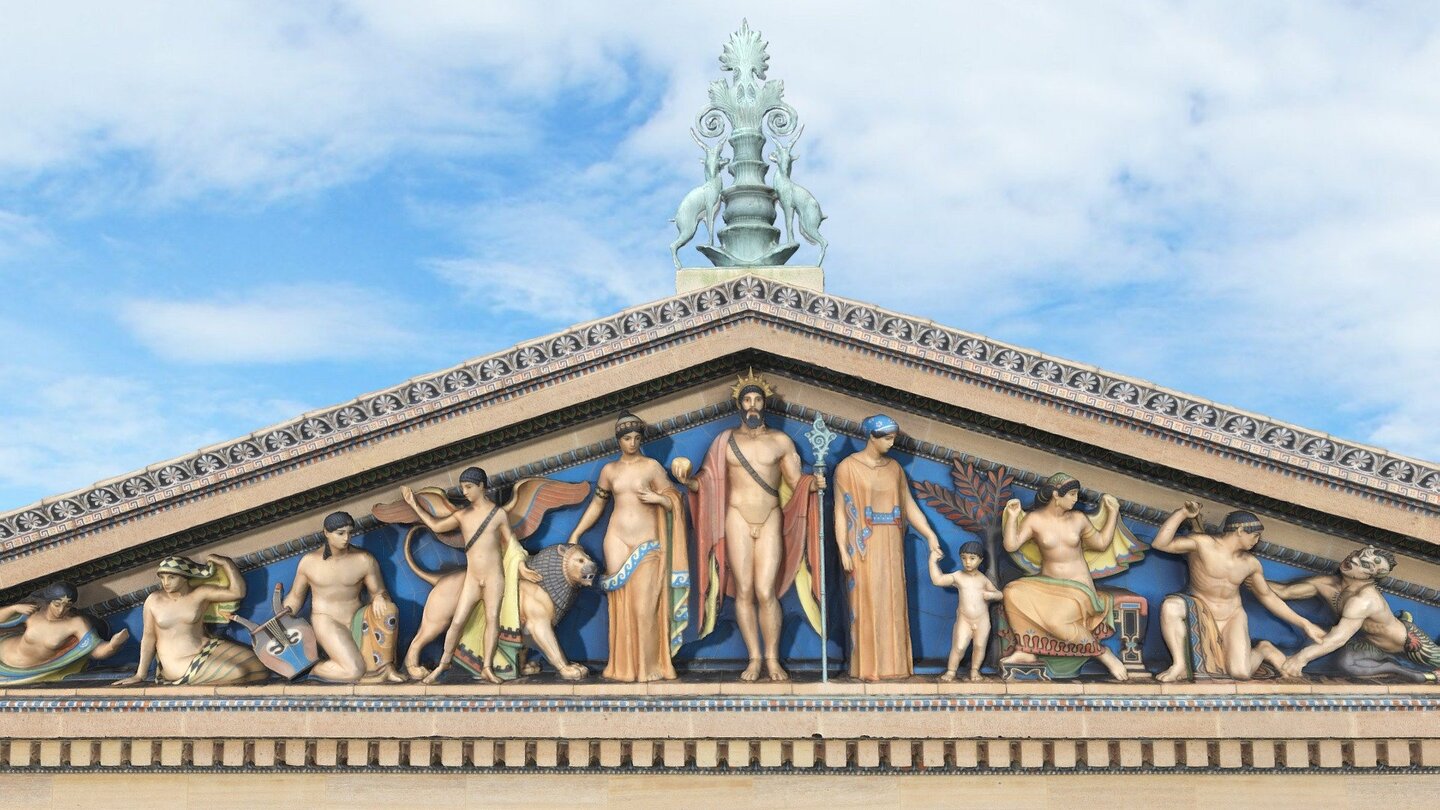
«Oh, if only, like a statue, I could erase my beauty and take on an unsightly appearance!» [1]
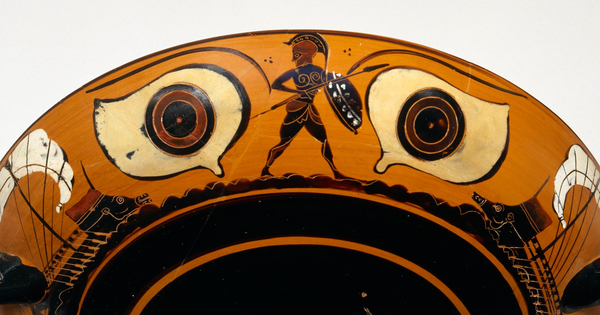
In the modern era, the concept of antiquity solidified as a realm of white stone. In reality, the marble statues and temples familiar to us were covered in vibrant colors. Color did not merely decorate the sculptures; it held a sacred meaning. Ancient masters painted their works with bright pigments to convey the social status, gender, age, and even the emotions of the stone figure and its commissioner. Sculptors and artists such as Phidias, Nike, and others used color to «animate» their pieces—painting not only the clothing but also lips, strands of hair, eyes, and drapery. To leave a sculpture white was akin to leaving it unfinished. «It’s like if we were painting a picture, and someone approached to criticize us for not using the most beautiful colors to convey the most beautiful parts of a living being—for example, if the eyes, which are the most beautiful thing, were drawn in black instead of purple.» [2]. For ancient Greek society, color was an inseparable part of art.
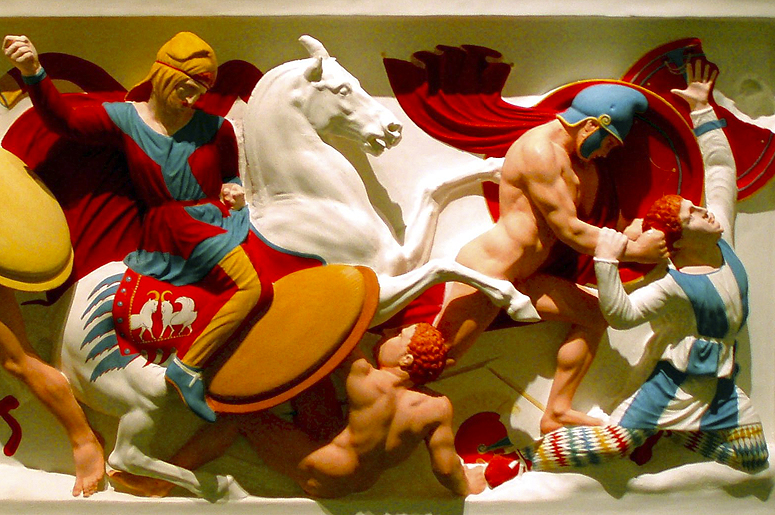
«Sidonian Sarcophagus.» Color reconstruction. Late 4th century BCE.
I. Concept
The perception of ancient Greek art has always been influenced by cultural and historical context. Due to the aesthetic precepts of Neoclassicism in the 18th–19th centuries and museum restoration practices, the archetype of the «White Greece» became fixed in public consciousness. The German historian Winckelmann played a significant role in spreading this myth. He proclaimed white as true beauty, ignoring the polychrome original. However, contemporary research has proven otherwise. The true colors of Ancient Greece are discernible through pigment reconstruction, subtle analysis of surviving traces, and digital modeling. This transforms the antique statue from a stone artifact into a powerful statement about the true values of the ancient Greeks. «The beauty of the body lies in the symmetry of its parts, in good color, and in physical perfection…» [3]
The goal of this visual study is to examine the significance of polychromy in Ancient Greek art.
I. Concept II. White III. Blue IV. Yellow V. Red VI. Green VII. Conclusion
II. White
To understand the true significance of color in Ancient Greek art, we will examine the perception of antiquity during the Neoclassical era. Johann Joachim Winckelmann—a German historian specializing in art—became the chief propagator of the «White Myth.» For him, the ideal of Greek art was simplicity and serenity. In his view, white lent sculpture dignity and spiritual completeness, whereas color introduced excessive emotionality.
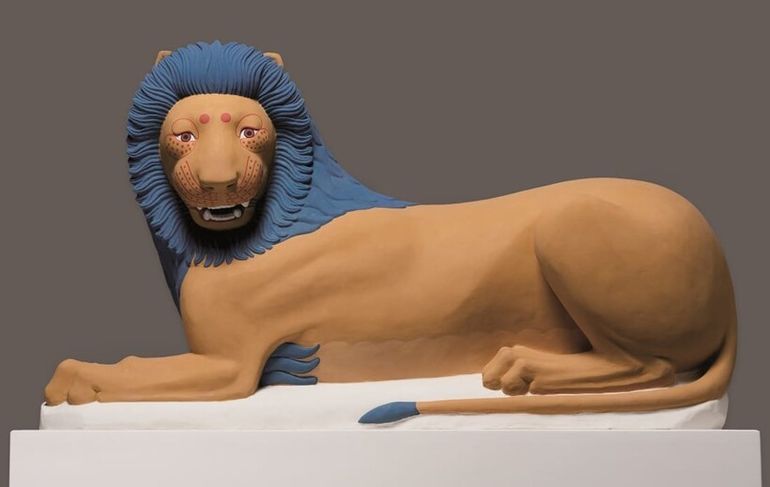
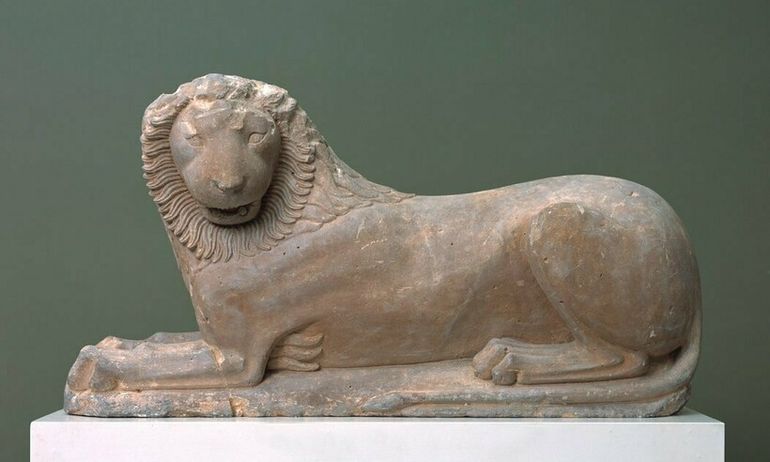
The Lion Statue from Lutraka.
III. Blue
IV. Yellow
V. Red
VI. Green
VII. Conclusion
Euripides. Helen: A Tragedy (pp. 262–263.) [Electronic Resource] // Innokenty Annesky. Collected Works: Website. — URL: http://annensky.lib.ru/evripid/te_2/evripid_elena.pdf (Accessed: 06.11.2026). [1]
Plato. The Republic. Book IV (420c–d) [Electronic Resource] // Plato.today: Website. — URL: https://plato.today/TEXTS/PLATO/LosevH/0305.htm (Accessed: 06.11.2026).[2]
Losev, A. F. History of Ancient Aesthetics. (p. 163) [Electronic Resource]. — URL: https://www.klex.ru/os8 (Accessed: 06.11.2026). [3]
«Sidonian Sarcophagus.» Color Reconstruction. Late 4th Century BCE. [Electronic Resource] // Science. — URL: https://naukatv.ru/articles/351 (accessed: 11/06/2026).