Mutation is frightening not because the body has changed, but because you can still recognize yourself within it.
Navigator 1. Introduction 2. Body-Object: Joint and Shell 3. Body-Flesh: Section and Wound 4. Body-Machine: Prosthesis and Biomechanics 5. Body-Hybrid: Digital Stitching and New Being 6. Conclusion
1. Introduction
Body horror is often associated with cinema, but the image of the altered body developed in static mediums earlier and evolved independently there—in surrealist photography, performance documentation, sculpture, and graphic arts.
Still imagery offers something that film cannot. Here, mutation does not unfold over time or get explained by a narrative—the viewer sees the frozen result and can examine precisely how it was made. This theme is important far beyond the history of art. Filters, plastic surgery, and generative imagery have turned the editing of the body into a commonplace practice; what was a radical gesture by an artist in the 20th century is now available to everyone. The study investigates the origins of the visual language we use when looking at the «incorrect» body.
The study includes only static images: photographs, performance documentation, sculpture, graphics, and fashion objects. The chronological scope runs from the 1930s to the early 2000s. A project is selected if it meets three conditions. First: the human body remains recognizable, but it is deformed, augmented, or hybridized with something foreign. Second: the tool used to alter the body is visible or intentionally obscured. Third: the image evokes a reaction of anxiety, disgust, or sympathy. Film frames are excluded. Alongside gallery art are fashion and club culture because the course examines the codes of the dark across both elite and mass culture.
The chapters are structured not chronologically nor by medium, but by the instrument of change and the depth of its penetration into the subject.
In the chapter «Body–Object, ” the body is altered externally—dismantled into joints or reshaped with costume. In the chapter „Body–Flesh, ” the intervention occurs beneath the skin: incisions, wounds, or surgery. In the chapter „Body–Machine, ” the body is augmented with prosthetics and mechanisms. In the chapter „Body–Hybrid, ” it is not the body itself, but its image or copy that is altered, utilizing retouching and silicone. Within each chapter, projects are compared based on several parameters: tool, subject, the seam between self and other, material and texture, and the expected viewer response. The textual sources are divided into three groups. The first consists of the artists' own statements—manifestos, interviews, and artist descriptions of their works. The second includes museum and catalog descriptions, which are used to verify dates, techniques, and circumstances of creation. The third is theory, which provides the critical framework. Theoretical texts are introduced only when they explain a specific visual solution and are not used as general commentary on an era.
The key question is how artists visualize the body that ceases to be normative, and how the instrument for its transformation changes with the emergence of new technologies—shifting from joints and costume to the scalpel, prosthesis, and pixel.
The hypothesis is that the more technologically advanced the tool, the less noticeable the seam between the self and the other becomes, and concurrently, the audience’s reaction evolves. Crude, visible bodily modification elicits fear and repulsion. Seamless hybridization evokes a different kind of unease, which then gives way to compassion for the new being. The source of the uncanny shifts from the wound to perfection, and mutation transforms from nightmare into project and potential norm.
2. Body-Object: Joint and Envelope
The skin is intact, no one is injured, but the body is already behaving like an object: it can be taken apart, cast in a mold, secured with tape, or fastened to a back support.
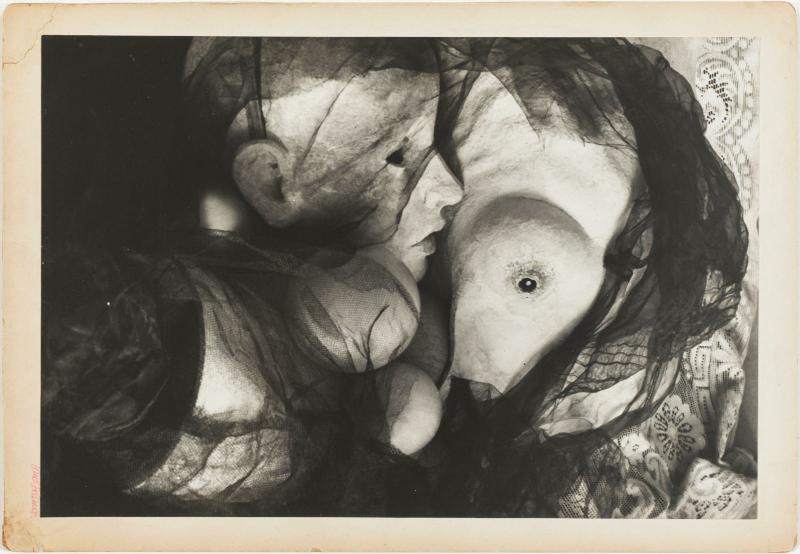
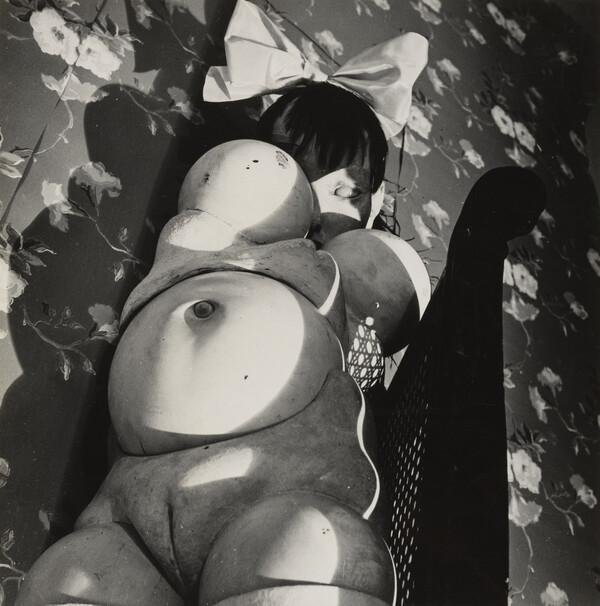
Hans Bellmer, «Doll, ” 1935
Bellmer assembled the first doll in Berlin in 1933, made of wood, plaster, and papier-mâché, and almost immediately began photographing it. He published ten images in a small book at his own expense, and a year later, the Parisian Surrealist magazine «Minotaur» printed them. The second doll, from 1935, is constructed differently. It features a ball joint at its center—something resembling a torso—to which parts can be attached in any order: two pairs of legs without a torso, two pelvises, and a head positioned somewhere to the side. Bellmer took over a hundred shots of it. The doll is lying on a staircase, hanging from a tree, sitting on a kitchen chair amidst completely ordinary objects, and this mundane setting is what has the strongest impact. Each part is immediately recognizable individually—the child’s leg in a white sock and shoe remains a child’s leg. What is unfamiliar is the assembly order, and the eye constantly tries to reassemble the figure. Later, Bellmer hand-colored the prints with aniline dyes—pinks, yellows, and greens—and the photographs began to resemble postcards.
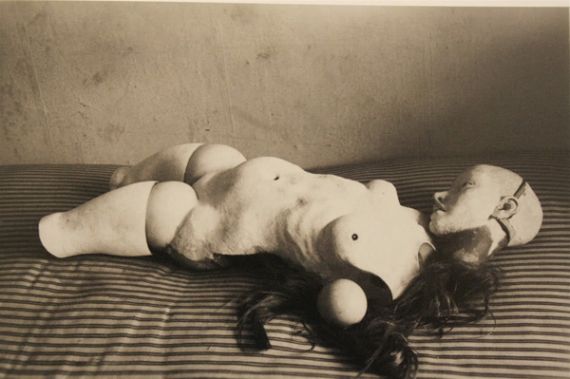
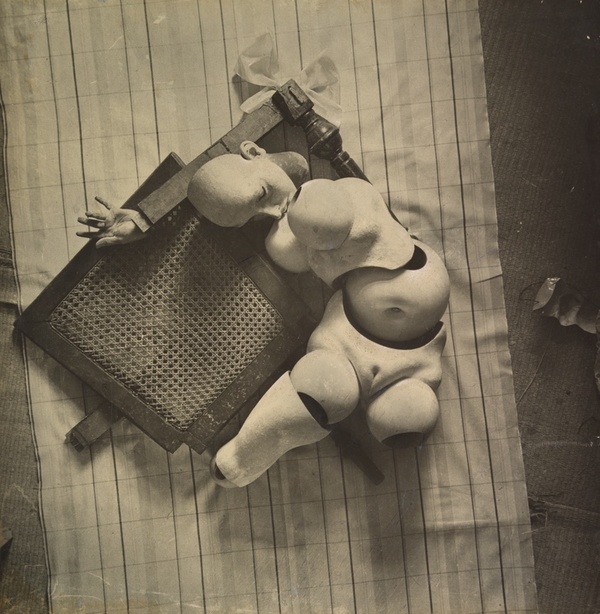
Hans Bellmer, «The Doll,» 1935
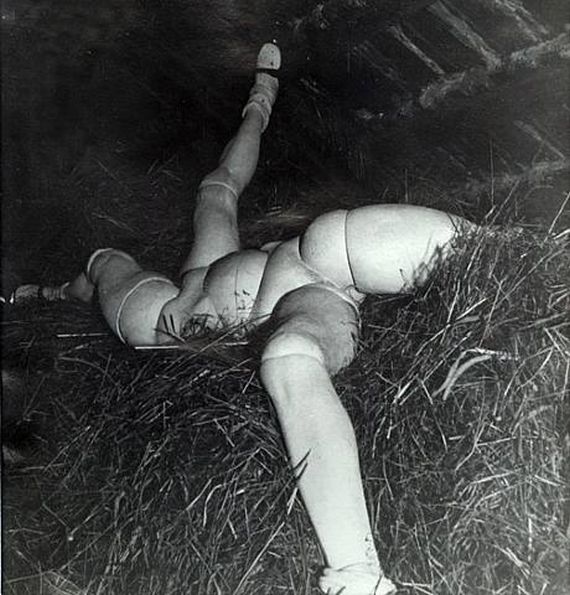
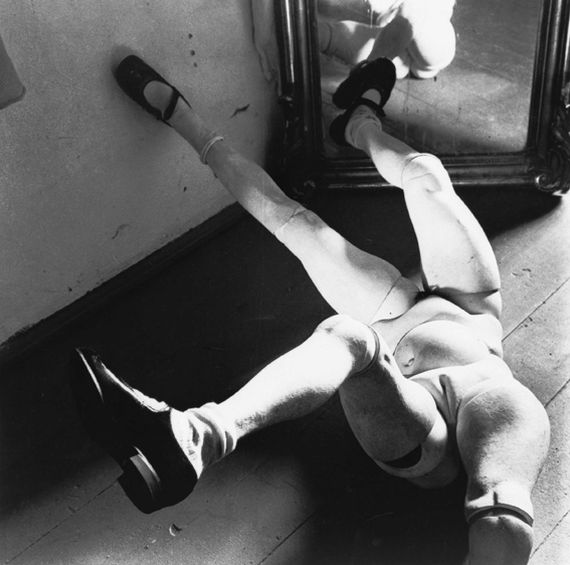
Hans Bellmer, «Doll,» 1935
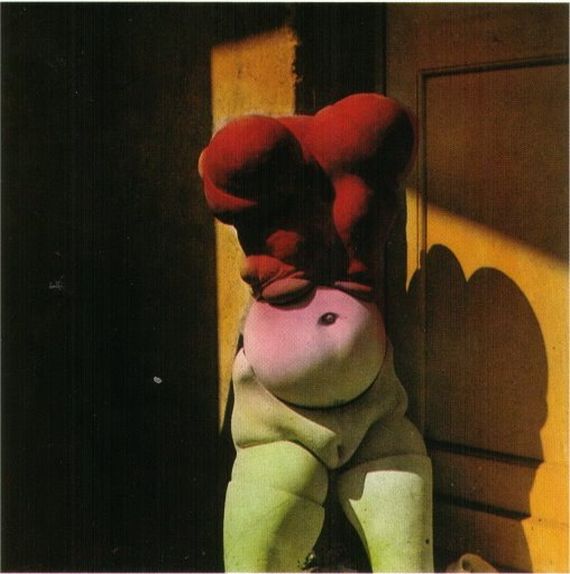
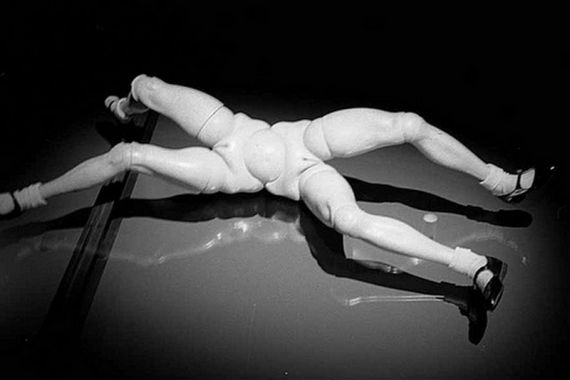
Hans Bellmer, «Doll,» 1935
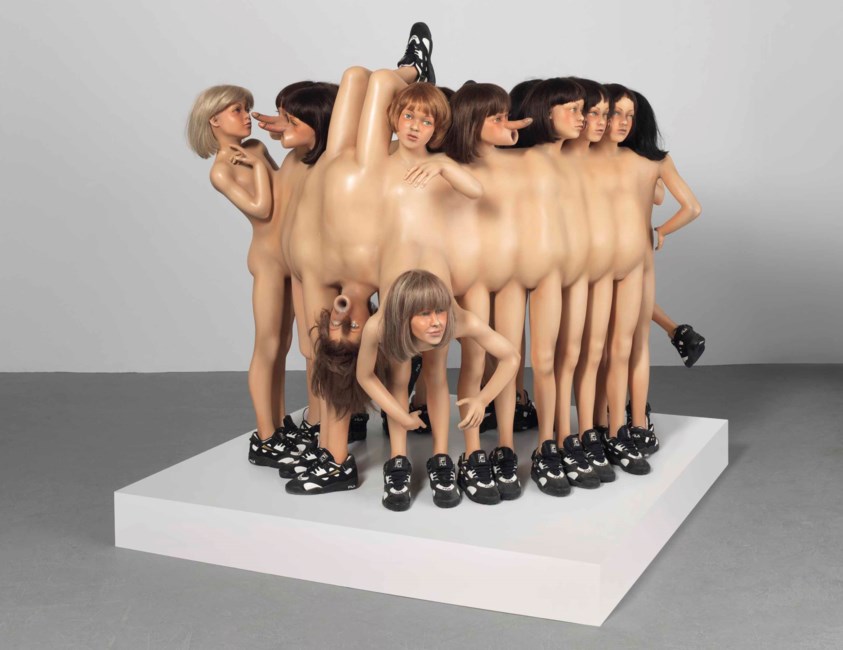
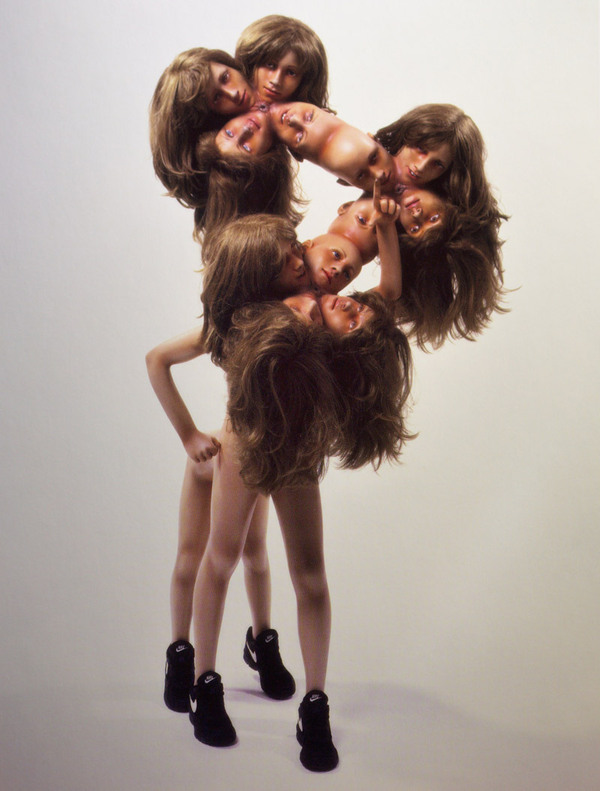
Jake and Dinos Chapman, «Zygotic Acceleration, Biogenetic Desublimated Libidinal Model (Amplified 1000x), ” 1995
The sculpture is assembled from fiberglass mannequins typically found in children’s store displays. The figures have fused side-by-side and back-to-back into a single ring, sharing a common torso and multiple legs. The surface is smooth and factory-finished, with no visible seams, making it impossible to tell where one girl ends and another begins. All figures wear wigs and identical new sneakers; there is nothing else. It is the sneakers that make the piece memorable. They were sourced from a real store, and next to them, the rest of the items begin to resemble a manufactured batch. In Billmer’s piece, it is evident that a human assembled the doll, as seams and fasteners are visible. In Chapman’s work, the artist’s hand is concealed; the body appears to have emerged from the mold instantly. The work was shown in the «Sensation» exhibition in London in 1997 and became one of the primary catalysts for the scandal surrounding young British artists.
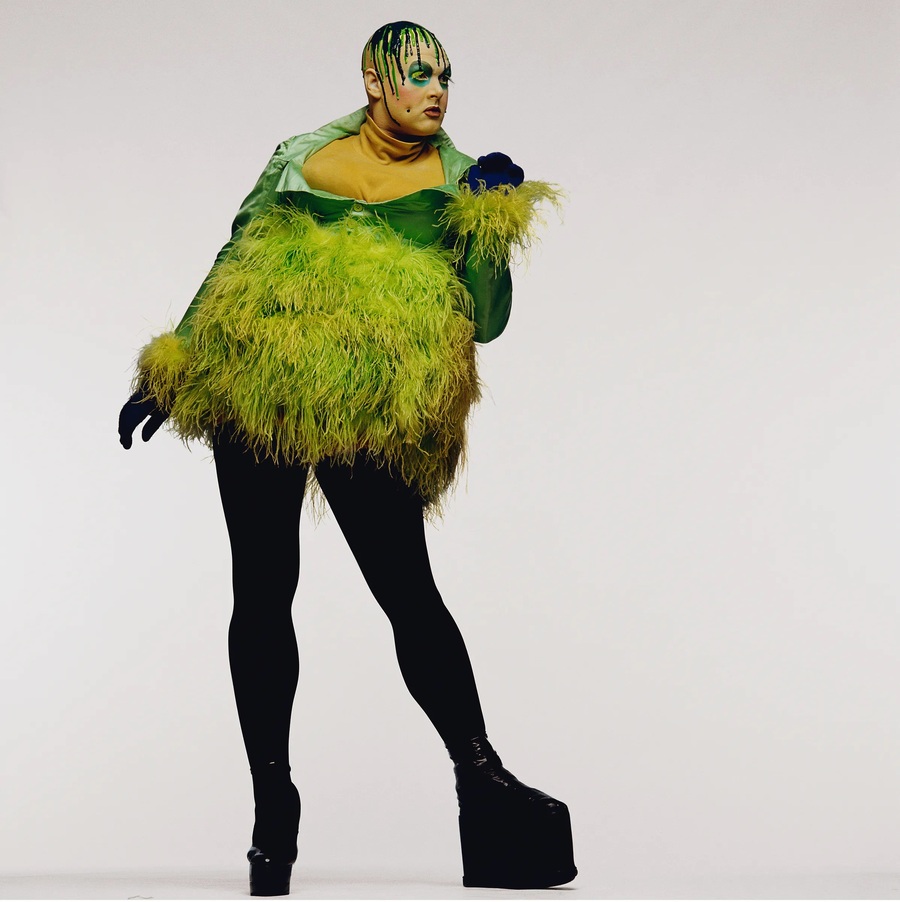
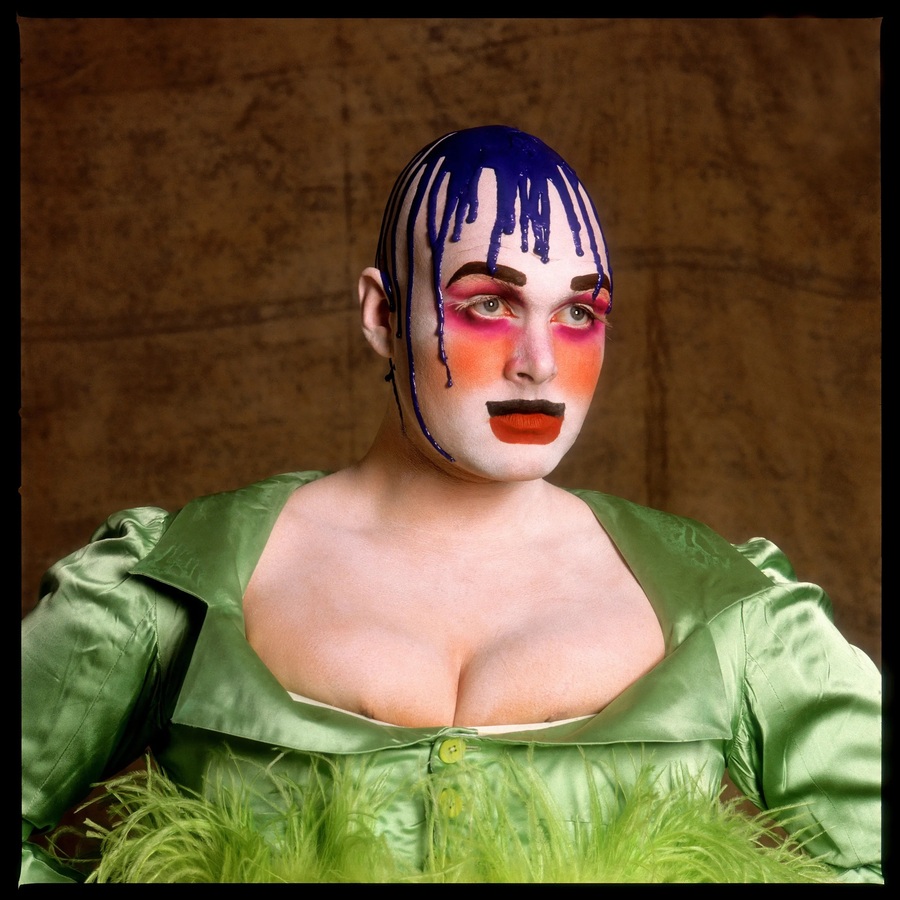
Fergus Greer / Lee Baurey, «Looks, ” 1988–1994
Bauery arrived in London from the suburbs of Melbourne in 1980. He made clothes, held the Taboo club, and remarkably quickly became his own main artwork. Fergus Greer photographed him for six years, session after session, resulting in a detailed archive of images. Technically, everything was done externally. Bauery strapped his torso and stomach with tape to create a chest, put on padding, corsets, platforms as high as a stool, and covered his head with a mask that had no eyeholes, or poured paint onto his bald head that solidified in streaks. He was a large man and didn’t try to hide it—on the contrary, his mass became material. Greer placed him against a plain colored background and photographed him full-length, frontally, with no props, as if shooting clothing for a catalog. This created a strange effect: the frame promised to show a costume, but the human underneath the costume was absent. In 1988, Bauery spent a week behind the glass at the London Gallery, presenting a new persona every day. The audience saw him, but he only saw his own reflection.
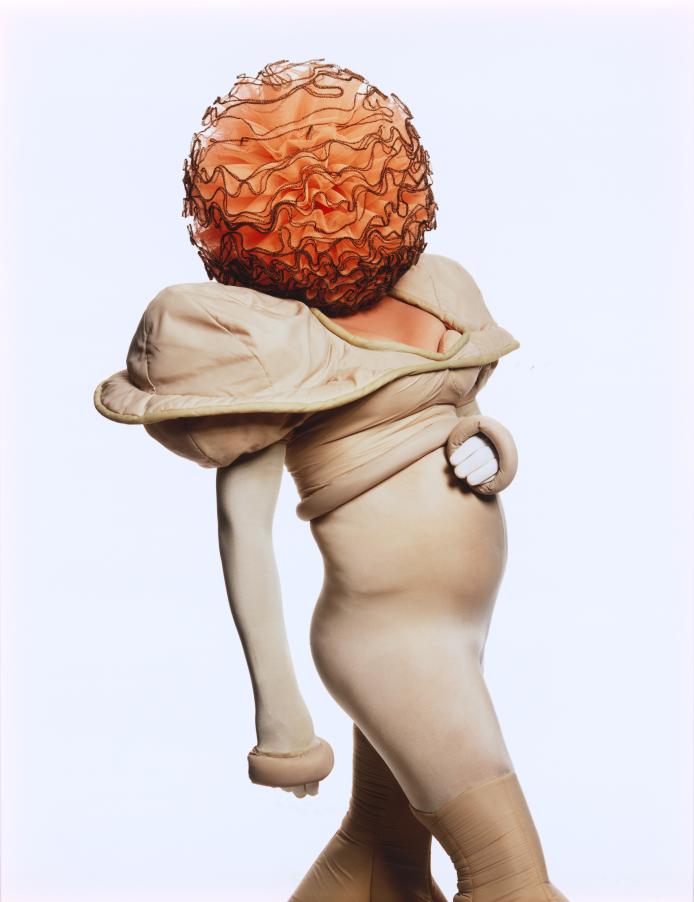
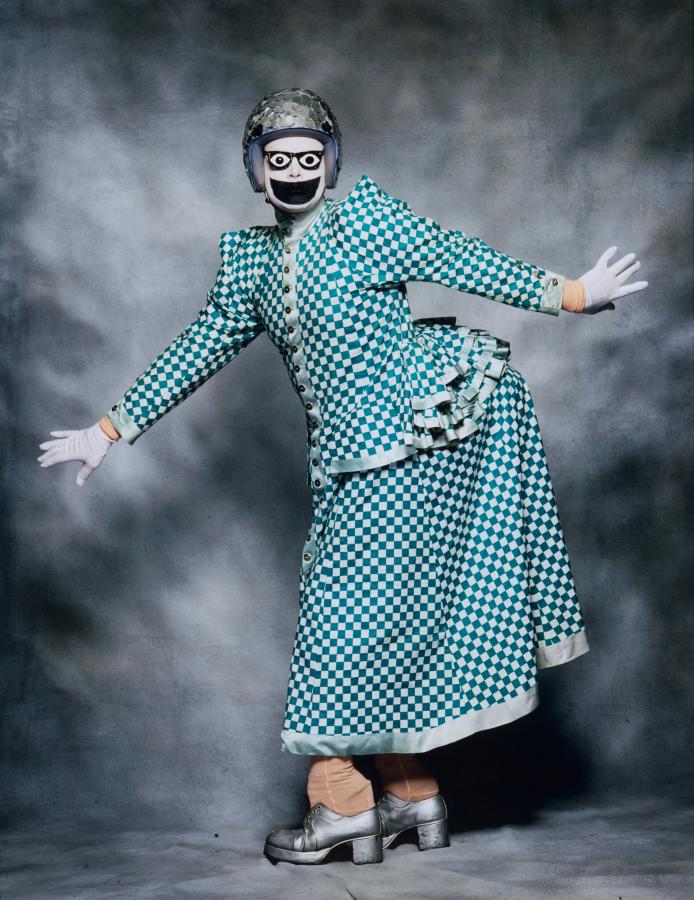
Fergus Greer / Lee Bawry, «Looks, ” 1988–1994
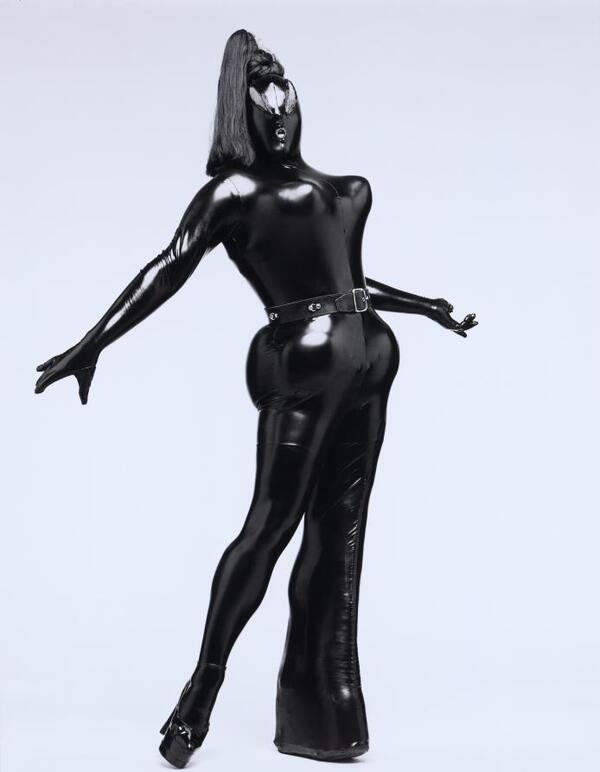
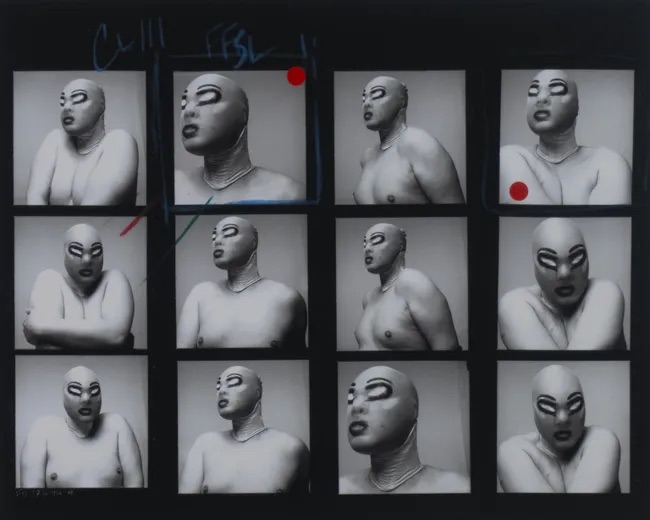
Fergus Greer / Lee Baury, «Looks, ” 1988–1994
Fergus Greer / Lee Bawry, «Looks, ” 1988–1994
Sean Lee for Alexander McQueen, «Corset Spine, ” 1998
Sean Lin studied jewelry design and created classic pieces before meeting McQueen. For the Spring/Summer 1998 show, he fashioned an aluminum spinal structure with ribs, designed to be worn on the back and fastened at the front. The ribs encompass the model’s ribcage, and the spine continues as a tail at the bottom. On the runway, the corset was worn over a black dress, and the metal against the dark fabric read like an X-ray. In the history of costume, the corset was almost always a hidden structure that corrected the silhouette from the inside, underneath the clothing. Lin brings the skeleton to the surface, and in doing so, adds an extraneous element. The tail changes the meaning of the entire piece because a human spine does not have one. We are looking at the skeleton of some other creature, worn on a woman like a trophy.
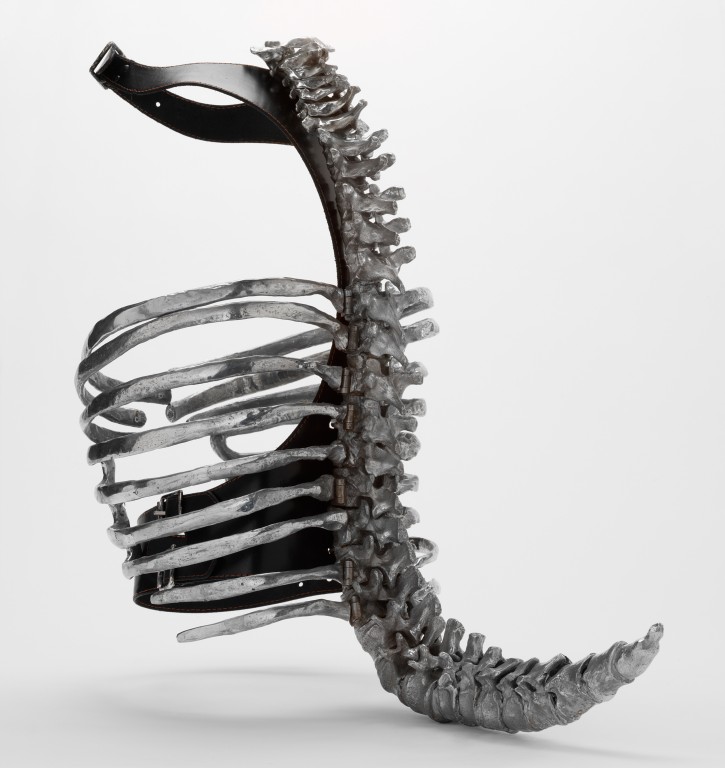
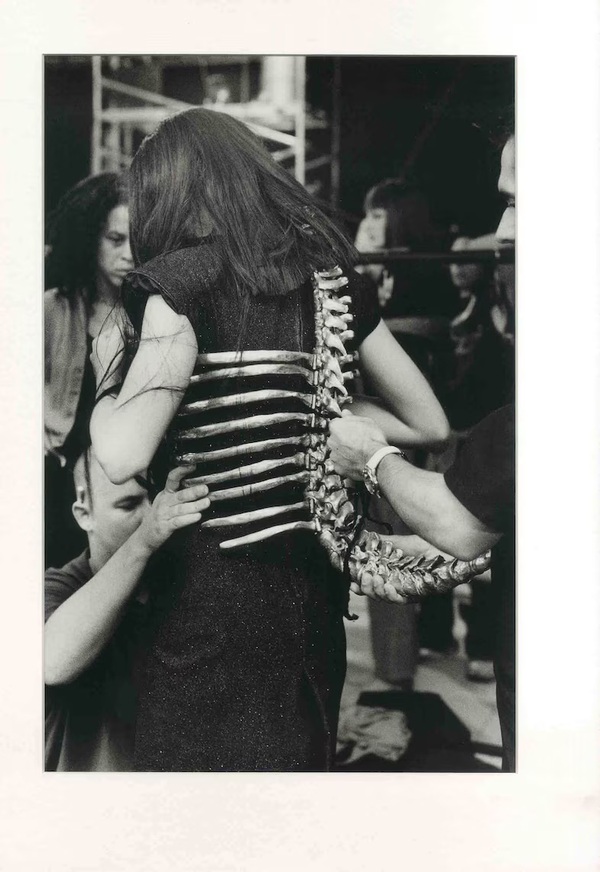
Sean Lin for Alexander McQueen, «Corset-Spine, ” 1998
The body cannot be pitied, as a wounded one is, and therefore the viewer is left with the question of what exactly they are seeing: a person, an object, or a costume.
3. Flesh and Body: Cut and Wound
Bandages, blades, and operating tables appear. In this context, one must constantly clarify what is actually happening in the image, and the answers from the three authors differ.
Rudolf Schwarzkogler, «Actions,» 1965–1966
Schwarzgoller held only six performances, and only the first was staged for an audience. The others he staged in a private apartment in Vienna specifically for the camera. An invited photographer shot the work, and the artist himself posed less often than his friend Heinz Zibulka. In the black-and-white prints, we see a person completely bandaged in gauze, including the head. Next to him and on him are razor blades, wires, light bulbs, medical vials, and sometimes fish. The composition is always very clean, almost sterile, with a lot of white space. There is not a single cut visible in the photographs. There is a bandage under which anything could be hidden, and a blade placed close to the body. The viewer completes the injury themselves. The artist died in 1969 after falling from a window, but three years later, the American press published a story claiming he had died by cutting pieces of himself for art. This is untrue, but the legend persisted for decades and still appears in texts. The photographs were staged so convincingly that they were accepted as documentation.