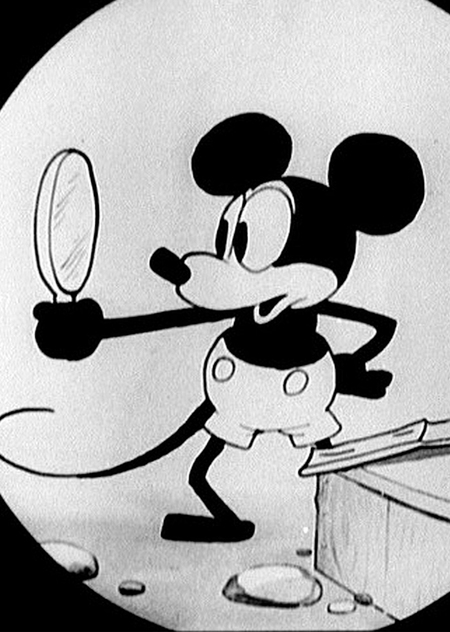
Concept
An animated character is not merely a drawn figure, but a distinct visual identity that must possess individuality, be recognizable, and convincingly inhabit motion. One fascinating aspect of early animation is how simple characters could be in appearance. Many iconic figures from the first half of the 20th century were composed of basic shapes, featured stylized proportions, minimal detailing, and a rather schematic body structure. Yet, it was these very forms that became memorable and developed a unique character. This allows us to view simplicity not as a flaw in artistic development, but as a deliberate principle in creating animation design.
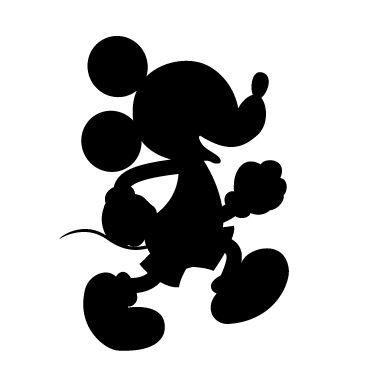
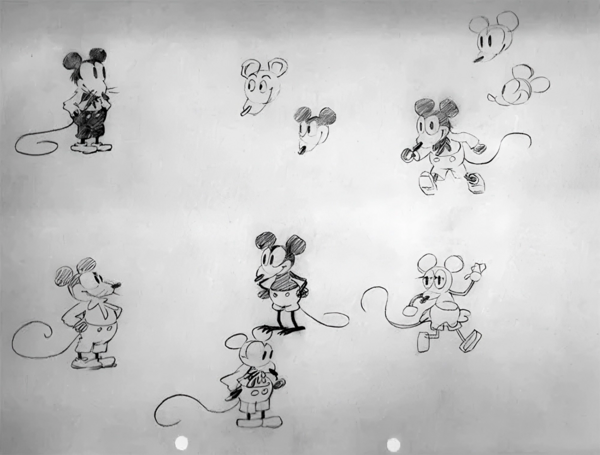
Mickey Mouse Silhouette; Concept Art of Mickey Mouse 1928, Walt Disney.
The relevance of this topic lies in the fact that character design in animation has specific characteristics that distinguish it from the design of characters intended for illustration, painting, or static graphics. An animated character must not only look good in a single image but also retain its expressiveness while constantly changing its body position. Since the character must be drawn repeatedly from different angles, in various poses, and in motion, an overly complex construction can hinder the artist’s work. Conversely, simple forms allow the character to be reproduced more easily, helping to maintain its proportions and ensuring visual consistency across different frames.
At the same time, simplifying the appearance does not mean abandoning individuality. On the contrary, a limited number of details compels the artist to be especially meticulous in selecting the proportions, the shape of the head, the limbs, and the characteristic elements of the character’s appearance. For example, a round head with large ears can serve as the basis for a recognizable image, just as unusually long limbs or a disproportionately large torso can be used to convey character. Even a small alteration in shape can significantly affect the viewer’s perception of the character.
The research examines the evolution of character design in international animation from 1914 to 1937. This period is significant for the transition from early experimental cartoons to a more developed system of animation production. The works of Pat Sullivan, Disney studios, and Fleischer are selected as source material. Special attention is paid to well-known characters that are characterized by structural simplicity and vividly demonstrate various methods of form usage.The main research question is as follows: Why did characters with simple structures become so expressive and recognizable in early animation, and how did the specific aspects of animation production influence their design?The research hypothesis posits that design simplicity is one of the most effective ways to create an animated character. It allows for an easier drawing and rendering process of the hero in motion without limiting its expressiveness. Conversely, the skilled use of simple shapes, proportions, and distinctive details helps create unique images that are easily remembered by the viewer. Thus, the genius of many early animated characters lies precisely in how expressive an image could be created using a minimal amount of visual means.
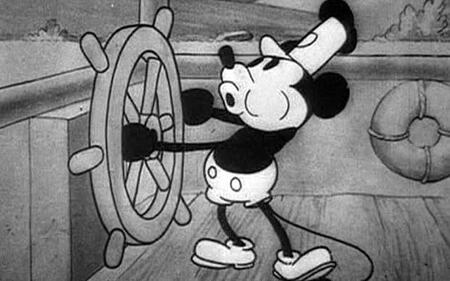
The research is structured around sequentially examining the core principles and functions of expressive silhouette, which are then applied to analyze specific animated characters. This approach allows us not only to describe the distinctive features of the characters' appearance but also to explain how their form influences the viewer’s perception. The analysis considers proportions, body part ratios, characteristic details, plasticity, and the character’s recognizability across various poses. Historical information about the cartoons and characters is separated from the visual observations and the author’s conclusions. The main research question is this: what is the significance of an animated character’s expressive silhouette, and how does its form help convey recognizability, character traits, emotions, and movement? The research hypothesis is that the expressive silhouette is not merely the character’s external contour, but a vital artistic tool that shapes their visual identity. The more deliberate and characteristic the hero’s form, the easier it is for the audience to recognize them, distinguish them from other characters, and understand the nuances of their behavior even without additional details.
Navigation
1. Concept 2. Design as the foundation of animated character recognizability. 3. Core principles for creating expressive design. 4. Main functions of expressive design. 5. Analysis of foreign animation characters before the 1940s. 6. Conclusion. 7. List of sources and literature.
Design as the Foundation of Animated Character Recognizability
Character design is a system of visual solutions used to create a hero’s external appearance. It encompasses body shape, proportions, facial structure, clothing details, color palette, distinctive features, and overall visual style. In animation, design holds particular significance because the character exists not as a single static image, but as a sequence of constantly changing frames.
Character design sheet from Walt Disney Studio — Mickey Mouse and Minnie Mouse in various poses and expressions.
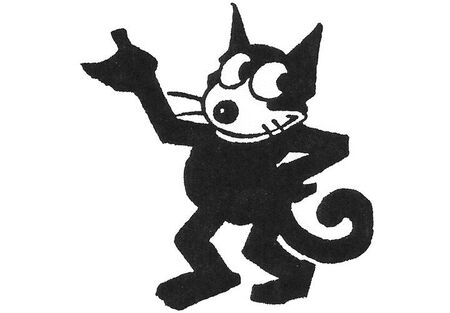
Unlike illustration, where an artist can focus on a single image, an animated character must maintain recognizability across turns, movements, shifts in emotion, and changes in body posture. Therefore, its visual design must be simple and logical enough so that the artist can reproduce it repeatedly without losing its core characteristics.
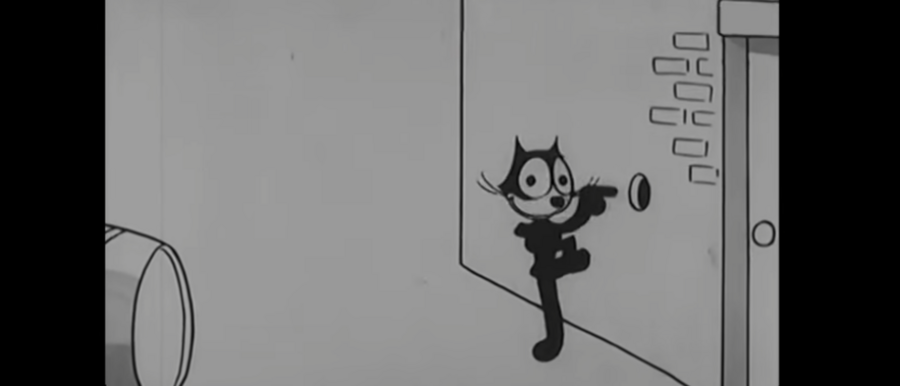
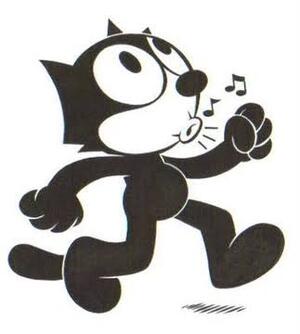
Felix the Cat in «Japanicky» 1928, Pat Sullivan; Felix the Cat.

Shape is one of the most crucial elements of design. Circles, ovals, rectangles, and triangles help establish a character’s foundation and set the overall impression of their appearance. Rounded shapes are frequently used to create soft and friendly figures, angular shapes can emphasize a character’s sharp or tense nature, and elongated proportions allow for a more unusual protagonist. However, these associations are not rigid rules—the meaning of a shape depends on the character’s overall look, facial expressions, and behavior.
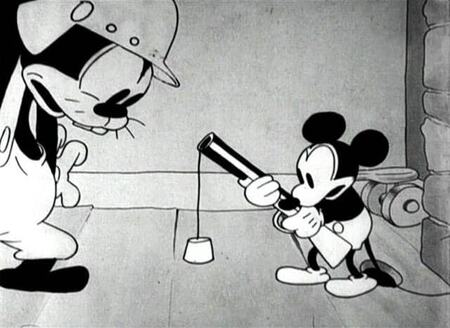
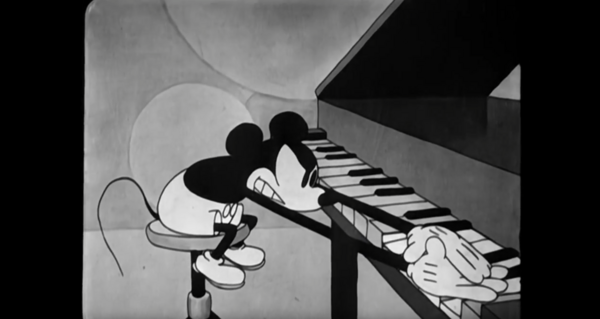
«The Barnyard Battle» 1929, Walt Disney; «The Opry House» 1929, Walt Disney.
The face is another crucial element of design. The placement of eyes, mouth, and eyebrows allows emotions to be conveyed even with minimal detail. Early animation often featured large eyes and exaggerated facial expressions because they helped the viewer quickly gauge the character’s mood. Moreover, even a slight change in the shape of the eyes or the position of the mouth could completely alter a facial expression.
Core Principles of Creating an Expressive Silhouette
When creating an animated character, the artist must consider not only its appearance but also how that character will function in motion. In early animation, principles gradually developed that helped make characters expressive while simultaneously being easy to reproduce in every frame.
One of the main principles is the rejection of superfluous detail. A character is often constructed from several large, easily distinguishable shapes. This allows the viewer to perceive the character’s appearance more quickly, and it allows the animator to maintain consistent proportions when creating a sequence of drawings. Simplicity does not mean the character must look primitive. On the contrary, the fewer details used, the more important the accuracy of each individual element becomes.
Character concept sheet featuring Walt Disney Studio designs—Mickey Mouse and Donald Duck in various poses and expressions.
Proportions help define a character’s nature even before they take action. An oversized head can emphasize emotionality, a small torso can create a comedic effect, and elongated limbs can make movements more fluid and noticeable. In animation, proportions are often intentionally distorted for expressive purposes. The key is that these alterations must appear organic and consistent with the hero’s archetype.
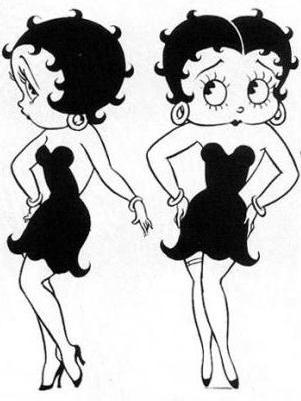
Even when considering a character devoid of color, facial expressions, and minute details, their outer contour should remain recognizable as much as possible. To achieve this, artists utilize characteristic elements such as head shape, hairstyle, ears, clothing, accessories, or specific physical features. Silhouette is especially crucial during motion: the viewer must be able to discern who is in the frame, even if the character is shown from a distance or in an unusual posture.
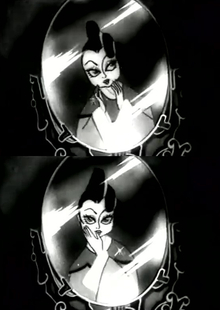
The face must be able to convey a wide range of emotions. To achieve this, artists often simplified its structure, emphasizing the most crucial elements—the eyes, mouth, and eyebrows. In animation, these details can change significantly: eyes widen in surprise, the mouth stretches into a smile, and eyebrows shift position depending on the mood. This allows the character to express emotions even without speaking.
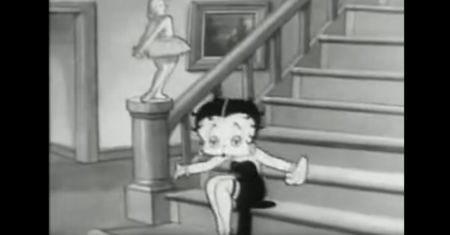
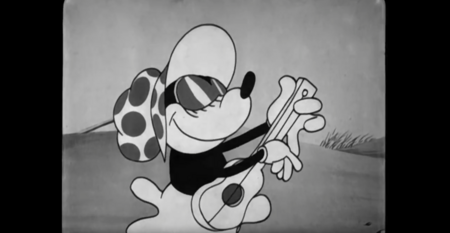
«Minnie the Moocher» 1932, Dave Fleischer; «The Plowboy» 1929, Walt Disney.
The external appearance must support the character’s behavior. For example, rounded shapes can convey a gentle and amiable nature, while sharp lines can suggest an energetic or conflict-driven demeanor. This is not a universal formula, but rather an artistic tool: consistency among the character’s appearance, facial expressions, posture, and actions is what matters.
Therefore, expressive design arises from the combination of several principles. Simple forms make the character immediately recognizable, proportions and details lend him individuality, and plasticity allows the character to be fully realized through movement.
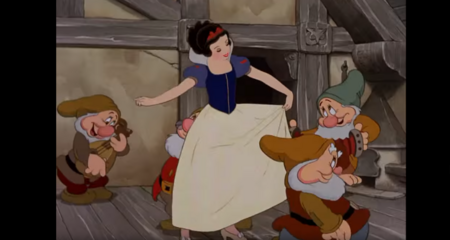
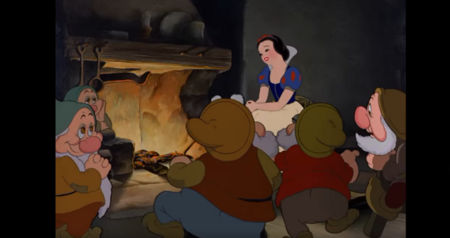
«Snow White and the Seven Dwarfs» 1937.
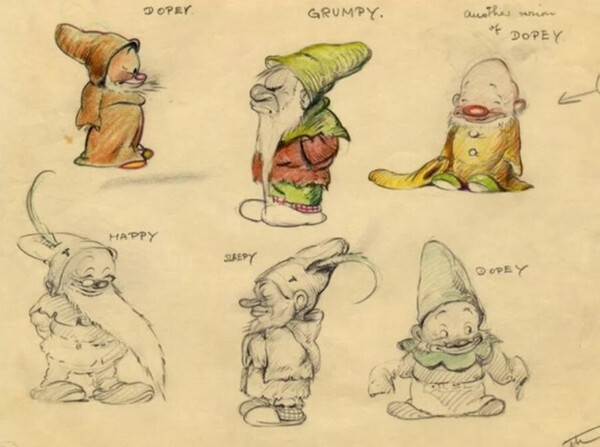
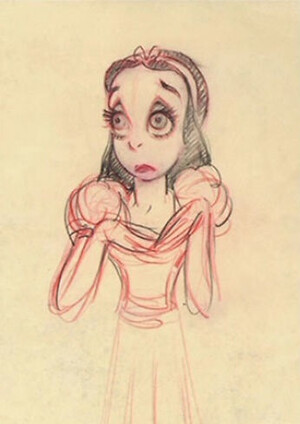
Early concepts of gnomes and Snow White.
Core Functions of Expressive Design
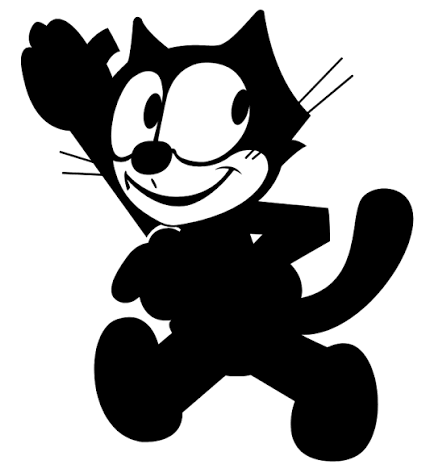
Character design serves several interconnected functions. It not only defines the look of a hero but also helps solve artistic and technical challenges in animation.Recognition Function. The design helps the audience distinguish one character from another. This is achieved using characteristic proportions, head shape, facial features, clothing, and other visual cues. Sometimes, a single element is enough to make an image recognizable—for instance, distinctive ears, a specific hairstyle, or nose shape.
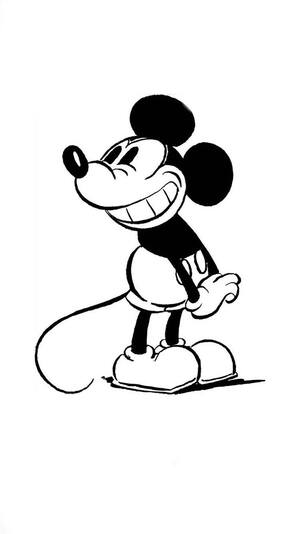
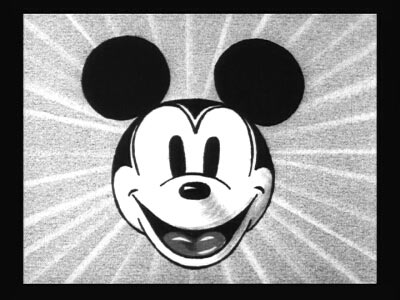
Mickey Mouse Walt Disney.