Research Concept
Rocaille: From Natural Form to the Ornamental Language of Rococo
In the first half of the 18th century, a new artistic system emerged in France, which came to be known as Rococo. It developed amidst shifting court culture, interior design, and evolving concepts of decorative expression. Unlike the preceding Baroque, which favored monumentality, solemnity, and grand compositional schemes, Rococo turned toward intimacy, refinement, plasticity, and visual lightness. One of the most characteristic manifestations of this artistic language is the Rocaille ornament. The very concept of «rocaille» is linked to the French word rocaille, which denoted decorative compositions made from shells, stones, and other natural elements, particularly used in the design of grottos and garden structures. Gradually, motifs initially associated with the imitation of natural forms began to acquire independent artistic significance. Shells, fanciful stone formations, plant shoots, and scrolls ceased to be perceived solely as depictions of specific natural objects. They transformed into conventional plastic elements capable of forming autonomous ornamental compositions.
The process of transforming a natural motif into a universal decorative language is of particular interest. The Rococo form sheds the need to follow the natural structure of the depicted object and begins to adhere to its own logic: lines curve, intertwine, break, and reconnect; the composition is built on asymmetry, and individual elements appear to be in constant motion. This newfound freedom does not imply a lack of artistic organization. On the contrary, balance is achieved through the complex interplay of volumes, directions, and decorative accents. Ornamental graphics played a crucial role in the formation and dissemination of this language. The designs of French artists and ornamentists, notably Juste-Orlel Meissonne, were reproduced in engravings and became models for masters across various artistic movements. Thanks to print publications, decorative motifs could transition from one artistic sphere to another, adapt to new materials, and take on diverse realizations. Thus, Rococo existed not only as an adornment for individual objects but also as a system for designing decorative form.
Within the scope of this study, particular attention is given to how the same principle of ornament organization manifests across various forms of decorative and applied arts. Furniture, interior elements, porcelain, silver, and gilded bronze possess distinct technological capabilities and functional requirements. Therefore, translating a Rococo motif from a graphic design into a three-dimensional object inevitably involves its transformation. In wood carving, it gains plasticity and depth; in porcelain, it becomes part of a complex sculptural form; and in metalwork, it is enhanced through relief, luster, and the interaction of light with the surface. Particular interest is also drawn to the spread of Rococo beyond France. In Germany, England, and Italy, the French decorative model receives new interpretations. While preserving its characteristic traits—asymmetry, fluid lines, and naturalistic imagery—national artistic traditions influence the proportions, composition, and character of the ornament. Comparing works from different countries allows us to trace not only the dissemination of a particular style but also the methods of its adaptation.
Key Research Question
How did natural motifs transform into an independent ornamental system in Rocaille, and how did this system evolve when transitioning from graphic design to decorative arts objects?
Research Hypothesis
Rocaille should be considered not merely as a collection of characteristic decorative motifs, but as an independent principle for organizing artistic form, founded upon asymmetry, plasticity, and the continuous movement of the line. This principle persists when transitioning between various materials and artistic traditions, yet it gains new expressive possibilities.
From Nature to Ornament
What is Rocaille?
Rocaille is a decorative motif related to the depiction of natural forms: shells, stones, water currents, and vegetation. Gradually, these elements cease to depict nature literally and transform into independent plastic forms.
Rocaille: Origin of the Name
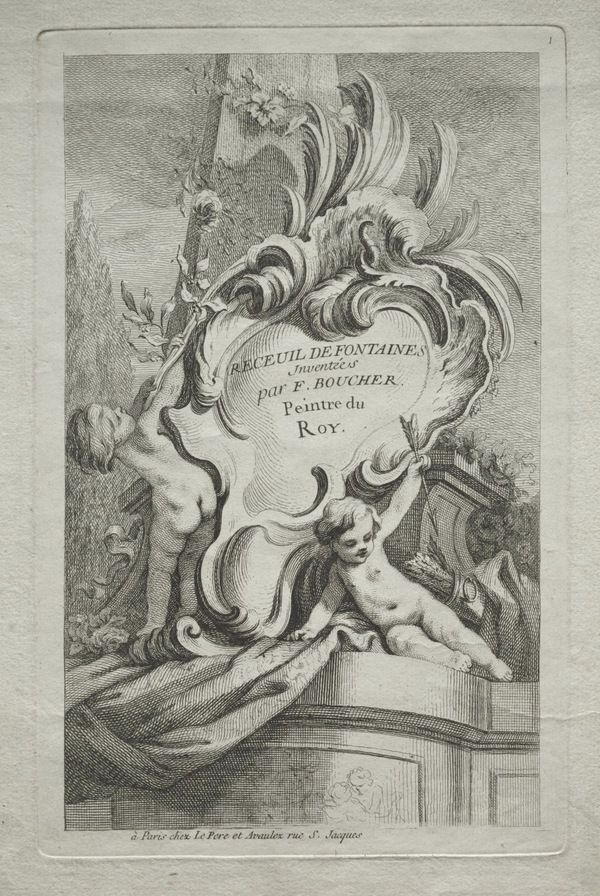
Rocaille is associated with the French word rocaille—decorative compositions made from shells, stones, and natural elements. Initially, such motifs were used in the design of grottoes and garden structures, before evolving into an independent language of interior decoration.
Gabriel Huquier after François Boucher. No. 1: Title Page, c. 1736. Etching. Cleveland Museum of Art, 1953.671.
Nature as a starting point
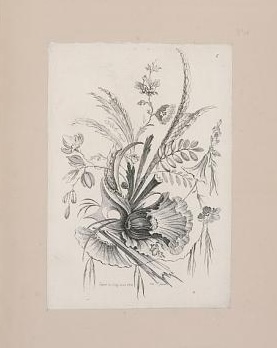
The foundation of rocaille ornament is not the exact replication of nature, but the transformation of its forms. Shells provide spiral contours, leaves offer branching structures, and stones and water evoke an irregular outline and a sense of continuous movement.Gabriel Huquier. Floral Ornament Design, 1738–1749. Etching on paper. Cooper Hewitt, Smithsonian Design Museum, 1921-6-213-18.
The Sink as a Form-Defining Motif
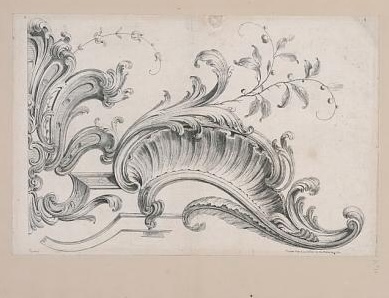
The basin becomes one of the main sources of rocaille ornamentation. Its asymmetrical shell, spiral development, and relief surface allow for the creation of compositions that seem to unfurl from a single point.Alexis Peyrotte, engraving by Gabriel Huquier. Rocaille Ornament Design, 1749–1761. Etching on paper. Cooper Hewitt, Smithsonian Design Museum, 1921-6-213-10.
The natural motif becomes abstraction
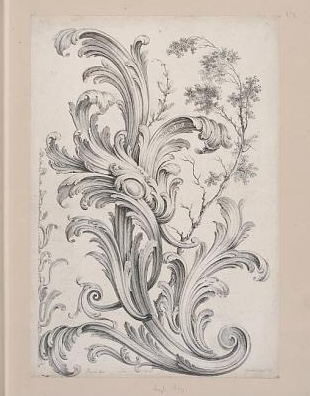
In Rocaille, the natural form gradually loses its literal resemblance to the original object. Leaves elongate, shells transform into cartouches, and plant stalks merge with scrolls. A self-sufficient decorative system emerges.
Alexis Peyrotte, engraving by Gabriel Huquier. Acanthus Leaf Ornament Design, 1749–1761. Etching on paper. Cooper Hewitt, Smithsonian Design Museum, 1921-6-213-2.
Just-Aurèle Méisonne
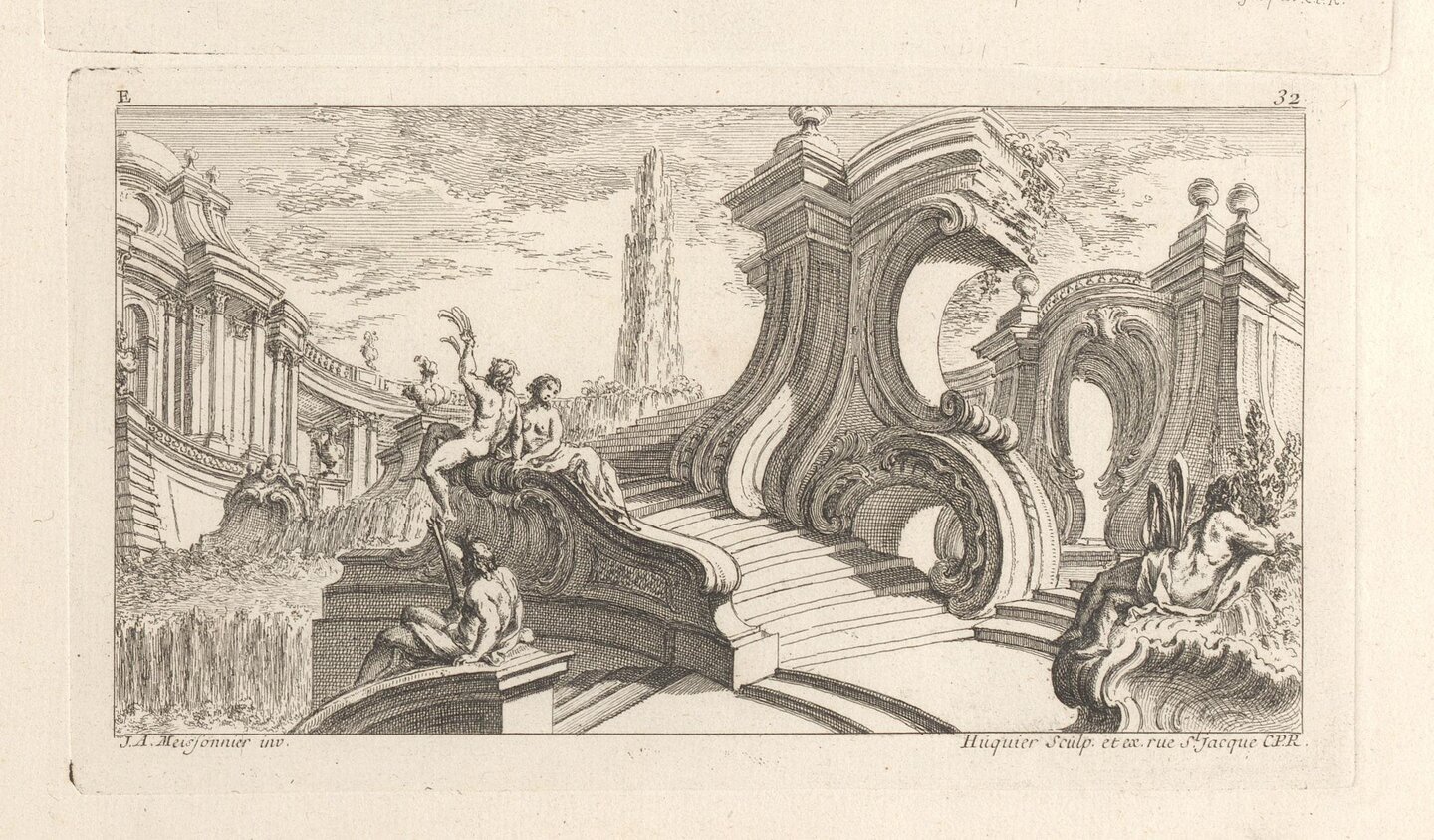
Maisonné is one of the key figures in shaping the Rococo language. His projects are distinguished by complex asymmetrical compositions, free curves, and the merging of natural motifs with fantastical architectural forms. Engravings made his designs accessible to other craftsmen.
Juste-Aurèle Meissonnier, engraving by Gabriel Huquier. Ornament with architecture featuring rocaille elements and figures, 1738–1749. Etching. Rijksmuseum, RP-P-1998-316.
Engraving as a medium of dissemination
Engraving allowed ornament designs to be disseminated beyond the workshop where they were created. Masters could use printed sheets as models when decorating furniture, porcelain, silver, and architectural elements.
Anonymous Rocaille ornament and frame, 1705–1775, etching, Rijksmuseum, RP-P-1964-3642.
Fantastical Architecture
Rocaille ornamentation is capable of structuring not just the surface of an object, but also a fantastical architectural edifice. In graphic projects, fountains, columns, and cartouches transform into complex compositions where structure and decoration are virtually inseparable.
Laureolli on the project of Juste-Aurèle Meissonnier. Rocaille Fontein, 1738–1749. Etching. Rijksmuseum, RP-P-1906-2212.