Main Question
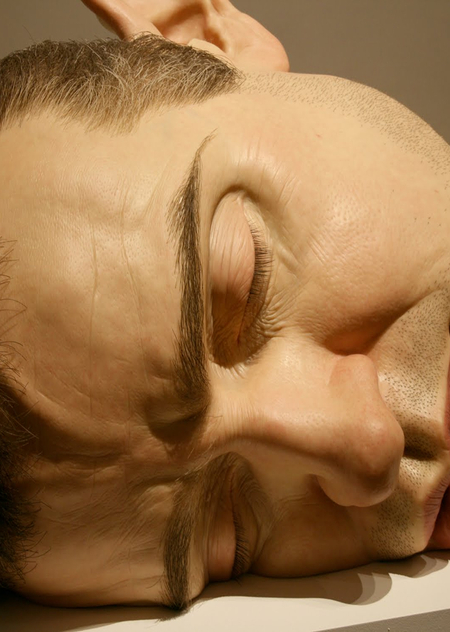
Why does a realistic human representation first inspire awe and then begin to cause anxiety? Humanity has always sought to conquer the static nature of an image. Stone, wood, wax, and silicone were intended to transform into a body that appears capable of breathing, moving, and looking. But the more convincingly a work mimics a human being, the stronger the doubt arises: are we looking at a living creature or an object?It is at this precise moment that awe gives way to apprehension. The sculpture no longer just represents a human; it forces the viewer to question the boundary between the living and the inanimate.
Ancient Statue: The Body as Ideal
Ancient sculpture rarely sought to depict a specific individual with all their unique characteristics. The main objective was the creation of an ideal, harmonious body.
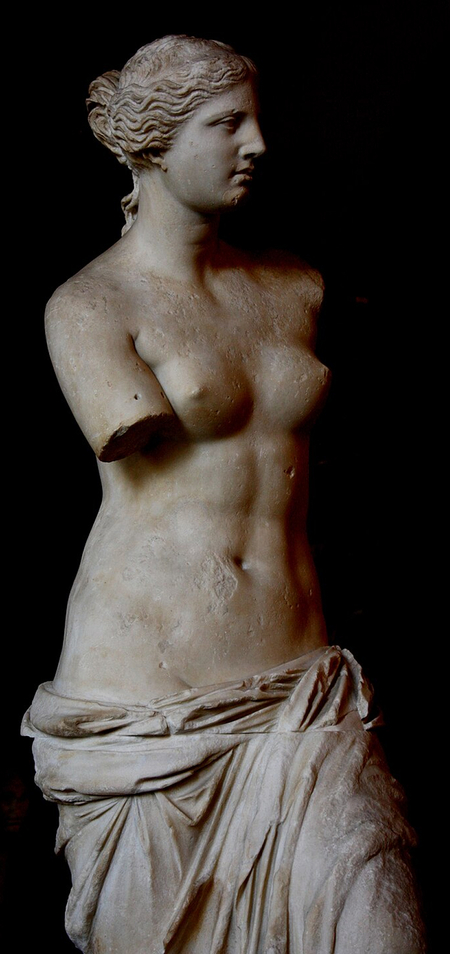
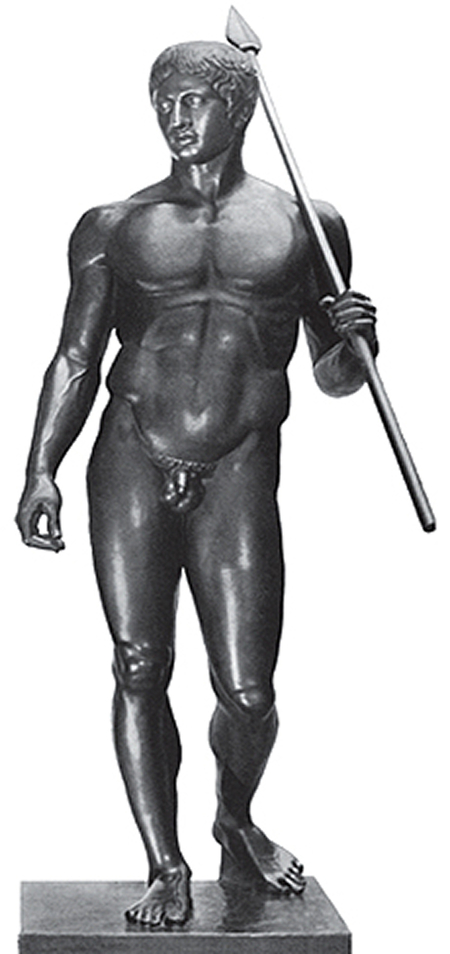
The antique body appears alive yet does not frighten. It does not resemble a specific person one might encounter on the street. It lacks random wrinkles, fatigue, asymmetry, or signs of age. The body is transformed into a clear system of proportions.«Doryphoros» by Polykleitos is built on the principle of balance: the weight of the body is distributed between the legs, and one part of the figure corresponds to the other. The pose seems natural, but it is simultaneously mathematically calculated. This is not a body in random motion, but an image of the perfect human being.Here, realism is constrained by the ideal. The statue does not attempt to completely deceive the eye. We understand that we are looking at marble, but this marble is organized to express strength, serenity, and harmony.Antique sculpture inspires admiration precisely because it does not literally copy life. It depicts the human being as they ought to be in a world of order.
Bernini: When Marble Begins to Resemble Flesh
In the Baroque era, sculpture becomes more theatrical. The figure no longer simply stands before the viewer—it moves, resists, suffers, and interacts with space.
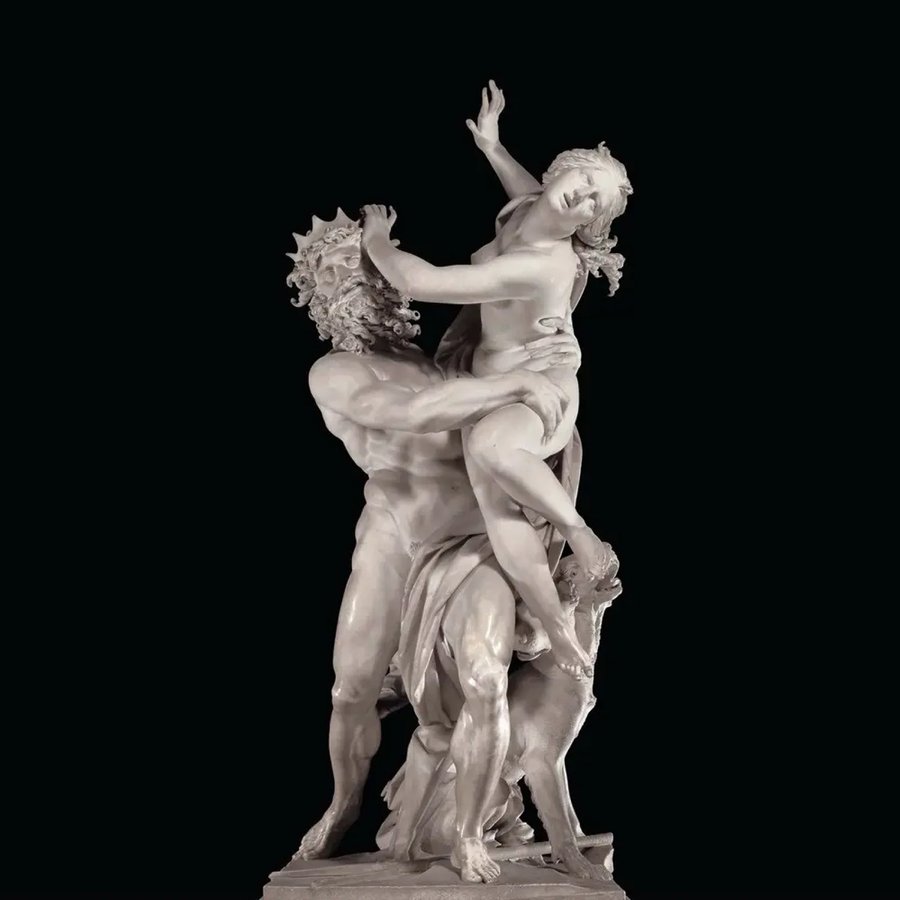
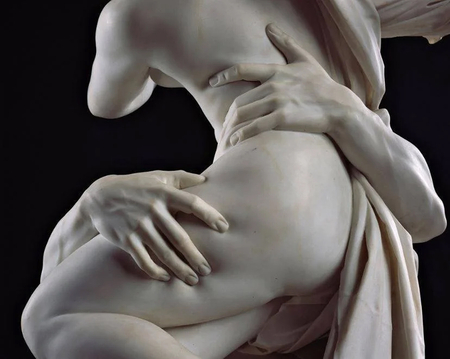
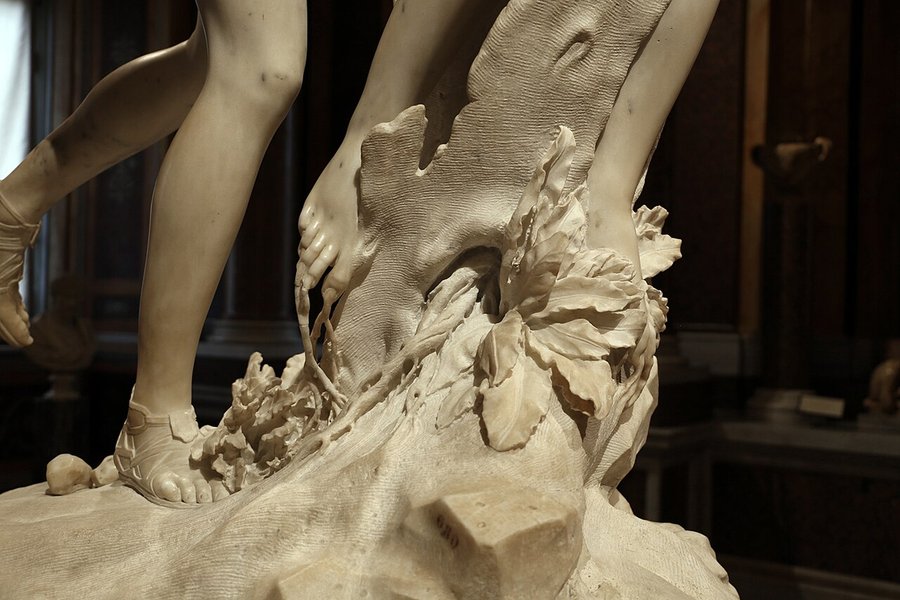
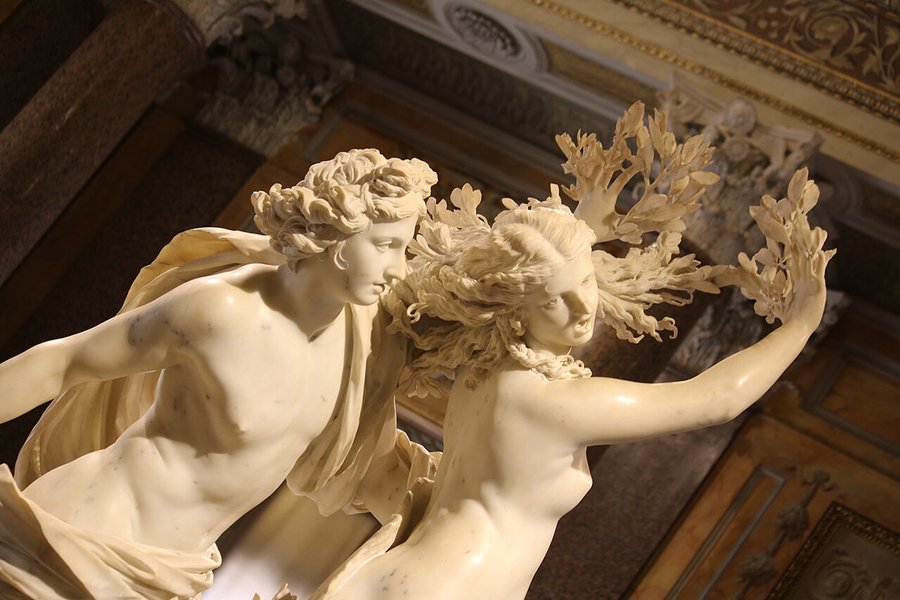
In «The Abduction of Proserpina, ” the contrast between the hardness of the marble and the softness of the human body is particularly vital. Pluto’s fingers seem to sink into the girl’s skin. The stone begins to depict not only form but also the resistance of matter.In „Apollo and Daphne, ” Daphne’s body is captured in the moment of transformation. Her fingers turn into branches, her hair becomes leaves, and her legs lose their human shape. Bernini shows not a static result, but the process of change itself.