Concept
When a character in a comic falls asleep, the artist might draw closed eyes, a bed, or the familiar «Zzz.» But how do you show what they are dreaming about? In dreams, object sizes change, people end up in unfamiliar places, and events are sometimes disconnected. Conversely, everything might look almost normal, and only the final panel reveals that it was a dream. I became interested in how artists depict such narratives and what helps the reader distinguish a dream from reality.
In a comic, there is no true movement or sound. We see individual panels and imagine what is happening between them. The artist chooses the angle, the panel size, the placement of characters, the color, and the sequence of events. I am curious how these choices function specifically in dream sequences.
I am examining American comics from various decades, starting with the newspaper strips of the early 20th century. I am interested in what techniques early artists employed and how later creators utilize them. I will be comparing how the images function, rather than the sheer number of details within them.
The main question of this research is how dreams are depicted in American comics. To answer this, I will focus on symbols of sleep and waking, changes in space and scale, transformations, panel shape and arrangement, and color and drawing style. I will also examine pleasant dreams versus nightmares: I am interested in how artists convey different emotions and whether a frightening dream always looks scary.For this study, I select works first published in the United States or Canada. The primary material consists of pages where the dream is confirmed by the plot. I exclude ordinary fantasies and hallucinations. I use images of sleeping characters when discussing conventions of sleep. I separate covers from pages showing the sequence of events.The sections are organized by visual techniques. Within each section, I compare pages from different years: I present the artwork, note the details, and explain how they affect interpretation. Importantly, I aim to avoid repeating the same images across different sections.I source images from digital archives of libraries and museums, and from the official websites of authors and publishers. I verify authorship, dates, and the location of the first publication against catalogs. For historical context and compositional analysis, I use articles about comics. The final work will include separate lists of textual sources and images. I also check usage rights—free access to a page does not grant permission to post it on another website.I hypothesize that there is no single way to depict dreams in American comics. Some artists separate the dream from reality using noticeable graphic techniques, while others allow the reader to understand what is happening only after the character awakens. I want to investigate which methods are used in different years and to what extent their choice depends on the specific story and the author’s style.
Sleep Signs
To indicate that a character is asleep, artists use simple and recognizable details. Typically, this involves closed eyes, a relaxed posture, or «Zzz» letters to signify snoring. Based on these cues, the reader immediately understands that the character has fallen asleep.
In The Katzenjammer Kids issue from 1903, the letters «Zzz» convey the snores of the sleeping Captain. While the kids are planning another prank, he remains oblivious. Onomatopoeia helps illustrate sleep without needing extra explanation.
Dirks R. The Katzenjammer Kids, 1903.
In Krazy Kat, Ignatz lies with his eyes closed as Crazy kisses him. His motionless posture and expression make it clear that the character is asleep. The appearance of the angels already suggests that he is dreaming.
Herriman G. Krazy Kat, 1917.
In the xkcd comic, the protagonist recalls her mother falling asleep while reading her fairy tales, yet continuing to speak. Mangro uses the letters «Zzz» directly within the dialogue to signify the moment of drifting off. We see that the character is already asleep, even though her mother’s story is still ongoing.
Munroe R. xkcd: Fairy Tales, No. 872, 2011.
Dream Cloud
Sometimes an artist depicts a sleeping person and what they are dreaming of on a single page. Dream sequences are separated by a cloud line or placed above the waking scene. This allows the reader to experience both states simultaneously.
Dirks R. The Katzenjammer Kids, 1900.
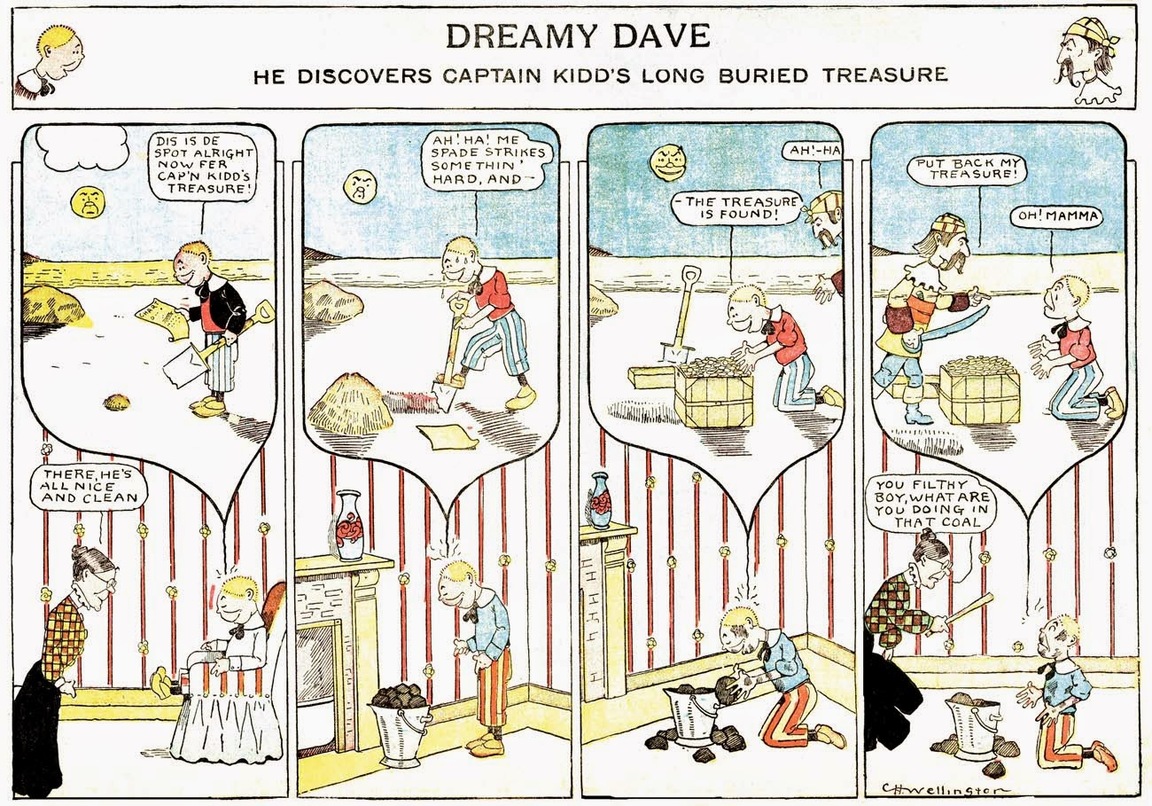
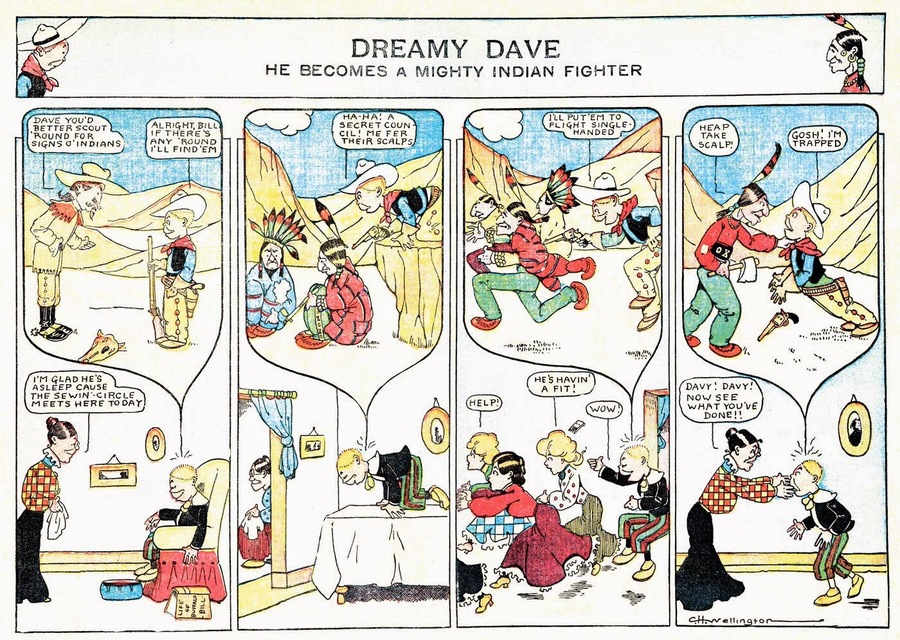
In Dreamy Dave, the top portion of the frame depicts the adventures the boy dreams about, while the bottom portion shows what is happening in his room. Dave continues to sleep but repeats movements from his dream. The wavy border helps separate the two simultaneously occurring events.
Between Sleep and Reality
Some dreams lack a distinct frame or color. The reader only discovers their nature in the final panel. Other narratives depict the awakening gradually, as the dream imagery fades right on the page.
In the first panel of Little Nemo in Slumberland, Nemo receives an invitation to the Land of Dreams and journeys there on a pony. After falling, he wakes up in bed. The final panel shows that the entire trip was a dream.
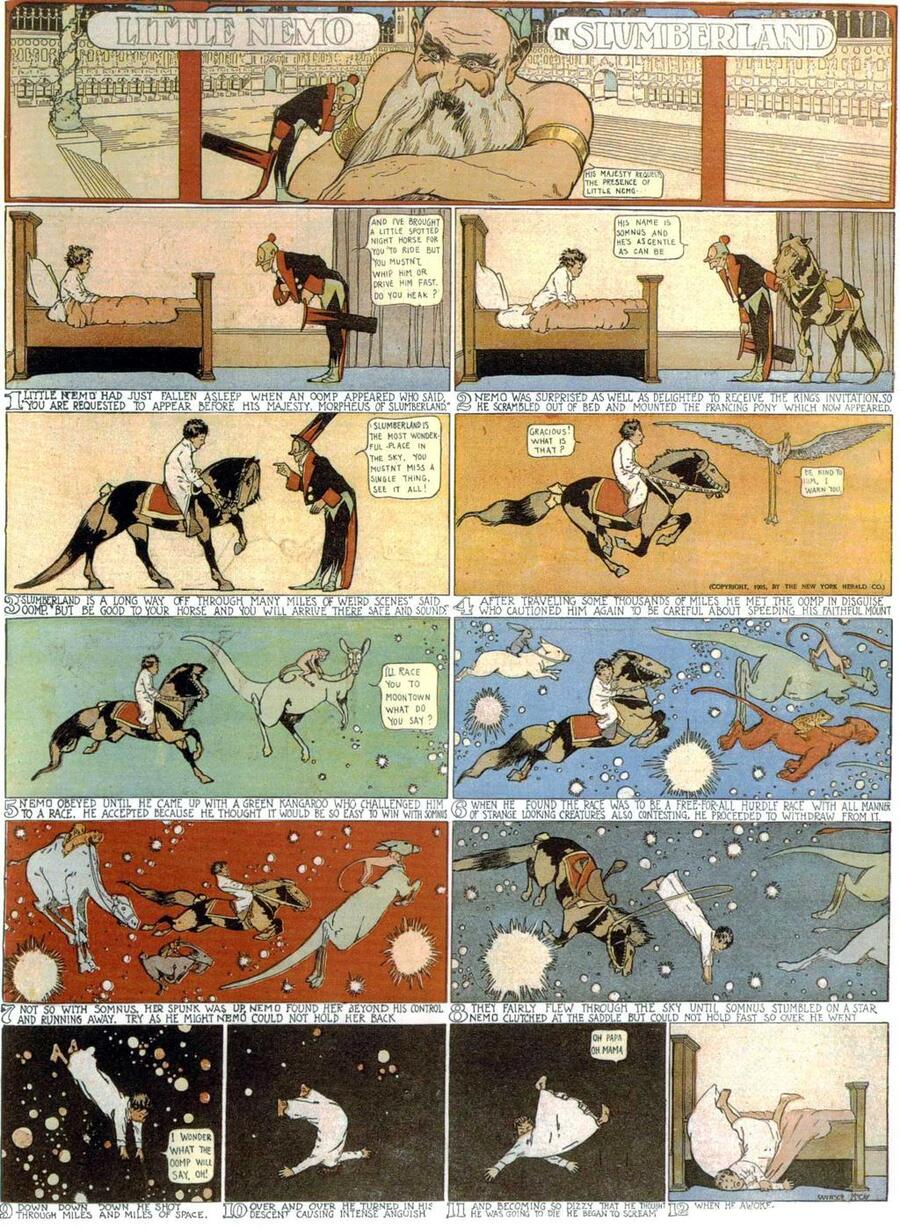
McCay W. Little Nemo in Slumberland, 1905. Outcault R. F. The Yellow Kid, He Meets Tige and Mary Jane And, 1907.
McCay W. Little Nemo in Slumberland, 1905.
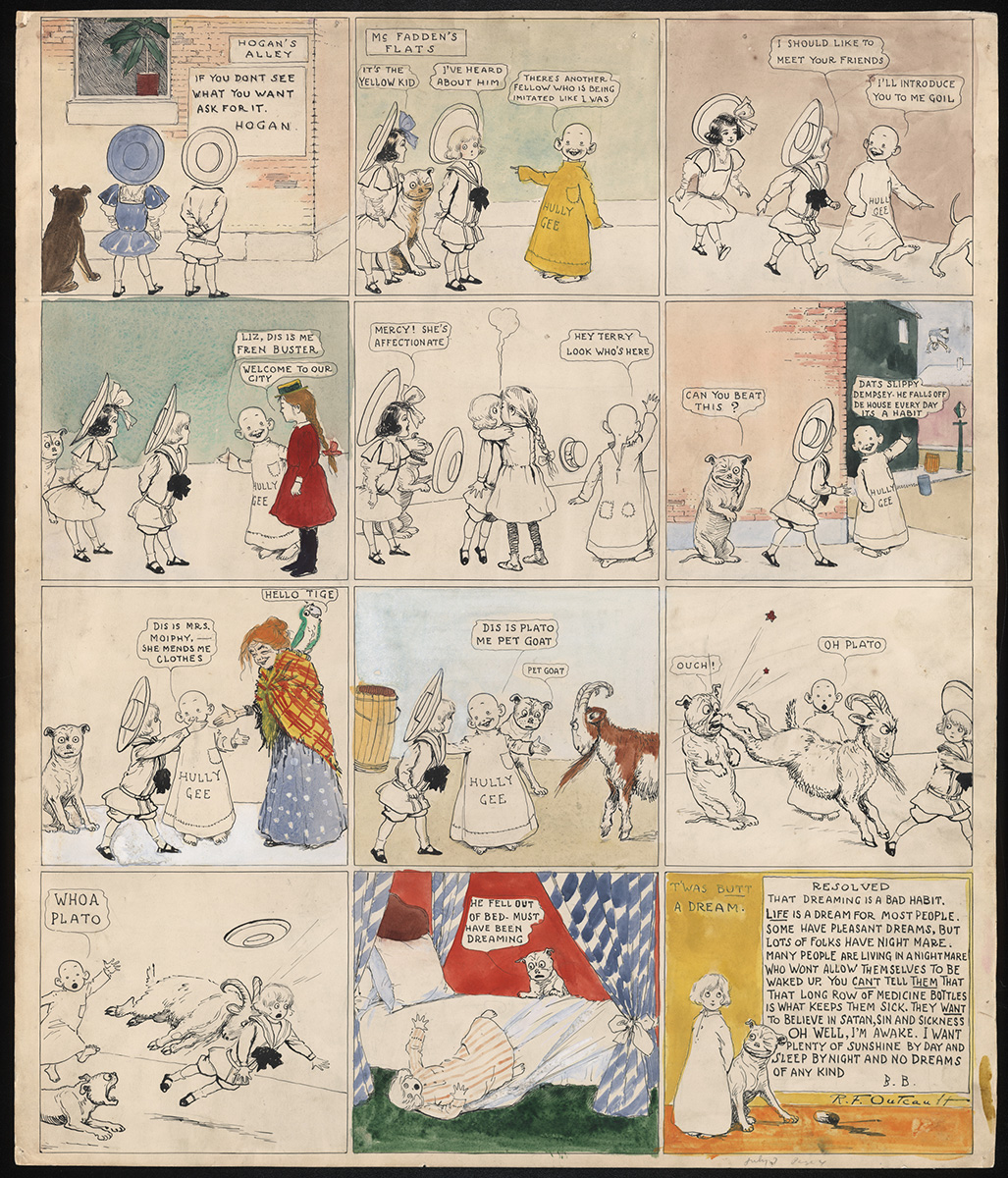
Buster Brown meets the Yellow Kid and other newspaper comic strip characters. The story seems like an ordinary stroll, but in the finale, Buster wakes up. Only then do you realize the encounter was a dream.
Outcault R. F. The Yellow Kid, He Meets Tige and Mary Jane, 1907.
In xkcd: Every Damn Morning, a vast fantasy world is visible behind the waking hero. As he walks to breakfast, its outlines fade and disappear. Instead of an abrupt transition, Manero shows how sleep gradually recedes from memory.
Munroe R. xkcd: Every Damn Morning, No. 430, 2008.
Distortion of Space and Transformation
In a dream, familiar sizes can shift. Everyday objects can become enormous, and people may feel too small for the world around them. This is especially noticeable near familiar buildings and animals.
At McKay’s, familiar subjects behave in unfamiliar ways. In one dream, Nemo and his companions wander among enormous berries; in another, a bed sprouts long legs and rises above the houses.
McCay W. Little Nemo in Slumberland, 1905.
In Dream of the Rarebit Fiend, a man sits in a corner of a tram to avoid being bothered. But large passengers begin to appear nearby, and the carriage itself starts to tilt. A regular journey gradually transforms into a ridiculous dream.