Navigation:Concept Touch and Feedback Light Switches Keyboards Automotive Dashboards Conclusion
Concept
Life in a technologically advanced world is becoming flat and sleek. Touchscreens and voice commands make interaction sterile—frictionless, weightless, and resistant to wear. An illusion of magic emerges, and reality begins to feel unreal. Human contact with the world loses emotional depth. This has led to the phenomenon of «haptic hunger,» where people feel a deficit of real physical interaction.
Currently, we see attempts to compensate for this lack of tactile sensation—there is a growing interest in retro aesthetics and vintage items. But this is not nostalgia; it is a human drive to regain the ability to touch the objects around them. Despite the prevalence of convenient and simple digital controls, simple mechanical buttons are not losing their popularity. On the contrary, they are gaining favor in numerous fields, reappearing in automotive design, interiors, consumer electronics, and workspaces.
The reason is that a button acts as an «anchor» that grounds us in reality. When pressed, a person feels the texture of the surface, the touch of cold metal, the resistance of a spring, and the distinct click. This physical resistance brings back our sense of embodiment and our feeling of control over the physical world. The press itself serves as confirmation of a completed action—a reaction without loading screens, lag, or the internet. Furthermore, the entire interaction, from the resilient press to the satisfying click, elicits emotions in the user. Therefore, beyond basic control and operation, pressing a button is intertwined with a sensory experience.
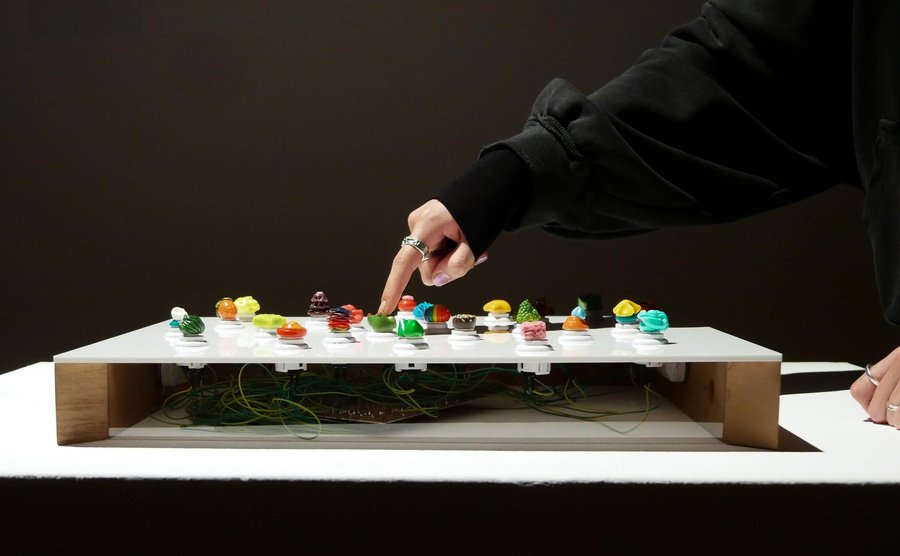
Installation featuring numerous colorful physical buttons from the SoundsLike Joy project
According to Donald Norman, people perceive things on three levels:
1. Visceral or instinctive 2. Behavioral 3. Reflective
Visceral—this is the most fundamental subconscious level, connected to animal instincts. It is where the initial impression of an object is formed. This is what is known as love at first sight or aversion within the first few seconds. The physical characteristics of the object are responsible for this—appearance, texture, weight, and even sound [1].
Hypothesis: The tactile response of objects is an important design tool. It carries not only a utilitarian function but also an emotional one—it shapes a sensory attachment to the object and allows users to derive pleasure from interacting with it.
Selection of Textual SourcesFor textual materials, works by designers and researchers examining the interaction with objects through the lens of emotion and tactile experience were selected. The selection included major design treatises, such as Donald Norman’s «Emotional Design, ” as well as more specific articles and research from the fields of marketing, automotive design, and other disciplines. This curation of materials allows for an examination from various perspectives—ranging from the general perception of design to specific industrial design solutions.
Selection of Visual Materials
For the visual component of this study, objects created or presented within the last decade were selected: light switches, keyboards, and automotive instrument panels featuring physical button mechanisms. A crucial selection criterion was the presence of tactile mechanical controls, despite the possibility of rendering these elements using more advanced sensory materials. This selection allows us to trace the human inclination toward physical interaction in contemporary design.
Tactility and Response
«All senses, including sight, are extensions of tactile perception» [2].Of the five senses, touch possesses the broadest spectrum of sensations: pressure, contact, sharp pain, heat, cold, warmth, and many others. Certainly, touch is a massive channel that provides humans with information about the world and the objects around them.
«Furthermore, the tactile channel is a private and personal channel for transmitting information from the system to the human. No one else knows about the transmission of tactile sensations» [3].
Exhibition on the Power of Touch
According to marketing research, people love to touch products before purchasing them, as this allows them to learn additional characteristics that cannot be found on the packaging—for example, assessing the softness of a blanket. This is called instrumental touch. However, sometimes a person touches an object not because they need to learn something about it, but because they enjoy touching it. This is hedonistic tactile pleasure; pleasant touch increases dopamine [4].
«The very essence of life experience is shaped by tactile sensations and peripheral vision. Focused vision confronts us with the world, whereas peripheral vision immerses us in its true essence» [2].
Variety of buttons and controls
We can interact with devices besides through screens using various manual manipulators:Toggle Switch — Toggle Rocker Switch — Rocker Pushbutton — Pushbutton Rotary Switch — Rotary Slide Switch — SlideUnlike a flat glass surface, each of these elements possesses a unique spatial anatomy. Haptic feedback is shaped by a complex set of physical parameters: ergonomic form, travel depth, spring mechanism elasticity, material resistance, and a crisp mechanical click.
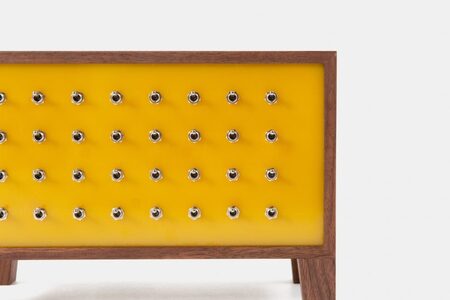
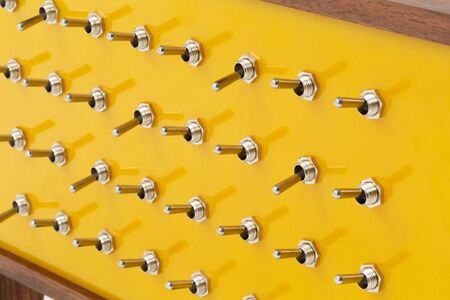
Invention by Yuri Suzuki, featuring 32 toggles, 2022.
There is a noticeable trend of replacing modern digital control systems with mechanical buttons and dials to compensate for a tactile deficiency. In interior design, some people prefer vintage light switches. For computer work, many opt for keyboards with deep key travel and custom buttons over flat, touch-sensitive ones. In new high-tech machines, both manufacturers and users are increasingly moving away from touch panels in favor of button-based control systems.
We are beginning to recognize our forgotten feelings. This growing awareness represents a kind of long-overdue rebellion against the painful deprivation of sensory experience that we have suffered in our technologized world,» writes anthropologist Ashley Montague [5].
Light Switches
Old switches in the museum
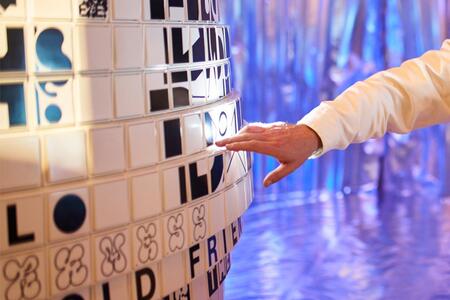
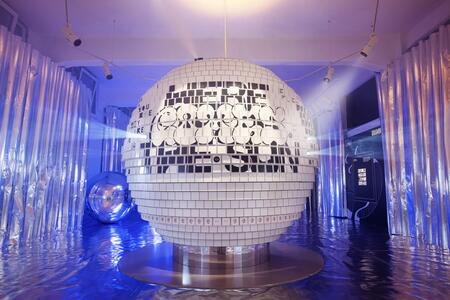
JUNG installation for Design Week 2025, realized as a massive sphere featuring hundreds of light switches.
With the development of «smart home» systems, traditional light switches are gradually giving way to motion sensors, voice control, and automated lighting. There’s no longer a need to search for a button on the wall or even reach out to it—the light turns on by itself. While this is convenient, along with the need to perform an action, another point of physical interaction between a person and their surrounding space disappears.
Dan Hill points to the surprising sensuality of this simple object: «When entering an old house, we trace the wall with our fingertips in the dim light—caressing the plaster, brick, or wood—before touching an early plastic or even Bakelite panel. The switch itself remains quite substantial, with a subtle rolling sensation when closing the circuit—one of the most satisfying and reliable ‘actions’ an industrial designer could conceive» [6].
Touching a switch is a familiar domestic ritual that makes our interaction with a space tangible. By pressing a key, we momentarily anchor ourselves in a moment, drawing from this simple action a sense of comfort and the familiarity of home.
«A standard light switch connects us to our everyday lives and the lives of others» [6].
Through this everyday gesture, we share space with those who touched this same surface before us and will touch it after us. Describing this bodily memory, Juha Palasmaa emphasized that «the tactile sense connects us to time and tradition» [6].
Keyboards
Despite flat and touch-sensitive alternatives, the mechanical keyboard remains an indispensable tool. Typing is done practically «blindly”—the finger relies on tactile feedback and muscle memory, not sight. This mechanism breaks down on a smooth glass surface: the lack of boundaries between keys forces the user to constantly monitor the process with their eyes, which fatigues the brain and reduces typing speed.