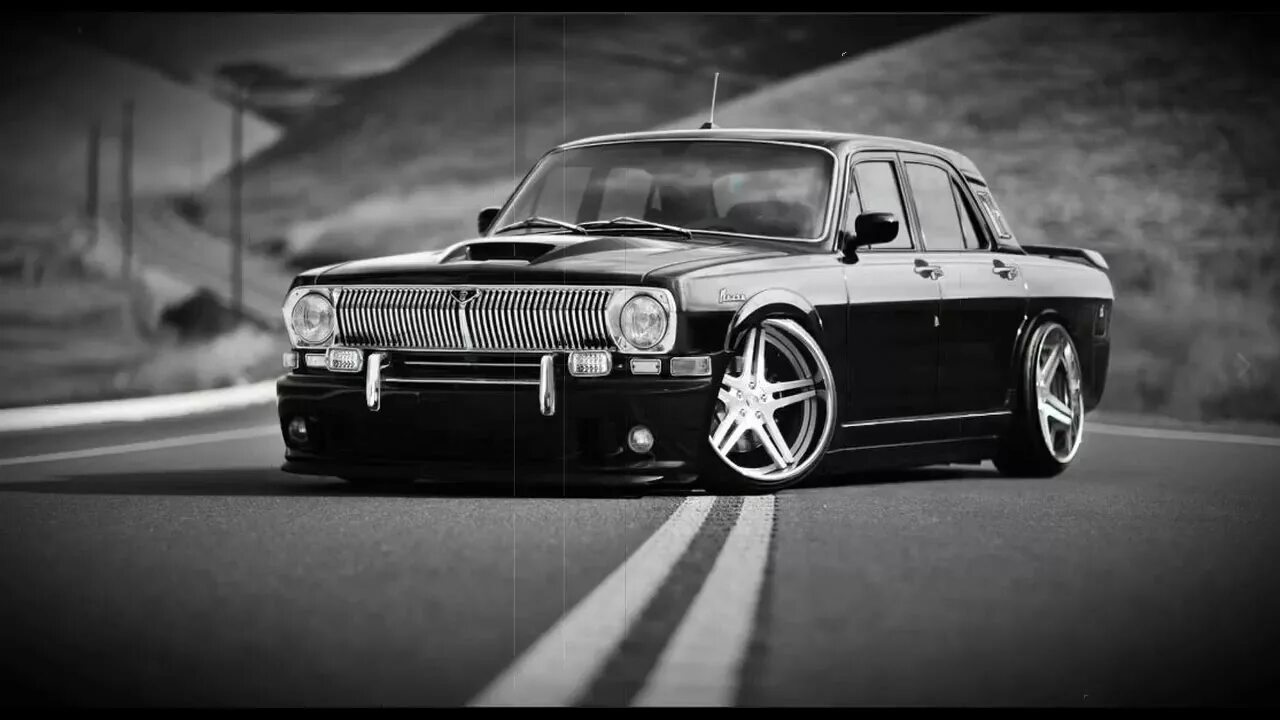
ТЮНИНГ СОВЕТСКОЙ «ВОЛГИ»: В ЧЕМ КАЙФ?
If you place a Ferrari next to a perfectly restored «Volga» at a car festival, there is no guarantee that the crowd will gather around the Italian supercar. In fact, the opposite is more likely. People will linger around the old Soviet sedan, trying to figure out why it has air suspension, where the Chevrolet Corvette engine came from under the hood, and how a car once purchased by factory directors and party officials transformed into a true work of art.
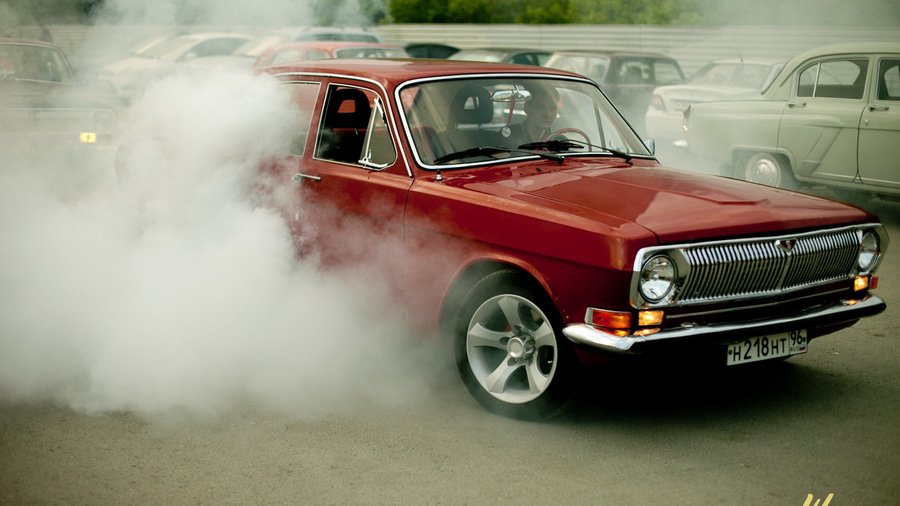
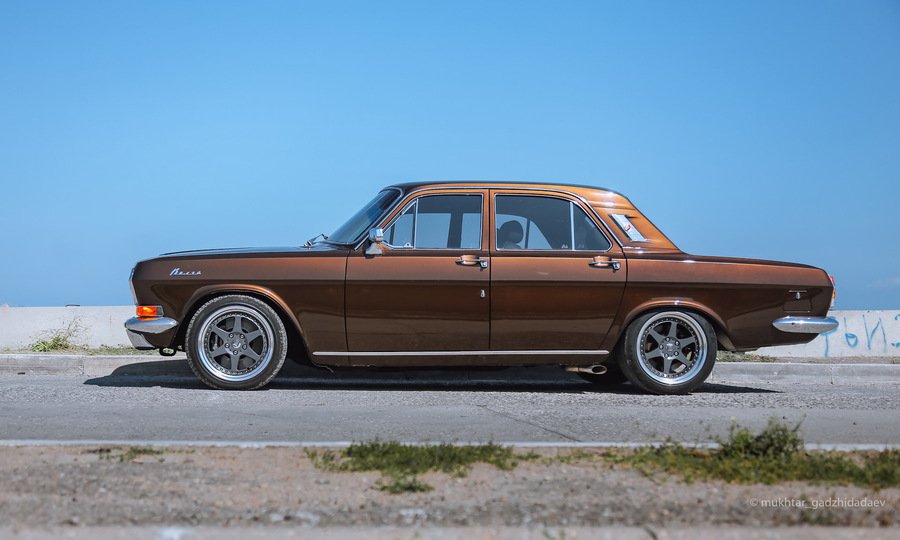
The state was the first customer for the unusual version of the car. In the late 1950s, the KGB required a vehicle capable of discreetly escorting foreign cars and official motorcades, and if necessary, catching virtually any violator. This is how the legendary GAZ-23 came into existence—an outwardly ordinary twenty-first «Volga,» inside of which was hidden an almost five-liter V8 engine producing about 195 horsepower and an automatic transmission from the executive «Chaika.» Today, similar cars are called sleepers—modest appearance but anything but modest performance. Back then, such vehicles existed under a classification of secrecy. According to various estimates, just over six hundred units were produced, and each one is worth as much as a fine suburban home today.
However, ordinary Soviet drivers never even knew about such cars. Their tuning looked much more modest. In the sixties and seventies, the owner of a «Volga» became a neighborhood hero simply because he managed to get a Sharp or Blaupunkt imported stereo. A wooden steering wheel, auxiliary fog lights, chrome mirrors, stylish hubcaps, and velvet covers—all of this was perceived almost as luxury items. Many parts were brought in by sailors, diplomats, and business travelers. Sometimes, the cost of a single stereo exceeded two or three months' salary for an engineer.
The exported Volga models were a source of particular pride. For instance, cars assembled by the Belgian company Scaldia-Volga. In Europe, Soviet sedans were equipped with diesel engines from Peugeot, Rover, and Perkins. For local buyers, these vehicles were exotic due to the Iron Curtain, and for Soviet collectors today—they are a true rarity. Some cars were even customized by small European bodywork ateliers, so today you can encounter a Volga with a design that never existed in the USSR.
The heyday of tuning arrived in the nineties. Borders opened, Japanese engines appeared in Russian car junkyards, and service owners suddenly discovered that the massive engine bay of the GAZ-24 could accommodate virtually any powerplant. Arguably the most popular engine became the legendary Toyota 2JZ-GTE. Every fan of the movie Fast and Furious knows it—this engine made the Toyota Supra a cultural icon. On a «Volga,» it looked almost sacrilegious, but it drove fantastically. Later, projects emerged using BMW M5 engines, American Chevrolet Small Blocks, modern LS3s, and even V12s from luxury Mercedes models.
It was then that the joke emerged that you could put anything under the hood of a «Volga"—except a second trunk. For many repair shops, these cars became a calling card. They didn’t bring in much profit, but they perfectly demonstrated the workshop’s capabilities. If a mechanic could make Soviet wiring work alongside a Japanese engine and an American automatic transmission, it meant they could be trusted with any modern car.
In the 2000s, the culture of car tuning unexpectedly transformed into an art form. Restomods emerged—cars that looked as if they had just rolled off the lot in 1975, but concealed modern technology inside: ABS, climate control, multimedia systems, electric seat adjustment, and digital dashboards.
However, a completely different trend arose concurrently—the Americanization of the «Volga.» It turned out that the smooth lines of the GAZ-21 fit perfectly within the hot rod aesthetic. In the United States and Europe, the Soviet sedan is perceived not as a symbol of the USSR, but as a very unusual 1950s vehicle. Many Americans even mistake it for an unknown model of Buick or Mercury.
While you won’t often encounter a «Volga» at major custom shows like SEMA, Soviet automobiles appear regularly at European festivals such as Wheels & Waves or various exhibitions in Germany and Finland. Projects featuring Chevrolet LS family engines are particularly valued because they blend a classic aesthetic with modern performance characteristics. The «Volga» has carved out a unique niche in the lowrider world. If the Chevrolet Impala is considered the queen of hydraulic suspension, the GAZ-21 unexpectedly emerged as its Soviet counterpart. Its long fenders, massive body, and abundance of chrome are perfectly suited for cars that literally drop down to the ground with the door sills and then rise up dramatically with the push of a button.
It’s interesting that many notable people have always owned modified «Volgas.» For example, actor Leonid Yarmolnik has collected Soviet automotive classics for many years, and the musician Garik Sukachev also had rare domestic cars in his garage. However, most famous collectors prefer factory authenticity, whereas true custom projects are often built by successful entrepreneurs and auto service owners.
In recent years, the quality and scale of projects have grown so much that some cost more than new Ferraris. It is nearly impossible to build a high-quality restomod for under 10 million rubles today. However, if the vehicle is completely overhauled—with a new chassis, modern suspension, an American V8, an exclusive interior, and a hand-crafted body—the budget easily exceeds 25–30 million. Some workshops honestly admit that the final cost of these machines can reach as high as 40 million rubles.
Modern cars are becoming increasingly similar to one another. Huge screens, identical LED strips, standardized motors. But the «Volga» remains a car with character. It cannot be mistaken for anything else. A long hood, powerful fenders, a massive grille—this is the design of an era when artists, not wind tunnels, designed cars. Tuning the Volga has long stopped being just about making the car faster. It’s an opportunity to take a piece of automotive history and tell its story in your own way. And a good story, as we know, never goes out of style.