Navigation:
1. Concept.
2. Mirror.
3. Within Reason.
4. Beyond Boundaries.
1. Concept
Around two thousand years ago, the Roman encyclopedist Pliny the Elder wrote: «On the far reaches of India, to the east, near the source of the Ganges, lives a tribe of Astomes who have no mouth […] They live only on the breath and smells they draw through their nostrils.» Even for the educated Pliny and Megasthenes, whom he references, distant India seemed so much of another world that the familiar rules of biology did not apply there. Pliny further describes peoples who move on a single large leg and individuals who are born old and die young.Throughout human history, the unknown has given rise to the most bizarre imagery. Where familiar lands ended, the domains of amazing creatures and unexplored tribes began. For Baron Munchausen, flies the size of sheep lived on the Moon, and apples were no smaller than watermelons. But as geographical discoveries replaced myths and science explained more and more phenomena, the boundaries of the unknown moved ever further away. Once, people were interested in what lay beyond the mountains on the horizon; in the 18th century, they gazed at the Moon; and today, science fiction authors send us to other universes and dimensions.But how far can an author’s imagination go? Can they completely abandon the familiar laws of biology, sociology, physics, and even logic? It is not very difficult to invent a planet where time flows backward and sentient beings lack consciousness. It is far more difficult to imagine how daily life is structured there. Can its inhabitants remember the past, build cities, or create civilizations? Even in the most unusual worlds, we often encounter familiar patterns: their residents trade, fight, and strive for power. It turns out that the external appearance changes, but not always the fundamental structure of the world. Nevertheless, in Stanisław Lem’s Solaris, humanity encounters an intelligence it cannot comprehend, and in the manga *BLAME! * by Tsutomu Nihei, architecture expands to such massive scales that a person is almost lost amidst the structures.
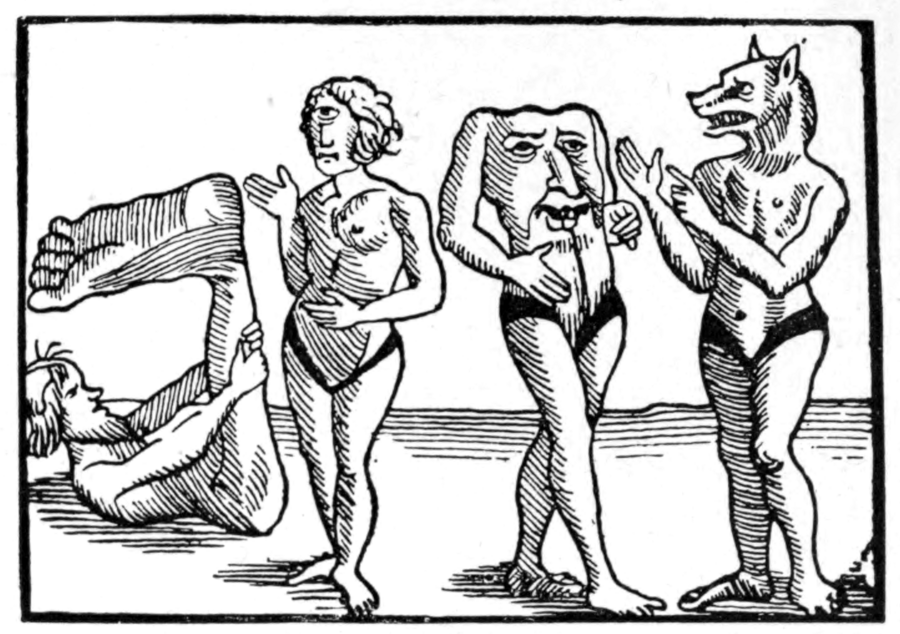
The Story of Geographical Discovery: How the World Became Known by Joseph Jacobs, 1854–1916. New York: D.
In my visual research, I aim to explore how creators construct worlds governed by different laws, and what elements of our own reality persist within them. To achieve this, I am selecting books, films, comics, and video games where unusual conditions are not merely set dressing, but fundamentally define the lives, societies, architecture, and environments of their inhabitants. I am interested in works from various countries and eras, but most critically, those where the structure of an alien world can be observed, rather than simply read about.
The research is divided into three chapters based on the degree of divergence from familiar reality. In the first chapter, «Almost Like Ours, ” I examine worlds where a single element has been altered: the overpopulated cities of „Green Slent, ” the social order of „Kin-dza-dza!“, and the Zones from „Roadside Picnic“ and „Stalker.“ The second chapter, „Distant Worlds, ” will focus on planets and civilizations whose inherent nature and biology dictate a distinct way of life: Dune, The Left Hand of Darkness, Wild Planet, and Wangers. Finally, the third chapter, „Completely Different, ” is dedicated to worlds where space, consciousness, and the very concept of life are called into question: Flatland, Solaris, *BLAME! *, and False Blindness.
The core of the research will be a comparative analysis of imagery: landscapes, architecture, inhabitants, technology, and everyday objects. I will observe how changes in the world’s laws are reflected in its visual form and which familiar forms the creators choose to retain. Literary source material will help clarify the established rules, while adaptations and illustrations will allow me to see their interpretation. I will utilize interviews with authors and existing science fiction studies to understand the underlying intent and historical context, ensuring that this does not substitute for the visual analysis with mere plot summary.
The main question of this research is how far human imagination can deviate from familiar laws while retaining the capacity to conceptualize and understand the created world. I will compare the works based on which laws have been altered, how understandable the world is, whether it is hostile to humans, and whether humans still have a place within it. My hypothesis is that the further a world drifts from our laws, the more astonishing it becomes, but the less genuinely frightening it is. Perhaps the scariest world is not the one where everything is completely alien, but the one where only one rule has changed, while everything else remains familiar.
Camille Flammarion’s L’atmosphère: météorologie populaire (Paris: Hachette, 1888), p. 163
2. Mirror.
In this chapter, we explore worlds that are still easy to recognize. Ordinary people live here; familiar cities, nations, and social structures exist. Yet, changing just one condition can cause this familiar reality to take on an entirely different form.
In 1966, Harry Harrison wrote the novel *Push! Push! *, depicting a New York City at the end of the 20th century suffering from overpopulation and resource scarcity. There are no aliens, bizarre laws of physics, or fantastic technologies here. It is the same city, but there are simply too many people in it. The streets are filled with crowds, housing has become a luxury, and familiar foods have become unaffordable for the majority of the population.
Soylent Green: feature film / dir. R. Fleischer; script by S. R. Greenberg; cinematographer R. H. Klein. — USA: Metro-Goldwyn-Mayer, 1973.
In 1973, a film titled «The Green Sludge» was released, based on the novel, giving Harrison’s world a visible embodiment. People sleep on stair landings, enormous queues form for groceries, and the city drowns in a dirty-yellow smog. However, the film adds another horrifying detail to the story: the food product consumed by the population is made from human remains. This detail was absent in the original novel.
Soylent Green: feature film / directed by R. Fleischer; screenplay by S. R. Greenberg; cinematography by R. H. Klein. — USA: Metro-Goldwyn-Mayer, 1973.
John Brunner examines a similar problem in his 1968 novel, All the World’s a Stage. While Harrison primarily depicts a physical scarcity of space, Brunner explores how overpopulation transforms society, politics, and daily life. In both cases, the authors did not need to invent new laws of nature to create a dystopian future—it was enough to push existing problems to their extremes.
In the film «Kin-dza-dza!», two Soviet citizens find themselves on the distant planet Pluk. There are spaceships, advanced technology, and intelligent inhabitants, yet the society operates under utterly absurd rules. People are divided into chatlans and patsakov, social status is determined partly by the color of one’s trousers, and ordinary Earth matches turn out to be an extremely valuable commodity.
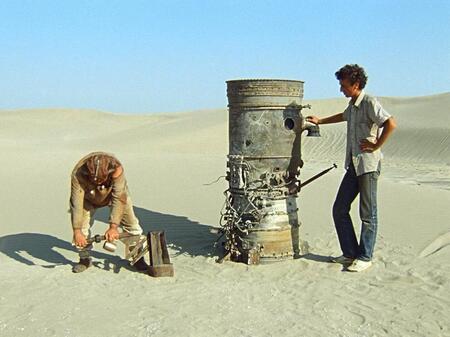
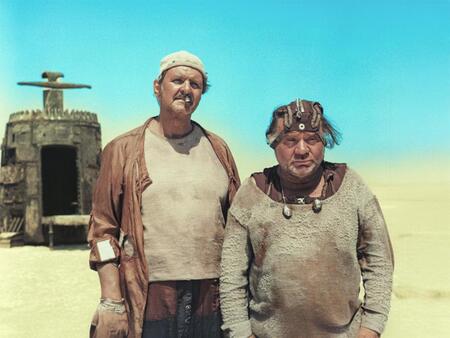
Kinzha-dza! : feature film / Dir. G. Daneliy; Screenplay by G. Daneliy, R. Gabriadze; Cinematographer P. Lebeshev. — USSR: Mosfilm, 1986.
What is most interesting is that beneath all this absurdity lie very familiar human dynamics: inequality, greed, the pursuit of power, and the desire to humiliate those lower on the social ladder. Even Pluke’s architecture and technology look less extraterrestrial and more ancient and worn out, as if a civilization learned to travel between the stars but never managed to solve its own social problems.
Unlike the worlds of Harrison and Brunner, what has changed here are not so much the living conditions as the rules by which people judge one another. And although Pluke’s societal norms seem utterly ridiculous to us, the relationships among its inhabitants are frighteningly familiar.
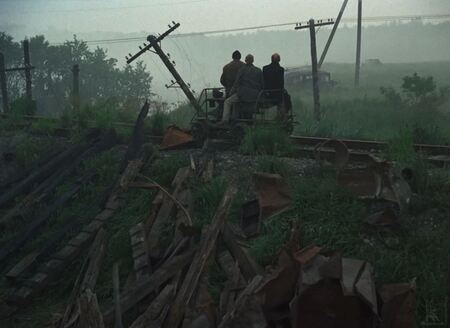
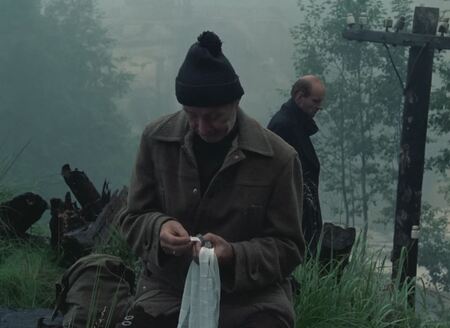
Stalker: A Film / Dir. A. Tarkovsky; Screenplay by A. Strugatsky, B. Strugatsky; Cinematography by A. Knyazhinsky. — USSR: Mosfilm, 1979.
In the novella «Roadside Picnic» by the Strugatsky brothers, humanity confronts the consequences of the aliens' visit to Earth. After their departure, the Zones remain—territories filled with enigmatic objects and dangerous phenomena. However, Earth itself has not changed: ordinary human life continues beyond the Zones.
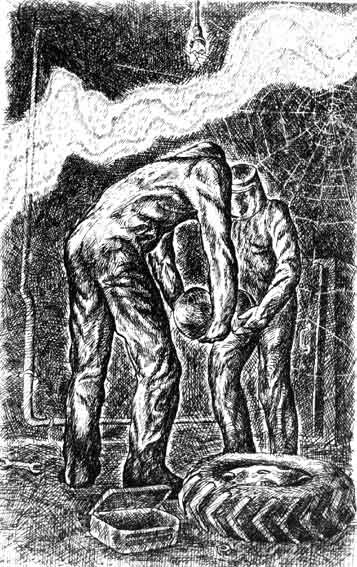
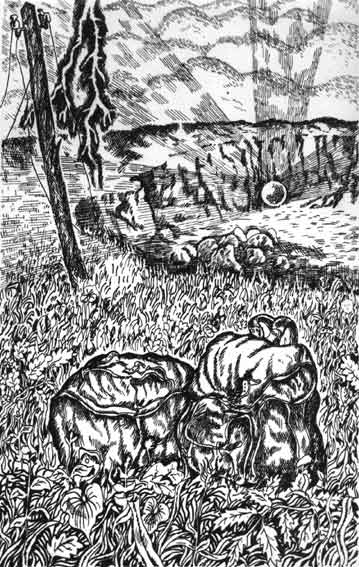
Strugatsky A. N., Strugatsky B. N. Picnic on the Shoulder: Novella // Aurora. — 1972. — No. 7–10. Unpublished Illustrations.
In Andrei Tarkovsky’s film Stalker, the Zone takes on a completely different appearance. Instead of an obviously fantastical space, we see abandoned buildings, flooded interiors, and overgrown industrial structures. Danger here is nearly impossible to spot, and therefore, even the most ordinary landscape begins to evoke anxiety.
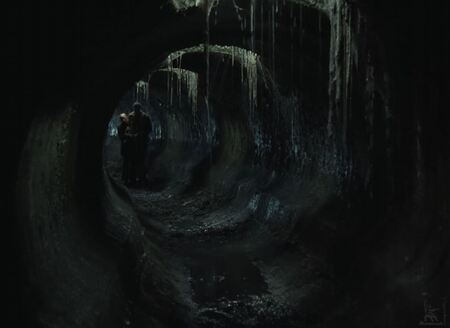
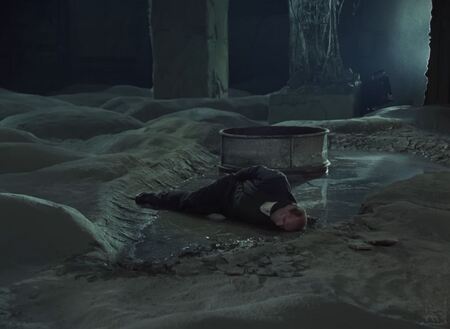
Stalker: Feature Film / Dir. Andrei Tarkovsky; Screenplay by Arkady Strugatsky, Boris Strugatsky; Cinematography by Andrei Knyazhinsky. — USSR: Mosfilm, 1979.
Of course, the list of such worlds is not limited to the examples provided. In «The Human Child, ” humanity loses the ability to reproduce; in „The Day of the Triffids, ” the established order collapses after a mass blindness; and in „Gattaca, ” genetic development leads to the emergence of a new social hierarchy. In Half-Life 2, familiar Eastern European cities fall under the control of alien invaders, and in Death Stranding, even a simple rainstorm becomes lethally dangerous.
Children of Men: Feature Film / Dir. Alfonso Cuarón; Screenplay by Alfonso Cuarón — UK, USA, Japan: Universal Pictures, Strike Entertainment, 2006.
The Day of the Triffids (1962) // The Encyclopedia of Fantastic Film and Television.
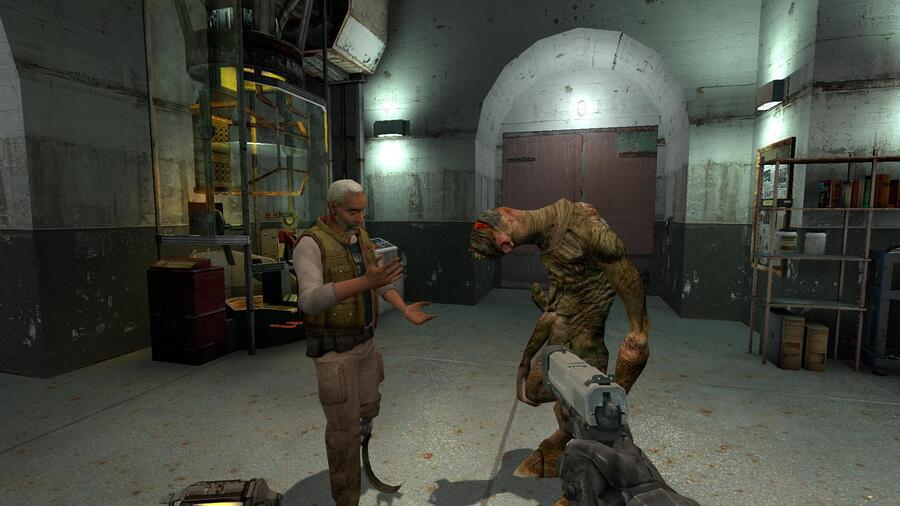
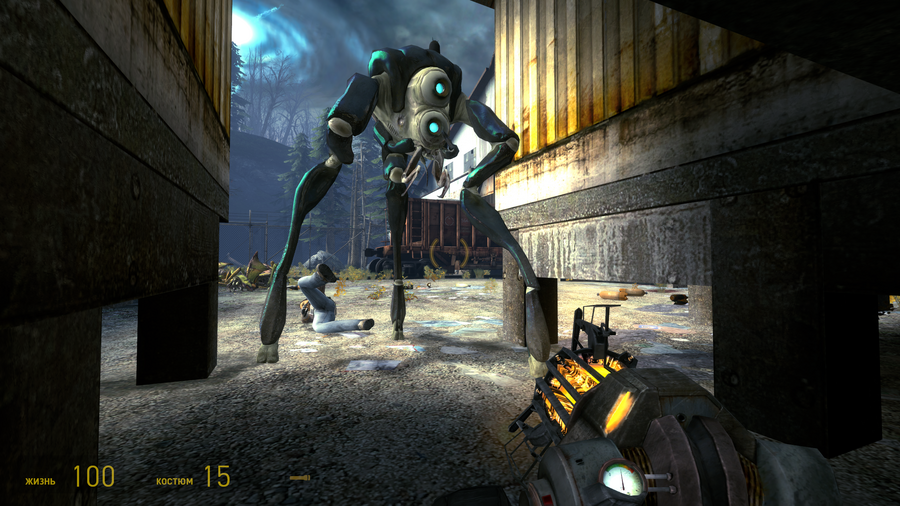
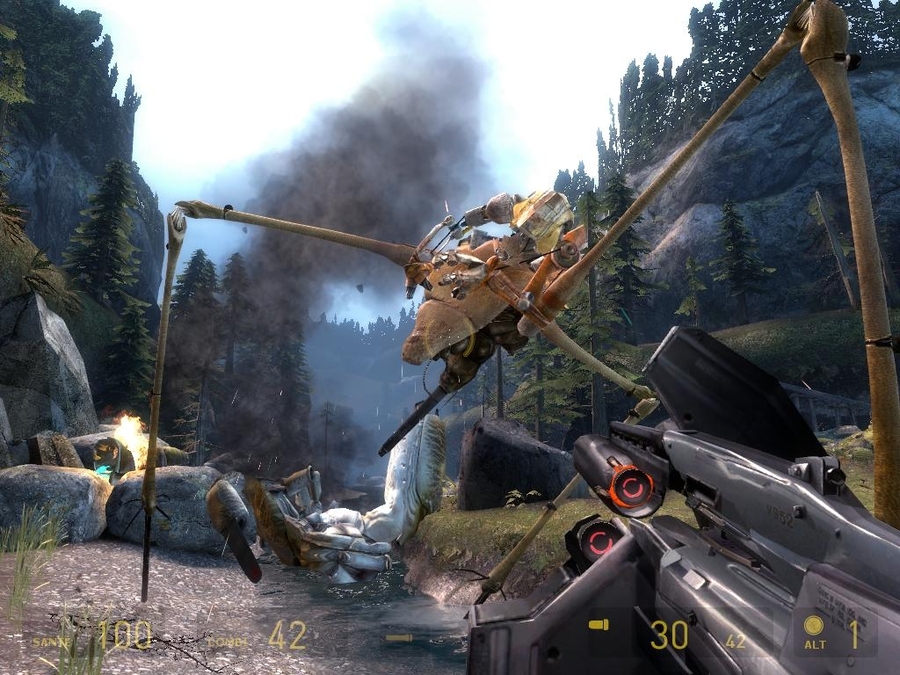
Half-Life 2 [Electronic Resource]: video game / developed and published by Valve. — USA: Valve, 2004.
All these works share one common feature: their creators did not have to invent an entirely new universe. It was enough to alter one or several conditions so that familiar cities, nature, and society began to operate under different rules. Moreover, the more the surrounding world resembles our own, the easier it is to imagine oneself in the place of its inhabitants. Perhaps this is why such worlds are particularly unsettling—we recognize our own reality within them and understand how little it takes for it to become alien.
3. Within reason.
But what if we leave Earth and venture into worlds where humanity has never lived? Worlds where endless deserts stretch out instead of familiar forests, and inhabitants are forced to adapt to entirely different conditions of existence. At first glance, such planets might seem alien and incomprehensible, yet upon closer inspection, a quite familiar logic emerges in their structure. After all, even the most unusual form of life must somehow derive energy, reproduce, and interact with its environment, and a civilization must adapt to the conditions under which it arose.
Dune: Feature Film / Dir. Denis Villeneuve. — USA: Warner Bros. Pictures, Legendary Pictures, 2021.