Concept
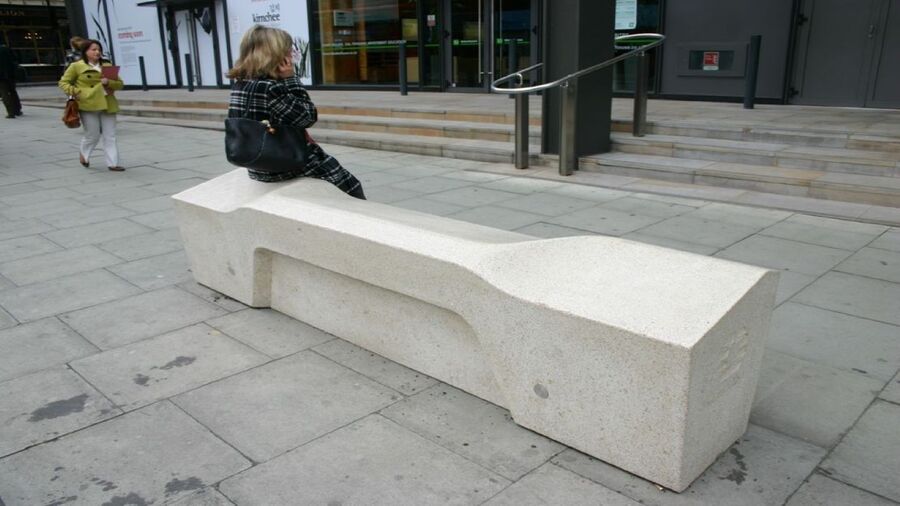
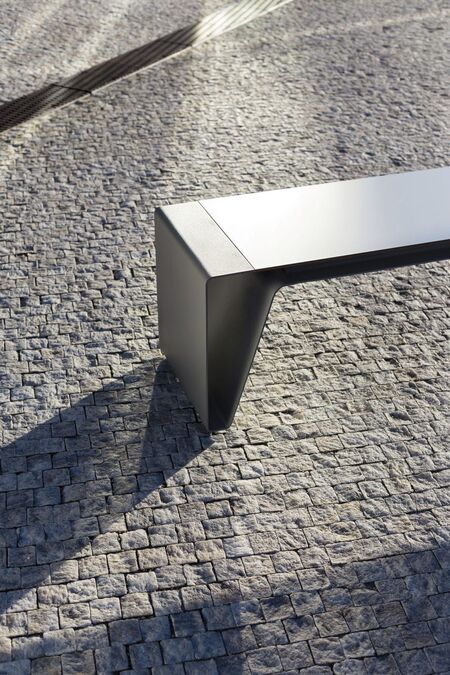
Camden Bench image by The wub
Initially, urban furniture was conceived as a symbol of hospitality. The idea was simple: every passerby could sit down, rest, and feel at home in the city. But today, comfort has become selective. Behind aesthetic minimalism and a commitment to cleanliness, another objective is often hidden: object design is now literally dictating the rules, limiting the duration of stay and excluding those the city wishes to see as «undesirable» guests.
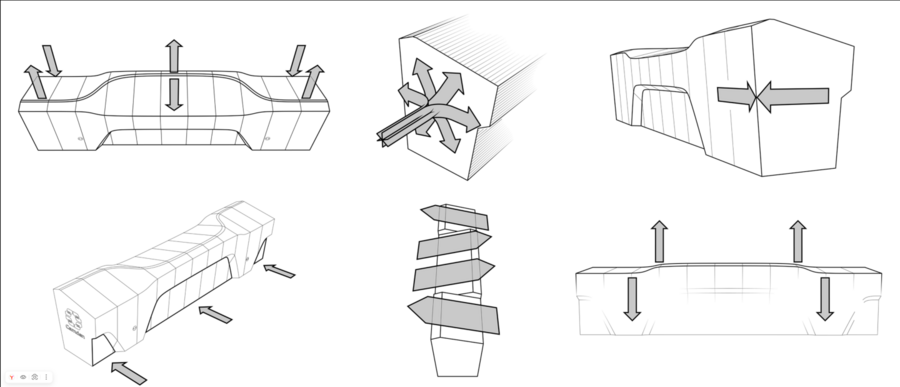
The Camden bench, first installed in London in 2009. Schematic
In this work, I explore the phenomenon of «hostile architecture» through the lens of object design and the urban environment. I want to understand how everyday items—benches, ventilation grilles, parapets, or public restrooms—are transformed into instruments of social control. I am trying to trace the visual conflict: where does the aesthetics of the sterile city end, and hidden aggression begin in its details.
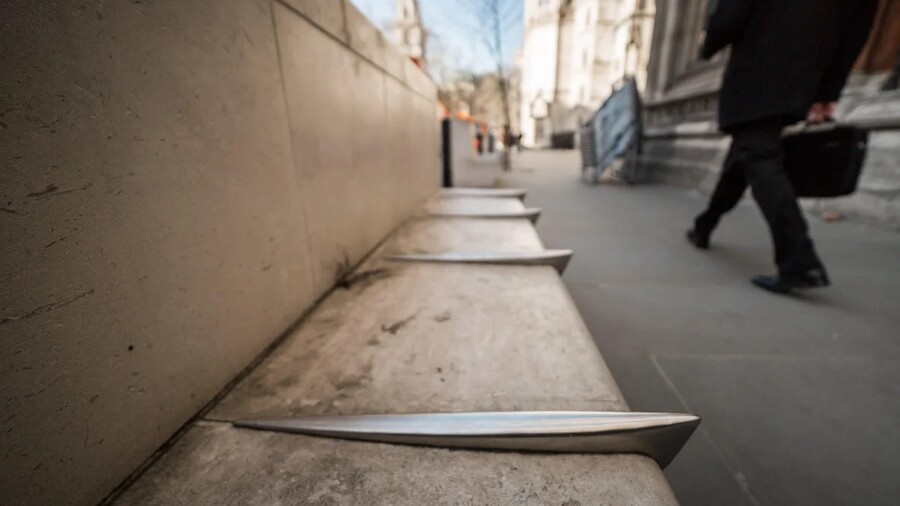
Paris, France — Metal spikes on the bench are designed to deter skateboarders. Guy Corbishley/Alamy Live News
In my work, I draw upon urban sociology and research in defensive design. I am not interested in simply listing examples of street restrictions—I want to analyze them as a unified visual system. It is crucial to understand how design masks discrimination as aesthetics and why we are willing to sacrifice urban ergonomics for its visual sterility.
Research Question
London, United Kingdom — Crisis UK, a charity for homeless people, photographed this hostile architecture outside a casino on Wardour Street, in the capital’s busy Soho district. Jeff Hubbard for Crisis UK
How does the design of objects and urban environments—through form, materials, and even tactile constraints—transform public spaces into zones of control, all while being masked by aesthetics and comfort?
Research Hypothesis
Paris, France — Besides benches, hostile architecture can take other forms—like this window sill equipped with anti-loitering spikes, which prevents people from perching on the concrete ledge. Cara Chellew
Aggressive design is likely a direct consequence of urban environments becoming overly commercial and «sterile.» Street furniture is no longer evaluated based on how comfortable it is for people, but rather on how effectively it protects businesses or maintains an aesthetically pleasing image for tourists. To displace teens or the homeless from the city center, designers intentionally undermine the ergonomics of objects. Meanwhile, the violence itself is concealed behind a stylish, modern facade. The average pedestrian doesn’t immediately grasp the situation and simply loses the ability to rest comfortably without realizing it.
The Principle of Rubrication
- Theoretical Framework of the Study 1.1 Cozy with Caveats: How Commercialization Divides City Dwellers into «Insiders» and «Undesirables.» 1.2 Ergonomics of Exclusion: Why an Object’s Form Begins to Work Against the Human Body. 1.3 Invisibility as a Goal: How the City’s Sterile Facade Masks Social Problems.
- Research Methodology 2.1 Navigation: Analyzing Geometry, Inclination Angles, and Physical Dividers as Barriers to the Body. 2.2 Pattern Recognition: How the Environment, Through Discomfort, Light, and Sound, Displaces Specific Social Groups. 2.3 Concealing Contradictions: How Minimalism, Art Forms, and the Rhetoric of «Beautification» Hide the Object’s Aggression.
- Object Analysis by Paradigm 3.1 Case Study Breakdown: 4 Landmark Cases of Hostile Design.
Theoretical Framework of the Research
How commercialization divides citizens into «us» and «unwanted»
Miles Brueton House.
Attempts to control human behavior through architecture have always existed. This is not a new invention; it begins as early as with the iron spikes at Miles Brueton’s home in Charleston in 1822 and continues with Robert Moses' low bridges on Long Island, which effectively cut low-income families off from parks. Today, this logic has permeated everyday design. Urban space increasingly resembles a shopping mall: comfort here is a privilege available only to those who can afford it—paying customers and tourists.
Paris, France — They also prevent people from using it for extended periods of rest. Guy Corbishley/Alamy Live News
The urban environment ceases to be neutral. As Daria Baibakova, director of the Moscow branch of «Nochlezhka,» states, the pursuit of a festive and tourist-friendly facade for the metropolis turns any presence of vulnerable groups into a kind of «visual flaw.» Ultimately, design receives a hidden objective: to create «coziness with caveats.» This is when drinking coffee for ten minutes is perfectly comfortable, but lying down or simply lingering without a specific purpose becomes physically impossible.
Why Subject Form Begins to Work Against the Human Body
London, United Kingdom — Photo of a sloped bench design captured by Cara Chellew, a Toronto-based researcher who focuses on the design, regulation, and politics of public spaces. She compiles photographs of defensive architecture on her website #defensiveTO. Cara Chellew
Classical ergonomics works for the human: it considers anatomical features to relieve strain on the spine and muscles. Hostile design does the exact opposite. It leverages the same knowledge of the body’s structure to deliberately administer discomfort. Overly narrow seats, slick metal, rigid armrests amidst benches, or concrete boulders under overpasses—all of this is designed to prevent you from relaxing.
Philadelphia, United States — Design firm Veyko created these benches for the Southeastern Pennsylvania Transportation Authority’s train stations. The wire-based seats are said to be impervious to vandalism and other types of damage—though they also look hard to sit on. Todd Mason for Halkin Mason Photography
The trap here is that a physical barrier cannot be configured selectively. As sociologist Pyotr Ivanov notes, hostile design intended to exclude a specific group of people ends up displacing everyone from the city. When benches were removed in Treviso and Venice to combat migrants and the homeless, and when the fountain in front of the Kursky Railway Station in Moscow was surrounded by a high fence, all city dwellers—without exception—stopped relaxing in those places.
How a city’s sterile façade masks social problems
London, United Kingdom — Hostile architecture is a form of urban design intended to discourage people from lingering in public spaces. The anti-homeless spikes here, for example, were installed to deter beggars and rough sleepers. amer ghazzal/Alamy Live News
The philosophy of technology, Robert Rosenberger, correctly noted: hostile design does not solve social problems—it merely hides them from view. Putting spikes on ventilation grates in the Presnensky District or driving metal hooks into parapets is neither help for the homeless nor the creation of support infrastructure. It is simply a wasteful expenditure of budget in an attempt to «clean up» the city’s appearance.
Boston, United States — Perhaps the antithesis of hostile architecture, this solar-powered phone charging bench was created by the US firm Soofa. Launched in Boston in 2014, Soofa benches are now found in more than 100 cities. This new technology changes how people spend time in public areas and encourages lingering. Soofa, Inc