Navigation
- Concept
- How the comic interacts with the reader’s psyche
- Metaphor of a state through comic structure
- Conveying emotion through paneling, perspective, and gaze
- Color as a symptom
- Conclusion
- Sources
Research Concept
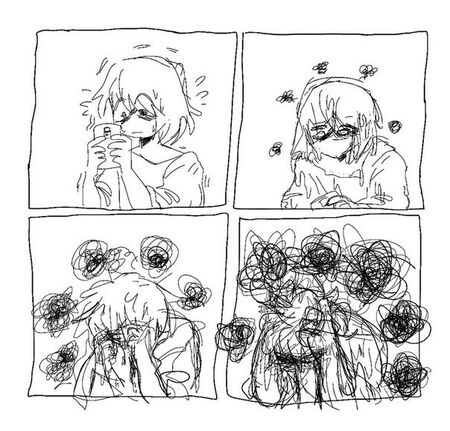
A comic book is a convergence of words and images, and to evoke specific emotions in readers or convey a story accurately—so that readers connect with it—authors maximize the visual techniques of the comic to transmit the characters' psychological state. This is because writing it out or simply showing a character’s facial expression is sometimes insufficient. But why? Because in order to fully convey the subjective experience of a person undergoing a crisis—who has experienced trauma or is in emotional instability—the general atmosphere and structure of the comic must reveal these feelings through its sequence and fragmentation.
In the contemporary landscape, comics have long transcended the realm of pure entertainment, evolving into a sophisticated medium. Armed with a theoretical foundation in comics studies—informed by the works of Scott McCloud, Will Eisner, and Tor House—I am eager to delve deeper into how the mechanism of empathy functions within the reader toward the characters. Specifically, I want to examine how comic artists manipulate our attention and reveal the inner depth of their characters through the strategic use of panels, gutters, color, and abstraction.
I love visual representations of emotion, whether in comics or animation, because they hyperboleize them far more intensely than films. Watching these works, one unconsciously recognizes themselves and their own feelings in the characters' emotions. Furthermore, I am interested in psychology, the human mind, and empathy—so I wanted to combine these two themes into one research project.
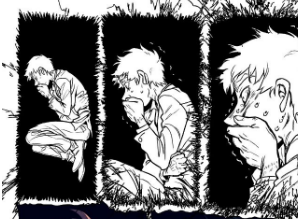
What is the main goal of my research? : It is to discover how structural and visual elements of the comic—the grid, perspective, color, metaphor—can be employed to authentically and emotionally engage the reader in representing various mental states, from anxiety and depression to happiness and elation.The importance for comics lies in creating a practical guide for emerging creators and demonstrating how their predecessors achieved this. I intend to analyze each element of comic structure and how it can convey a character’s state, providing concrete visual examples from existing comics. This will illustrate how the reader, through embodied and Gestalt perception, experiences that state firsthand. The research proves that disrupting the grid, employing Dutch angles, or using non-sequential editing are precise tools for psychological modulation, allowing the comic to be a profound form of literary work.
How does the comic interact with the reader’s psyche?
Before we delve into analyzing the characters' emotional states in the comic, we first need to understand what techniques compel readers to become immersed in the comic and hold our attention. We will examine this using the theories of Scott McCloud and others.
Gutters
What mechanism triggers empathy in comic readers? It is initiated by «filling in the blanks» based on McCloud’s Gestalt theory.McCloud posits that there is a blank space between two adjacent panels in a comic, which he calls the «gutter» (literally translating as a trough or gap), or more simply, the empty space between two sequential frames. The reader does not see continuous action, as in animation, but the human brain fills in the fragmented visual information into a cohesive sequence. This very action transforms the reader into a participant in the narrative, helping them fully immerse themselves in what is happening. The individual must mobilize their own life experience and emotional memory to «construct» what is not drawn between the panels.
Completion of Scott McCloud’s story in «Understanding Comics, ” Chapter 1. (1993)
This mechanism directly elicits empathy. To analyze this with a specific example, consider a frame featuring a screaming girl and a gun: the first frame shows a hand holding a gun and a sound effect, while the second shows the screaming girl; the action frame between them is intentionally omitted. As the reader transitions across the gutter, they subconsciously «hear» the sound of the gunshot and feel the horror alongside the character.
«Mouse» Art Spiegelman (1986)
In Art Spiegelman’s comic «Maus,» the transitions between timelines—past and present, camp and everyday life—employ this precise mechanism: when the reader moves between panels from different eras, they are forced to construct the connection independently. This act of splicing mimics the function of traumatic memory—the past never disappears; it intrudes upon the present through fractures.
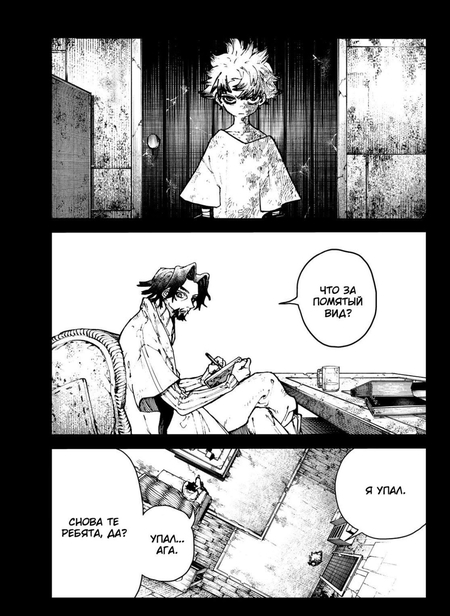
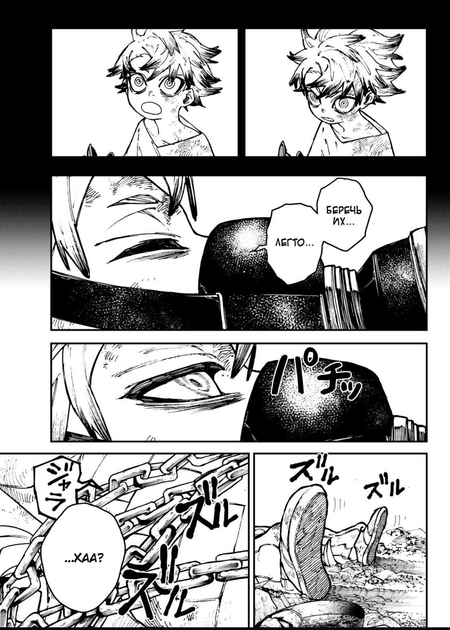
Visualization of the «Gachiakuta» Flashback by Kei Uran (2022).
Another example of using gutters as a narrative device is the visualization of flashbacks (characters' memories). Comic book artists and manga creators often render this empty space black to represent memories, while the frames themselves are toned down so the reader instinctively understands that the narrative is set in the past and can connect more deeply with the character.
Six Types of Transitions
Another significant visual technique in the complex is six types of scene transitions:
- moment-to-moment
- action-to-action
- subject-to-subject
- scene-to-scene
- aspect-to-aspect
- non-sequitur (disjointed transition).Each transition type creates a different sense of pacing and, consequently, stimulates distinct psychological states.
Scott McCloud, Understanding Comics (1993)
If we analyze all types of transitions as a method for depicting a character’s psychological state, we find:
- Moment-to-moment transition—this compresses time to the extreme, suitable for conveying anxiety, obsessive states, or instantaneous confusion.
- Action-to-action transition—this is the most common type, maintaining narrative continuity, but accelerating the tempo can create a sense of loss of control.
- Non-sequitur—the most radical tool for dissociation and traumatic experience: the connection between shots is completely severed; the reader cannot establish a logic and experiences the same disorientation and loss of control as the character.
- Aspect-to-aspect transition—a key tool for conveying a dissociative state: it does not advance the plot but scans different fragments of the same scene (e.g., a cup, a curtain, a hand), imitating the fixation and detachment of a traumatized person’s perception.
«Asterios Polyp» by David Mazurek (2009)
In David Mazukel’s «Asterios Polyp,» transitions between aspects are actively used to create narrative pauses, compelling the reader to pause and feel the character’s reflections on life, death, and dualism.
Embodied cognition
Embodied cognition provides a physiological basis for «empathy» in comics. The central thesis of this theory is that cognition is not a purely abstract activity of the brain but is deeply rooted in bodily sensory and motor experience. When reading a comic, the panel composition, direction of gaze, and visual pressure can unconsciously trigger bodily simulations in the reader.
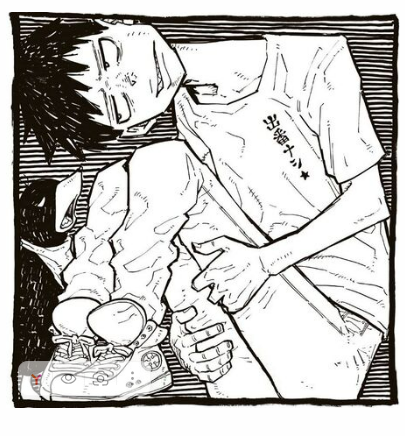
Mike Borkent in «Comics and Cognition» systematically develops this viewpoint: cognitive processes are «embodied,» knowledge is structured in long-term memory, and it is activated through perception, mental modeling, and blending. Many layers of reader comprehension occur subconsciously but manifest in the conscious experience of multimodal text. When a reader sees densely packed panels on a page, their field of vision constricts, and their breathing unconsciously quickens—this is claustrophobia induced by the visual composition. When the panels suddenly expand, a large empty space appears, and the reader’s body relaxes in contrast, evoking a feeling of release. A comparison can be made between any two pages from the «Daredevil» comic featuring suffocatingly close panels, which show all tension and calm, and the detached pages of «Asterios Polyp.» This also underscores the significance of comic book structure on reader perception.
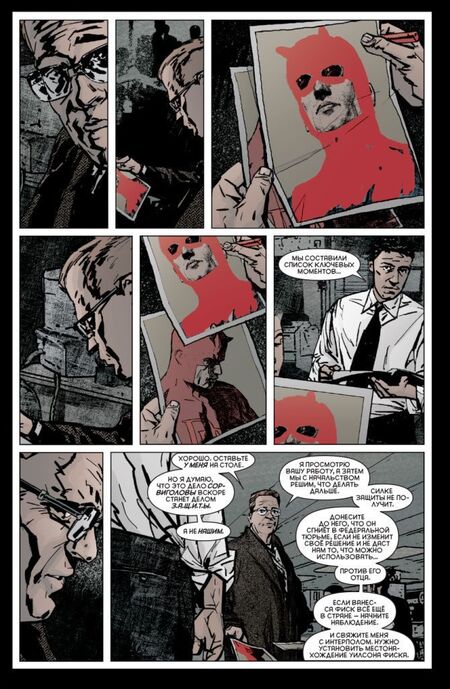
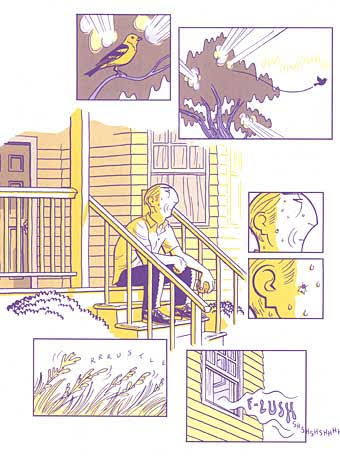
«Sorvigolova» by Brian Michael Bendis (1964) and «Asterios Polyp» by David Mazur (2009)
Gestalt Principles: Perception and Distortion
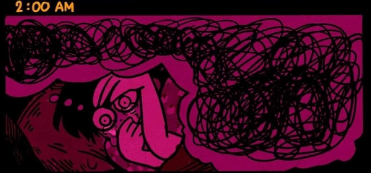
Gestalt principles provide the psychological framework for the «organization of perception» in comics. Key principles include figure-ground relationship, proximity (perspective), closure, and good form. Research shows that in comics, the figure-ground relationship is used to separate characters and scenes, proximity is used to group information, and closure is used to connect disparate panels into a cohesive perception of space and time.
The strength of these principles lies in the fact that when they are violated, a psychological disorder is conveyed. For example, when the boundary between the figure and the background blurs (for instance, when a character merges with a wall or dissolves into shadow), the reader loses a point of visual reference, experiencing the same sense of personal dissolution as the character.