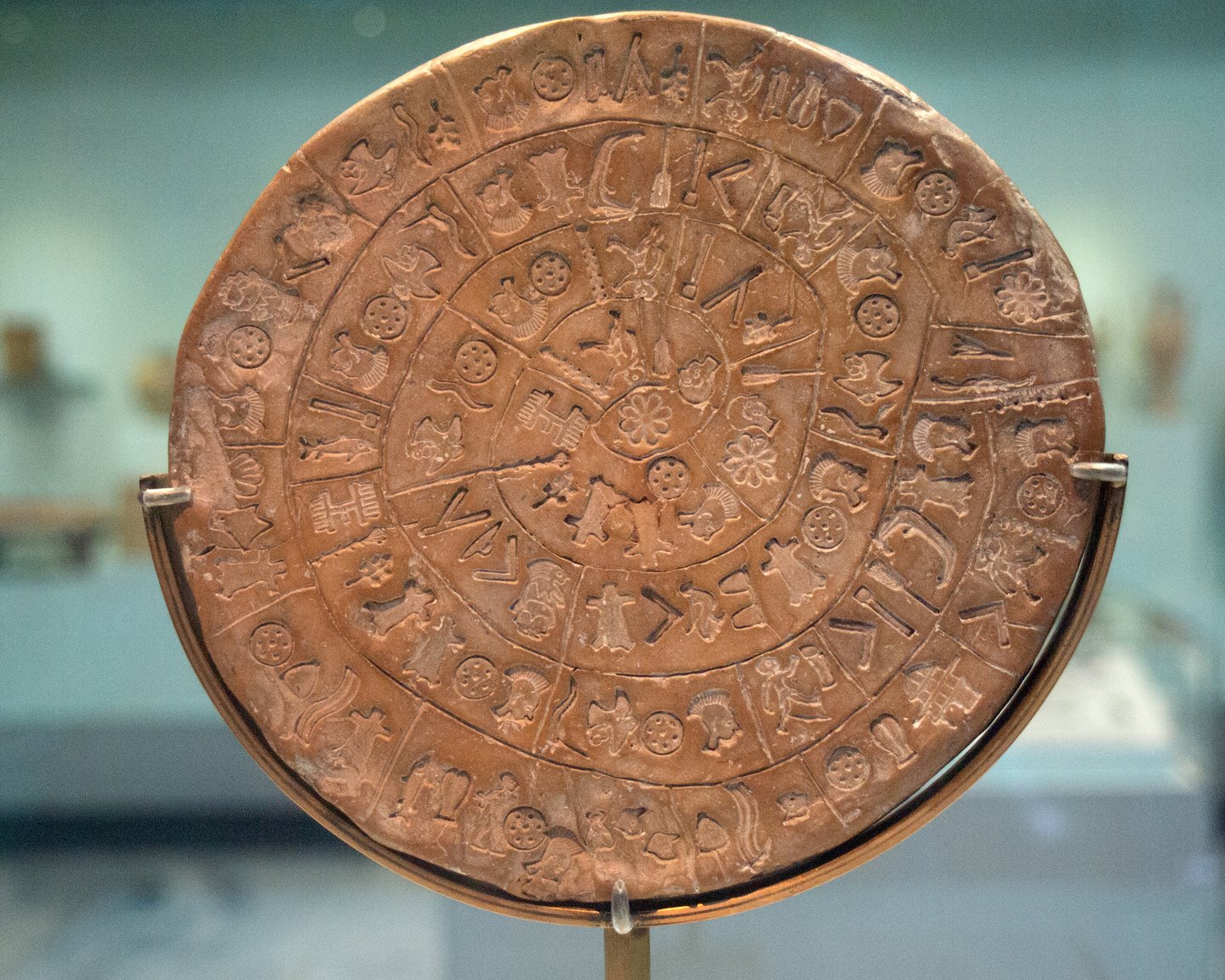
Визуальные мотивы в минойском искусстве
NAVIGATION:
1) Introduction
1.1 Concept
1.2 Relevance of the Study
1.3 Material Selection Principle
1.4 Hypothesis
2) Visual Motifs
2.1 Mystery of the Cretan Bull
2.2 The Human Figure
2.3 Natural Patterns
2.4 Dualistic Motifs
3) Conclusion
4) Sources
1) INTRODUCTION
Concept
The Minoan civilization is one of the oldest. The age of the first settlements on Crete is comparable to the late Neolithic period in Europe and the Old Kingdom period in Egypt. However, the visual language of Cretan culture remains undeciphered to this day. This is primarily because their writing system (Linear A; Phaistos Disk) is barely deciphered: archaeologists have not found an equivalent of the Rosetta Stone or similar tablets on Crete or neighboring islands. Therefore, the interpretation of most subjects in Minoan art remains a subject of debate for scholars for decades. In my research, I would like to provide an overview of the visual motifs of Cretan culture and their possible interpretation.
Minoan Culture—an ancient example of how a strong image can function in place of words, becoming a self-sufficient statement. Because the written sources remain largely undeciphered, we must study Minoan art relying solely on its visual language. By exploring Minoan civilization, we learn to understand a culture for which we do not have accessible text.
Material Selection Principle
In my research, I identified four key groups of visual motifs and based my classification on them. Within each section, I aimed to include research material so that every visual narrative was presented from multiple perspectives. For example, the section on the bull motif in Crete presents not only the characteristics of the taurokathapsia depicted in frescoes and sculpture, but also the mechanics of the athletic exercise a gymnast might perform while executing the ceremonial ritual.In my work, I utilized established bibliography: research by archaeologist N. Merinatos, books by B. R. Wippe and Paola Volkova, and articles from university portals were also used. The selection of visual sources is broad: from online gallery websites to the personal photo archives of the Archaeological Museum in Heraklion.
Hypothesis
In the Minoan culture, there are several principal visual motifs: the bull, the priestess, botanical ornaments, the octopus, and the labyrinth. The bull represents a primal force, and interactions with it suggest an attempt to establish dominance over the elemental forces. The priestess embodies the female cult within religion, an influence reflected not only in rituals but also in the culture of dress. The botanical ornaments demonstrate that Minoan art is naturalistic; the masters derived forms from nature when creating ceramics. The octopus serves as a guiding deity—a symbol of two vital principles. The labyrinth is the chief symbol of dualism; through it, themes of death and subsequent rebirth are revealed.We are not asserting that all Minoans thought this way. We are merely suggesting that this was the structure of their visual language. This can be verified by examining whether motifs recur across different art forms: ceramics, sculpture, fresco, and so on.
2) VISUAL MOTIFS
The Mystery of the Cretan Bull
According to historian Paola Volkova, the bull is the principal deity of Crete. The main cultural motifs of Minoan civilization are associated with this animal: palaces and sanctuaries were adorned with bull horns, and games involving the bull were a popular subject in sculpture and frescoes. Let us examine the scenes of taurokathapsia more closely.
«Horns of Initiation.» Knossos Palace. c. 1600–1450 BCE.
Initially, bull jumping was a method of hunting the animal. Neolithic and Early Bronze Age people needed to subdue the beast to obtain its meat and wool. However, this hypothesis raises questions. Archaeologist N. Merinatos asks in one of his studies: why was it necessary to engage in such contact with the bull when the goal was to capture or hunt it? Typically, bulls were either caught in nets or driven with spears. On the Katsambas wall, we see not only jumpers tumbling over the horns but also people with piercing weapons. Consequently, we can surmise that for the Minoan culture, hunting the bull held a ceremonial significance. The animal had to be conquered by leaping over it to establish dominance over natural forces.
Pixid with a scene of a bull hunt. Cacambas. c. 1450–1400 BCE
It is interesting that the human figures on the pre-courtside rhytons are disproportionately small compared to the bulls. The sculptor heightens the contrast between humanity and the animal’s elemental power, creating a strong tension within the vessel’s form. This contrast perfectly illustrates the metaphor of the «life force»: the human must literally leap over something immeasurably greater and stronger than them. One wrong move—and the bull will crush the jumper.
Clay pitcher shaped like a bull with acrobats. Kumasa. c. 2000–1900 BCE
In later periods, we can see harnesses and ornamentation on the bull’s head. This suggests that the beast was simultaneously formidable and tamed.
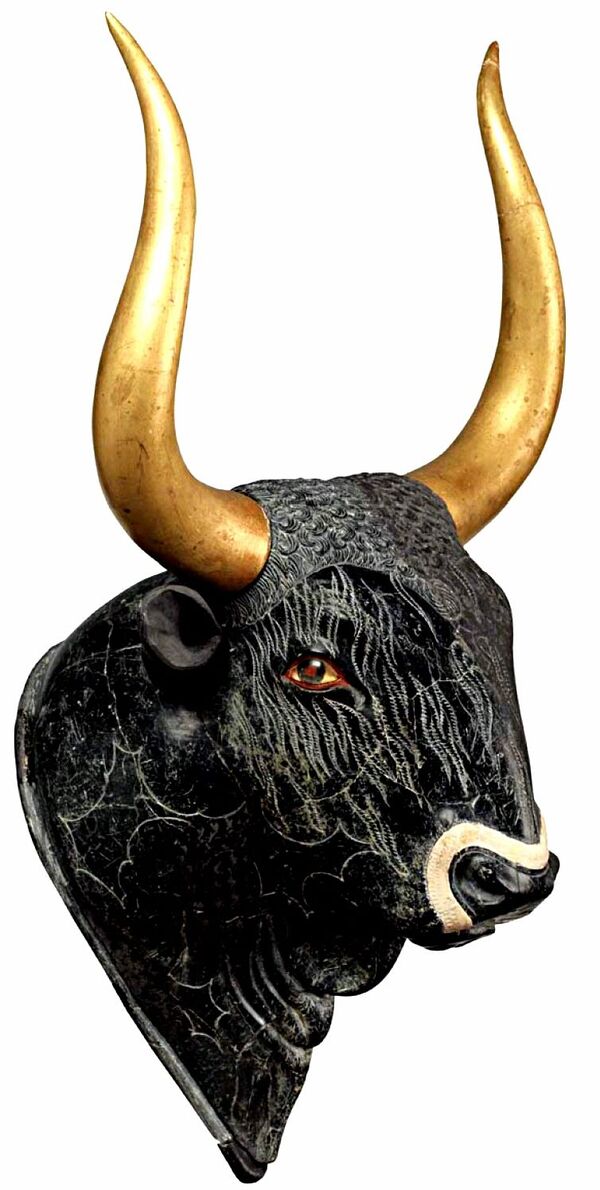
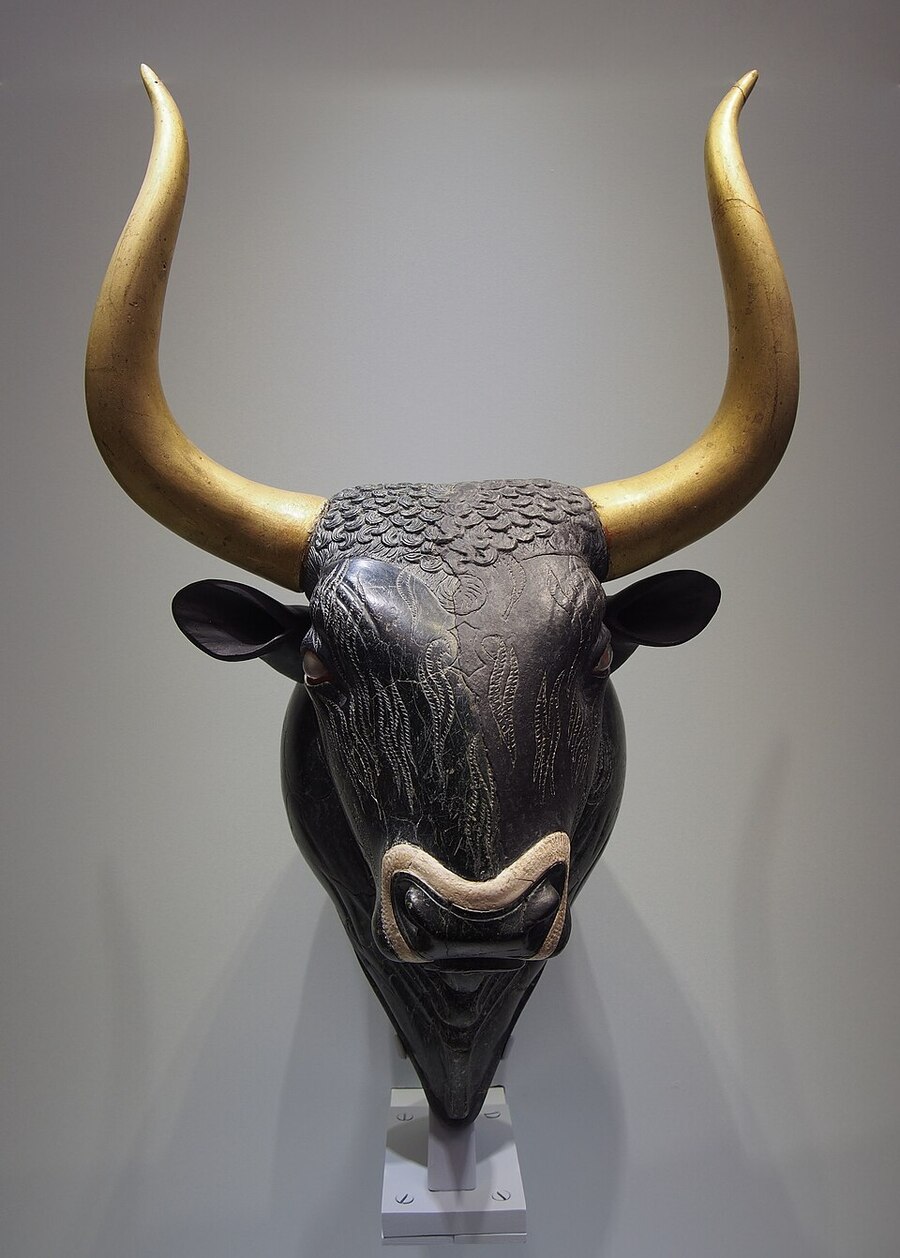
Rhyton in the form of a bull’s head. Little Palace, Knossos. c. 1600–1450 BCE
Now, let’s turn to the Knossos fresco depicting taurokathapsia. The subject of this fresco remains a matter of debate to this day. According to archaeologist Arthur Evans, the fresco portrays a gymnastic feat by a bullfighter: the jumper grabs the horns, somersaults over the bull’s head and neck, and lands on its back. In this interpretation, taurokathapsia represents athletic prowess. But what if it is a scene of celestial performance rather than a sporting competition? J.A. MacGillivray argues this, criticizing Evans for his loose interpretation of the narrative and asserting that such jumps are impossible in reality.
Fresco «Games with the Bull» («Taurokathapsia»). Knossos Palace. Circa 1450–1400 BCE.
Bull Play Scheme (Taurocatapsy). Reconstruction by A. Evans.
In my opinion, such games could have existed because the rhythm of the exercises is entirely possible for a professional acrobat to replicate. However, we also cannot completely abandon the idea that these were divine games involving a heavenly bull. Both interpretations could be woven into the narrative of the fresco.
The Human Form
Every culture possesses its own representation of the human being. Although Crete is geographically close to mainland Greece, the depiction of the human in Minoan culture differs significantly from the classical ideal. When creating figurative sculptures, artists guided themselves by natural forms and motifs. For example, in a small figure of a maiden, the arms visually resemble the torso of a snake. Later, this motif would be expressed in the dance of the snake charmer.
Clay figurines of adorants (praying figures). Piskokefalo. Circa 1650–1500 BCE.
The figures of the adorants are highly expressive; their movements are brimming with energy and life. This raises the question: if their plasticity is filled with inner dynamism, what is the nature of that dynamism? The most important aspect of the figures is not their body, but their gesture. They pray to a primal deity, and their dance is an act of reverence toward a supreme power. The plastic quality of the adorant sculptures is simplified—there is no detailed rendering of the face, and sometimes it is difficult even to determine the supplicant’s gender. However, it is the expressive posture of the arms that brings the image to life.
Clay figurines of adorants (praying figures). Khamaza. c. 1700–1900 BCE
Minoan religion is distinguished by the great emphasis placed on the worship of women—the mother goddess. Female priestesses performed the primary religious rites; it is hypothesized that Cretan families were under the protection of a mother figure. It is impossible to definitively state whether a matriarchy existed in Cretan culture because there is insufficient evidence. However, it can be asserted that women possessed social freedom: they could participate in all ceremonies, appear in public, and pursue professions on par with men.
Sacrificial scene of a bull. Sarcophagus from Agia Triada. Circa 1400–1370 BCE
One can tell about a person through their culture and clothing. Cretan fashion differs significantly from Egyptian and Greek styles. Egypt is characterized by linen sheath dresses, while Greece featured draped peploses or tunics. Women from the island of Crete wore voluminous, ruffled skirts with a cinched waist, paired with fitted tops that exposed their breasts. In this attire, the grandeur of the costume complemented the sensuality of the body and the naturalness of movement. The look was further enhanced by hairstyles featuring curling locks adorned with pearls.