Unidentified Attention: The Jaguar Rebranding Paradox
Table of Contents
1. Introduction
2. How the Image of Jaguar Has Changed
3. Copy Nothing: An Analysis of the Advertising Campaign
4. Violating Expectations as a Psychological Mechanism
5. Attracting Attention or Changing Brand Perception?
6. Conclusion
Introduction
Jaguar. New Visual Identity, 2024.
At the outset of this exploration, I propose we consider this: how frequently is a person exposed to advertising? We encounter advertisements daily, if not hourly. Ad banners and messages surround us everywhere—on social media, in the streets, on buses, in the subway, and even on book pages. Due to this sheer volume of information, a person simply cannot devote attention to every announcement they see, much less remember it. This is precisely why brands and companies seek ways to stand out from the competition, employing diverse strategies, including unconventional solutions and provocations.
Here, a contradiction emerges: capturing the viewer’s attention and conveying a specific advertising message are two different things. A person might remember a striking or unusual presentation but fail to notice which brand was being advertised. The recall of an advertising message depends on the specifics of its content and the context in which the person perceives it [1]. This raises the question: can advertising be considered effective if it attracts attention, yet the viewer fails to understand what product is being advertised?
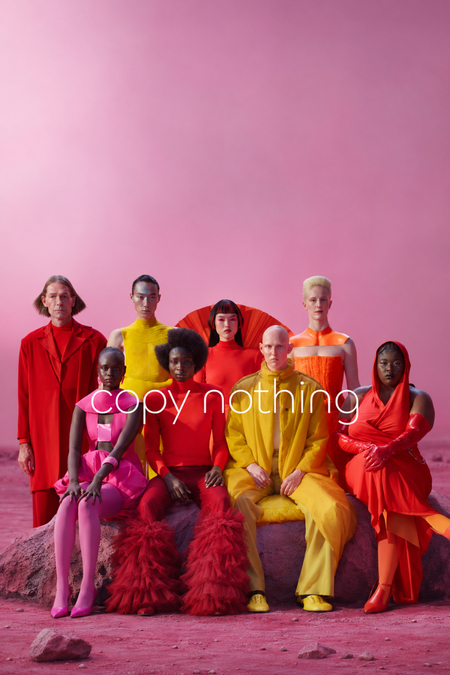
We can see such a contradiction in the rebranding of the British automotive brand Jaguar. In November 2024, the company presented a new visual communication that was very different from its former image. One of the key elements of the update was the «Copy Nothing» commercial, in which viewers saw different people, strange spaces, and ambiguous imagery instead of the familiar cars. At first glance, this kind of advertising is hardly associated with the automotive industry. In an official company statement, Chief Creative Officer Jerry McGovern emphasized: «Our founder, Sir William Lyons, believed that Jaguar should not be a copy of anything» [2].
Jaguar didn’t just try to present a new advertisement; it attempted to change the audience’s perception of the brand itself. But how successful is such an approach from the perspective of perceptual psychology? In my visual study, I aim to understand the psychological mechanisms Jaguar uses to capture attention and how the viewer’s expectations influence the reception of such advertising.
How Has the Jaguar Image Changed
Your Turn Advertising Campaign, 2013
To understand Jaguar’s new advertising campaign, one must first grasp what the brand was like before the 2024 rebranding. In previous Jaguar campaigns, the car itself was typically the central focus. The company strove to present it as something luxurious, prestigious, and sporty. The entire marketing presentation cultivated a specific image of opulence and elegance, with the vehicle serving as a marker of status. After all, Jaguar wasn’t just selling a car; it was selling an image of the person who bought it.
Jaguar’s «British Villains» Advertising Campaign. 2014.
One of the most striking examples of this approach is the British Villains advertising campaign (2014). In this campaign, the brand utilized imagery of British cinematic villains, characterized by their confidence, elegance, and charisma. Jeff Curry, Vice President of Jaguar North America Brand, explained that the campaign was intended to showcase «our perception of British sophistication and charm» [3].
Promotional materials for the Jaguar «British Villains» campaign, featuring British actors. 2014.
It turns out that the former Jaguar advertising did not just promote cars; it also forged specific associations with the brand: luxury, status, sportiness, and British elegance.
Jaguar Type 00: two concept cars in Miami Pink and London Blue. 2024.
As Jaguar prepared to take a new position in the electric vehicle market, the company decided to completely change its communication language so that people would begin perceiving the brand differently. Back in 2021, Jaguar also announced plans to become an all-electric luxury brand, making sustainability a key pillar of its strategy [4].
Jaguar has presented the audience with a completely new visual approach. Where the brand previously relied on the traditional perception of British luxury and exclusivity, it has now begun building associations with abstraction, contemporary art, and unconventionality.
Jaguar’s outdoor advertisement «Copy Nothing» on a Piccadilly digital screen in London.
Thus, Jaguar decided not merely to update individual elements of its corporate identity, but to change the entire approach to visual communication. To understand how this decision works in practice, let us examine the commercial spot, Copy Nothing.
Copy Nothing: Advertising Campaign Analysis
A frame from the Jaguar advertising campaign, «Copy Nothing.»
The commercial begins with the elevator doors opening, and people emerge wearing very bright and unconventional clothing. Throughout the video, the shots change: we see rich, contrasting colors, brushstrokes, unusual spaces, and non-standard compositions. At the end of the video, all the characters gather together, pose, and then exit the frame. After this, the new Jaguar logo [5] appears on the screen.
A frame from the Jaguar advertising campaign, «Copy Nothing.»
If you don’t know in advance which brand is being advertised, I believe it’s nearly impossible to guess that it’s an automotive company’s advertisement. The first associations that arise upon viewing are more related to the fashion, beauty, or contemporary art industries. Vivid colors, unusual clothing, and the models' poses might remind one of an ad for a fashion brand. However, this is an advertisement for an automotive brand, and it can only be understood at the end of the video when the Jaguar logo appears.
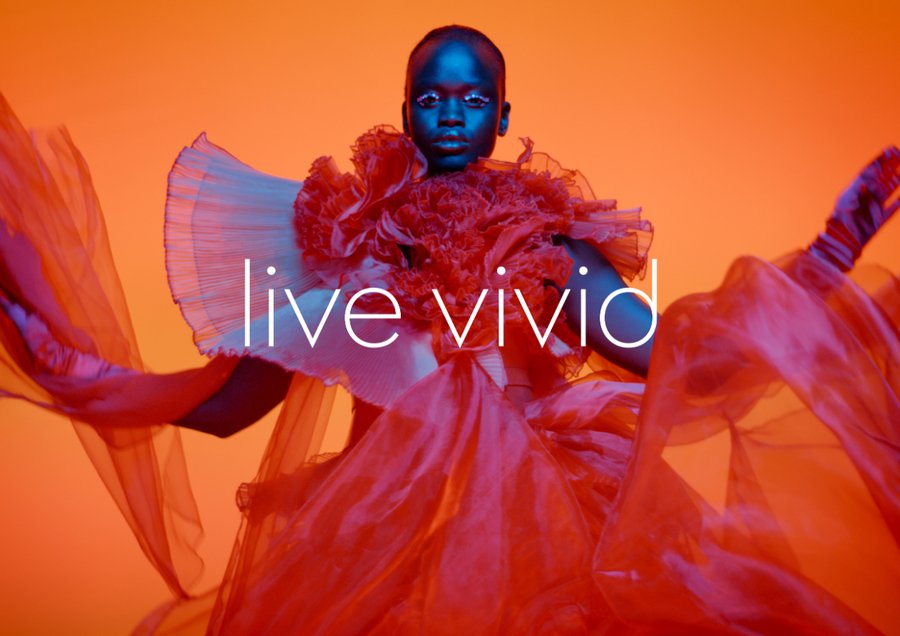
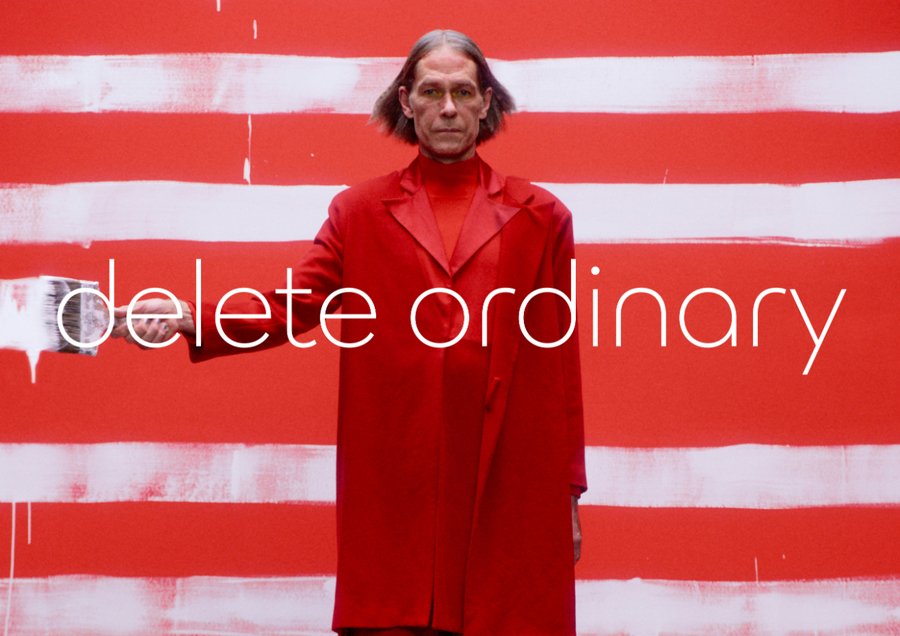
A frame from the Jaguar «Copy Nothing» advertising campaign.
Such an unconventional solution can elicit a wide range of emotions—from interest and surprise and confusion to irritation.
After the video was published on social media in November 2024, active discussions began. Many users criticized the advertisement for lacking cars. For example, Elon Musk addressed the official Jaguar account by asking, «Are you selling cars?» [6]. This phrase accurately reflects one of the audience’s criticisms: viewers did not understand why an automotive brand would not showcase its product at all.
Meanwhile, the advertisement garnered significant attention online. Users discussed Jaguar’s new style, joked, and created memes. Thus, the video continued to spread not only because of the brand itself, but also because of the audience’s reaction.