0. First Step. Why Hollywood Needs a Ladder
Background. In Hollywood during the 1920s and 1930s, almost everything was shot on sets. Castles, hotels, opera houses, or nightclubs were rebuilt for each film, and the production designer himself decided what rooms, windows, and passages would be in it. Many parts of these sets were fake: the walls had no backside, and distant halls and mountains were often painted on.
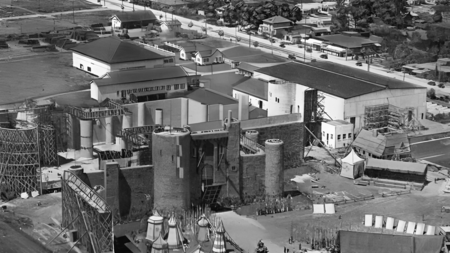
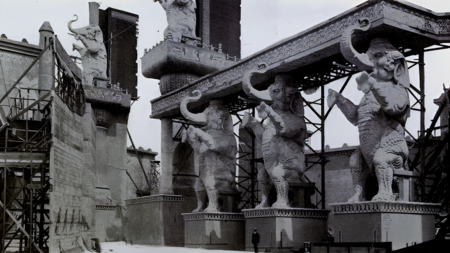
Castle set design for the film «Robin Hood» / dir. A. Duon / 1922 | Babylonian set design for the film «The Treatment» / dir. D. W. Griffith / 1916
It is not possible to draw the stairs: actors walk on them, extras stand on them, and the camera moves alongside them. Therefore, the stairs were constructed for real, and they often became the largest and most expensive part of the set.Art direction researchers note that in classic Hollywood, the set design often does not simply «represent» the setting; it emphasizes and even directs the narrative [4]. The staircase is the most visible example of such a set piece.
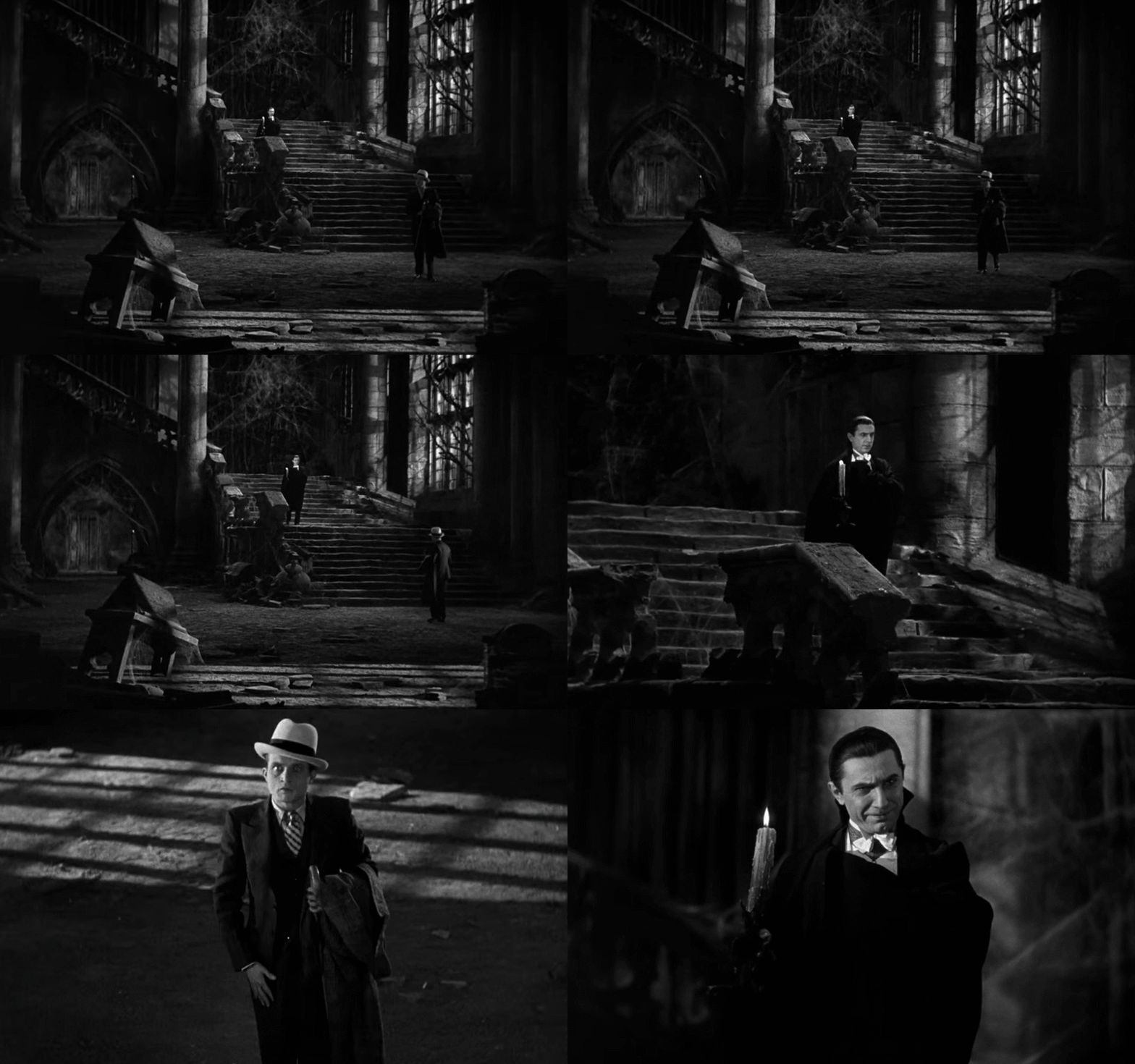
«Dracula» / Dir. T. Browning / 1931 / Shot: Renfield at the base of the stairs
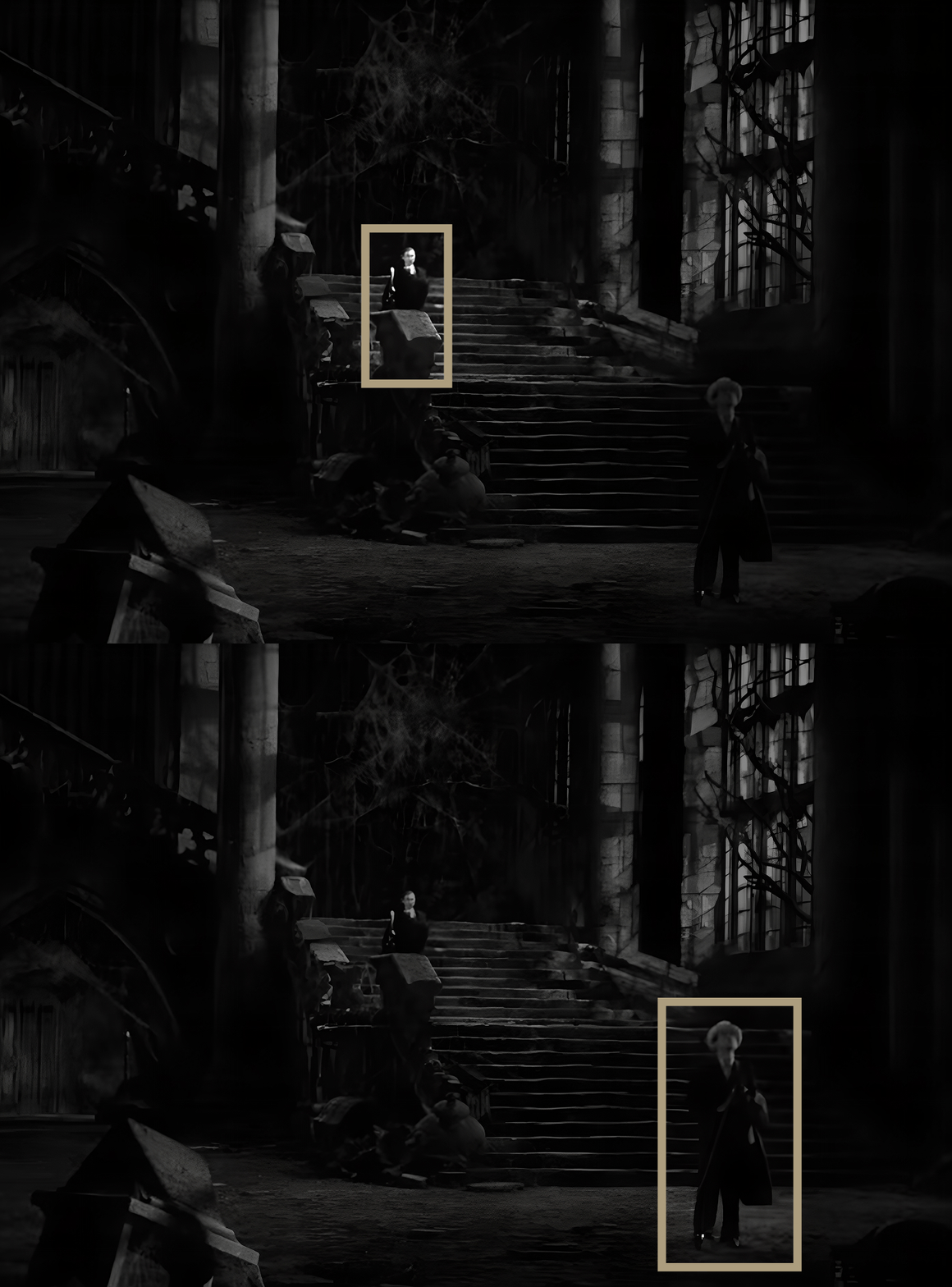
The topic is also interesting because the staircase cannot be perceived as «neutral.» It always has a top and a bottom, meaning there is a difference in the characters' positions. The one standing at the top looks down, and the one at the bottom looks up.
Hollywood set designers utilized this simple concept again and again, from the gigantic sets of Griffith to Art Deco era club interiors [10].
Key Question. Why does Hollywood cinema from the 1910s–1930s so frequently place action on a staircase, and how can the exact same set detail function across epic, melodrama, comedy, horror, and musical films?
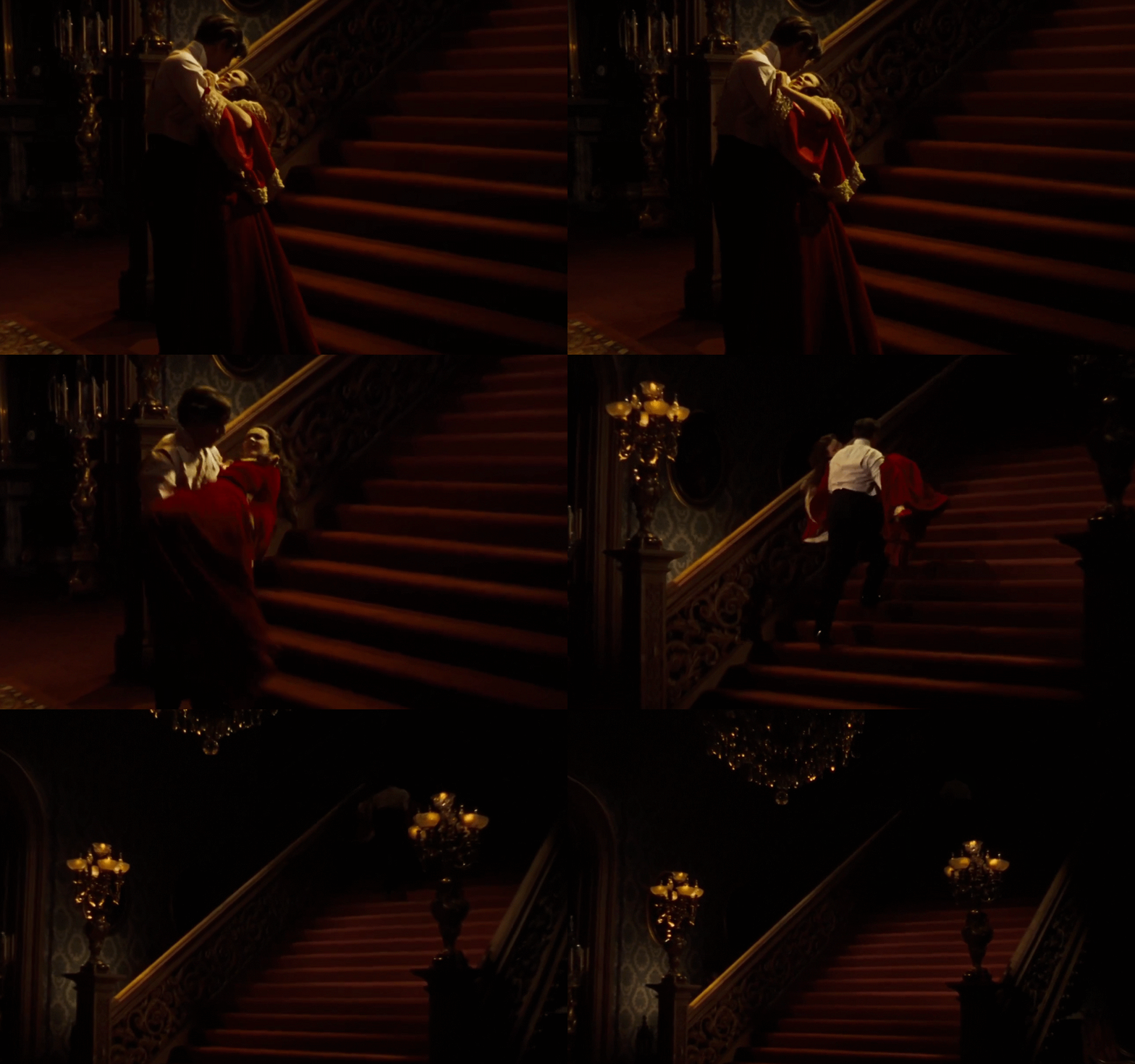
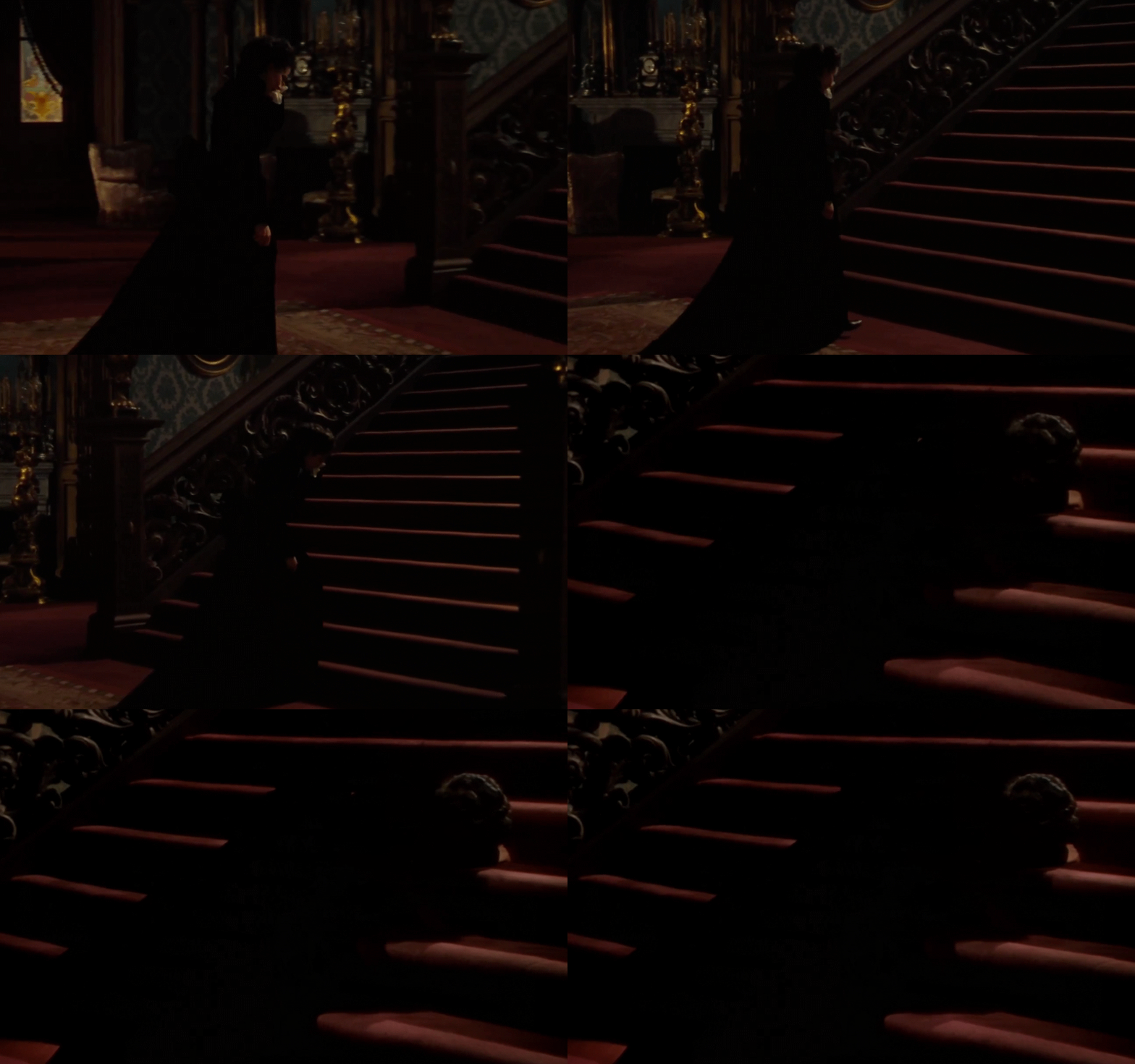
Left: Gone with the Wind / Dir. V. Fleming / 1939 / Scene: Rhett carries Scarlett to the top | Right: Gone with the Wind / Dir. V. Fleming / 1939 / Scene: Scarlett falling down the stairs
Hypothesis. Staircases likely appear so frequently in Hollywood films because they are very easy to shoot: the actor immediately knows where to go, and the viewer understands what is happening to the character. The crucial element here—is which direction he is moving.
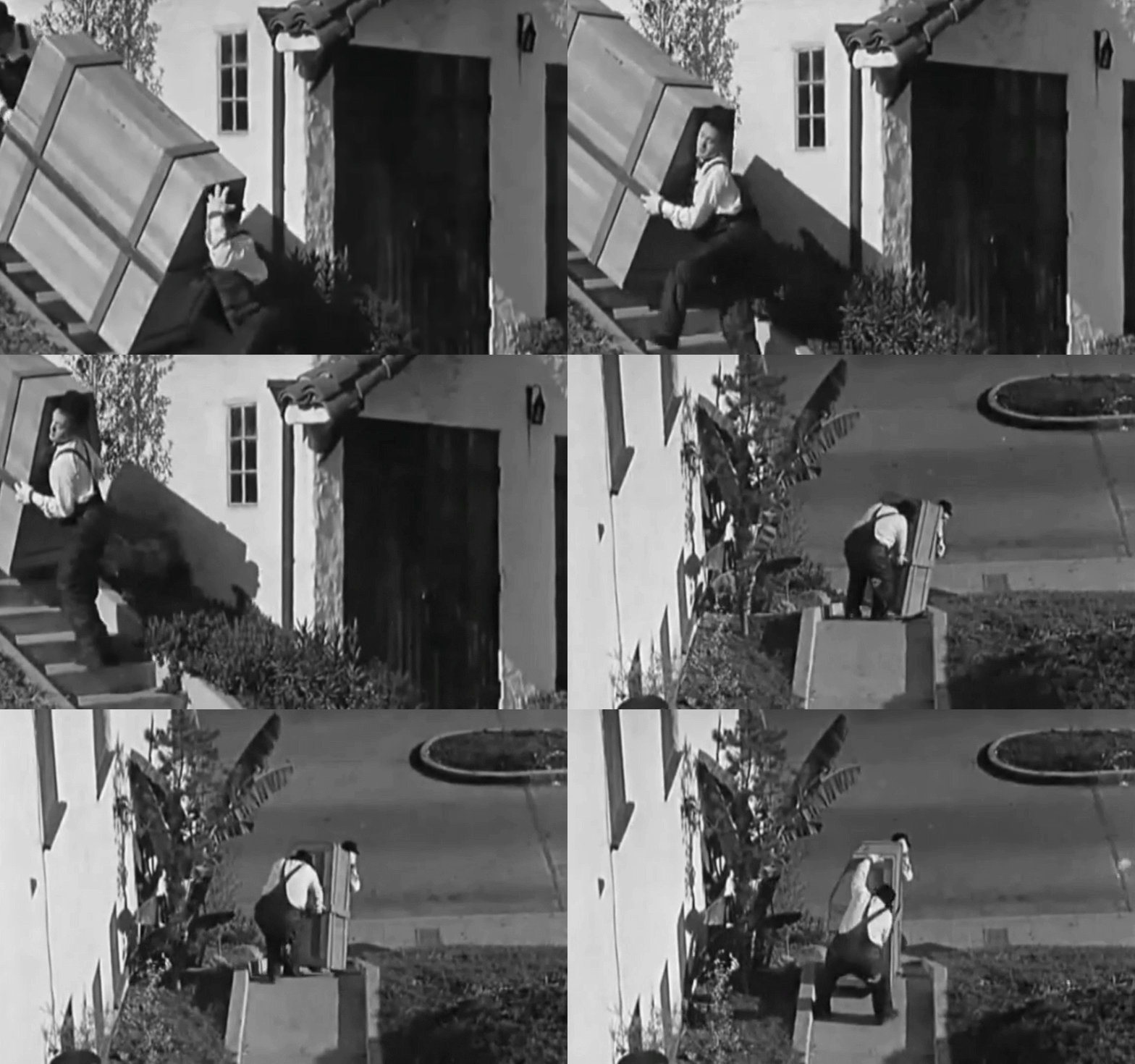
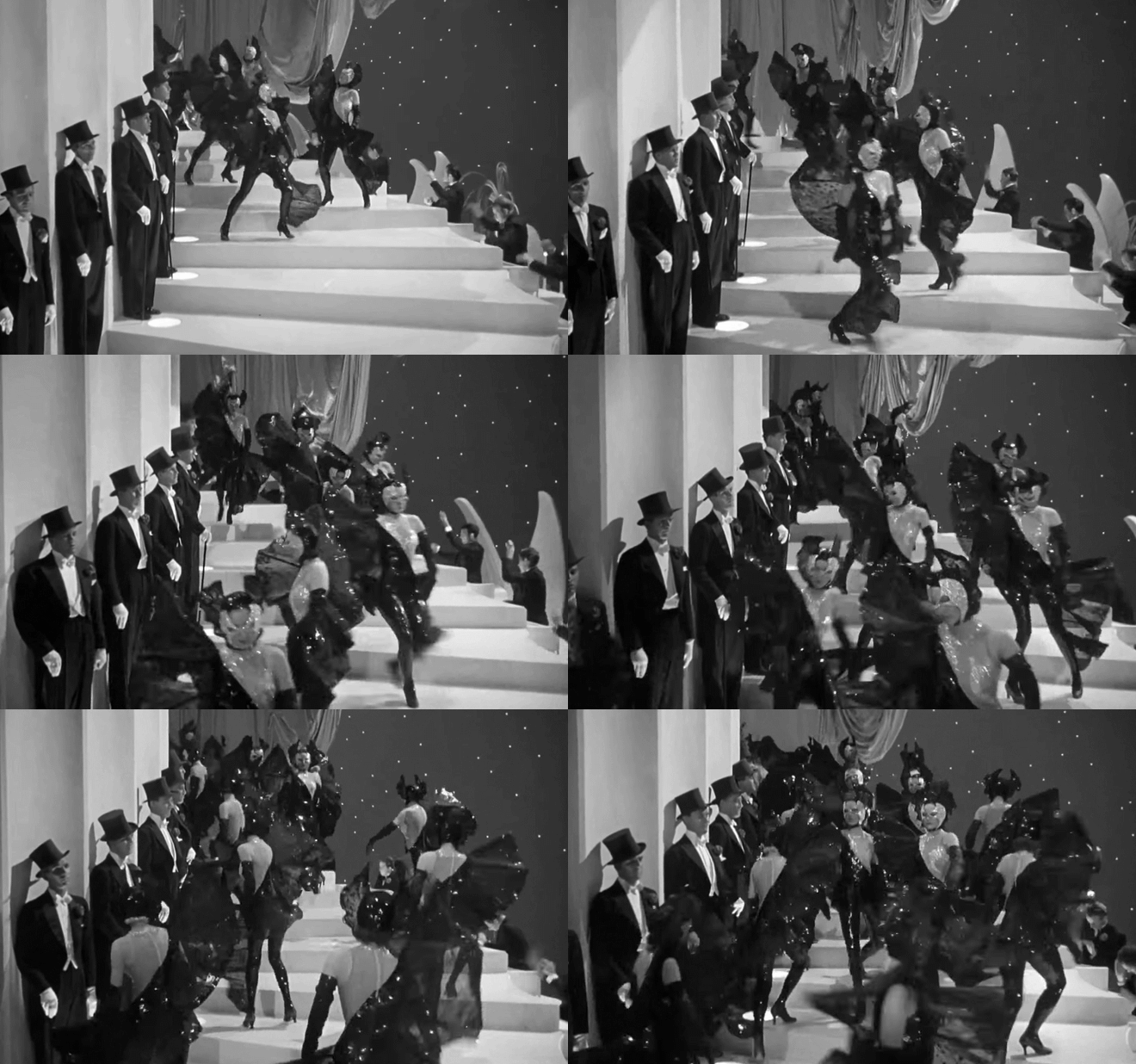
When the character ascends, they are achieving something—power, wealth, or another person. When they descend, everyone watches them like an artist on stage. If they fall, it is either comical or terrifying—depending on whether they can get back up. If they move downstairs into a basement, it becomes eerie. But in musicals, they simply dance on the stairs, and whether it’s up or down matters less.It seems the meaning of the staircase in the frame depends more on where the characters are going than on the film’s genre.
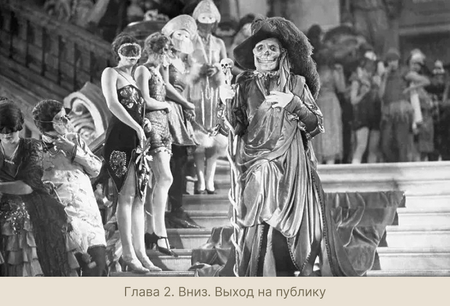
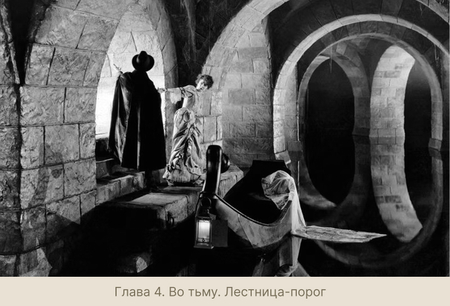
Left: «The Phantom of the Opera» / 1925 / Scene: The Red Death on the grand staircase | Right: «The Phantom of the Opera» / 1925 / Scene: Descent into the opera’s catacombs
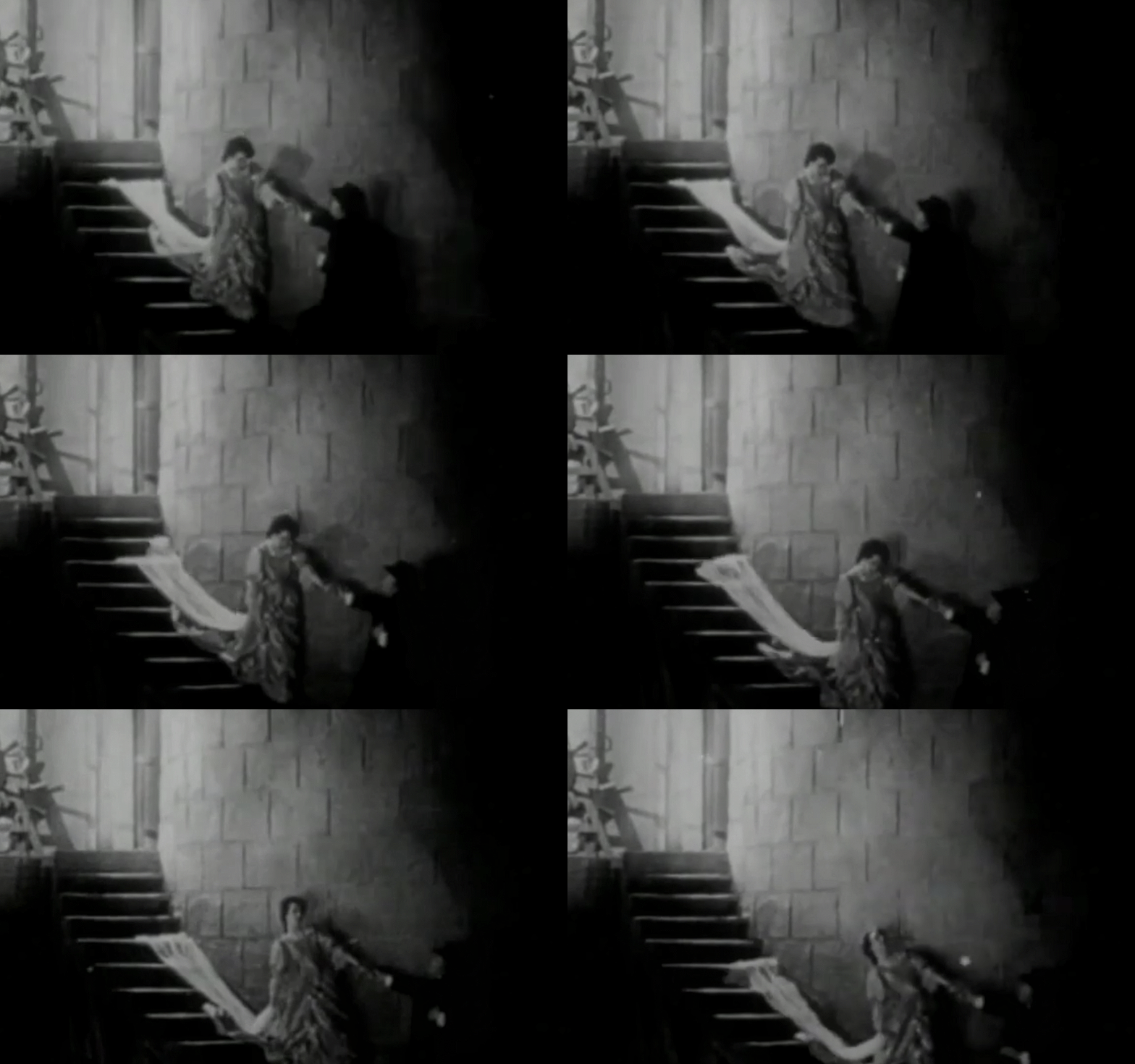
Structure: The exploration is not structured by age but by directional movement. The chapter «Up» is about power and desire. The chapter «Down» is about entering the public eye. The chapter «Tumbling» is about falling in comedy and drama. The chapter «Into the Dark» is about the staircase as a threshold in horror films. The chapter «In Place» is about dance, where the staircase transforms into rhythm.Some films appear in two chapters, and this is intentional: it shows how one staircase can mean something different at different moments.
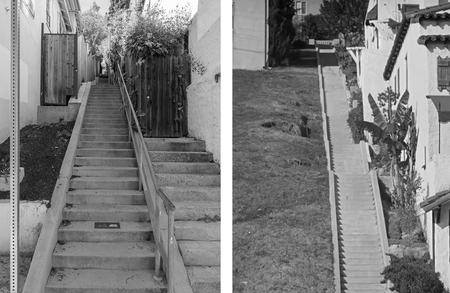
Material: American films from 1916–1939, a total of sixteen pictures. Scenes were selected where the staircase was not merely in the background but actively participating in the action. The selection includes films from major studios (Universal, MGM, Warner Bros., RKO, Fox) as well as independent productions by Griffith, Fairbanks, Chaplin, Keaton, and Harold Roach. For some of the scenes, real prototypes were placed nearby: the grand staircase of the Paris Opera House, and the «Music Box Staircase» in Los Angeles.Posters are not used—only shots from the filming locations and photographs of the actual sites.
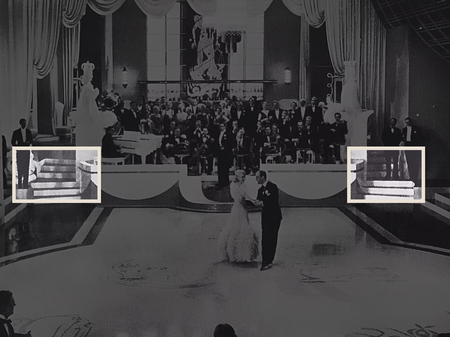
Sources: The foundation of this work rests on books concerning the architecture and set design of classic Hollywood: Juan Antonio Ramírez’s study [10] and Charles and Mirella Affron’s book on the role of set design in narrative [4]. For the general context of the studio system, we utilized the work of Bourdeau, Stieger, and Thompson [5]. For the chapter on comedy, Tom Gunning’s article on the stunt as a «mechanism» [8] and Krakaauer’s thoughts on slapstick and objects [3] were important. For the chapter on horror films, we referenced Lotte Eisner’s book on German Expressionism [6], given that many Hollywood horror films were made by German émigrés, as well as Gaston Bachelard’s «The Poetics of Space,» where the basement and attic are analyzed as two poles of the house [2]. For the musical, we consulted Martin Rubin’s book on Basbi Berkeley [11]. Specific set facts were verified using the American Film Institute (AFI) catalog.
1. To the Top. The Ladder of Power and Desire
«The Grand Hotel. People come, people go. Nothing happens.»
The most obvious meaning of a staircase is hierarchy. Those at the top are the most important; those below are the masses. Early Hollywood drew upon this idea from theater and palace architecture, transforming it into a spectacle of unprecedented scale. But in this chapter, the focus is not just on who stands at the top, but also on who and how they ascend. Ascending stairs almost always signifies a claim—a claim to power, to status, or to another person.
Set design for the Court of Babylon for the film «The Birth of a Nation» / 1916 / directed by D. W. Griffith / Set design for the Court of Babylon for the film «The Birth of a Nation»
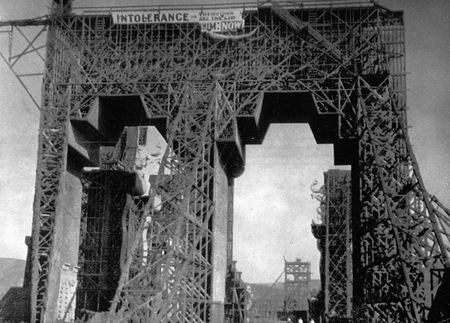
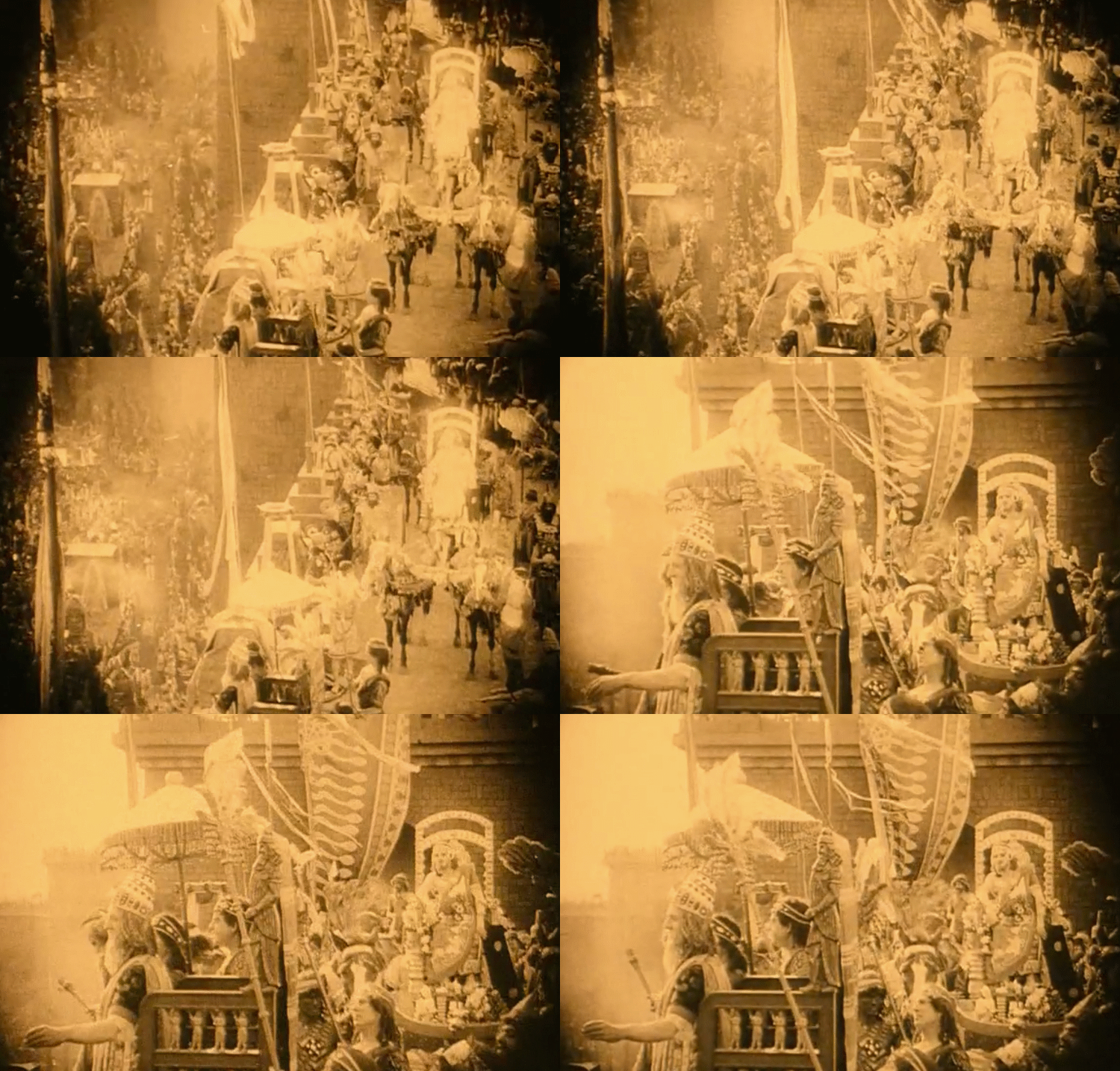
The Babylon set for «Intolerance» was located right in Hollywood, with walls approximately ninety feet high [16]. However, the main feature was not the walls, but the steps and terraces. The courtyard is constructed like a massive amphitheater: thousands of extras could be arranged across various levels, akin to a giant theater.Ramirez writes that such monumental sets became one of the most recognizable types of Hollywood screen architecture [10].The staircase here serves as a means to simultaneously convey scale and the order of power.
«Intolerance» / dir. D. W. Griffith / 1916 / Scene: The Waltaşar feast
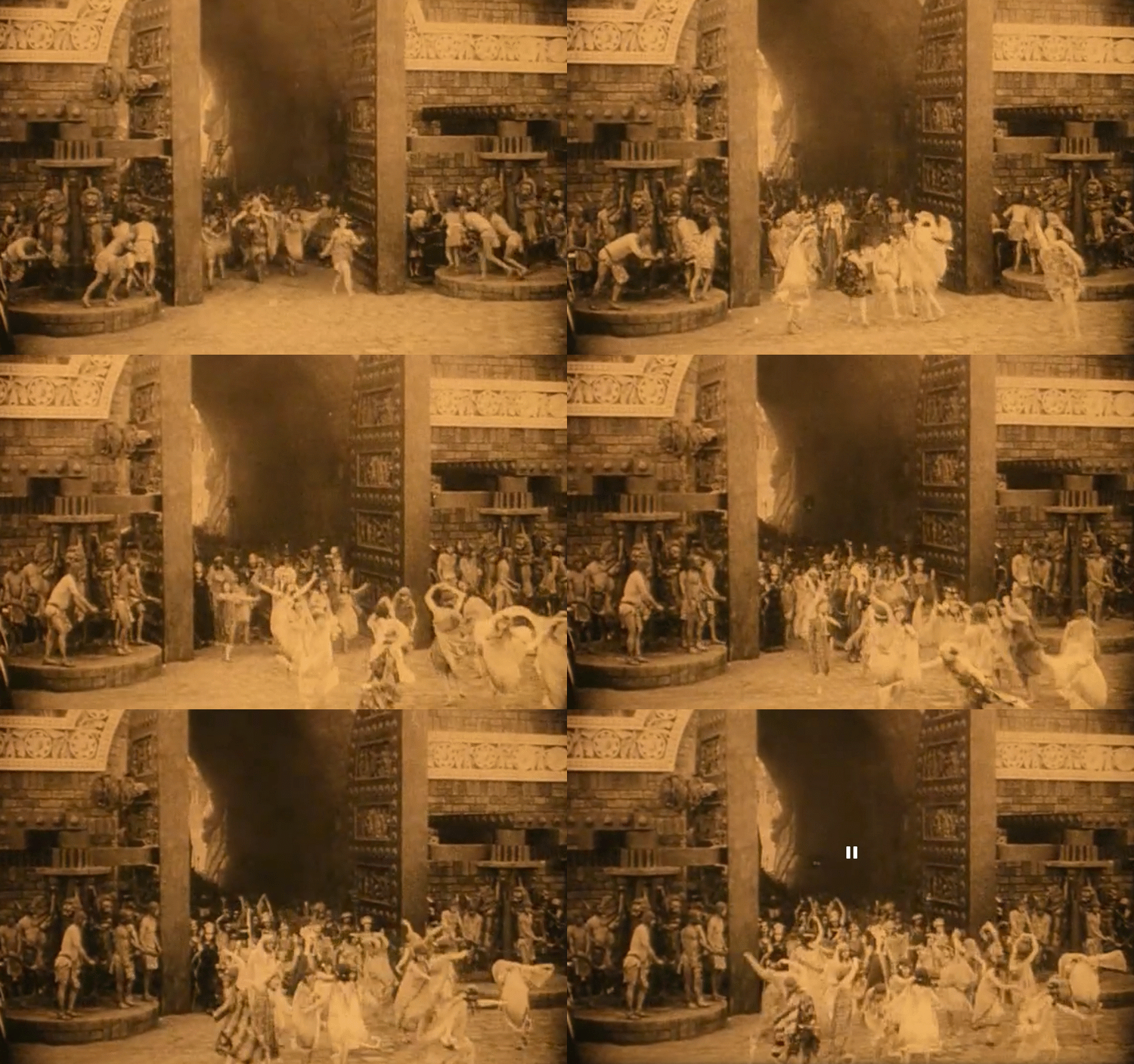
In this scene, the camera slowly pans down over the courtyard, and the viewer observes the feast from above, as if from the highest step. It appears the staircase continues even beyond the set; the camera occupies the highest point.Arnheim noted that shooting from above or from below alters how we perceive the figure in the frame [1].The staircase makes this distinction visible directly within the architecture.
«Intolerance» / Dir. D. W. Griffith / 1916 / Scene: Waltasar and the princess in the palace
Here, the steps function like a social hierarchy. The higher a person is, the fewer people are around them, and the more empty space there is. You don’t need to explain in titles who is in charge in Babylon; it’s clear from the height.
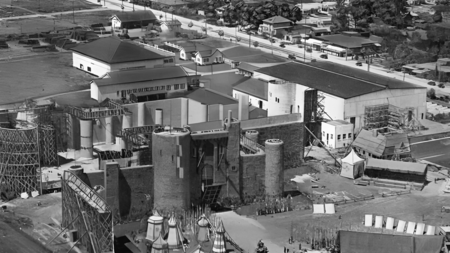
The castle for «Robin Hood» stood ninety feet high and is still considered one of the largest sets ever built in Hollywood [20]. It is known that Fairbanks himself was initially intimidated by the scale and unsure how to manage in such a vast space [20].
Interestingly, historians draw comparisons between it and Griffith’s Babylon: in just six years, Hollywood began building higher and higher.
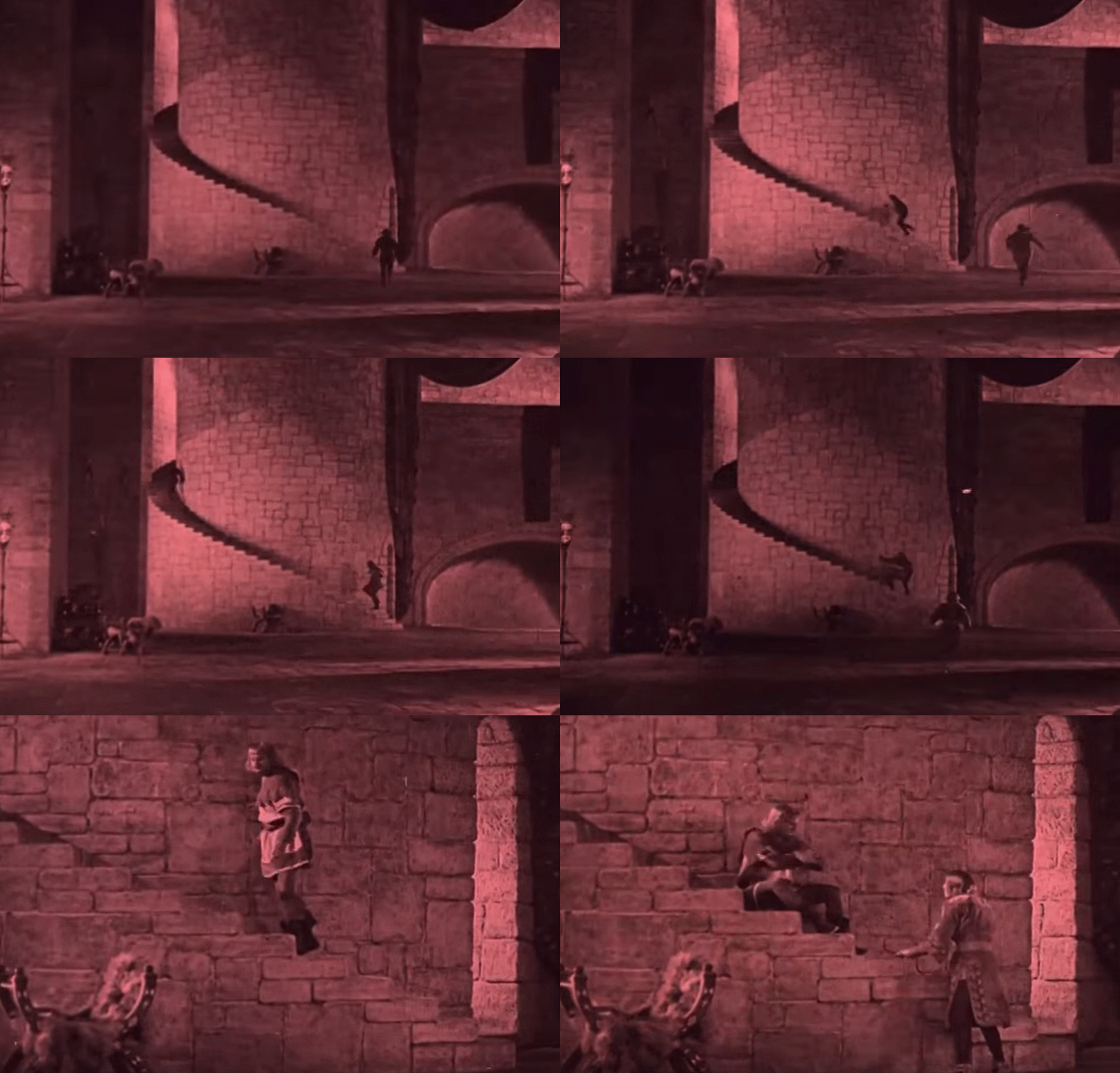
In the castle, the stairs and galleries belong to the authority. Guards and courtiers stand above, overseeing the hall and all passages. The spiral staircase around the column further lengthens the ascent: to reach power, one must journey a long route.
Director: A. Duone / «Robin Hood» / 1922 / Scene: Descent from the curtain
The most iconic scene in the film—a descent down a curtain approximately twelve meters long [20]. Interestingly, the protagonist doesn’t use the staircase but simply walks around it.
Historians write that the set was intentionally constructed for Fairbanks' tricks [20]. But there is also a semantic layer (the author’s observation): the staircase represents order and power, and the noble rogue moves along the vertical axis on his own path, bypassing the steps.If you place this shot next to Babylon, the difference is immediately apparent: the architecture is the same, but the attitude toward it is opposite.
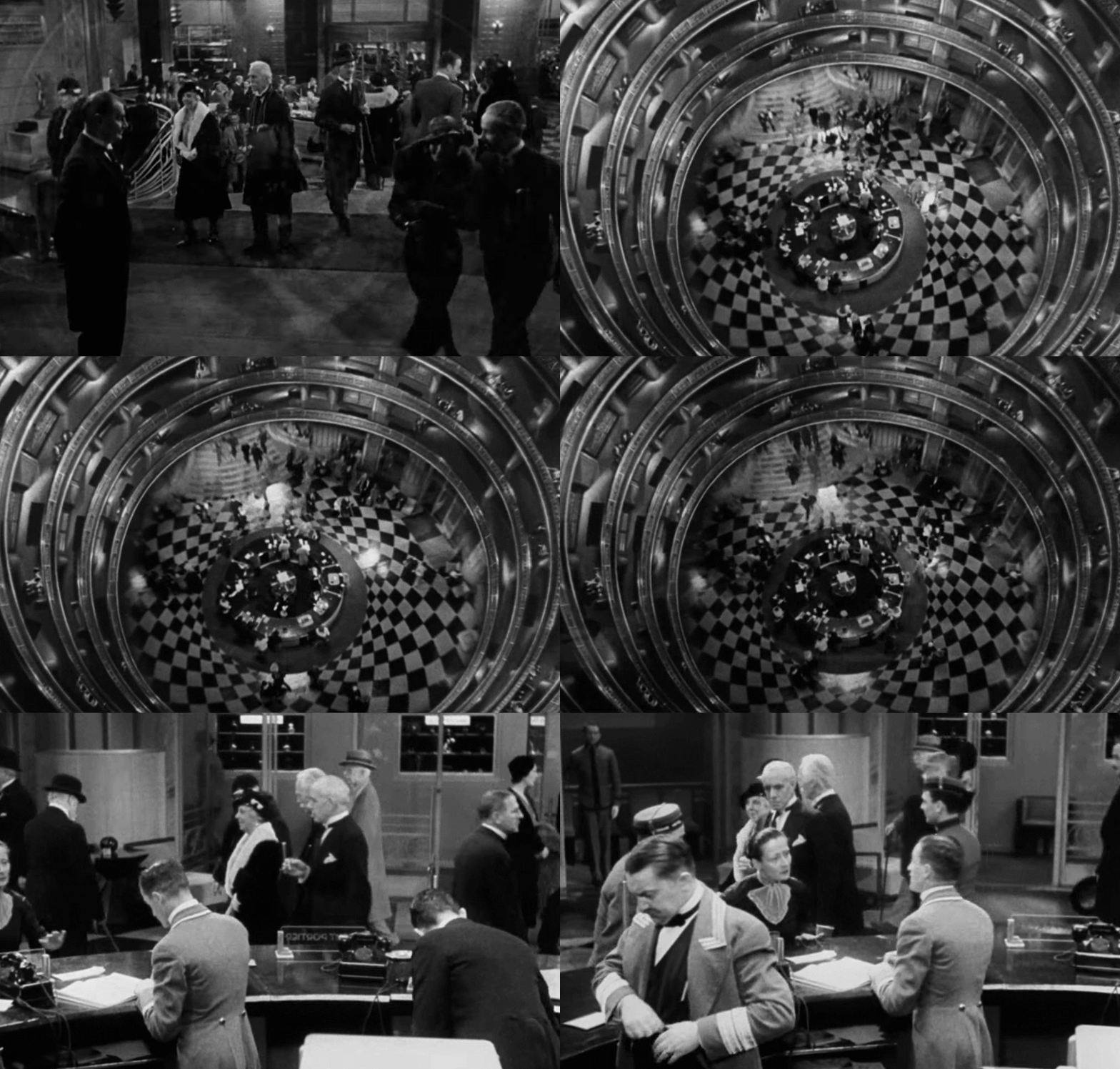
Gibbons' hotel is designed like a well: a circular counter is at the center, surrounded by levels of galleries. From above, it resembles a mechanism where people move in circles and vertically. From the galleries, everything happening below is visible, while from below, the gallery is almost inconspicuous. Although the staircase is open to everyone, the upper level still provides an advantage—the ability to observe.
The fates of the wealthy and ordinary people intertwine in the film, and the hotel’s floors resemble the steps of the social ladder (author’s observation).
Ramírez notes that the interiors of hotels and nightclubs in 1930s cinema became one of the primary settings for modern architecture on screen [10].
Gone with the Wind / Dir. V. Fleming / 1939 / Scene: Rhett carries Scarlett upward