CONCEPT
Advertising is one of the key mediums of visual culture due to the rapid growth in content consumption. It is becoming not just a commercial tool, but a reflection of social ideology. Advertising captures the transformation of gender roles, influences society, and transmits the standards and ideals of the current era. If we compare its trends now (in the age of social media and the Internet) with those from 50 or 100 years ago, we can make comparisons and observe shifts in the mass agenda and public opinion.
Why is this important today?
In the age of social media and the Internet, advertising continues to reflect established stereotypes. Researching how the image of women has changed in advertising will help us understand how perceptions of beauty, success, and a woman’s place in society have evolved.
Why Russia?
Russian advertising possesses a unique trajectory. It evolved within the context of a specific political climate—the creation and collapse of the USSR, Perestroika, and the unstable 1990s. Initially, the agenda formed independently of other countries, but following the dissolution of the Soviet Union, the media landscape began to absorb Western trends. This combination of autonomous and dependent experiences makes Russian advertising valuable material for analysis.
Research Question:
How have standards of feminine beauty and gender stereotypes in Russian advertising evolved across the 20th and 21st centuries, and how do these shifts reflect the contemporary social position?
Hypothesis
The shift in the standards of the female role in Russian advertising reflects a transition from the conservative ideals of the 20th century—specifically the image of the working woman in the USSR—toward sexualization adapted from the Western media landscape, alongside 21st-century body positivity and feminist trends. Despite this evolution, Russian advertising retains a distinct cultural specificity and traditional notions of femininity.
Research Object: The female archetype and its transformation
Research Subject: Advertising and the stereotypes embedded within it
Sample for the study
Over 30 pieces of advertising and posters featuring women in various situations and time periods were selected. The study includes both contemporary advertisements from billboards and popular glossy magazines, as well as older, well-known Soviet posters. The sample consists of mediums where women are the central element of the composition or the brand’s face.
Rationale for Selecting Academic Sources
The research draws upon the work of Russian authors who addressed similar topics while considering the specific nature of advertising in Russia. This approach allows for an accurate interpretation of the visual language of advertising, avoiding the false imposition of Western concepts where the male gaze, rather than state ideology, predominated.
PRE-REVOLUTIONARY PERIOD
During this period, the Russian Empire experienced profound socio-political and economic upheaval. Despite a deep political crisis, the era was also marked by a powerful cultural ascent, which entered history as the Silver Age of Russian culture.The primary audience for advertising was the conservative merchant class and the petty bourgeoisie, whose tastes were tied to a traditional Orthodox worldview. For them, advertisements were created in the lubok style, featuring a young woman in a meticulously detailed traditional costume as the central character: a kokoshnik, a sarafan, and an embroidered blouse.The Singer Company intentionally utilized this typical image [1], combining the girl’s detailed costume with grotesque typography. The girl’s image reflected the cultural duality of the era. Despite the economic and political changes, the advertising industry actively exploited the fairy-tale archetype of the «Russian beauty.»
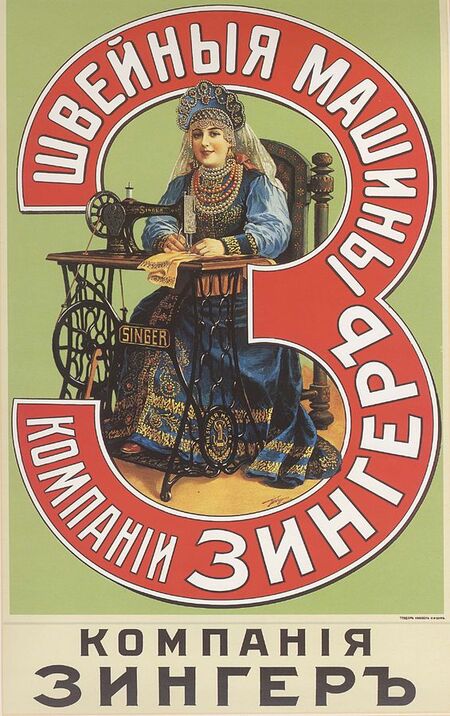
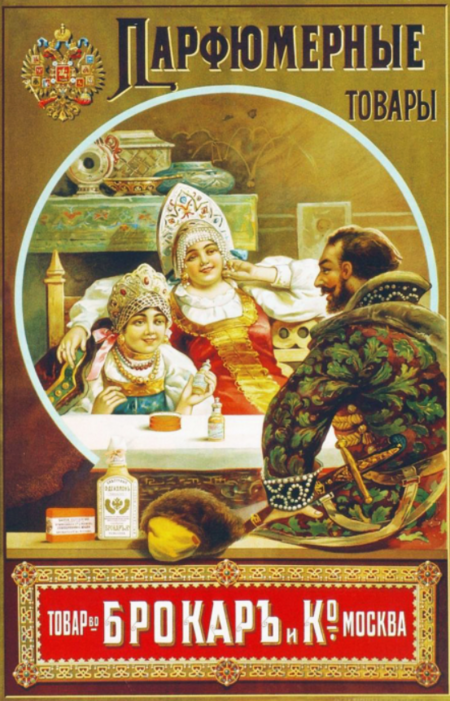
1. Sewing machines by Singer. (Taburin V. A., Early 20th Century) 2. Perfumery products. (Unknown artist, Early 20th Century)
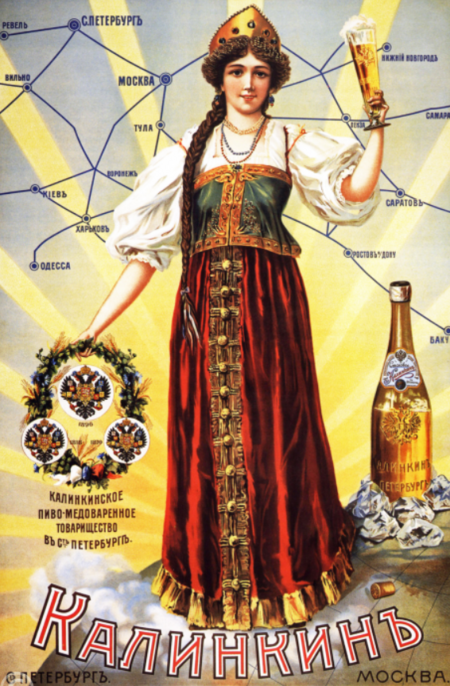
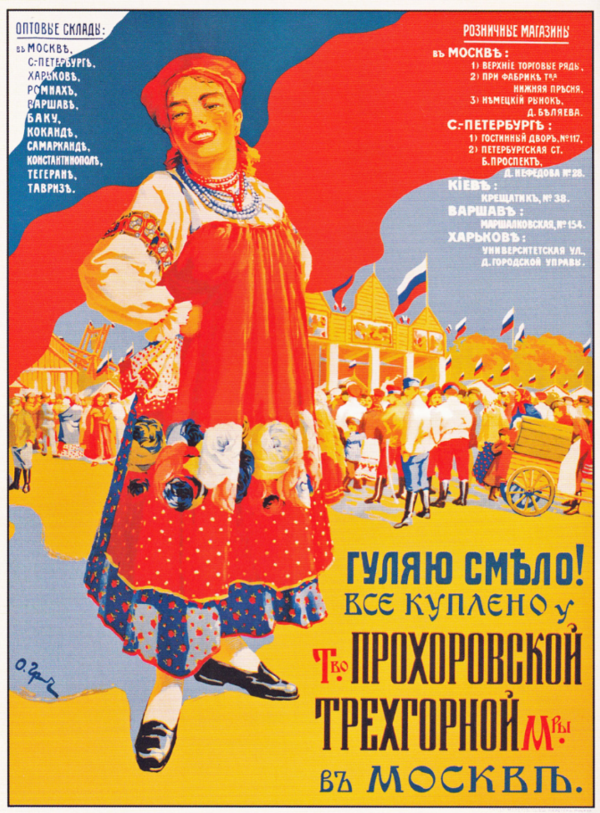
1. Kalinkin. (Unknown Artist, 1903) 2. Prokhorovskaya Trekhgornaya Manufactory Partnership, Moscow. (Unknown Artist, 1910s)
French authors and artists significantly influenced the Russian cultural landscape. One such figure was Henri de Toulouse-Lautrec, who created posters reflecting the culture of modern France at the time [2]. These posters featured liberated, alluring women. Aspiring to emulate the French style, Russian advertising adopted this tradition. The women portrayed in these advertisements were far removed from the established image of the noblewoman.
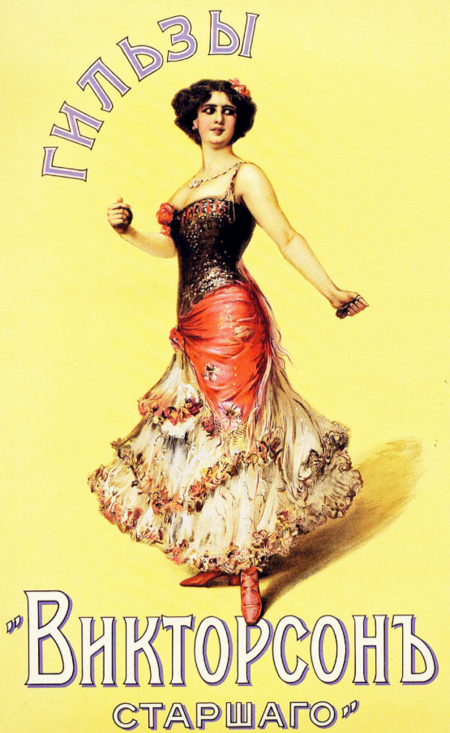
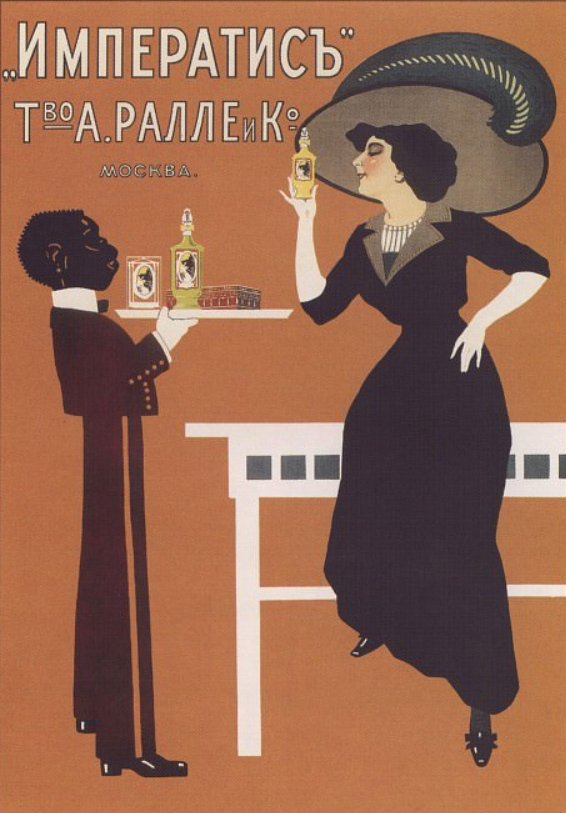
1. «Victorion Senior» Cartridges (Unknown Artist, Early 20th Century) 2. Imperatis. (Unknown Artist, 1910s)
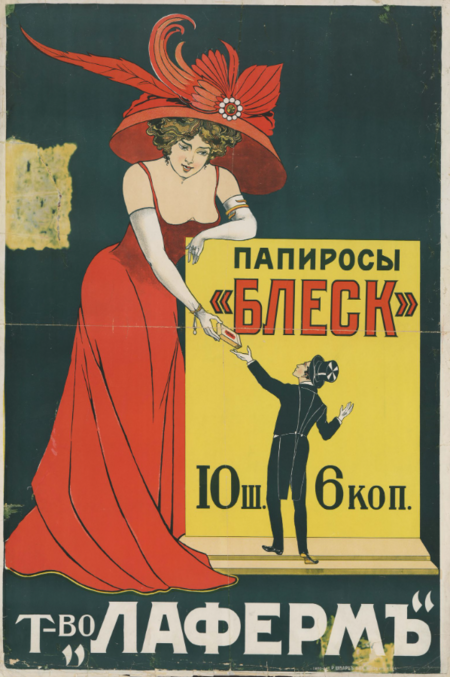
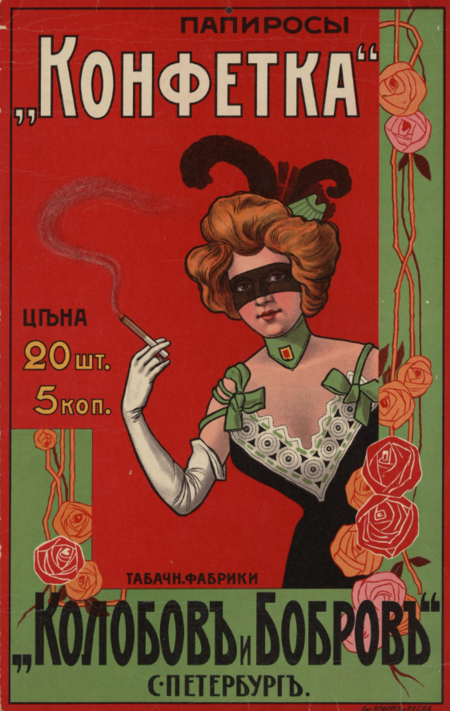
1. «Blesk» Cigarettes. Laferm Partnership. (Unknown Artist, Early 20th Century) 2. «Konfetka» Cigarettes. (Unknown Artist, circa 190?)
USSR Decree
After the revolution, advertising took on a different purpose—to call everyone to work and unify them under a single communist ideology. Because goods were distributed via rationing cards, the need for commercial advertising diminished, and in its place, the volume of social advertising increased.The new government proclaimed gender equality and «abolished the patriarchal foundations of the family» [3]. Women in advertising now appeared as workers, agitating for support of the Union. They began being portrayed in traditionally «masculine» spheres: labor, education, politics, and the military. The focus was no longer placed on physical figure or gender as a whole.
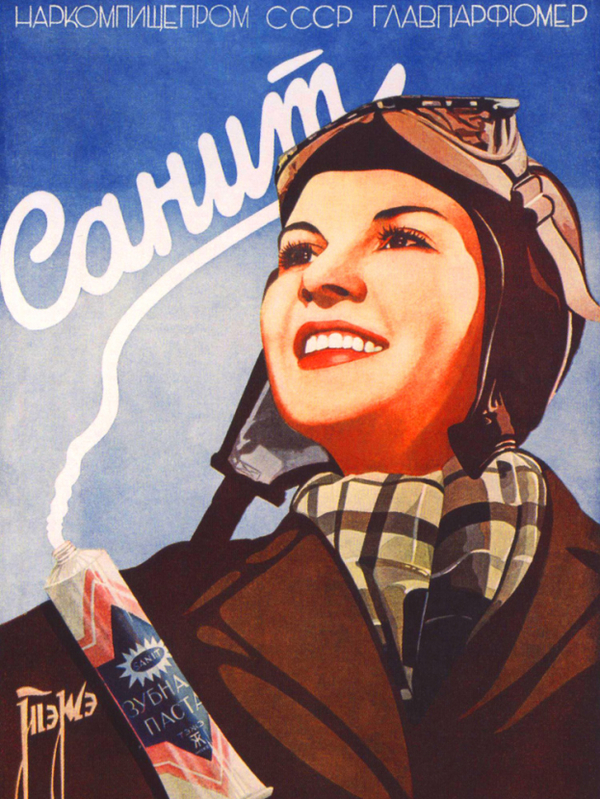
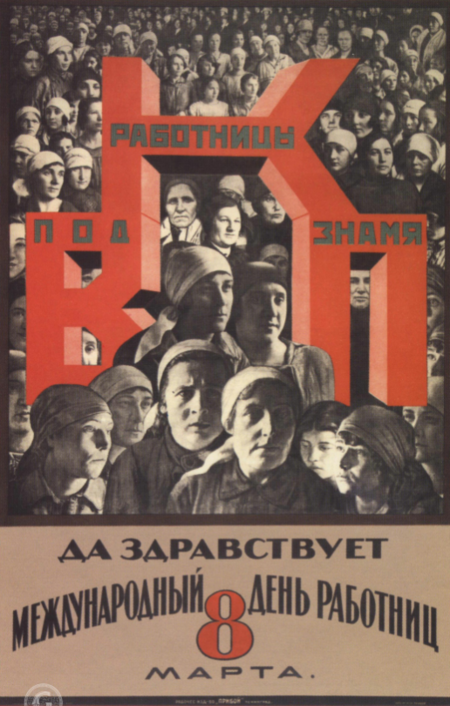
1. Sanit Toothpaste. (Unknown Artist, 1938) 2. Workers Under the Banner of the VKP. Long Live International Women’s Day, March 8th. (Unknown Artist, 1926)
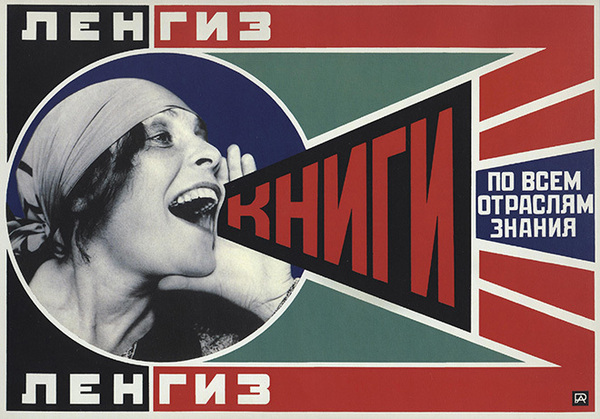
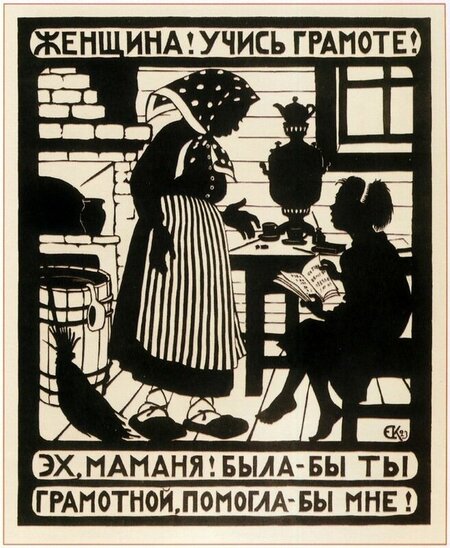
1. Lengiz. Books in all fields of knowledge. (Rodchenko A., 1925) 2. Woman! Learn to read and write! (Unknown artist, 1920s)
WAR TIME
In June 1941, the USSR faced an attack from Nazi Germany, which led to the total militarization of the economy: conventional commercial advertising virtually disappeared, giving way to military and political posters [4]. Advertising food during a period of severe shortage was inappropriate.
As men were mobilized en masse to the front lines, women became the primary labor force in factories and fields. Society was already prepared for this division of labor due to the Soviet policy of gender equality in the 1930s.
The primary female symbol became Motherland, which called people to defend the Fatherland. Young women were depicted as strong, independent, and determined. The female population was being prepared to replace men on the front lines. The theme of sacrifice also emerged as another motif: the girl for whom one should fight and die [5].
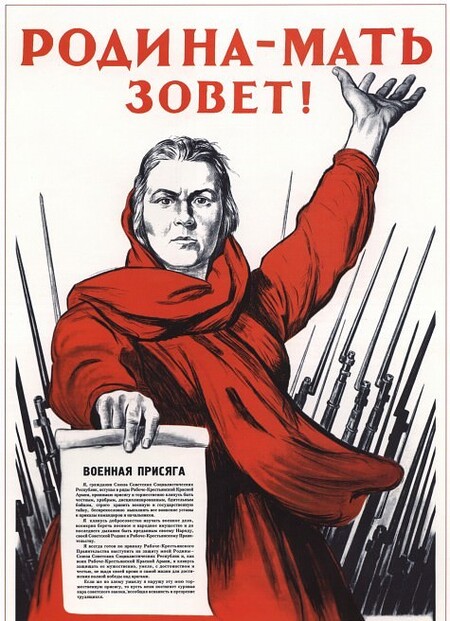
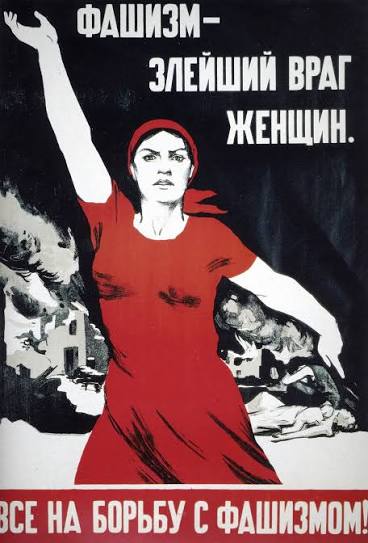
1. Motherland Calls! (Toidze I.M., 1941) 2. Fascism—The Worst Enemy of Women. All for the Fight Against Fascism! (Vatolina N.N., 1941)
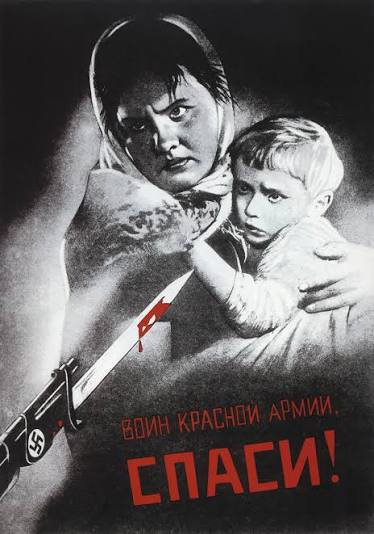
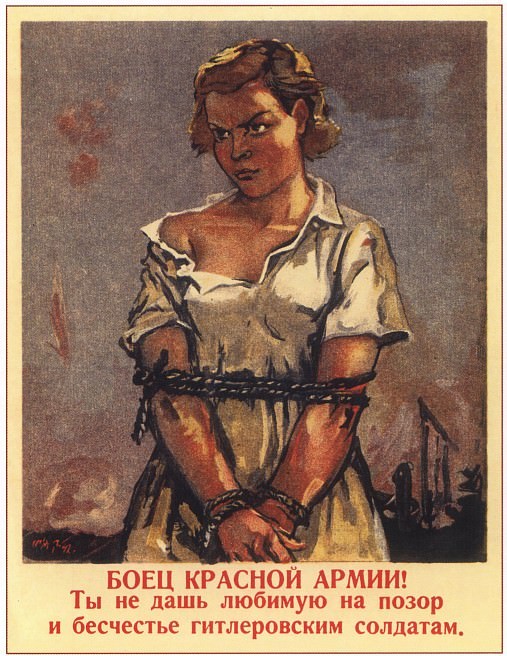
1. Warrior of the Red Army, save me! (Koretsky V. B., 1942) 2. Soldier of the Red Army! You will not let your beloved suffer shame and dishonor at the hands of Hitler’s soldiers. (Antonov F., 1942)
POST-WAR YEARS