The HSE Art and Design School, part of the Faculty of Creative Industries at HSE University, presents the eleventh issue of the HSE University Journal of Art & Design, dedicated to issues that have long remained on the margins of research discourse.
Our authors focus on the art of modernism—a subject that seems to have been thoroughly covered both in Russia and internationally. We are well-versed in the historical facts, the names of artists, the manifestos and declarations, the various «isms,» and the canonical works. However, there is much surrounding this phenomenon that falls outside the main narrative.
The new issue is a bold research attempt to challenge conventional perspectives, shift emphasis, and view Modernism not as the pinnacle of the canon, but as a living process of an unobvious art history.
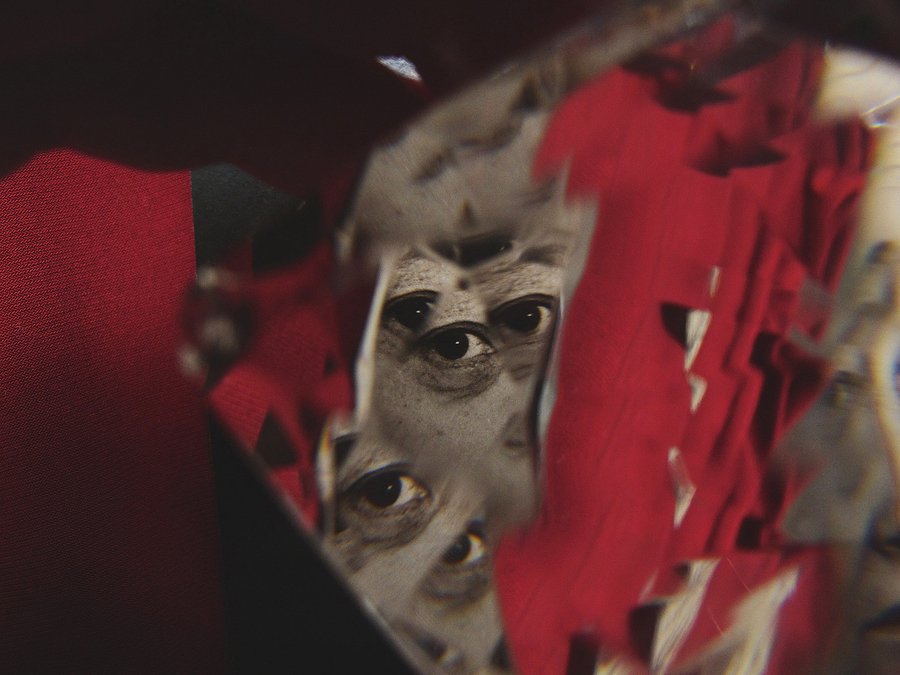
Svetlana Pozharskaya. From the project «Family Album.» 2010–2016. Digital color photography. Digital pigment print on archival paper. 40 × 60 cm. Provided by the artist.
The discovered marginalia become new sources of meaning, creating a unique space for artists' doubts, searches, mistakes, and casual gestures. We question the traces invisible to contemporaries, erroneous attributions, and unnoticed artistic projects that have shifted the scale of aesthetic inquiry. Our authors draw upon little-known facts, archival materials, forgotten names, and offer a new perspective on canonical works, introducing new sources into scholarly discourse that have long remained outside the view of researchers. We do not aim for sensationalism; rather, we document new facts and unexpected interpretations—a timely research toolkit that we hope will be valued by the academic community.
This issue features the article by I. N. Proklov, «Gustav Klimt’s ‘Faculty Paintings’ (‘Philosophy’ and ‘Medicine’) as an Allegory of Absurdity.»
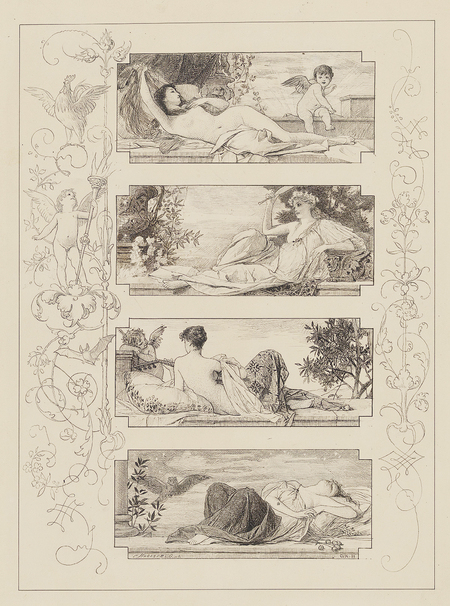
The researcher, based on a comprehensive analysis, seeks to explain why the «Faculty Paintings» were not understood at the time and provoked such fierce rejection, while simultaneously foreshadowing the existential and absurdist themes that fully emerged in 20th-century art.The article demonstrates how Klimt reinterpreted the content and composition of traditional allegory, how he evolved from academicism to symbolism, and how, in turn, he imbued Symbolist poetics with existential and ontological motifs.
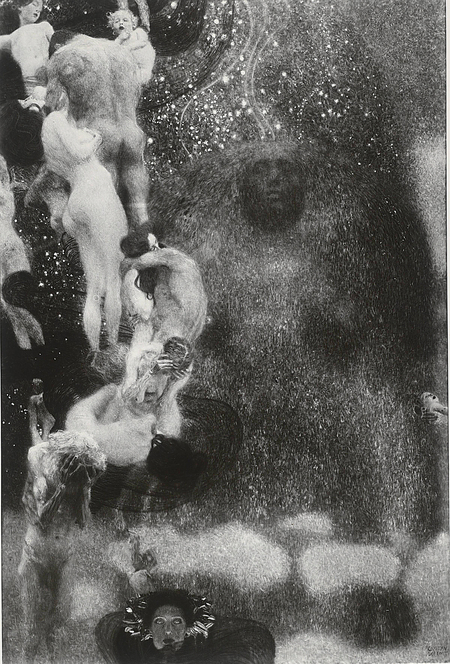
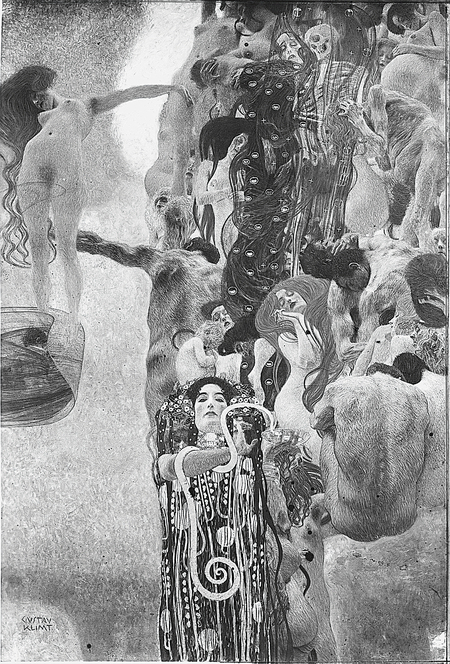
Gustav Klimt. Philosophy. 1900–1907. Canvas, oil. 430 × 300 cm. Gustav Klimt. Medicine. 1900–1907. Canvas, oil. 430 × 300 cm. Not preserved. Known from black-and-white photographs.
The article «Mirror, Magical Sphere, and the Optics of Vision» by I. Yu. Chmyreva continues to be published.
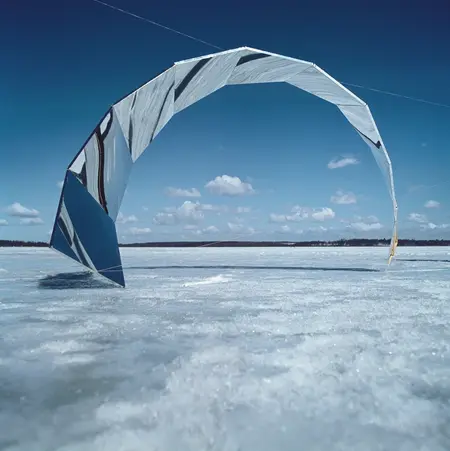
In it, the author addresses the investigation of optical objects—mirrors, magic globes, wormoscopes, kaleidoscopic and mirrored systems—in 20th-century photography and contemporary art. The author examines these objects not merely as isolated motifs or elements of artistic props, but primarily as tools for transforming vision, as mediators through which artists construct new regimes of visibility and push imagery beyond conventional optical experience. Starting in the first third of the 20th century and through the end of the last century, these objects in the collections of artists and photographers, from avant-gardists to post-modernists, were subjects of reflection and used as instruments in the creation of new works.
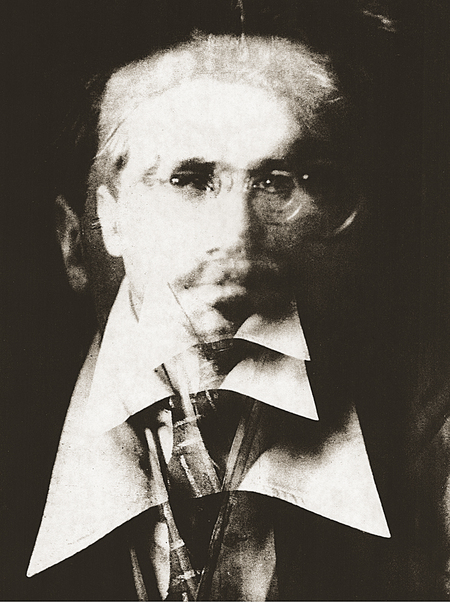
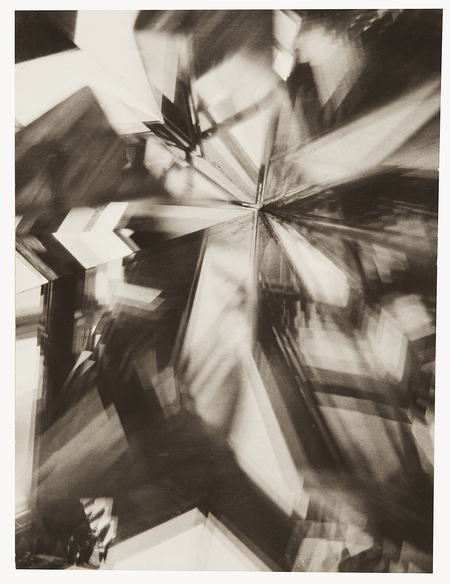
Elvin Coburn. Ezra Pound’s Vortography. Studio II. 1916. Photograph. Silver-gelatin print. 26 × 20 cm. Bootham Gallery, Bootham / Elvin Coburn. Vortography. 1917. Photograph. Silver-gelatin print. 26,4 × 20.2 cm. Cleveland Museum of Art
D. O. Martynova’s article, «The Image of the Pathological Body in Early 20th Century Art, ” is dedicated to the history of the formation of the image of the „hysterical“ female body.
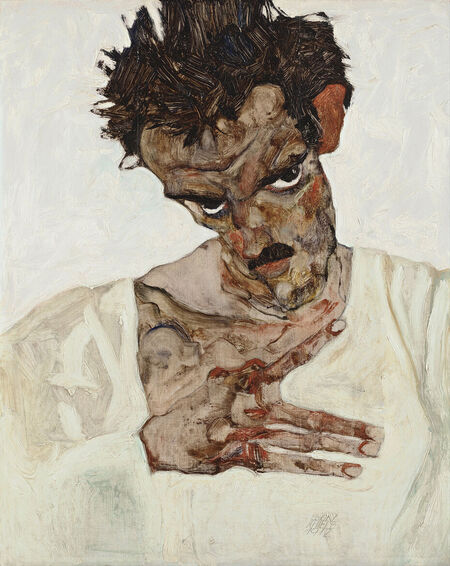
This image was created by physicians and photographers at the Salpêtrière Hospital and gained particular prominence through the popularization of images of patients suffering from hysteria, macrodactyly, and other mental illnesses, which garnered significant public attention. The author analyzes how these medical and photographic representations influenced artists—especially Viennese Expressionists and Surrealists—and also examines the tropes of the mechanized and fragmented body used in art to convey a sense of alienation, internal struggle, or technological interference with human biology.
E. V. Igumnova, in her article «From the History of British Modernism: Wyndham Lewis and Vorticism, ” examines the role of artist Wyndham Lewis (1882–1957) in the formation and development of British modernism.
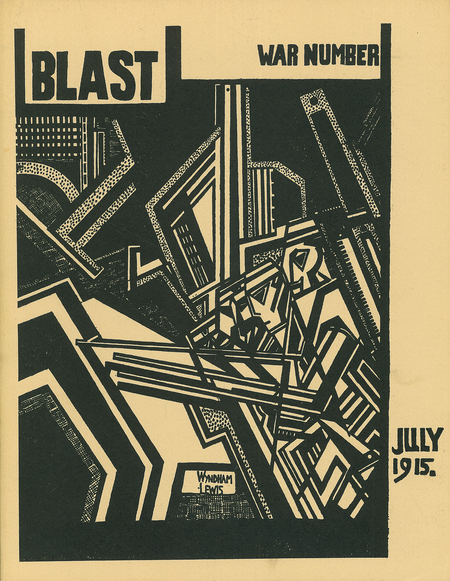
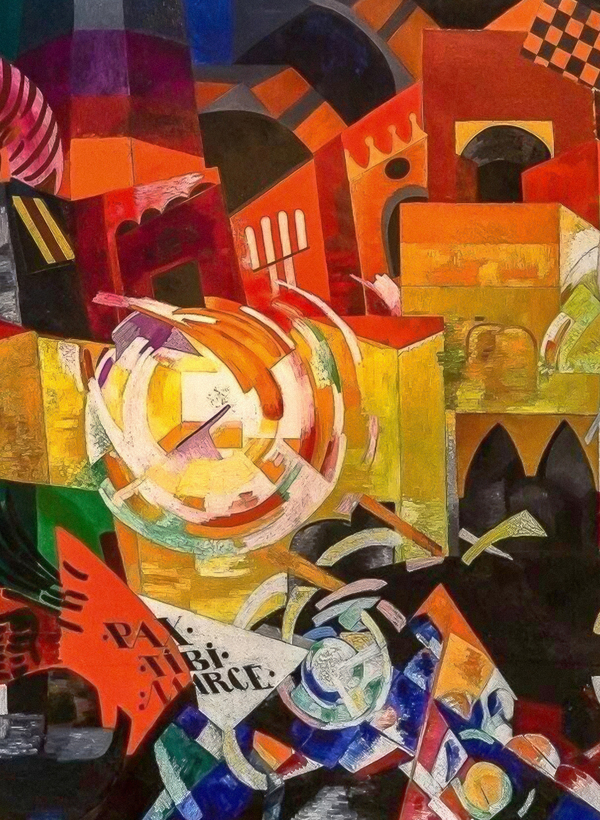
Lewis—a leader of Vorticism, an avant-garde movement that played a significant role in British art and cultural life in the 1910s. He conceived and co-published the journal BLAST with his friends, which aimed to dismantle Victorian cultural traditions and create a new art inspired by the industrial world. Although he nearly abandoned painting after World War I, shifting his focus to journalism and novel writing, his works and ideas influenced subsequent generations of modernists, such as Henry Moore and Ben Nicholson. The article primarily focuses on Lewis’s pre-war period—his artistic experiments from 1910–1915 and his work as an organizer and theorist of Vorticism.
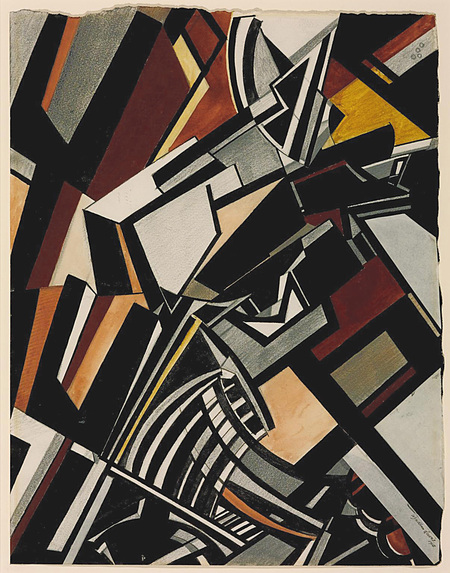
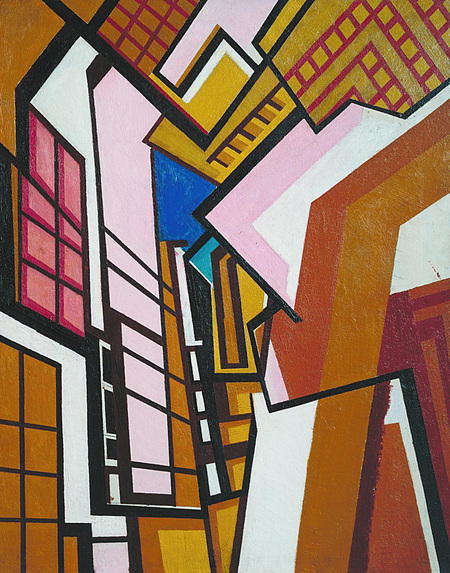
Windham Lewis. Composition. 1913–1914. Paper, ink, pencil, watercolor. 343 × 267 mm. Tate Gallery, London / Windham Lewis. Workshop. 1914. Oil, canvas. 765 × 610 mm. Tate Gallery, London
Next, we present a polemical and pioneering article by our colleagues—S. Yu. Kavtaradze, I. Yu. Korovin, and V. E. Tsarina—titled «The Moscow Metropol. Another History.»
Metropol Hotel in Moscow. Main facade
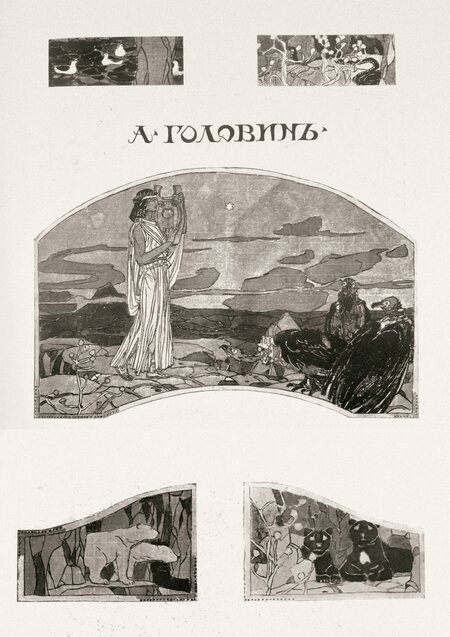
The article discusses the design and construction history of the Metropol Hotel in Moscow, focusing primarily on its facades. It is currently believed that, firstly, Lev Kekushev won the competition to decorate the facades, but Savva Mamontov preferred William Walcott’s design and assigned Kekushev’s team to work with it; and secondly, that Mikhail Vrubel’s majolica panel, «Princess Grosa, ” was installed concurrently with Alexander Golovin’s compositions, becoming the first work by the Abramtsevo ceramic workshop in Butyrki for the Metropol’s facades. However, photographs of the building before the fire, discovered by one of the article’s authors, necessitated a revision and clarification of many established assumptions. Based on new archival materials and documents, the authors propose new hypotheses regarding the subjects in Alexander Golovin’s panels and the probable authorship of the majolica tiles over Mikhail Vrubel’s central bay.
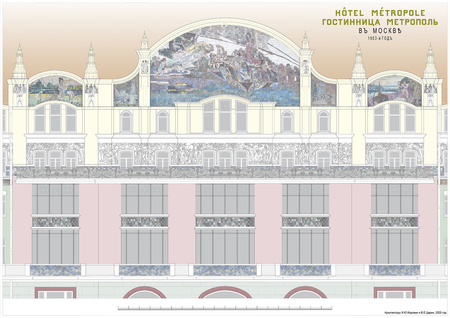
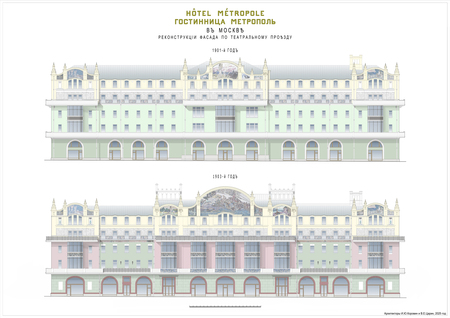
Graphic reconstruction of the façade along Teatralny Proezd for the years 1901 and 1903. Architects I. Yu. Korovin and V. E. Tsarin
V. D. Evallé, in the article «Abel Hans’s ‘Wheel’: The Tragedy of Passion and Fin de Siècle Aesthetics, ” addresses the artistic experiments of the French director Abel Hans, which are interpreted within the framework of Symbolist aesthetics.
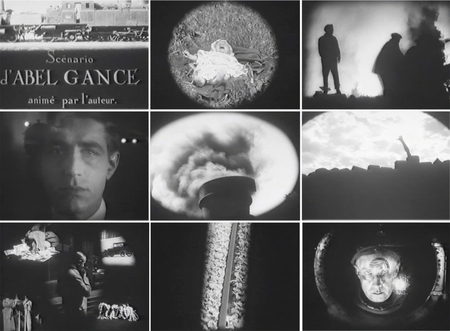
The research focus is on analyzing cinematic form (technical techniques), the relationship between lyrical and tragic elements in visual storytelling, and methods for adapting myth and classical dramatic devices. Technical techniques—such as superimposition, multiple exposure, and poly-screen—allow the master to examine their characters without detachment, exploring the topography of passion and despair.
Director Abel Gance. Stills from the film «La roue.» 1923
S. A. Fofanov’s article, «The Red Curator: Otto Nagel—German Artist and Exhibition Commissioner, ” explores the exhibition as a tool of cultural diplomacy and ideological exchange within the context of Soviet-German artistic ties in the 1920s.
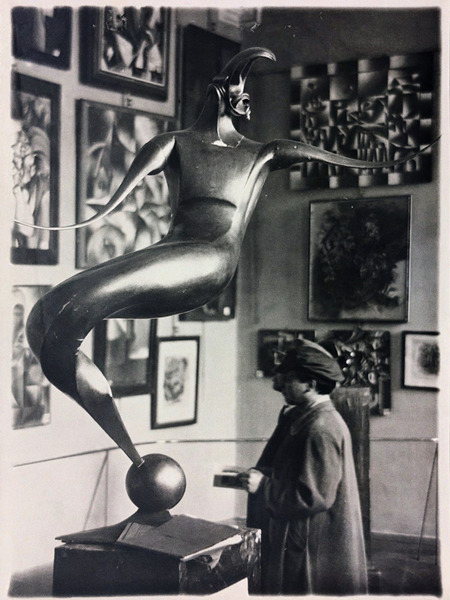
The focus is on the work of German artist and curator Otto Nagel, who played a key role in organizing the First All-German Art Exhibition in the USSR in 1924. The author reveals the mechanisms of exhibition formation, the principles of artwork selection, and the specific ways German art was represented within the Soviet cultural landscape. Historical and cultural analysis and comparative study of artistic practices in Germany and the USSR become important research tools; furthermore, archival sources are utilized in the study. Special attention is given to the activities of the Künstlerhilfe organization, its role in shaping transnational artistic connections, and the concept of «political art» as realized in the exhibition.
Excerpt from the First All-German Art Exhibition in Saratov. 1924/25. Second Floor Exhibition. «Abstract Expressionism» Section
The graduating class concludes with the essay by D. A. Pyrkina, «Artistic Avant-Garde and Social Reality: Spain 1936–1976.»
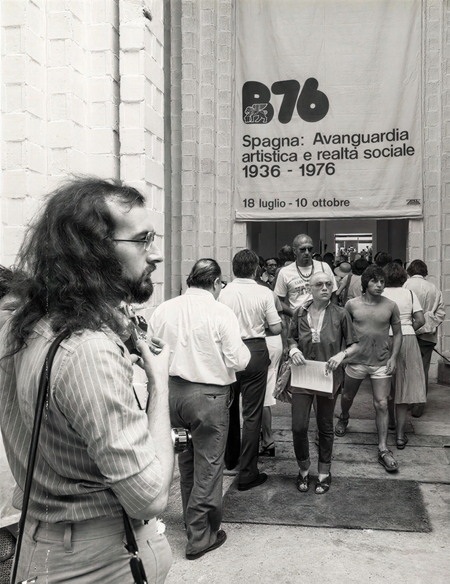
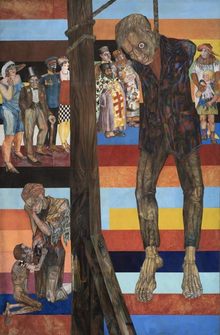
In the article, the author examines the specific characteristics of the Spanish avant-garde during the reign of Francisco Franco, noting the period’s distinct features—primarily the dual nature of the Francoist cultural policy regarding modernist art. Abstract painting and sculpture became tools of «soft power» for the ruling regime, used to achieve certain foreign policy successes. Among subsequent generations of artists, informel art is often criticized as official, supported by the regime, and overly «flexible» for interpretation and instrumentalization. Subsequently, movements that directly conveyed the artists' political and social stance came to the fore—chiefly pop art and conceptualism.
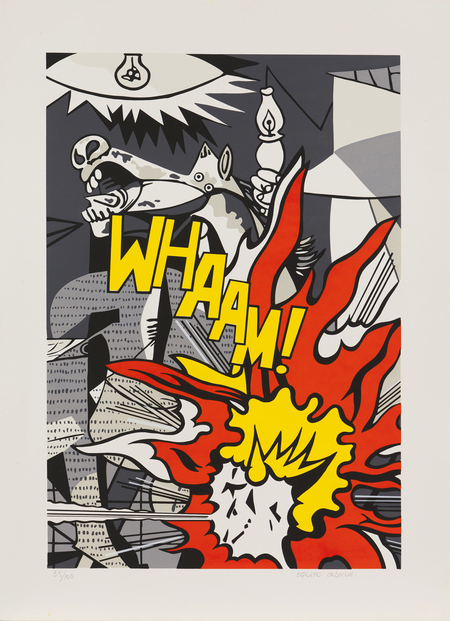
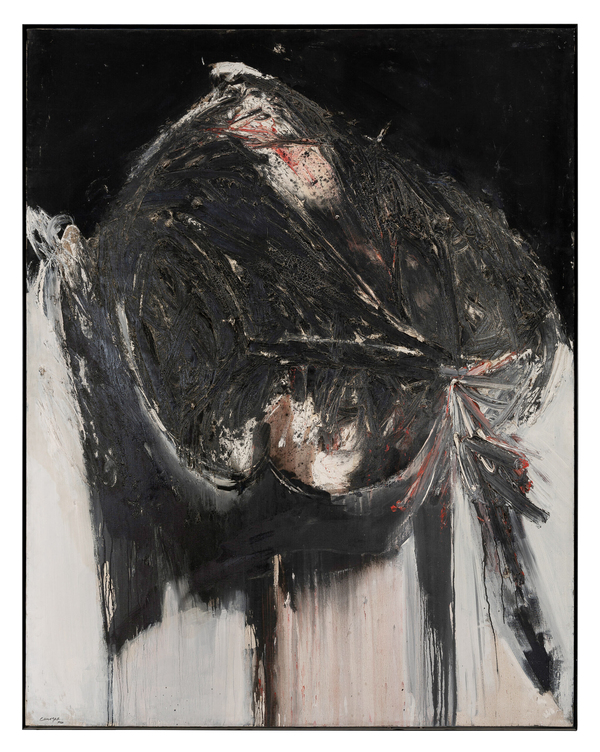
Equipo Crónica. Guernica. 1971–1972. Cardboard, silkscreen. 75 × 55 cm. Private collection // Raphael Canogar. Black Series No. 55. 1960. Canvas, oil. 250 × 200 cm. Fundació Suñol, Barcelona
We did not set out to rewrite the history of modernism, but rather aimed to draw attention to the «non-obvious vision» (borrowing Daniel Arassa’s term) and the marginalia: the periphery, archives, and drafts. We hope that the material in this issue will inspire our readers to view familiar names and subjects with a fresh, unbiased perspective. We sincerely hope that this issue will not be an ellipsis, but rather a continuation of the conversation on the margins of new research narratives.