Before every game, there is a brief pause: we power on the console and wait. At this moment, the screen doesn’t show the game itself, but the sound already sets the tone. Sometimes it is calming, sometimes it feels mysterious, and sometimes it reminds one of a short musical flourish. These very few seconds will become the central subject of our study.
Sega Saturn. Splash Screen as the First Greeting
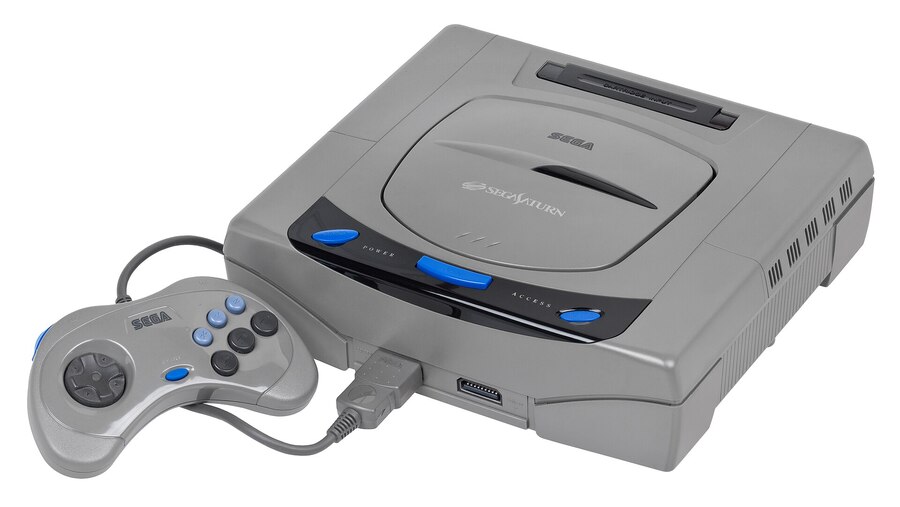
With Sega Saturn, the sound and the appearance of the company logo are perceived as a single event. Before we know anything about the future game, the console has time to introduce itself. Here, it is not as important to hum a melody as it is to hear the very gesture of the beginning—where the sound appears and when it ends in relation to the logo.
PlayStation. Almost like watching a movie opening.
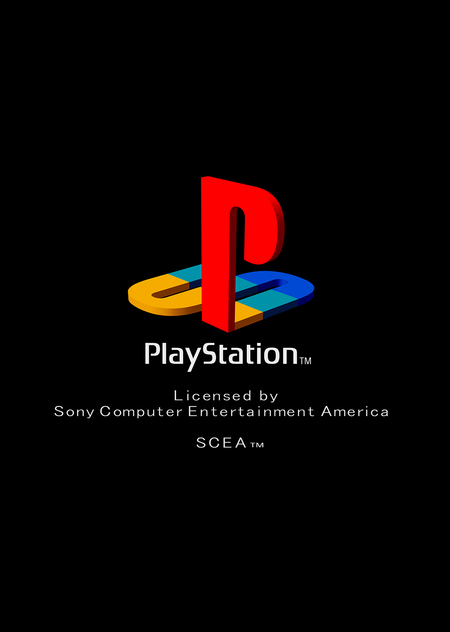
The first PlayStation was released in Japan on December 3, 1994. Its startup screen separated the console’s power-on from the immediate start of the game and gradually became one of the system’s most recognizable icons. However, later nostalgia is more significant: according to the memories of sound designer Takafumi Fujisawa, the composition was created during the prototyping stage and tailored to the animation of the logo.
The opening sequence of the first PlayStation feels unusually grand for a home console. It doesn’t rush to the menu; instead, it first conveys a sense of significant beginning. The sound designer, Takafumi Fujisawa, mentioned that he wanted to evoke in the player a feeling similar to entering a movie theater, where something exciting awaits.
Takafumi Fujisawa was involved in the PlayStation project even before the final team was assembled. In a 2019 interview, he discusses the first prototype and even recalls a version that featured the brand name whispered. This effect was ultimately omitted from the final composition. This episode illustrates a critical design decision: the device could have literally «spoken» the brand name, but instead, it received a more abstract and multi-layered musical gesture.
Today, we are accustomed to listening to game jingles through quality headphones. However, in 1994, the PlayStation was often connected to a standard television, and the speakers varied widely among users. Fujisawa specifically considered how to ensure the sound’s character remained consistent across different televisions. This is an important concept for design: recognition depends not only on the beauty of the sound but also on the conditions in which it will be heard.
The sound of the first PlayStation is interesting because it combines several functions. It signals the device’s startup, helps monitor disc reading, and builds anticipation for the game. This is a great example of how technical elements can become emotional. The player remembers not the microchips or the loading process, but the feeling they received through the sound.
Dreamcast. Sound drawn in a spiral
With Dreamcast, everything feels lighter and shorter: a spiral symbol appears, and the sound underscores its motion. Instead of a long musical intro, it creates a compact scene. It’s clear that the sound doesn’t exist in isolation—it helps the viewer feel how the symbol assembles itself on the screen.
Not every prefix needs a long intro sequence. Dreamcast shows a different way: a small action can make a memorable impression if the visuals and audio align perfectly. For research, it is more interesting to compare how much time each sequence demands from the viewer and what it manages to convey within that time, rather than determining which intro is «better.»
PlayStation 2. Sound opens up space
In PlayStation 2, the imagery becomes more spatial: instead of the familiar flat logo, we see depth, movement, and abstract forms. Sound reinforces this feeling. It seems as if what opens before us is not a program window, but an entire space into which one is invited to step.
Fujisawa recalled that when creating the PlayStation 2 sound, the team was inspired by the image of a monolith floating in space with Earth in the background. This didn’t necessarily have to sound literally like space. Rather, the image helped set the mood—a sense of calm power and vastness.
The first and second PlayStations sound different, but they share a common technique: the startup sequence is presented as a distinct, noteworthy event. Fujisawa mentioned that when creating the PS2, the team aimed to maintain a recognizable musical connection to the previous system. This suggests that what is inherited isn’t just the logo, but also the method of building anticipation through sound.
GameCube. Sound toy
If PlayStation sounds grand, Nintendo GameCube has a much more playful atmosphere. As the cube forms the Nintendo logo, the sounds seem to acknowledge its movements. It almost feels like a small toy: the viewer watches the shape emerge from individual actions while hearing those actions.
The GameCube is interesting to watch even without an image—the sound features movement and pauses. With the visuals, it becomes clearer that these moments correspond to the appearance and movement of cubic elements. This is an example where animation seems to explain what is heard, and sound helps convey motion without words.
The most unexpected feature of the GameCube is its hidden startup options. If you hold down the Z button while powering on, a different sound replaces the standard jingle. If you hold Z down on all four controllers at once, you hear yet another variation. The graphics remain recognizable, but the mood of the scene shifts. Nintendo turned the system splash screen into a little secret for attentive players.