March 27 | Monday
Petrogradsky Listok, No. 74 Peasant Rally Never before had the vast hall of the Naval Corps, where Petersburg residents gathered for splendid balls, housed such an audience as those assembled for the rally organized by the «All-Russian Peasants’ Union» on March 26. Grey greatcoats predominated. A sea of military-style heads. All of them were peasant-farmers who came here seeking «land and freedom.» A peasant congress is necessary. It is necessary to cover the entire country with a network of peasant committees that would prepare the transfer of «royal» and noble lands into the hands of the peasants. «The land must belong to the state, and all workers and those who till it themselves must have the right to use it, ” the orators proclaimed. And the hall erupted in boisterous applause for these slogans…
In the Streets Never before has the capital seen so many street rallies as yesterday… It is understandable—Petrograd is currently navigating an extremely tense moment. Our defeat at Stokhoda was due to disorganization within the troops. The same disorganization exists in factory operations. And there is a severe food crisis… All these grim phenomena cast a shadow over the freedom we have just won…
Above the marching lines of soldiers, red and blue-black-white banners flutter. Petrograd, the revolutionary heart, had not seen that last combination of colors before. And the soldiers marched on and on. There were many of them—thousands… A small Estonian tribe, inhabiting the northern part of the Estland Gulf, gathered for a demonstration from Mount Revele. For them, the Germans were ancient oppressors of their tribe, and the Russian administration of the autocracy was the patron of the Germans and the oppressor of the Estonian people. But other times have come. The Russian people have won freedom. The Estonians—the soldiers of the Petrograd garrison—have won it with them… Inscribed on the red and blue-black-white banners are the words: «Long live the Democratic Republic, ” „Long live free Estonia.“
Repercussions of the Revolution in the Provinces
Exchange Gazette, No. 16155 (Evening Edition) Sanatorium in Livadia The Committee for Public Safety, in agreement with the commissar, has resolved to request the provisional government to provide the palace and social house in Livadia to equip a sanatorium for tubercular patients from the ranks of former political prisoners. The Zemstvo Union has taken on the responsibility of equipping the sanatorium; 15,000 rubles in donations have been collected.
Provocateurs St. Petersburg. In the records of the provincial gendarmerie department, a list has been found of numerous individuals who belonged to left-wing organizations and served in the Okhrana. The provocateurs included intellectuals, workers, railway employees, and students.
Transformation of a Monastery into a Secular Commune In Ladivostok. The Nikolsky Union of anarchist-communists decided to send delegates to the Shmakovsky men’s monastery with a proposal to join the union, abolish the monastic regime, and allow those unwilling to live the secular communist life to withdraw to a more remote area.
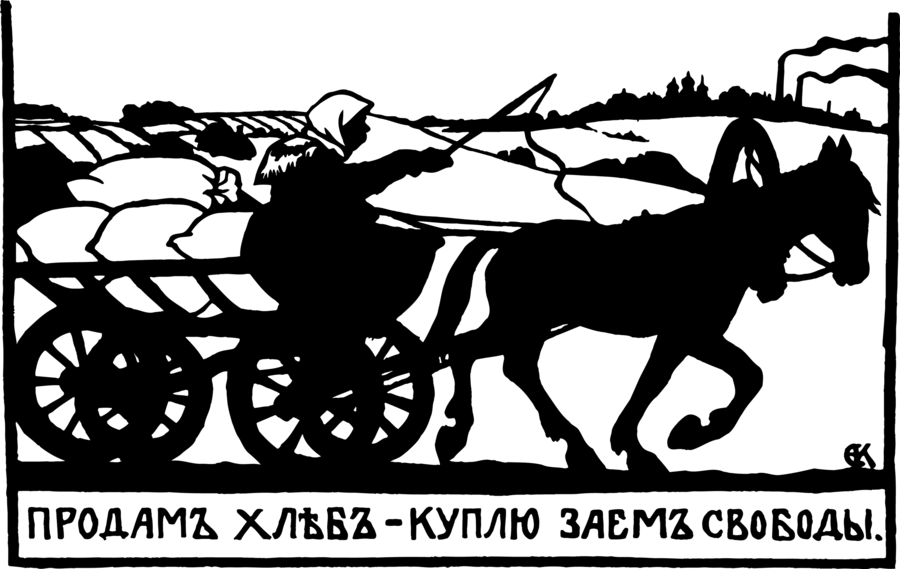
Meeting in the village in March 1917
March 28 | Tuesday
Russkiye Vedomosti, No. 69 The 140th Week of the War The most significant event of the past week was the fighting on the Stokh River, in the area of the villages of Staroye Chervishche and Gelenin, 25 versts north of the Kovel–Sarna railway. Unfortunately, these battles ended in a major setback for us… The German attack was preceded by heavy artillery fire and gas waves—a total of only 13 were released, which is more than in any other gas attack conducted by the Germans on our front. Although our troops were not significantly outnumbered on the enemy side in this case, for one reason or another, our forces could not withstand the enemy assault and, being pressed against the flooded river, suffered very heavy losses… Ultimately, our losses are estimated at 20–25 thousand people. Furthermore, according to German reports, the enemy captured one hundred and fifty officers and 9,500 soldiers.A. Oglin
Bolshevism A number of political parties and organizations have already issued statements on the key issues raised by the upcoming great events of the Russian Revolution… Gazing broadly at the totality of these statements, we immediately notice a striking characteristic. This characteristic lies in the involuntary convergence of various democratic currents—from cadets to Mensheviks included—on the common ground of distancing themselves from the demagogic and dictatorial tendencies of Bolshevism… Bolshevism is a sermon advocating the violent, seizing implementation of the maximum demands of the minority—a sermon of minority dictatorship over the majority… Before the convocation of a free constituent assembly, any attempt at dictatorship is an assault on the freedom of popular self-determination. …No class can be considered superior to the nation, regardless of how that class is named: bourgeoisie or proletariat. Nevertheless, a party committee that places itself in the position of commander of a certain class can claim dictatorial authority over the fate of the free people. …The triumph of Bolshevism would present a grave danger to the cause of nascent liberty—this is the position that currently unites all the minor-Menshevik democratic currents…A. Kizevetter
March 29 | Wednesday
Exchange Gazette, No. 16159 (Evening Edition) The Riga Front (By Special Correspondent) The Germans displayed curious excitement on the frontline during our national revolution. It was evident from the conduct of the German soldiers that the initial news of the Russian revolution in the enemy trenches had been received with great enthusiasm, fueled by fervent hopes for a swift peace. Starting the morning of March 5, German proclamations began appearing on blue paper dusted with snow: «Soldiers. Revolution in Petrograd… The Russian people. Wake up. Open your eyes. All the troubles come from England and so on and so forth…» …The Germans are utterly captivated by our revolution. It has finally arrived—the one promised by the Kaiser back in 1914. For the Germans, the revolution in Russia is the first harbinger of peace. Everyone believes that if not today, then tomorrow Russia will yield…
March 30 | Thursday
Moskovsky Listok, No. 71 Decree on the Transfer of Grain to State Control All quantities of grain—food and feed from previous years' harvests, 1916, and the future 1917 harvest—less the reserve necessary for the owner’s food and household needs, are transferred into state control from the time the grain is recorded. This grain may only be alienated through state food agencies… The State undertakes to pay for all alienated grain. The payment procedure for the grain is determined by a special instruction. Delivery of the grain to the station or pier is mandatory for the owner… Until the grain is surrendered, the owner must store it at his own risk and peril and bear civil, and in appropriate cases, criminal liability for its preservation. For individuals who refuse to voluntarily surrender grain, requisitions will be carried out based on a special instruction.
Facing Danger …Two ministers were present at the meeting of the People’s Freedom Party in Petrograd. These were the Minister of Agriculture A. I. Shingarev and the Minister of Communications N. V. Nekrasov. A. I. Shingarev, defending the introduction of a grain monopoly, pointed out that the country’s grain reserves were small… The situation with transportation is worse. The devastation caused by the old regime has gone very far. The situation with fuel is also dire. The old government ruined coal delivery through indiscriminate requisitions… Now, fuel production has sharply declined during the revolutionary period. And this situation cannot yet be stabilized… The ministers' speeches must serve as a final call. Everything is clear—what is needed is work, work, and more work. And the nationwide effort will perform the necessary miracle…
03/31 | Friday
Russia’s Morning, No. 84 Army Morale Our army—the army of gray people—is the offspring of a poorly educated, impoverished village. It brilliantly passed the test of political and civil maturity… The army realized that the Russian Revolution signaled a decisive push to bring the war to a victorious end and crush the treacherous dreams of certain circles regarding a separate peace with Germany. This message was conveyed to them by the names of those who took charge of the government and led the revolution. That is why the news of the overthrow of the old regime was met on the front lines with such joy, with such rosy hopes. But soon, a certain anxiety began to mix with this joy. The army was unsettled by wild shouts from the rear, «Down with the war!», as well as rumors of the dual power reigning in Petrograd. The tactics of the Petrograd Soviet of Workers' and Soldiers' Deputies—its pressure on the Provisional Government and its usurpation of the right to issue independent orders—are met with decisive condemnation here, among the officers, and especially among the soldiers… The army raises the alarm: «The Fatherland and the army are in danger!» S. Moskvin
Disorder and Pogroms Kyiv (Own Correspondent). The areas near Kyiv are extremely tense. In Belgorodka, a gang of robbers disarmed the militia and seized control. A military detachment that left Kyiv under the command of Lieutenant Bashinsky fought a real battle with the robbers. Twelve robbers were arrested. In the settlement of Brusilov, a Jewish pogrom occurred. Police and military units left Kyiv by car. In Ovruch, denaturant warehouses were destroyed. Displaced populations got drunk. The city is in complete anarchy. Troops have been dispatched to Ovruch.
April 1 | Saturday
Alarm Clock, No. 17. Drawing by D. Moor
Alarm Clock, No. 17 A Speech by Mikhail Vladimirovich Rodzyanko Brothers-soldiers, soldiers-brothers; Hello, soldiers, brothers-soldiers! Even though you are democrats, soldiers-brothers, Believe me, soldiers, brothers-soldiers! The wars of the mountains call you, soldiers-brothers, Dragging you toward the Carpathians, brothers-soldiers.
Fight as long as you have the strength, Placing your chests in the path of bullets; Anonymous graves Will conclude your sorrowful journey. The red banner flies, Greedy bayonets shine. Fortunate is he who survives Without a leg or an arm. We must honor and rejoice him for glorious valor, And he will receive a wooden prosthesis from the treasury.
He will receive it, brothers, soldiers-brothers, As in the old formation. Believe me, soldiers, brothers-soldiers, Believe me, heroes!
Skanderbeg
Early Morning, No. 73 Prisoners of the Tsarskoye Selo Palace According to the instructions for the guards of the prisoners in the Tsarskoye Selo Palace, all their letters sent to the outside world had to pass either through the watch commanders or through Commandant Kotsebu. However, it soon became completely obvious that the palace inhabitants preferred to give their letters to Kotsebu. One day, the duty ensign Verik uncovered the secret of a bulky package that Count Benckendorff had handed over to Kotsebu. The package contained two letters—one addressed to Count Benckendorff and another to Prince Dolgorukov and Countess Shuvalova—as well as an order for one of the banks. The content of one of the letters was approximately as follows: «Sell all our properties immediately; transfer the money to the American Bank. Let us know when a courier is departing abroad. Before leaving for abroad, the courier must stop by Tsarskoye Selo to see Kotsebu to collect documents»… By order of General Kornilov, Kotsebu was immediately arrested. Then, by order of the Minister of Justice Kerensky, supervision of the Tsarskoye Selo prisoners was reinforced… Nikolay Romanov’s previous unrestricted walks through all the palace rooms and conversations with those around him were forbidden. Two or three rooms were assigned to his personal use, from which he could only leave when accompanied by guard officers. The former Tsar’s conversations with Alexandra Feodorovna were only permitted in the presence of duty officers. The menu, which the Tsar had previously curated personally and which had been rich and varied, was also somewhat curtailed.
April 2 | Sunday
EASTER OF THE LIBERATED PEOPLES HALLELUJAH…
Truth born in the valley of suffering… A call from Golgotha… Freedom of thought, purchased through suffering and the cross’s torment, has broken free from the blindness, the soullessness, and the peculiar confines of scholasticism… Such was the thorny path of the human being who shatters the rusted chains of tyranny. That remains his path even now—the same arduous yet joyous journey that led us through Golgotha to our Easter—the great Easter of liberation, which we first encounter amidst the tolling bells not as pitiable slaves, but as free citizens.
Dawn, No. 73 | Theatrical Gazette, Nos. 13–14
Hallelujah! The chains of violence have been broken. The rusty bars of dark prisons have been smashed, the villains have been overthrown, and the axe of arbitrary power has been wrested from the hands of the executioners. Hallelujah… Brilliant Truth is coming… And it is not some ephemeral, intangible dream—a great judgment is coming that will mete out to everyone according to their deeds, that will eradicate the evil of the old world, and usher in the kingdom of the new world on our soil… We came last, after humanity across the world had come to know the happiness of a new life… But time passed, and people devised many other heavy chains of servitude instead of the chains of tyranny, within which humanity is struggling, a humanity that once unfurled the banner of «liberty, equality, and fraternity»… We came last not only to firmly and unshakably build a new, free Russia, but also to remind the world of the forgotten and abandoned covenants of freedom… The liberated Russia carries the joyous news of freedom to all the peoples of the world, and a joyful cry races toward us from everywhere: —Hallelujah!
Procedure for Entering and Accessing the Kremlin during the Easter Vigil
1) The Spassky and Borovitsky gates are open for pedestrians. The Nikolsky and Troitsky gates are open for carriages. Officials, clergy, and chanters are admitted through all gates without obstruction, whether on foot or in carriages. <…> 3) Departure from the Kremlin is permitted through the Troitsky and Borovitsky gates after the conclusion of the event. Exit from the Kremlin is permitted through all gates. <…> 5) Riding through the Kremlin on the Holy Night is strictly forbidden. 6) Entry of carriage drivers without drivers into the Kremlin is strictly forbidden. 7) 1,500 people will be admitted to the Dormition Cathedral. 8) Firing rockets is permitted only upon the order of the elders of the cathedrals and churches in a designated location.
From the Moscow City Food Committee
The Food Committee calls upon all citizens to help ensure the immediate implementation of the rationing system, for every person who buys bread or flour without a ration card is thereby taking a portion of bread away from another.