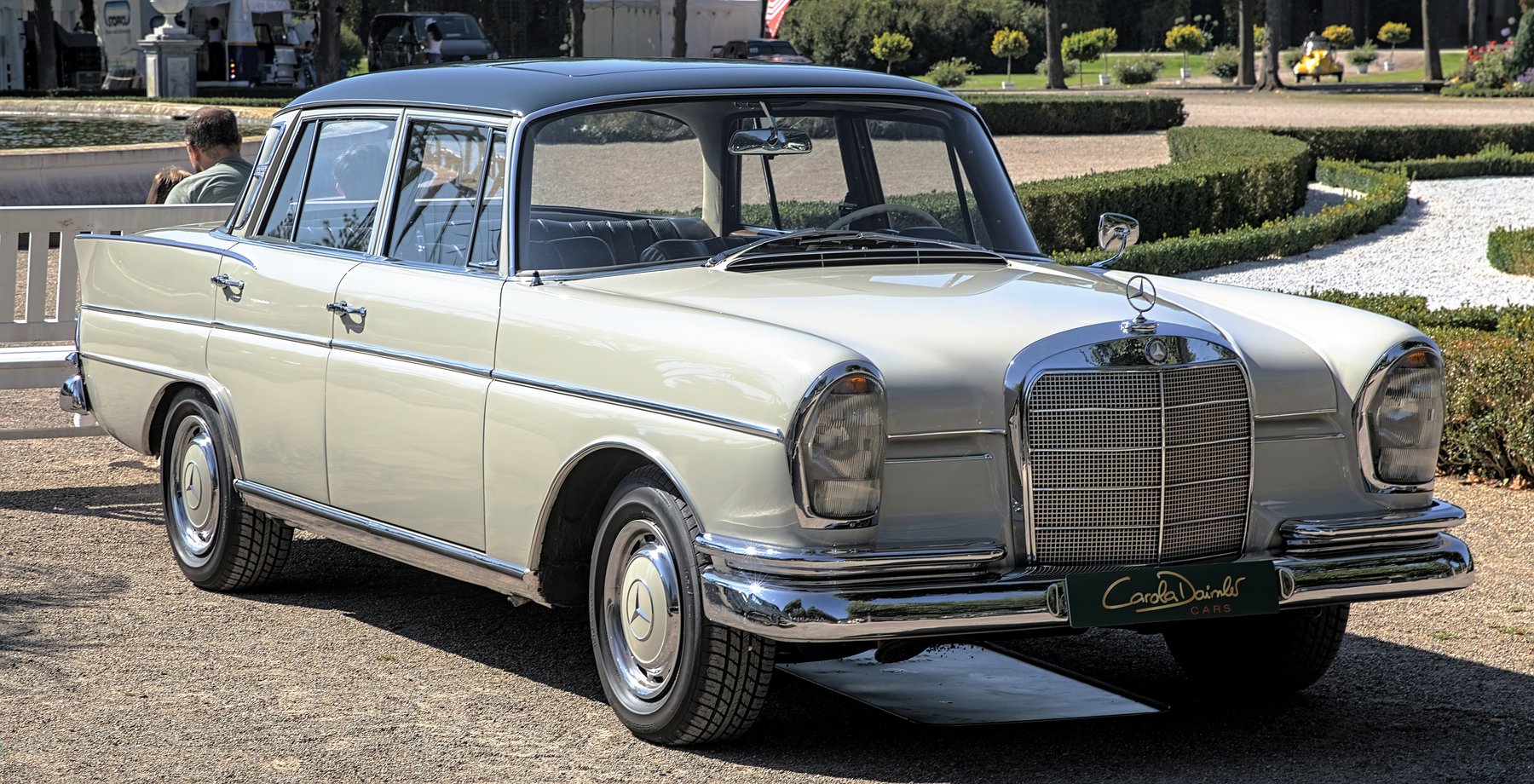
From 1957 to 1962, the flagship Mercedes model was the W189 300, also known as the «Adenauer.» However, work on a new flagship began even before the production of the W189 concluded. At the same time, the company pivoted toward unifying its models. Therefore, instead of developing a separate platform for the new lineup leader, they utilized the chassis from the Mercedes-Benz W111. For the first time in the company’s history, Mercedes did not have a dedicated platform for its most expensive and prestigious model! They attempted to compensate for this by emphasizing rich interior and exterior trim and a more powerful engine. The new Mercedes, designated W112, gleamed with chrome, and the interior was finished in leather and expensive wood veneers. The engine was a 3-liter M189—the largest engine the company had at that time.
A new model was introduced under the names 300SE and 300SEL (the extended version). The four-door sedan, designed by Friedrich Geiger, was unveiled to the public in 1961. A year later, two-door coupes and convertibles, designed by Paul Brock, were released. The 300SE was an excellent car, but it was excessively expensive, which kept sales relatively low. In 1962, 24 W111 models were produced for every W112 sedan rolling off the assembly line, and by 1964, this ratio had dropped to 1 to 40. Furthermore, in 1963, Mercedes released an even more luxurious 600 model, causing the 300SE to lose its status as the flagship of the lineup. Its sales immediately halved. All of this resulted in the 300SE having a limited lifespan and low production volumes. A total of 5,202 sedans were built, with 2,419 coupes and convertibles. Nevertheless, the Mercedes-Benz 300SE left a mark on the history of the automotive industry, both in itself and as one of the predecessors to the S-Class.