
10.10 | Tuesday
Anarchy in the country
Morning Russia, No. 243 Army Collapse Tver (Correspondent). In Rzhev, for three days, the local garrison soldiers and a significant portion of the civilian population lived with one thought: to loot as much vodka as possible and sell it at a higher price.
State of Alarm Kostroma (Correspondent). …The province began to starve. In Chukhlo, there is no flour, no grain, and the population is eating pomace sent for livestock feed… The mood in Kostroma itself is anxious. In the factory crowds, there are demands for food raids and severe measures against speculators, otherwise, they threaten vigilante justice and riots… …The Bolsheviks point out that raids are inevitable because they serve as an outlet for popular anger…
No Schools or Hospitals Tver (Correspondent). The Tver district zemstvo has become so destitute recently that it is unable to pay salaries to elementary school teachers. Consequently, many schools are closing… Following the schools, the district zemstvo hospitals have run out of funds. The cause of all these woes is that the zemstvo payers have stopped paying their dues…
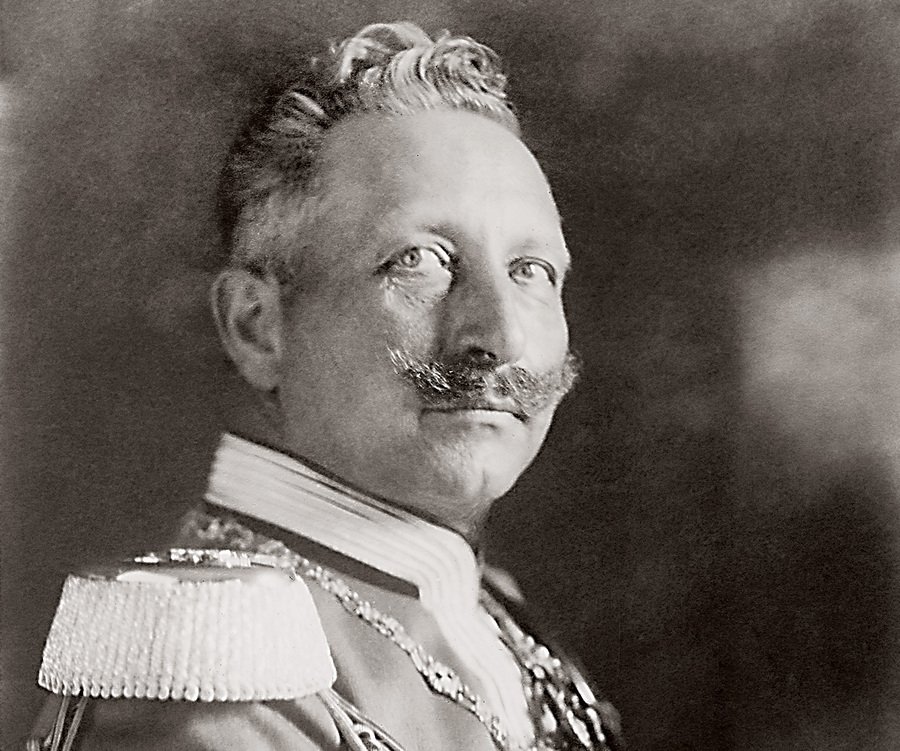
Wilhelm in Riga
Moscow Gazette, No. 229
…Reports from Riga indicate that Emperor Wilhelm, while there, ordered without delay that all persons wishing to return to Russia be allowed passage. This is, of course, due to provisioning considerations. …Upon his initial arrival in Riga, Emperor Wilhelm visited an Orthodox church, venerated an icon, and ordered that Emperor Nicholas II be mentioned during the liturgy. He then commanded that the captured officers and soldiers be lined up. To the officers, he said, «You are knights worthy of deep respect, ” while addressing the soldiers, he said, „but you are cowards and traitors.“ After the surrender of Riga, an unprecedented order was established there; ten leaders were executed, the citizenry was returned, and the city was entirely safe and illuminated. What a disgrace for us…
11.10 | Wednesday
New Times, No. 14894 City Notes Potatoes are rotting near Petrograd. There are no laborers to dig them up. Workers refuse to work for 9 rubles a day… It is also widely known that wagons loaded with foodstuffs are not being unloaded. There are no workers, yet soldiers demand 10 rubles a day for their casual labor. The conclusion is obvious: there is work, but there are no workers in need of employment. Factories and mills are closing down. Thousands of workers are being thrown onto the streets. Professional unions are now paying unemployed comrades 3 or 4 rubles, and even 1 ruble for their food. The conclusion is obvious: there are workers who need employment—even if only for food—but there is no work available. …The two conclusions are diametrically opposed. Each is confirmed by facts. …The unemployed prefer to receive sustenance from the funds of the professional unions.
Football The final match of the autumn football cup took place on Sunday. Mercur and Kolomyagi played. The Mercur team could have reasonably expected a victory, but luck turned against them, and Kolomyagi won 2–0.
The Death of Ivan the Terrible
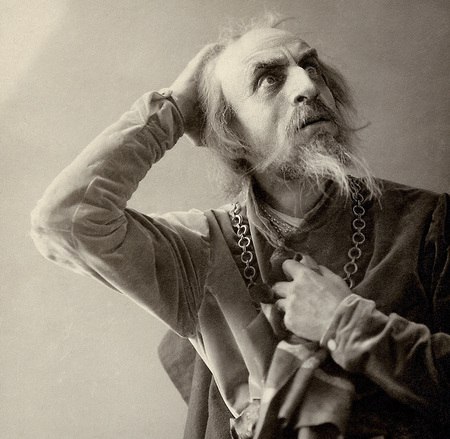
Stock Exchange Gazette, No. 16487 (Morning Edition) Alexandrin Theater Prior to the staging of A. Tolstoy’s tragedy, there were highly regrettable rumors circulating… Newspapers reported that some actors at the Alexandrin Theater were refusing to perform in A. Tolstoy’s «monarchical» play, where they were cast as confidantes and boyars who would have to bow to the earthly tsar. Such rumors gained some credence… There will always be zealous people, driven not by reason, who are willing to carry over the detestable habits of the old regime into the days of the freedom we have so painstakingly brought into being… The old ways do not perish immediately, and we entered the new free structure with lingering traits of venality and subservience… Fortunately, the rumors turned out to be overly exaggerated… The resumption of Tolstoy’s tragedy, which had long been absent from the stage, must be greeted with enthusiasm and sincerity… Among the vulgarity and insignificance of the contemporary repertoire, any reminder of our literary treasures is welcome. The first scenes of the tragedy, as well as its conclusion, evoke events in Rus' that bear many resemblances to what we are experiencing now. From this—there arises a reason for certain publicistic reactions from the audience. The first act, in this respect, presented a rather impressive manifestation…
When Godunov speaks of the great turmoil in Rus', of the enemy already positioned near Pskov, of the new order requiring unity and accord that is absent among the boyars—and, characterizing the danger and proximity of the state’s demise, concludes this beautifully written and very well-spoken monologue by Apollon with the appeal to «immediately go to the Tsar with the entire Duma”—a relatively warm round of applause erupted from a significant portion of the audience, despite mild jeering from a minority. Conversely, as if in response, part of the audience applauded Sitsky’s words against the Tsar…
The production inspires high expectations… Everything was in place, but there was a lack of inner vitality and life.
This applied to the set design and props (the jewels admired by the Terrible Tsar were dreadful), as well as many mass scenes; the common people on the square resembled an operatic stereotype, and in other areas, the crowd made it difficult to hear the actors' lines. The coldness and disjointedness are partly explainable by the fact that working with „freelance“ artists became more difficult, and the director’s firm „authority,“ which is so necessary on stage, wavered…
The tragedy’s great success was hampered by the performance of the lead role by Mr. Ge… His peculiar style of acting was unbearable in the role of the Terrible Tsar…
The suffering caused by his stumbling and incomprehensible shifts across the entire stage, along with his various tics, threatened to evoke a purely comical impression. However, there were good moments in Mr. Ge’s performance.
The performances of all other roles shared the same character of routine and artistic indifference. Mostly young people were playing. Among the older generation, we note Mr. Kondr. Yakovlev, who played an overly frail Zakharin, and Mr. Valua in the role of Shuisky… Mr. Apollon in the role of Godunov is quite fitting, beautifully conceived both visually and in performance. But the scene of the Terrible Tsar’s murder should be staged differently—more believably.
K. Arn (Solus)
In the photograph: Ivan the Terrible — Mr. Ge
12.10 | Thursday
Evolution
Early Morning, No. 233
It turned out that the best way to fight the Bolsheviks was to put them in power. Here are the first results of such an experiment conducted in Tsaritsyn.
Everyone certainly remembers that, no later than this summer, Tsaritsyn was considered a nest of Bolshevikism. The Bolshevik Minin ruled and controlled Tsaritsyn, who was the subject of legends.
People were afraid to travel to Tsaritsyn even for necessary errands…
It seems that Tsaritsyn «separated» from Russia several times. Petitions, requests, and threats were sent to Tsaritsyn, but to no avail…
This continued until Minin was elected as the city mayor. When this happened… Tsaritsyn mourned him as if he were dead…
But what actually happened?… Once Mayor, Minin found himself facing an empty city treasury first. And he didn’t start by slaughtering all the bourgeoisie, but «quite the opposite»: he invited these bourgeoisie and shrugged his shoulders:
«Citizens, help me!!!»
…Thus, the first wedding between the Bolsheviks and the bourgeoisie was celebrated…
Er. Pechersky
The Tragedy of the Petrograd Intellectual
Exchange Gazette, No. 16490 (Evening Edition)
Yes, this is—a tragedy… Yesterday—the first… (the capital!) among the ranks of Russia’s «advanced society»; today—a pitiful, haggard «tail end, ” exhausted, frayed, spat upon by sunflower-seed-crusted socialists, who have squandered the last remnants of their years of cultivated moral „self“ in a damned battle against gnawing hunger and in some absurd martyrdom among the meaty and floury rabble—God, how hopelessly bleak and wretched your current lot is, you laboring metropolitan intellectual!..
…“Junior janitor required. Stipend—250 per month, quarter, heated, lit.» «Experienced teacher (female), —15 years of practice, ready for all subjects. Starting at 10 rubles per month.» «Student of the upper course (implied), recitation of the Constitution, starting at 5 rubles per session. Agreement for completion.» All three live in the same house… The first is a proletarian, for he walks in greasy boots, bought for some paltry 140 kopecks, and collects tribute from the «bloodsuckers.» The latter are «petty-bourgeoisites, ” as they preen in „composition“ collars and hats, and wear footwear only from the „stock market“ company „Soles“… The gait of one is authoritative, calm, and confident; the other jumps around like a bird from stone to stone, picking at scraps of dried food while terribly worrying that one new mark costs five nights of grueling nighttime work, and that the loan interest hasn’t been paid for five months… And he jumps like this from morning till night… Jumping, jumping, jumping—this worthless „starch-based“ bourgeois—a hungry, quiet, and nearly forgotten worker from the despised intellectual establishment…
A teacher from a capital gymnasium had to beg the commissar for a special ID card instead of a passport—one that contained no mention of his social standing or background. The explanation was brief and simple… «The teaching salary—it’s absolutely not enough to live on… Recently, I went to a team of porters and got hired to unload and load freight cars. That earned me up to 60 rubles a day… But two days later, they asked for my passport, and when they saw from the passport that I was a gymnasium teacher and also a nobleman, they immediately fired me because the workers claimed that a nobleman and a teacher had no place there… that, in general, they did not want to work with a bourgeois. So I decided… to temporarily take a simple identification card in exchange for my passport… Thanks to this, I can get into another team for a month or a month and a half…» The commissar thought for a while, then, deciding that nothing illegal was happening, issued the requested ID card to the teacher-citizen… The lucky man earns decently now, but… how many such lucky people are there?
…The elections to the city Duma have recently concluded, and now the Constituent Assembly has arrived. Look at the happiness, the triumph in the eyes of all these people—who, for reasons unknown, overcame years of study to gain the chance to write up to a thousand entries an hour for the city’s registry! How many applicants, how many who strive for this honor, how many pleas, tears, and humiliations!.. It would be more than enough! Starting at age four or five (once their service in the office or ministry ends), they can «earn» up to ten… A full five or six rubles a day! 90 in fifteen days! A new blouse, trousers, a couple of cans, a shoe, even for one foot!..* * *…Living with family on a civil servant’s salary of 60–100 rubles (control, treasury), of course, is not easy; however, it is even harder to bear the brazen, unjust insults at every turn, paying these hard-earned, final remnants of health, with money gained through sacrifice. Purchases amounting to less than a dozen and a half rubles are no longer considered purchases. And one must witness the abyss of infinite contempt shown by marauders of all kinds and ranks toward the unfortunate «petty bourgeois"—one must hear that magnificent laughter. It is not that it is terrible when civil servants' half-pound cuts of ham (a whole month’s dream!) are tossed onto the counter barely wrapped, without any ties, but rather that one cannot, uselessly, protest against it. It is also not absurd that two stove repairmen take a hundred rubles for a three-to-four-hour «repair» of two kitchen stoves, while a teacher, who teaches with their children from 9 AM to 2 PM—earns one hundred and fifty a month; and that the former are «true democrats» and «honest proletarians,» while the latter is a cunning «bourgeois.»Alex. Valentinov
10/13 | Friday
Russkaya Slovo, No. 234 Ban on Entry to Moscow The Bureau of the Petrograd Unloading Commission adopted several decrees concerning entry into Moscow, prohibiting entry to those without a permit. Starting October 14th, the sale of tickets to the «Moscow» station is forbidden for those lacking such a permit. This certificate is issued to everyone traveling to Moscow, including permanent residents of the city. Certificates are not required for those not planning to stay in Moscow. Moscow residents obtain permission for re-entry from the district commissars at their permanent place of residence. Those serving in state or public service and students receive permits from the relevant departments… Those arriving without a permit, and the hosts who are receiving them, are subject to arrest without a court order for up to six months or a fine not exceeding 10,000 rubles.
Day, No. 188 Regarding the Candidacy of I. G. Tsereteli and N. S. Chkheidze Yesterday afternoon, on behalf of the Petrograd Committee of Menshevik-Defenders, N. A. Chernov and F. A. Yudin held direct telephone negotiations with the Tiflis organization regarding the inclusion of I. G. Tsereteli and N. S. Chkheidze in the list of Menshevik-Defenders candidates. It turned out, however, that both men had left Tiflis for Kutaisi, and from there, traveled south to a village. Given that the deadline for submitting candidate lists had passed, the issue of the candidacies of I. G. Tsereteli and N. S. Chkheidze was resolved, unfortunately, negatively. …Revolutionary leaders cannot stand for election in the city where their activities took place.
10/14 | Saturday
Novoye Vremya, No. 14897 Candidates for Petrograd The candidates for the Foundational Assembly of Petrograd, nominated by various parties and groups, have been identified today. By noon, the city mayor’s office had received 14 candidate lists. <…>
From Appendix No. 2. Candidates of the People’s Freedom Party: P. N. Milyukov, M. A. Vinaver, P. N. Kutler, F. I. Rodichev, V. D. Nabokov, A. I. Shingarev, Countess S. V. Panina, A. A. Kornilov… Prof. V. I. Vernatsky. <…>
From Appendix No. 4. Bolshevik Candidates: V. I. Lenin-Ulyanov, E. A. Zinoviev-Radomysky, L. D. Trotsky, L. B. Kamenev-Rosenfeld, A. M. Kollontai, I. V. Stalin. <…>
From Appendix No. 9. Socialist-Revolutionary Candidates: V. M. Chernov, V. D. Kats (Kamkov), City Mayor G. I. Shreider, M. A. Spiridonova…
Election Calendar October 20 Deadline for publishing submitted candidate lists…
November 2 Deadline for the secondary announcement of electoral lists (corrected)…
November 12 The date set by the Government for the election—the first day of voting…
November 14 The third day of voting (until 2 p.m.); counting of ballots (after voting concludes).
October 15 | Sunday
«Salome» on the stage of the Chamber Theatre
Scene from a play
Ramp and Life, No. 41–42 | Theatrical Gazette, No. 42
Aestheticism and Wildeanism
…“Salome» presents a curious document of the highly refined theatrical aesthetic intertwined with hysteria—an aesthetic that, in our electrically accelerated time, I think is beginning to lose its appeal… A sincere actor, a genuine actress, with a big, simply human heart, will not feel or love this role.
But there is an interest here—a very sharp interest—in the hysterical aestheticism we experienced, and still experience. Our mothers, not to mention our grandmothers, women in their 40s or 60s, would find a Salome on stage like that incomprehensible, repulsive…
Undoubtedly, Wilde’s play is striking to the eye and to the ear.
Here is the moonlit night, the feast on the palace terrace, the proximity of that ancient body of water, and the cries of the prisoner Jokanaan echoing from it. It is cleverly and vividly conceived.
Of course, the dance of the seven veils—it may be seductive.
And within this entire sadistically-hysterical drama, there is what we call color—a general terror stemming from something happening to all the characters, even the moon.
And the conclusion, when Herod’s soldiers kill Salome by his order, as if crushing a serpent, is full of this terror and, if you will, a satisfaction of moral sentiment.
But in the drama of Salome—that is, the drama of the feminine being—one cannot look for much, not only because it is too brief for emotional development. It is absent. And because such a half-dreamy, half-animalistic, half-clinical, sensually hysterical creature cannot possess a drama.
N. Wilde
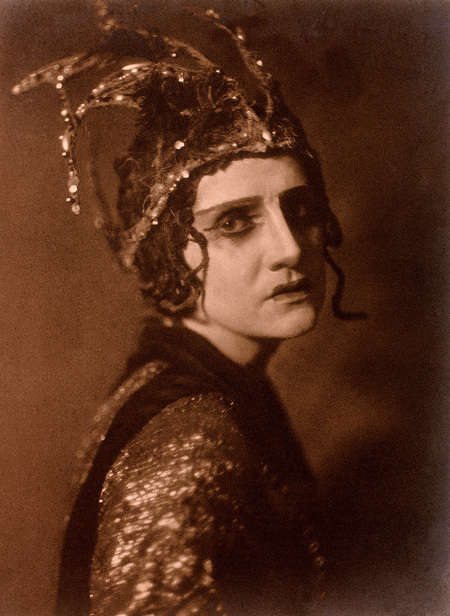
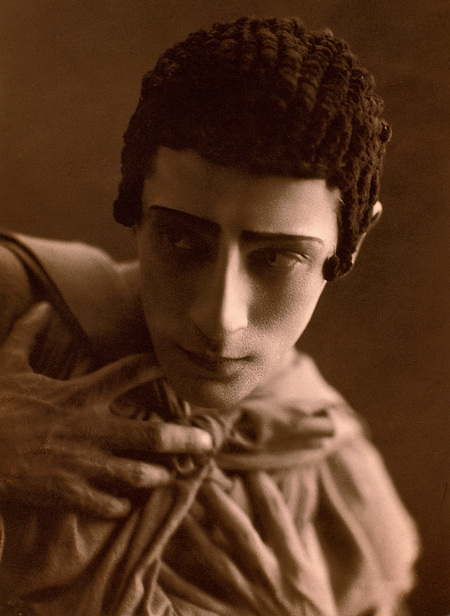
Left: Salomeia — A. Koonen. Right: Jochanan — N. Ceretelli.
In Futile Search I went to see the production of «Salome» at the Chamber Theater with expectations. No matter how little this theater of delights gave me in its previous performances, I still remembered the beautiful scenes from «Sakuntala» and thought: here is again a play seemingly written for such a theater—a real, dreamlike piece where the two main roles suit the actors perfectly: Koonen and Ceretelli… Alas! My expectations were not met. The production was strained, cold, built on pretentious declamation and full of pretensions. This was likely due mainly to the director, because the production itself is very cohesive and maintained this tone of declamation and stiff poses and movements from beginning to end. Meanwhile, Wilde’s work has the least of this; everything from start to finish is imbued with passion, everything is enveloped in a intoxicating bloody mist, and the entire design rests on the actors, on their speech—moments akin to delirium—on their movements full of passion, rather than on the setting, the scenery, the lighting effects, and so on. The theater did the exact opposite. It moved not from the actors’ feelings and not from the actors themselves to the external forms of the presentation, but from the scenery, the colors, and the lighting effects to the stage design and the actors' movements, finally to their speeches—and everything was drowned by the main element: the passion raging in the souls of Salome, Jokanaan, Herod, and others. Yet, what led the theater down this path?… The conditional futurism of the background demanded that the characters embody posture rather than life, masks rather than faces. With these masks, facial muscle expression disappeared, facial animation vanished… And masks cannot speak in a living human language, so instead of scorching, passionate speeches, instead of breathtaking, ecstatic cries—there was monotonous, unnatural declamation accompanied by some single, constant note. Only the dance of the seven stood out somewhat lively against this backdrop. It was well-constructed; only those dashes across the entire stage did not connect with the rest. I would have preferred Salome to be wrapped in lighter fabrics at the beginning of the dance. This would have made the subsequent nudity more striking. Overall, the performance left a burdensome impression…Sergey Glagol