December 5 | Tuesday
New Petrograd Gazette, No. 2 Truce until January 1st In Brest-Litovsk, generals from Berlin and comrades from Petrograd signed an agreement for a truce on the Eastern Front until January 1, 1918… The public in Petrograd reacted rather indifferently to the news of the truce… After all, the actual cessation of military action had begun five months ago… Regardless, neither the Austrians nor the Germans would undertake any major or even noticeable military operations before spring during the winter, especially before the Christmas frost, as past winters have shown… And after January 1st? Can Russia resume the war after the truce ends? Of course not. Because even now, essentially, there is no army on the Northern or Western Fronts—only gatherings of many people dressed in greatcoats and armed. …Gray greatcoats and rifles do not make people soldiers. The idea of defending the nation died in the Russian troops back in 1915, during the «great retreat»… The 1915 retreat contained the seeds of both the February and October Revolutions… Thus, to speak sincerely, the Brest-Litovsk treaty of separate truce is not at all a consequence of the Smolny Institute seizing power, but rather the result of losing Przemyśl, Warsaw, Kaunas, complicated later by the loss of Tarnopol, Riga, and the Monsund positions… Since 1915, the Russian army has been only a shadow, only a mirage…P. Sh-shin
The Bolshevik City Duma in Session The Petrograd Duma in December—the Duma of Bolsheviks, the Duma of Left SRs… Its physiognomy was entirely different from the previous one. Many people were smoking in the hall. Two or three leading figures were wearing hats… But a starch-crisp collar was still not uncommon… And there was something different about the atmosphere of the December Duma—a stark contrast to its predecessor. It was not a feeling of triumph, but rather a kind of subdued concentration. Speeches were few… decisions were made with great haste. Opinions did not cross-examine each other. The new Duma assigned the chairmanship to Mr. Vinokurov, and elected the leading Bolshevik Kalinin as the city head… …The most important part of Mr. Kalinin’s speech was his declaration that the former administration had paid all the sabotaging senior employees their wages and bonuses in advance, while the workers and junior employees who had started working had not received a single ruble for November. He proposed that the Duma react to this fact by declaring all the payments made invalid… …But the real victor was the representative from the municipal workers’ district of Petrograd. He read a resolution from the committee condemning the «malicious sabotage» by city employees. In particular, he spoke about how those who «know how to forge and saw can hold the highest positions»… However, the city treasury was empty… The only way forward was to take out a loan…
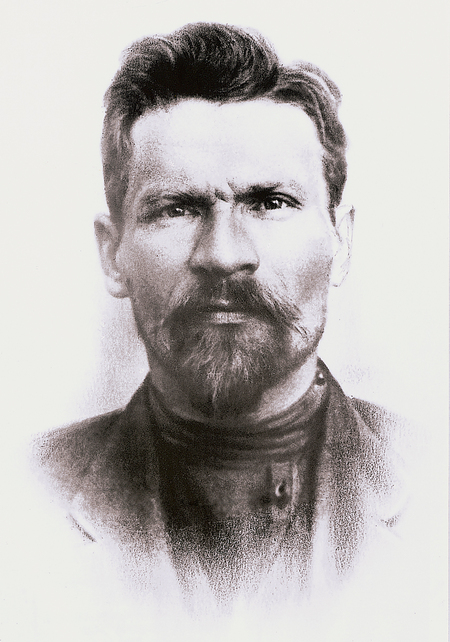
Photo: M. Kalinin
Smolny Institute delivered an ultimatum to Kyiv
…It encompasses four main questions: — Is the Council intending to abandon the disorganization of a united revolutionary front? — Is the Council obligated to halt the transfer of troops to Don without the order of Ensign Krylenko? — Is the Council obligated to assist the revolutionary troops in their fight against the Kadetsko-Kaledinsky uprising? — Is the Council obligated to cease attempts to disarm the Soviet regiments and the workers of the Red Guard in Ukraine, and will it return weapons that have been confiscated? …If a satisfactory answer is not obtained within 48 hours, the Soviet commissars of the Smolny Institute will declare the Ukrainian Council to be in a state of open war against the Soviet government…
50 rubles per day! In the working session of the Petrograd Soviet, a representative of the Metallurgists' Union delivered a report regarding wage standardization… The speaker acknowledged that the earnings of some skilled laborers had risen extremely high—40–50 rubles per day. A representative of the Leatherworkers' Union noted that in his industry, skilled laborers earn between 20 and 30 rubles per day—this was at a time when there were 150,000 unemployed people in Petrograd… The speech by the representative of the unskilled workers' section made a strong impression. This orator declared that if the demands of the unskilled workers were not met, the Smolny government would fall, just as the governments of Romanov and Kerensky had fallen. A resolution was adopted establishing a minimum wage for unskilled laborers of 8 to 10 rubles and 40 kopecks per day.
The Triumph of Looting Solovyev’s gourmet shop on the corner of Nevsky and Vladimirsky Prospekt seems to have set a record for exorbitant pricing. A pound of praliné chocolate costs 28 rubles, a pound of cheese 10 rubles and 10 kopecks, and a pound of small Russian pork fat is 9 rubles, while the pound of white and red (cranberry) candies, which cost 46 kopecks before the war, now stands at 16 rubles. In all other stores, all of this sells for almost half the price.
A New Scam Due to the looting of cellars and wine warehouses in the capital’s streets, sellers of various wines and brandies have appeared… The sellers claim that the wines are very old—from the cellars of the Winter Palace or, for example, from the cellar of Prince Oldenburg… For a bottle of «such» wine, they demand anywhere from 10 to 50 rubles, depending on the buyer’s attire and how eagerly he gazes at the bottle. Some buyers of the «expensive» wines have become victims of clever swindlers who sold them liquid tea poured into wine bottles.
The Battle Between Tobacco Speculators on Nevsky Avenue Yesterday, from the enormous crowd of tobacco resellers crowding one of the tobacco shops on Nevsky Avenue, opposite the Kazan Cathedral, familiar faces—who had returned seeking to restore order and form a line near the queue—began to «pull out» inconvenient female resellers from the throng. However, the women would not allow themselves to be wronged; they rallied to aid their «fellow resellers,» which resulted in a physical fight erupting amid the shrieks and cries of all the women… Only the timely arrival of Red Guards managed to «separate» the gathered crowd, who were striking one another with fists.
Gunfight Between Soldiers and Red Guards A shootout between soldiers and Red Guards occurred on Peski, near 4th Rozhdestvenskaya Street. The gunfight was extremely intense and lasted for about two hours. The firing started over a dispute concerning the wages demanded by the Red Guards. «We are defending the revolution and we only receive five rubles a month, ” the soldiers told the Red Guards. „But you are demanding fifteen rubles per day…“ The shooting ended with the retreat of the Red Guards.
«Stripping» of Officers Yesterday and the day before, in various parts of the city, groups of differently dressed people stopped officers on the street, demanding they remove their insignia. Some officers complied, while others refused the demand. This led to misunderstandings that did not always end well…
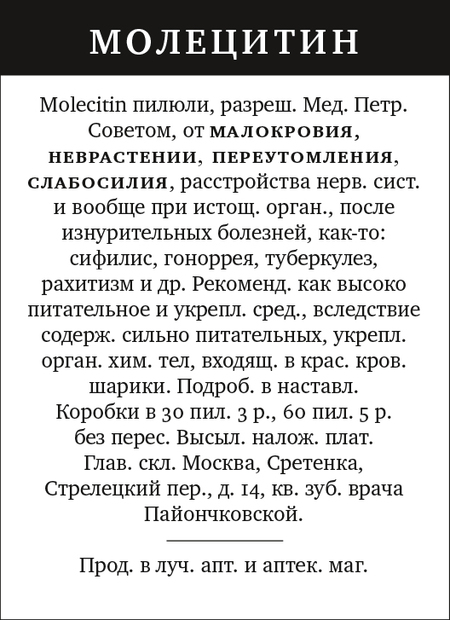
Petrograd Has Gotten Used to Being Without Medicine The pharmacy strike yielded completely unexpected results. In over 40 days of strikes, Petrograders have grown accustomed to managing without medication… Without medicine, Petrograders have even become healthier! Pharmacists say they won’t forget such a stagnation in the pharmacy trade as what is currently happening… There’s a crowd at the pharmacies, or rather, there’s hardly a crowd, and even the small crowds steer clear when they learn about the monstrous prices introduced some time ago: for a medicine that cost 71 kopecks before the first strike—now they demand 2 rubles and 92 kopecks.
New Life, No. 193
• Talks begin today with Germany regarding a peace treaty • The eastern part of the Donetsk basin is occupied by Kaledin • The military-revolutionary tribunal will open in mid-December • The Right SRs and the Center have left the Peasant Congress
Threat to the Academy of Arts The administration and students of the Academy of Arts had been agitated by rumors in recent days concerning a planned takeover of the Academy by an organization of students from private art schools. Citing that the Academy of Arts was run by «bourgeois» officials and professors, and that its students were also composed of «bourgeois, ” an unknown organization demanded that they provide the academy’s circular halls for art instruction, threatening to take them by force if they refused… Regarding this matter, the students of the Academy of Arts held meetings where they decided to donate the so-called Foundry Yard, which they put at the disposal of the mysterious organization. Rumor has it that the would-be conquerors are students from various schools: Stiglitz Art Encouragement Society, Zeidenberg’s private schools, Petrov-Vodkin’s, and so on. The same organization, it is said, has also set its sights on the A. I. Kuindzhi society, intending not only to seize the premises of this society and the numerous, immensely valuable paintings by A. I. Kuindzhi housed there, but also the capital held in the bank under this artist’s name… The A. I. Kuindzhi society took necessary precautions just in case.Spectator
A. Kuindzhi. Darial Canyon
Exhibitions A. I. Kuindzhi’s exhibition, held on Morskaya Street, just steps from the city telephone station, was hardly attended at first… Now the «Kuindzhists» have an audience, and their paintings are selling out quickly… Prices for Kuindzhi’s paintings have increased by 50% recently… Approximately 30 thousand paintings have sold, and there were only about 6,000 visitors…* * *On December 6th, an exhibition by the Wanderers' Association will open in the same halls… Incidentally, I. E. Repin will play a prominent role in this exhibition. He will present a depiction of the barge haulers (a large canvas, five and a half arshin), a portrait of the caricature artist Remy, and the painting «Desertion»…R.
12/06 | Wednesday
DRUNK RIOTS A massive raid and fire at the Petrov vodka factory
Yesterday, around one in the morning, several vehicles with armed men pulled up to the gates of V. E. Petrov’s vodka plant on Zvenigorodskaya Street, No. 6…
New Petrograd Gazette, No. 3
…The threat of shooting frightened the guard, and he let strangers into the yard, who identified themselves as members of the military-revolutionary committee, dispatched to destroy the spirit and vodka products at the factory… The strangers did indeed begin pouring alcohol down the drains, but soon other unknown individuals began arriving and approaching the building, and intoxicated people appeared at the factory. Around 5 AM, a fire broke out at the factory… It was only in the morning that sailors arrived to restore order… The fire was finally put out only in the daytime…
The Second Night of the Drunken Orgy The rampage and drunken spree at Petrov’s vodka factory bore the same character as the previous raid on the «Iona» factory, located on Ligovsky Lane. The groans of the wounded and the death throes of the dead mixed with drunken jubilation and the wild howling of intoxicated people. Neither gunfire nor threats from firefighters to douse the basements with water helped… The thugs entrenched in the ransacked factory, facing machine-gun and rifle fire, responded with indiscriminate shooting and hurling bottles and shards from the windows. The most sober among them, laden with bottles of spirits and wine, ran out of the factory and, like soldiers in battle, reached the safe corner points—sometimes leaning forward and taking a few quick leaps, other times spreading out in the middle of the street… New crowds replaced the runners… The raid on Petrov’s vodka factory continued late into the night…
On the nearby streets, a wine exchange organized itself by evening, where champagne was trading hands for 8 rubles 50 kopecks per bottle, English bitter—3 rubles, rowan berry—1 ruble 50 kopecks, and English whiskey for 10 rubles. The area around Zvenigorodskaya, Borovaya, Gazovaya Streets, and Obvodny Canal Embankment presented a bizarre scene at the time. It seemed as if Maslenitsa, reminiscent of the old Peterine era, was being celebrated in revolutionary Petrograd. Everywhere there were drunk people, everywhere songs, the accordion played loudly, and on the streets, here and there, lay hopeless corpses… Throughout the evening and all night, the shooting echoed in the squares and alleys adjacent to Zvenigorodskaya Street, inciting panic among the population… According to reports from the staff at Obukhovskaya Hospital, the number of wounded and severely injured during the raid on Petrov’s factory over the past two days exceeds 73 people, whereas during the raid on the «Iona» factory, which lasted three days, only 35 people were affected, of whom 5 were killed.
Modern Parallels While chaos and a drunken revelry unfolded at the Petrov distillery, the property of the recently deceased owner, Petrov, was being sold off. He had bequeathed his entire enterprise and all his real estate to his children. However, the jewelry, gowns, apartment furnishings, and all movable property—estimated to be worth approximately 960,000 rubles—were willed to his handful of servants: maids, coachmen, cooks, and porters. In two days, the factory, which represented the greatest value, was reduced by the riot and a resulting fire to a worthless brick shell. Meanwhile, the auction of only paintings, trinkets, and dresses earned the distillery owner’s staff over 139,000 rubles. Petrov’s children are turning into proletarians. And the staff has found themselves in the position of affluent heirs.
The Looting of the «Bavaria» Factory For the last two days, the looting of the «Bavaria» brewery on Petrov Island continued. The vandalism began with some teenagers who broke into the factory yard. They rolled a barrel out of the basement, smashed it, and began drinking the beer. After some time, about twenty people lay sprawled in the yard, unconscious. By evening, local residents learned about the destruction of the factory… Yesterday, Red Guards and a military unit with two armored personnel carriers were sent to the factory…
Vigilante Justice Yesterday in Kolomna, two unidentified men who participated in the looting of a cellar were detained. The assembled crowd sentenced the vandals to death. The unidentified men were tied to a wall and immediately shot. The bodies of the victims were sent to the morgue of Alexandrovskaya Hospital.
Project to Abolish Military Ranks The Military-Revolutionary Committee attached to the Stavka developed a draft order for the democratization of the army… The full authority within every military unit belongs to the corresponding soldier’s committee… Ranks, grades, and medals are abolished. The uniform for all branches of service is standardized. Wearing shoulder boards is discontinued… The selection of command staff is introduced… Individuals removed from command or administrative positions, or those who remain unselected, are equated in their legal standing to the other soldiers of the revolutionary army.
Commissioner Stuchka’s Work Commissioner of Justice Stuchka, determined not to let the steadfastness of the ministry officials' strike falter, announced the hiring of new employees. Yet, no one responded to his summons. Then Stuchka called upon the couriers, their wives, and their children to take the posts of the striking clerical staff. The call drew a response: two courier wives, one courier, and 30 children aged 14 and older. Delighted by the brilliant success of his appeal, Stuchka, overcome with joy, assigned a salary of 175 rubles per month to the child-officials. The new employees did not let him down… Files were pulled from cabinets. Volumes were turned, pages were stamped, and notes were made in the margins…
New Life, No. 194
• At the request of the Left Bloc faction, the Council of People’s Commissars categorically announced that a Constituent Assembly would be convened. • Rostov and Nakhichevan were taken by Kaledin’s troops following a battle. • Looting of wine warehouses continues in Petrograd. Red Guards are shooting down the pillagers with rifles and machine guns… • Rumors that the Japanese had occupied Vladivostok proved to be false.
12/07 | Thursday
Morning Russia, No. 280 Siege Conditions in Petrograd The Committee for Combating Riots under the Executive Committee of the Council of Workers' and Soldiers' Deputies declared Petrograd under siege conditions… The resolution states that attempts to raid wine cellars will be suppressed by machine-gun fire without any warning.