Dec 19 | Tuesday
Negotiations in Brest
Following two weeks of meetings in Brest-Litovsk, it became clear that the Germans were prepared to sign a «peace without annexations or indemnities, ” but on the condition that the Baltic provinces be incorporated into Germany.
New Petrograd Gazette, No. 14
…It turned out that the German delegates, while in principle accepting the universally known democratic slogan of peace, firmly insisted on keeping the entire Baltic region in German hands «temporarily.» When asked by members of the Smolny delegation how such decisions were justified, the Germans replied that such a measure was necessary «for strategic reasons»… Furthermore, the Germans cited the slogan of «self-determination of peoples,» advanced by Russian democracy. According to the Germans, the population of the Baltic region had seemingly expressed a desire to join Germany… This news made a strong impression among circles close to the Smolny Institute…
The Republic of Finland The Council of People’s Commissars published a decree stating that in response to the Finnish government’s appeal for recognition of the independence of the Finnish Republic, the Council of People’s Commissars decided to enter the Central Executive Committee with the proposal: 1) To recognize the state independence of the Finnish Republic…
Discontinuation of Real Estate Sales
New Evening Courier, No. 3
The Council of People’s Commissars bans property transactions… Individuals who continue to sell real estate are subject to monetary fines, up to confiscation.
Dec 20 | Wednesday
Day, No. 226 On the Western Front The armistice sharply impacted the condition of our army, fundamentally destroying its value as a fighting unit. The departments of combat operations have been almost entirely liquidated in the army headquarters. There is no command structure, as such. Military-revolutionary committees have been established everywhere, utilizing their «absolute authority» to transform the army into detachments of city dwellers, speculators, military travelers, and «members» of all sorts of organizations. These institutions and committees wage a relentless struggle against the population in the frontline areas. They requisition everything, even money… The formalism is extraordinary; only those recommended by the duty members are allowed to see the committee chairs. Document checks are conducted very thoroughly. Technically, the revolutionary committees are in complete chaos… The internal life within the regiment is disheartening. What is an elected body? …The more or less educated workers are being displaced and systematically replaced by privates. Dismissed officers are appointed as errand boys, potato washers, kettle warmers, latrine guards, and messengers. They mock the officers incredibly. Officers elected to the regimental committee are given written certificates stating that they are «fighting for the people»… Officer meetings have been abolished. Many officers, influenced by the difficult situation, are deserting the army…
THE «GOVERNMENT’S» ACTION Appointment of New Ambassadors Trotsky finally decided to replace the «vacant» posts of Russia’s diplomatic representatives abroad… …Litvinov, known by the party nickname «Papasha, ” was appointed as the envoy in London. In Bern, another political émigré-Bolshevik, Karpinsky (party nickname „Minin“), was appointed. Vorovsky-Orlovsky was appointed as the envoy to Sweden; he has effectively been acting in Stockholm for about a month as the representative of the Council of People’s Commissars, removing our ambassador Gulkevich from active duty. Without a visa, no foreign subject was allowed across the Russian border in Tornio by Vorovsky-Orlovsky. According to K. Radek, who took office as head of the press department yesterday, Vorovsky-Orlovsky maintains official relations with the Swedish government. The newly appointed „diplomats“ will not hold the titles of ambassador or envoy. They will officially be called „authorized representatives of the Council of People’s Commissars of Russia.“ When asked by Radek how the workers’ and peasants’ government would proceed if the British government did not recognize its appointed envoy, Radek replied that „we require no official recognition. If the English Cabinet does not wish to maintain relations with Litvinov, we will immediately remove the English ambassador Sir Buchanan from Petrograd.“
12/21 | Thursday
Utro Rossii, No. 282 Moscow, December 21 From December 8th to the 20th, our press was constrained by prior censorship… The Moscow press deemed it impossible to comply with the Bolshevik decree on prior censorship, and some newspapers, including «Utro Rossii,» decided not to publish at all… We are back in our stead, resuming our work. And once again, our call to combat the country’s dreadful ruin—to mobilize healthy national forces and to establish a truly national government capable of speaking and acting on behalf of all Russia—will resonate.
The Failure of the Bolshevik World
«Shameless Lies» The Petrograd press, which has publicized the German peace terms proposal from Smolny, considers the Bolshevik adventure an utter failure. Even Radek, according to the official Bolshevik line, admitted that «all the German and Austrian promises of a democratic peace were a shameless lie.»
The Trotsky-Bronstein Statement Bronstein-Trotsky stated in an interview with a staff member of Izvestia that it is unlikely that peace negotiations will resume in Brest-Litovsk, as it is considered more prudent at this stage of the negotiations to continue them in a neutral country… — If we, — said Trotsky-Bronstein, — now reject the peace terms proposal from Austria-Germany, it is not because we wish to keep Poland with Russia, but because we want the Polish people to decide for themselves what their future should be. …Trotsky-Bronstein considers it his task to continue negotiations on the fundamental principles put forward by the Russian Revolution.
The Release of Ms. Panina …The Committee of Higher Female Courses contributed 93 thousand rubles, which Countess Panina, as a minister’s associate, deposited in one of the Petrograd banks pending the opening of the Constituent Assembly.
12/22 | Friday
Moscow Premieres
Early Morning, No. 271 «Lysistrata» (V. F. Komissarzhevskaya Theatre) It was a stroke of genius: precisely now, we could resurrect Aristophanes and introduce the wise, divinely lighthearted satire of unsurpassed Hellenic epic into the boiling bile and insane murkiness of Russian distortions. The marital «sabotage» amidst the looming civil war between Athens and Sparta—captured in the bold, clear lines of perfect caricature—seemed literally pulled from the depths of our magnificent modernity… In general, the entire evening spent on Nastassinsky Lane leaves a positive and invigorating impression, and even passing the Bolshevik guard at the savings bank, one returns with a heart momentarily eased…Don-Aminando
December 23 | Saturday
Left: Doll — A. Koonen. Right: Melnikov. A. Koonen in the role of a doll. Caricature
Early Morning, No. 272 «Fast Money» The Maly Theatre staged one of Ostrovsky’s most delightful comedies—"Fast Money.» The role of Lidiya Cheboksarova was created in Moscow by the established G. N. Fedotova. Ms. Gzovskaya, who performed this role for the first time, displayed an excellent, confident tone infused with the finest, most carefully thought-out nuances. On a standard, now classic, level, Mr. Pravdin — Kuchumov and Ms. Yuzhin — Telekhov were very good. Ms. Yablochkina, the main actors Maximov and Golovin were also very good. The production leaves a vivid, lasting impression.
«The Toy Box» The latest novelty from the Chamber Theatre was Claude Debussy’s pantomime «The Toy Box"—a stylized cardboard piece. In a children’s night, the toys came alive, taking on a life of their own. Here, the doll’s affection for the tin soldier begins, Polishinel’s wild jealousy, a competition and duel between two rivals, and finally, a contented idyll of two lovers, who once burned so brightly, now aged by 20 years, sitting together at their farm with numerous offspring. All this is experienced in one short night: with the dawn, the dolls freeze in their former poses around their box. Both directors—Mr. Mordkin and Tairov—gave a sufficiently nuanced realization of the author’s concept. G. Tairov perhaps delved deeper into the symbolism than Debussy intended, and Ms. Tairov lacked the creative energy to sustain this «depth,» which he himself created, particularly in the last two acts. Among the performers, Mr. Korolev stood out vividly—a wonderful Polishinel. Mr. Ceretelli’s soldier appeared as if all his colors had faded from love. Ms. Koonen was unexpectedly weak. The pantomime was a success.
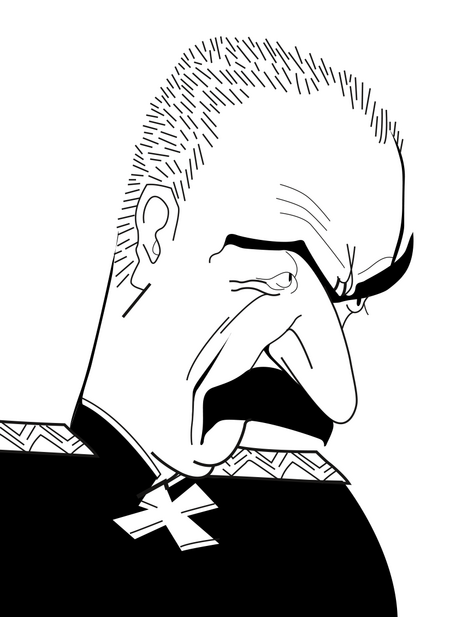
Russian Gazette, No. 274 Civil War Kyiv (From our correspondent). The situation on the Ukrainian front has reached a peak of tension. Both warring sides have concentrated their forces near the border of Ukraine. Technical measures are being taken. The road section between Zernovo and Mykhailovsky Khutor has been dismantled… Last night, we received a brief report that a large battle had begun near Bakhmut between Ukrainians and Bolsheviks.
Kharkov is in Bolshevik hands. Ukrainian Bolsheviks have joined the Russian Bolsheviks there… The Bolsheviks have declared Kharkiv their main southern base, from which they will conduct military operations against Don on one side and against Ukraine on the other.
A. Kaledin. After D. Moore
December 24 | Sunday
Morning of Russia, No. 285 To the Constituent Assembly At a railway meeting on December 23, one of the speakers stated that on January 5, the Bolsheviks would indeed convene the Constituent Assembly; on January 6, they would allow it to elect a presidium; and on January 7, they would address the question of recognizing Soviet power. However, since the majority is forming against this power, the Bolsheviks and the Left SRs will leave the assembly to participate in the All-Russian Congress of Soviets opening on January 8. Addressing the Bolsheviks, the speaker asks: «Are these reports not true?» The Bolsheviks answered this question with silence…
Russkiye Vedomosti, No. 275 On the Don River …The residents of Rostov enthusiastically greeted Gen. Kaledin. Order has been restored in Rostov—order purchased at the cost of a relatively small number of lives. But there are rumors that the Bolsheviks are gathering a «two-million-man army» against the Don Army Territory. This «two-million-man army, ” of course, is only a threat. Lenin and Trotsky hardly manage to gather even 20,000. „Government“ troops were already being dispatched to the Don. Most of them fled along the way… …In Novocherkassk—Russia. I didn’t feel Russia in Petrograd, in Rostov, or even in Moscow. In Petrograd—Lenin, Trotsky, Menzhinsky, some Feyerman, some Stuchka. It smells of Germany, a German headquarters, crushed counter-intelligence, betrayal of the allies, selling out the homeland… In Rostov, the south, is hardly Russia, and most importantly, there is the same contagion in Rostov… the same betrayal, the same 25 rubles for an 8-hour „worker“ day on „positions, ” and the same Red Guards. But Rostov also has its own thing—what seems to be unique to Rostov—armed Austrian and German prisoners of war… …In Novocherkassk—freedom. In Novocherkassk, you won’t be arrested by the orders of self-proclaimed organizations, courts won’t be abolished, vigilante justice won’t be enacted, newspapers won’t be shut down, prayer won’t be hindered, assemblies won’t be dispersed, and laws won’t be trampled. You can live here… The elections to the Constituent Assembly proceeded peacefully. In cities—for instance, in Rostov—about 40 percent voted, in suburbs—about 60 percent, and in stanitsas and khutors—90 and 95 percent. Cities voted mostly for the Bolsheviks, stanitsas for the Cossack list, and peasants for the Socialist Revolutionaries… …“Non-townsfolk“ received 57 percent versus 43 percent for the Cossacks. They have not yet been represented in the military government, but now on a large scale, the possibility of an agreement between the „non-townsfolk“ and the Cossacks, and the desirability of reconstructing power on the basis of what is called parity… Gen. Kaledin stands precisely on this state perspective…B. Savinkov
«To be St. Petersburg’s void»
At first glance, the city seems as vibrant as it ever was. Trams rumble down the streets, and thousands of people rush back and forth… But take a closer look, and it immediately becomes clear that this entire semblance of business bustle is merely a simulation of life that has drifted away from Petersburg.
New Life, No. 210
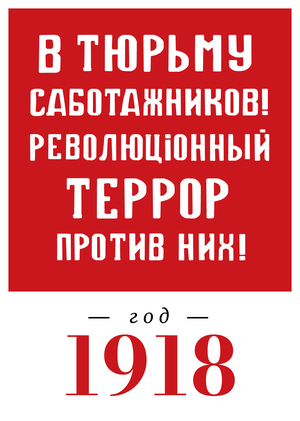
The trams move at the pace of a breathless fanatic pedestrian… The street crowd is composed of voluntary and involuntary «saboteurs,» who are devoid of any meaningful purpose… The factories operate three, two times a week, and even then incorrectly: one factory suddenly halts in the middle of the workday because of a power failure, and then another. Only the nimble, «honey-coated» speculators and thieves feel completely comfortable, as never before. Petersburg is dying because it is isolated… The flow of livelihood and raw materials has ceased, because nobody needs the products that this industry is still producing for some reason. The war is over… And yet, five or six weeks ago… in the most hurried, most revolutionary manner, «Pravda» promised to recast the swords of our defense industry into shovels… Where are the promised plows?.. …It is confidentially whispered that two or three shovels, forged for an experiment, cost such a monstrous sum that all plow-related dreams immediately dissipated…
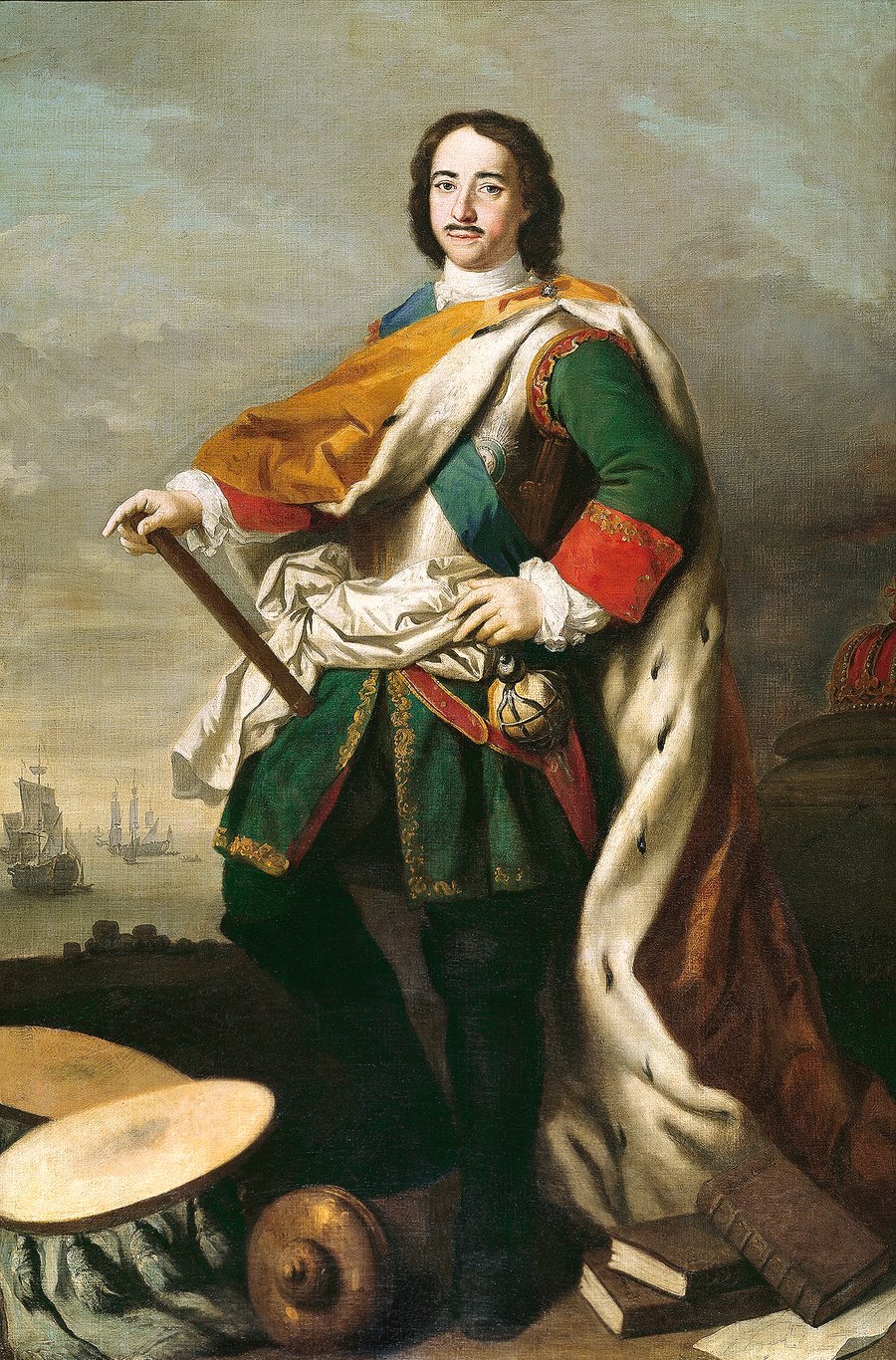
Working with Donbas fuel extracted a thousand versts away from us, the St. Petersburg factories and mills naturally cannot compete with the southern enterprises situated near the coasts. Meanwhile, the cheap English coal that Petersburg used before the war will evidently not be available to us for many months, if not years. …And to revive the center of defense industry under new political conditions, thirty versts from the state border, would be sheer madness… The proletariat, which produces the values necessary for society to live, is absent from Petersburg and will not be for long. The current Petersburg proletariat subsists on the charity of society; their «labor» is merely the ridiculous destruction of precious raw materials, a senseless waste of fuel… …The wages received by the workers and employees of Petersburg enterprises are currently not a reward for productive labor but a hidden form of public charity… …Meanwhile, never in history has such a stark contrast been observed between what people do and what they think about their work—never has «ideology» so decisively detached itself from the «material base» in its rosy daydreams—as in modern Petersburg. In the perception of the proletariat and its leaders, Petersburg today fulfills a grand, world-historical mission: it is no longer a «window to Europe,» but a window of Europe into the kingdom of socialism, miraculously arisen on the snows of Hyperborea. In reality, Petersburg is being liquidated; the catastrophic collapse of «Peter’s enterprise,» which the schismatics predicted in their malicious prophecy two hundred years ago, is occurring: «May Petersburg perish!»
V. Bazarov
Theatre and Art, No. 52 Red Guards searched the Moscow apartment of F. I. Shalyapin …They were looking for «hidden foodstuffs.» They did not find any food, but their attention was drawn to chests that primarily contained wreaths, theatrical costumes, and other items. After receiving refusal from the staff to hand over the keys to the chests, the Red Guards placed seals on them. In response to F. I.'s petition to remove the seals, Muralov, the commander of the Moscow Military District, issued the artist a certificate stating that these chests were recognized as «state property.»