Should you be careless and «fall» out of reality in an inappropriate place, you will find yourself in the Backstage. Here, you will only encounter the smell of old, damp carpeting, an maddeningly monotonous yellow color, an endless hum and the buzz of fluorescent lights, as well as about six hundred million square miles of chaotically divided empty rooms from which there is no escape.
And God save you if you hear someone wandering nearby. Rest assured, «something» has already heard you.
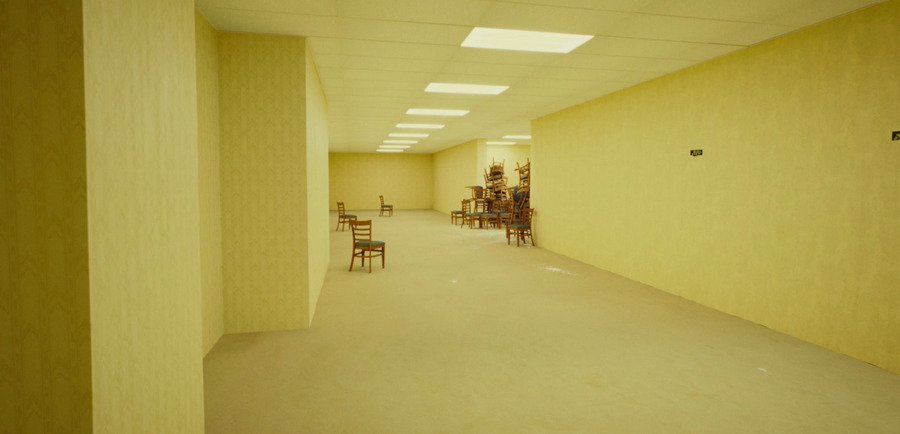
Still from the film «Behind the Reality,» 2026
Concept
In 2019, a photograph of an empty office space with strange architecture and yellow wallpaper was posted on the anonymous forum 4chan in the «Paranormal» thread. In reality, the photo depicted the interior of a HobbyTown store in Oshkosh, USA, during its construction in 2002. However, this photograph, along with a comment that soon appeared beneath it, launched one of the internet’s most popular creepypastas.Attach Card The «Backstage» concept is built on the fear of liminal spaces. Man-made locations photographed—when devoid of human presence, which is vital context for them to exist—evoke a sense of unease and appear unnatural. Furthermore, the aesthetic’s popularity is driven by collective memory—empty locales resemble fragments of recollection. The viewer recognizes familiar outlines of shopping malls or corridors but cannot recall where or when they saw them, subconsciously generating a feeling of inexplicable anxiety.
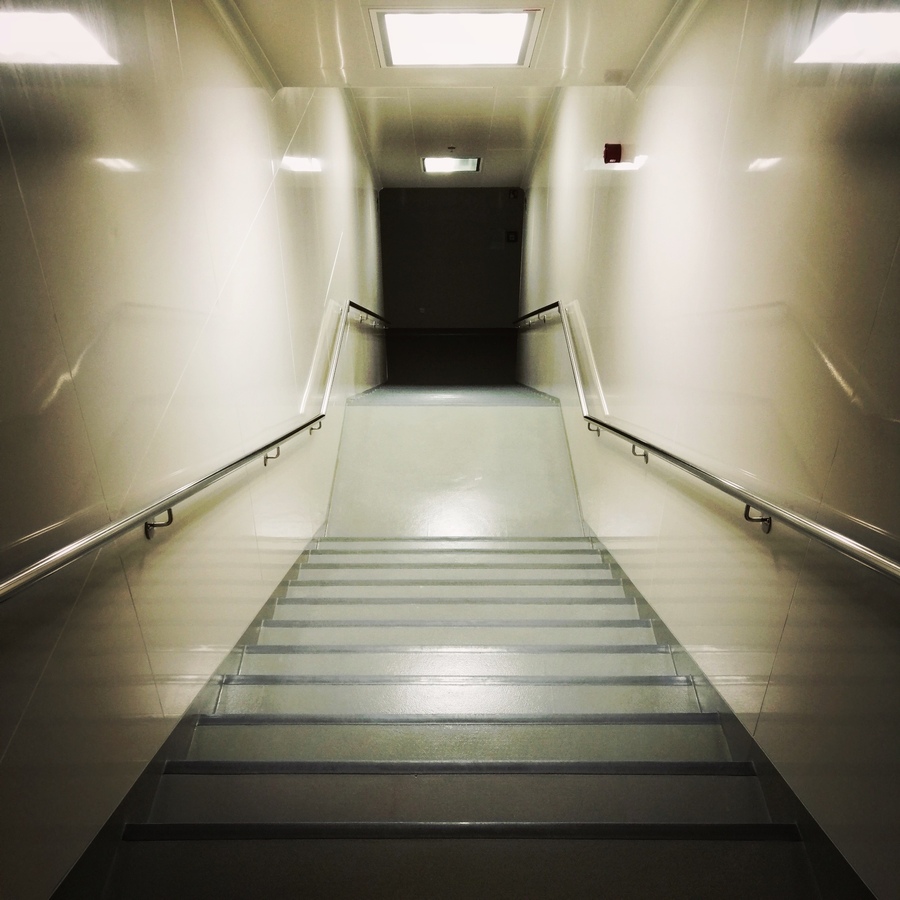
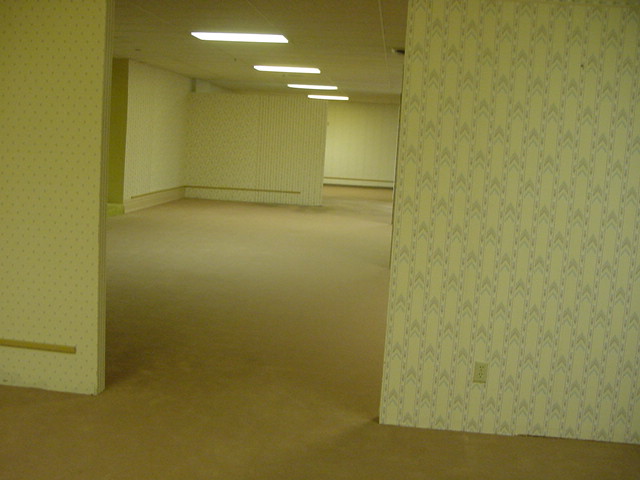
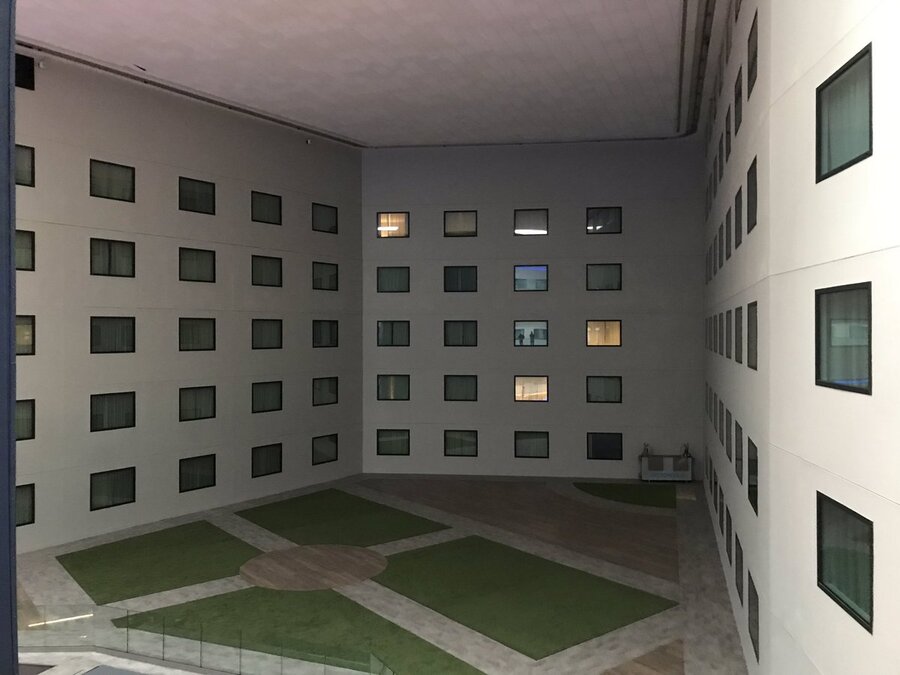
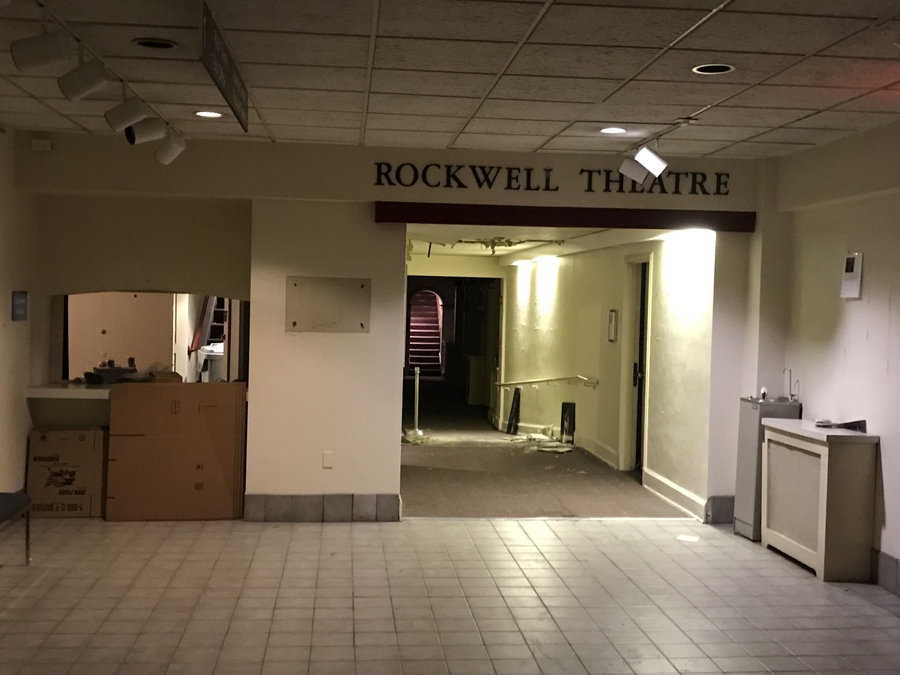
In the original post, the author asked internet users to share photos that felt «anxious and wrong.» In a short time, the post garnered a huge number of comments with similar photos, and the original text, which dubbed endless yellow corridors the «Backstage,» initiated a new genre whose popularity continues to grow with the years.

The «Backstage» phenomenon has long moved beyond anonymous internet folklore to established science fiction, largely thanks to Kane Parsons' web series (2022–2026) and the A24 studio film (2026), in which Parsons continues to develop his sci-fi concept on the big screen. Moving further away from mystical horror, the «Backstage» concept explores parallel dimensions and humanity’s confrontation with a fundamental technological error of existence—an error the individual attempts to catalogue, study, and inhabit. While classic science fiction has traditionally visualized the «unknown» through space, cyberpunk, or complex alien technology, Parsons’ «Backstage» proves that the source of science fiction horror and wonder can be a sterile, mundane office environment of the late 20th century.
Гипотеза:
The «Backstage» phenomenon, interpreted by Kane Parsons, constitutes a new subgenre of hard science fiction. Its foundation is visual inversion: instead of futuristic designs of the future or starships from distant galaxies, an unknown dimension is constructed through the aesthetics of utilitarian office spaces, artifacts of analog recording, and the scientific rationalization of spatio-temporal anomalies.
Разделы:
1. Architecture as a Parallel Universe Model
2. Retro-futurism and Corporate Science
3. The Medium as Message: Analog Horror and «Found Footage»
4. Biologicalization and the Physics of Anomalies
Section 1. Architecture as a Model of Parallel Universes
Images of cosmic vacuum, dystopian megalopolises, and various mechanical structures are quite classic tropes of science fiction. These images radically diverge from ordinary human experience due to their otherness, making them perfectly suited as a foundation for sci-fi worldbuilding. Ken Parsons, however, builds his «Backstage, ” or „The Backstage of Reality“ in the Russian adaptation, using the most familiar and unremarkable architecture of late 20th-century interiors. Here, the underlying concept is Marc Augé's idea of the „non-place.“ Unlike anthropological places endowed with history and social ties, non-places are depersonalized transit zones like airports, hotels, and offices. Parsons’s Backstage is such a non-place—removed from its original context and distilled into an infinite, empty absolute.
The visual code of «Backstage» is built upon the hypertrophied repetition of standard layouts and furnishings from the American office and warehouse environments of the 1980s–1990s. Monochromatic yellow wallpaper with a uniform geometric pattern, carpeting, fluorescent lamps, and Armstrong-style suspended ceilings—familiar to everyone—stop being the space where people are and work, and instead transform into a non-Euclidean labyrinth where cause-and-effect relationships are disrupted.
Completely abandoning functional architectural logic is a crucial device that transforms the interior of «Backstage» from a mere abandoned building into a science fiction anomaly. In the real world, building layouts are governed by strict building codes; in Kane Parsons' space, these rules are deconstructed—the architecture merely imitates the human environment without understanding its purpose.The environmental elements are dysfunctional. Doors open into walls, staircases hit the ceiling, and instead of a street outside the windows, there is a neighboring yellow corridor or a bottomless shaft. Living rooms, open-plan offices, warehouse hangars, and swimming pools flow seamlessly into one another without logical transitions, violating scale and zoning. The space seems to be generated by a faulty algorithm that copies random construction modules without regard for how they connect.
As authors of the article «Liminal Space Theory» on the Habr portal note (2025), a similar effect arises from the disconnect between an object’s form and its utilitarian meaning: Liminal space becomes unsettling when a familiar architectural pattern sheds its usual function. A corridor stops being a passage from point A to point B and instead becomes a self-contained structure.
As one delves deeper into the Complex, the geometry of the walls deforms, and so do everyday objects. Ordinary items appear as if an alien dimension is attempting to «remember» or replicate the human material world but is making systemic errors. Chairs, tables, road signs, or lighting fixtures with distorted proportions and reflected text begin to appear in the frame. The environment seems to start hallucinating.
This phenomenon is precisely described by Jean Baudrillard’s concept of simulacra, which researchers of liminality reference (Mitch Whitehead, 2026). The familiar objects in the Backstage are simulacra of the third order: copies that have no original, signs that conceal the absence of a real physical world beyond the yellow walls.
The narrowing corridor with a small door at the end—not a real linear perspective perceived by the human eye, but merely its concept, a false copy whose original has long been lost. The space’s inability to accurately replicate everyday objects and its distortion of familiar human phenomena shift the narrative from mysticism into the realm of science fiction.
Additionally, the use of liminal space aligns with the enduring tradition of sci-fi works. A classic example is Stanley Kubrick’s film, «2001: A Space Odyssey.» Liminal spaces are pervasive throughout: the stark white, echoing, and nearly empty waiting area of the «Hilton» space station, complete with bright pink seating, appears as an ideal yet lifeless transit hub. The corridors and centrifuge of the Discovery One ship isolate the astronauts from the outside world. The monotonous hum of life support systems and the cold artificial light amplify the sense of claustrophobia and psychological detachment from Earth.
The final scene in the bedroom, illuminated by fluorescent panels embedded in the floor, utilizes the same technique as Parsons' «Backstage.» While not a place, a superior extraterrestrial intelligence constructs an environment for humans—one familiar in form, yet alien in essence and scale.