- Concept
- The Genesis of the Soviet Film Poster (1920s)
- Revolution in Visual Culture: Steinberg and Rodchenko in Film Posters
- Realism in Film Posters
- Cultural Shifts of the 1960s and the Transformation of the Soviet Film Poster
- Film Posters Amidst Political and Cultural Change (1980s)
- Conclusion
- Image Sources
- Bibliography
1. Concept
In this visual study, I aimed to explore and analyze the phenomenon of avant-garde Soviet posters and film posters.
The Soviet film poster of the 1920s became a space where the artistic experiments of the avant-garde converged with mass communication, transforming an advertising tool into a complete work of art. My goal was to demonstrate how the posters reflected the principles of Suprematism and Constructivism, visualized the editing and dynamism of cinema, and consequently shaped a new visual language for the viewer.
Cinema in the Soviet Union became the primary cultural and educational instrument. The poster functioned not merely as an advertisement, but as a means of communicative influence on the audience, creating an emotional and visual accompaniment to the film. Avant-garde artists utilized novel compositional approaches—diagonal lines, photomontage, overlapping shots, dynamic perspective, and expressive typography. Every detail of the poster, from the shape of the letters to the direction of the lines and the contrast of the color scheme, served not only an aesthetic but also a semantic function, conveying the dynamism of the montage and the drama of the cinema.

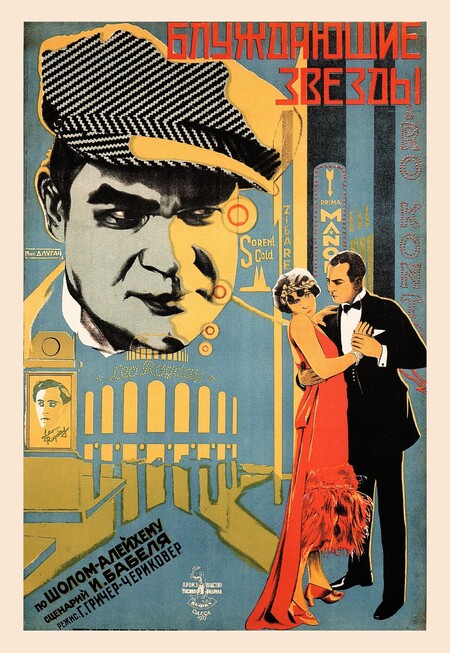
1. «The Sweltering Prince,» 1928, film poster by I.V. Gerasimovich (Avant-garde Soviet art, 1920s) 2. «Wandering Stars,» 1926, directed by G. Gricher-Cherikover
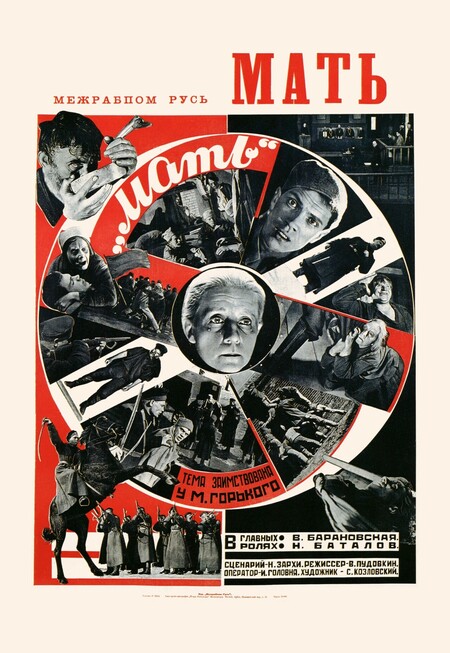
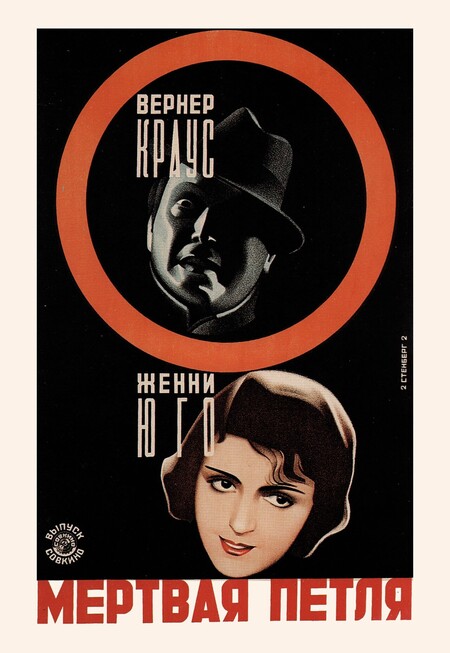
1. «Mother,» 1926, directed by Vsevolod Pudovkin, film poster, unknown artist 2. «Dead Loop,» 1928, directed by Arthur Robinson, film poster, by Vladimir and Georgiy Stenberg
The Stenberg brothers hold a special place in the history of Soviet cinema poster art. Their work demonstrates masterful use of diagonals, image layering, and close-ups, creating a sense of movement and intense dynamism. Alexander Rodchenko contributed through strict geometric composition, photomontage, and the use of typography as an independent formal element, transforming the poster into a visually rich and self-sufficient work of art. El Lissitzky and Gustav Klutsis also expanded the possibilities of the poster by experimenting with Suprematist forms and photo-collage, creating expressive, symbolic images that were easily understood by the mass audience.
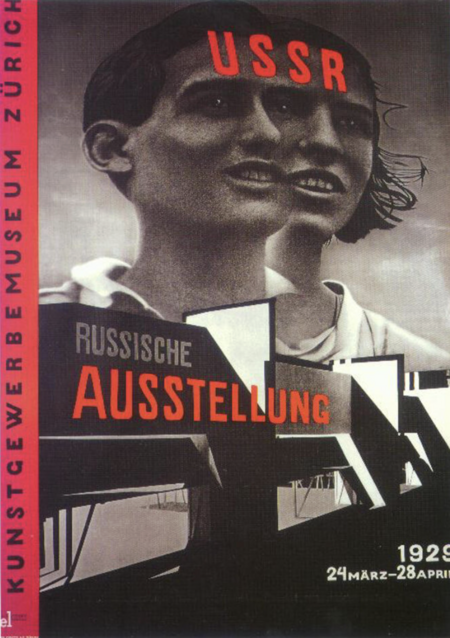

1. El Lissitzky, poster for the Russian Exhibition at the Museum of Decorative Arts in Zurich, 1929 2. Poster «City Park in Winter» by El Lissitzky
Soviet film posters reflected not only artistic goals but also social and ideological objectives. Posters informed, educated, and shaped the viewer’s consciousness. These posters broadcasted the ideas of a new society—revolutionary and cultural values—becoming part of visual education and mass culture.
Analyzing avant-garde film posters allows us to trace the development of this phenomenon and understand how cultural and political processes of the Soviet era were reflected within them. Through art, we can see how society, its values, and its ideals evolved, as well as how artistic form became a medium for expressing ideological stances and shaping collective consciousness.
Film posters demonstrate how the visual language developed by avant-garde artists could combine dynamism, color, form, and typography to create emotionally rich and expressive images.
2. The Genesis of the Soviet Movie Poster (1920)
The first Russian movie poster—for the film «Stenka Razin.» Artist Paul K. Assaturov. 1908.
The first Soviet movie posters emerged almost simultaneously with the formation of a new cultural and political reality following the 1917 Revolution. Film, declared «one of the most important arts,» became the primary tool for influencing the masses, while the poster served as the visual intermediary between the idea and the viewer. It was during this period that the principles of the Soviet movie poster—conciseness, agitprop style, dynamism, and symbolism—were established.
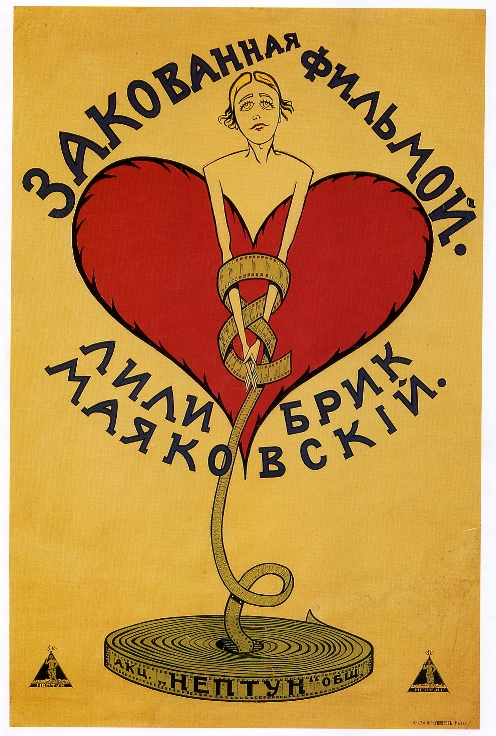
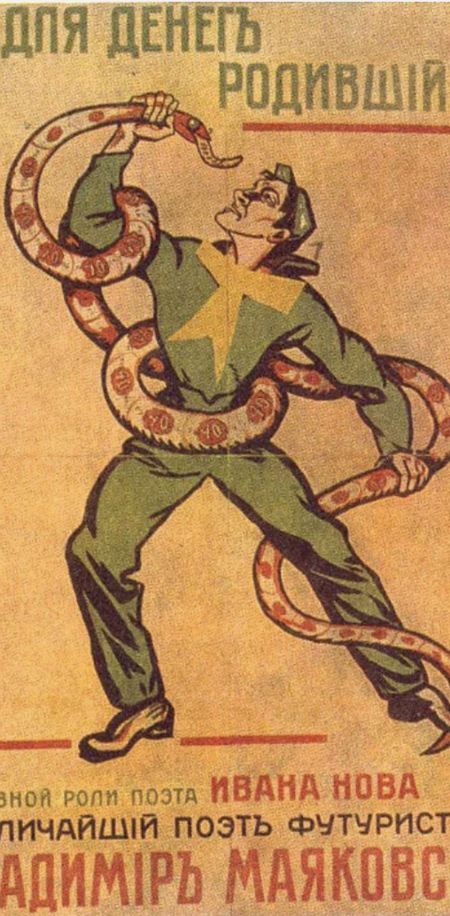
1. «Bound in Film» (1918), a silent feature film directed by Nikandr Turkin and scripted by Vladimir Mayakovsky. 2. «Born Not For Money,» attributed to V. Mayakovsky.
In a setting of low population literacy, imagery became the universal language understood by everyone.
One of the earliest examples is the poster for the film «Bound by Film» (1918) by Nikandr Turkin, created based on a script by Vladimir Mayakovsky. It was executed in the spirit of the revolutionary era, featuring sharp graphic lines, strong contrasts, an expressive composition, and active use of red and black colors. The core idea was the liberation of art and humanity from «the shackles of the old world.»
Another early example is the poster «Not Born for Money» (1919), attributed to Mayakovsky himself. The poster employs the principles of contrast, large typographic elements, sharp angles, and expressive silhouettes. Here, another important principle of the emerging Soviet poster appears: typography as part of the visual identity. The text does more than simply convey the film’s title—it becomes a visual element supporting the emotional rhythm of the composition.
In movie posters, one can observe early signs of the Constructivist approach—the use of dynamic geometry, a rejection of illusionism, and a pursuit of a concise, expressive image. The color palette is limited to several tones of red, black, and white, which amplifies the emotional impact and makes the composition graphically sharp. In this context, red acts as a symbol of revolutionary energy, action, and life, while black contrasts to emphasize the drama and power of the form.
3. A Revolution in Visual Culture: Stenberg and Rodchenko in Film Posters
Among the first masters to define the look of Soviet film posters were brothers Georgy and Vladimir Stenberg. They used close-ups of faces, body fragments, and symbolic details—such as ship chains, flags, and cameras—to convey the tension and drama of the film. This was in the spirit of Constructivism, which was popular in the Soviet Union during the 1920s. They rejected traditional realistic imagery, which set their posters apart from the more «conservative» and illustrative works of the time.


1. Poster for the film «October» by Vladimir and Georgiy Stenberg 2. Poster for the film «The Traitor» by Vladimir and Georgiy Stenberg
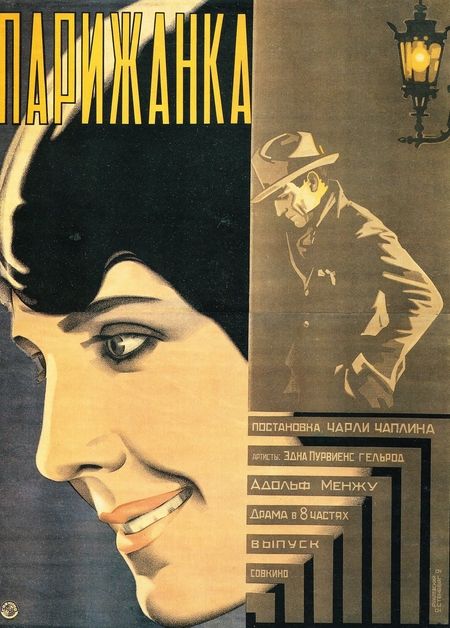
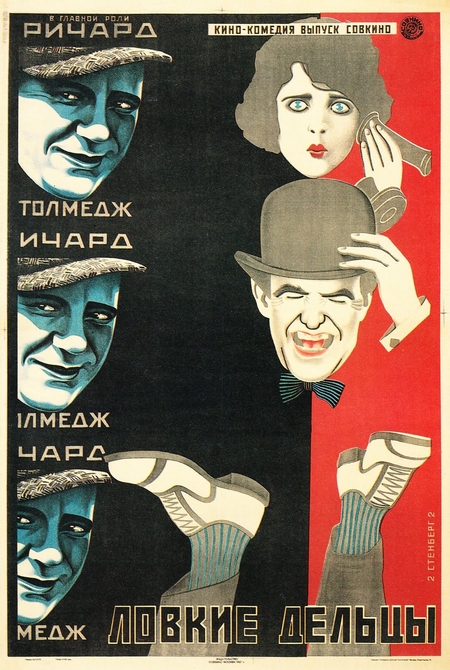
1. Poster for the film «The Parisian» by Vladimir and Georgi Stenberg 2. Poster for the film «Sly Operators» by Vladimir and Georgi Stenberg
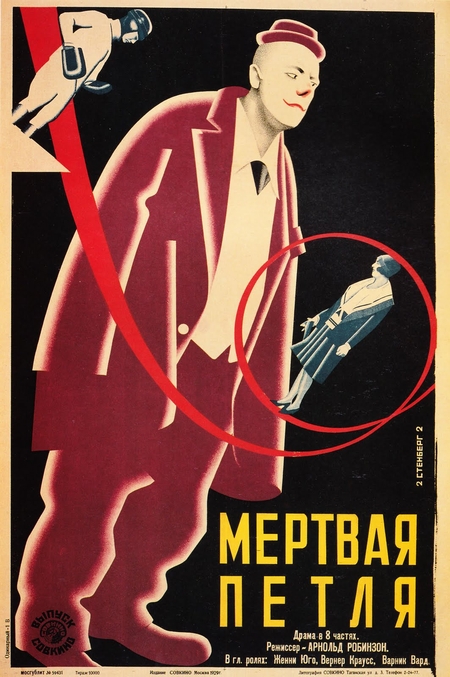
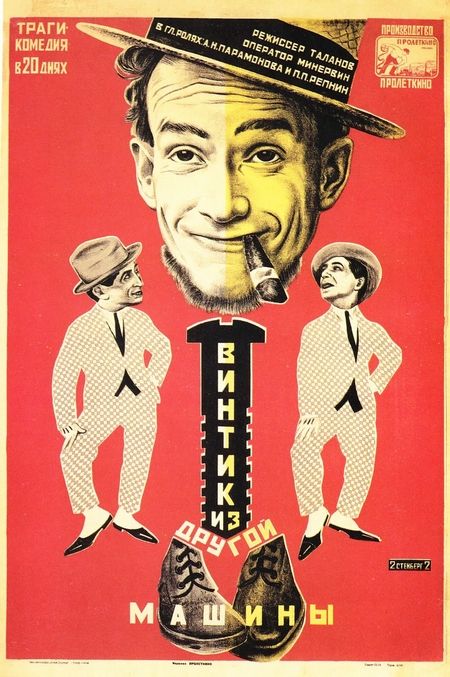
1. Poster for the film «Dead Loop» by Vladimir and Georgi Stenberg 2. Poster for the film «Wrench from Another Machine» by Vladimir and Georgi Stenberg
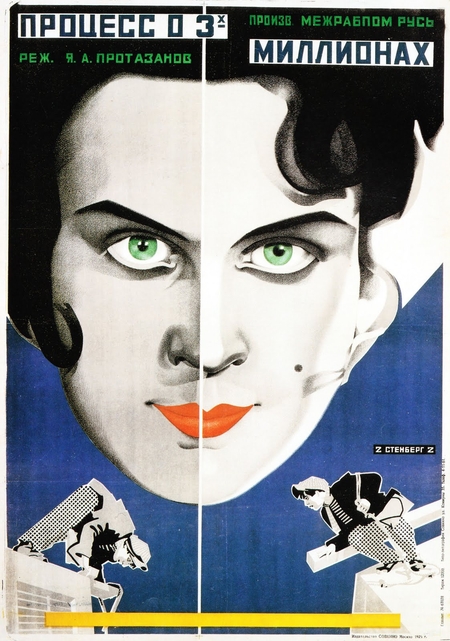
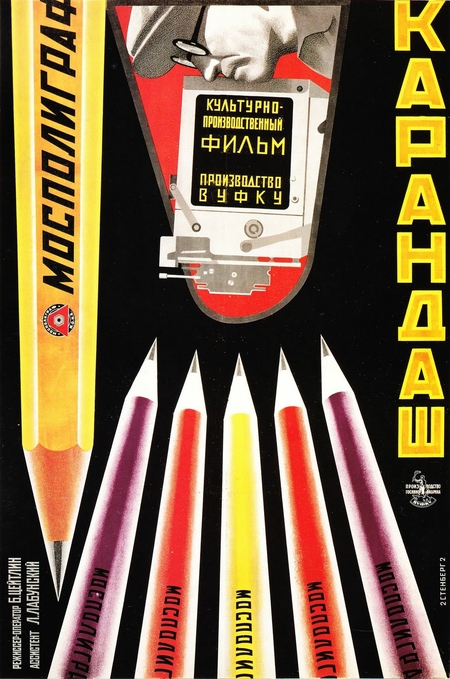
1. Poster for the film «The Three Million Trial» by Vladimir and Georgy Stenberg 2. Poster for the film «Pencil» by Vladimir and Georgy Stenberg
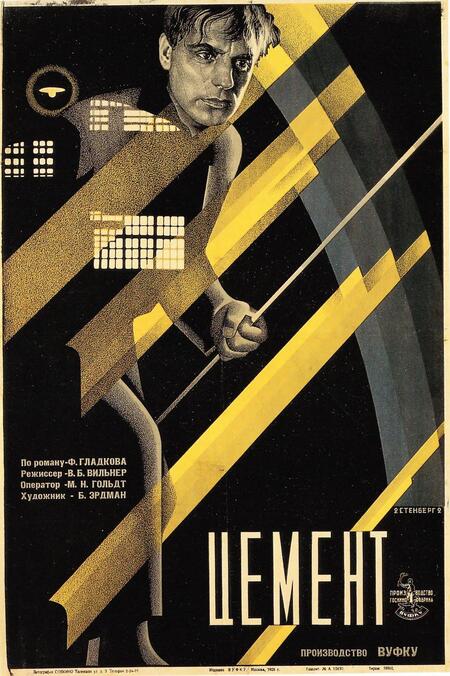
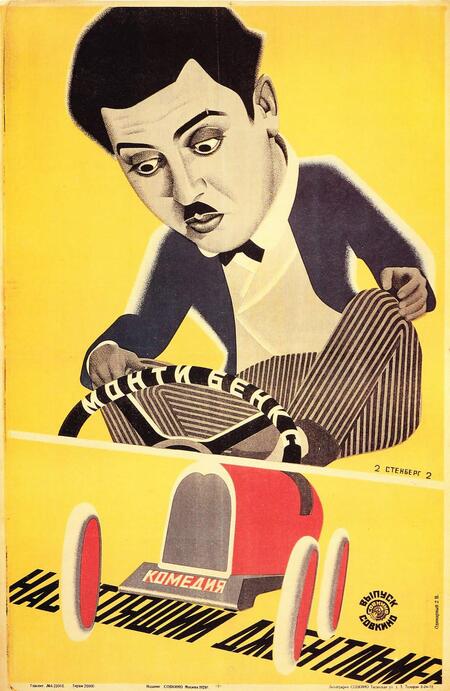
1. Poster for the film «Cement» by Vladimir and Georgiy Stenberg 2. Poster for the film «Gentleman» by Vladimir and Georgiy Stenberg


1. Poster for the film «Debris of an Empire» by Vladimir and Georgy Stenberg 2. Poster for the film «Miss Mend» by Vladimir and Georgy Stenberg
Unlike the traditional posters of that era, which often featured standard images of actors or movie scenes, the works by the Steinberg brothers were far more experimental. They frequently depicted not actors, but abstract symbols or elements related to the film’s theme.
Their work promoted the ideals of revolution, socialism, and industrialization. In this context, film posters had a function beyond simply attracting an audience; they demonstrated the importance of cinema as a tool for political influence.
The compositions frequently employed slanted lines and angles to evoke a sense of movement. This correlated with the idea of accelerating change and progress, making it particularly well-suited for cinema and propaganda posters.
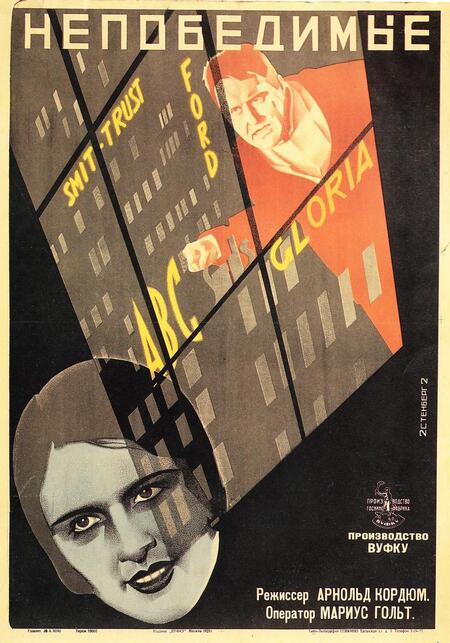
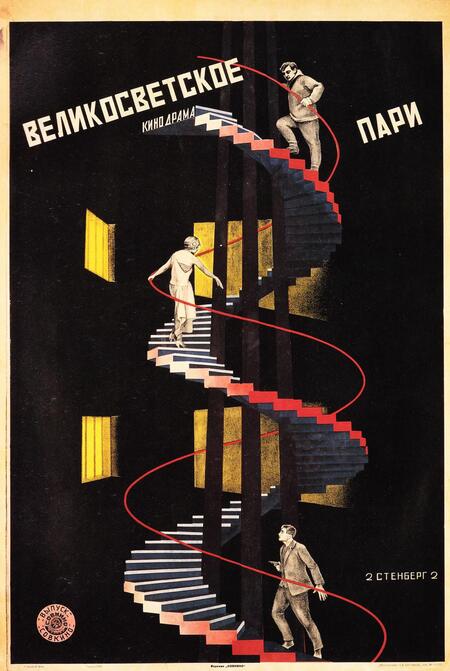
1. Poster for the film «The Unbeatable» by Vladimir and Georg Stenberg 2. Poster for the film «The Great World Bet» by Vladimir and Georg Stenberg
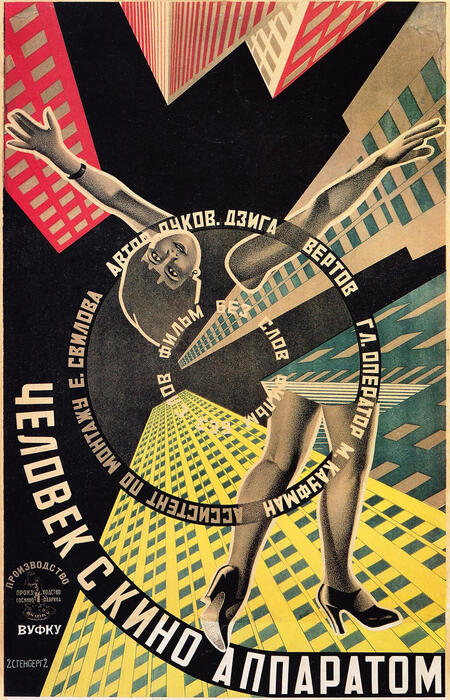
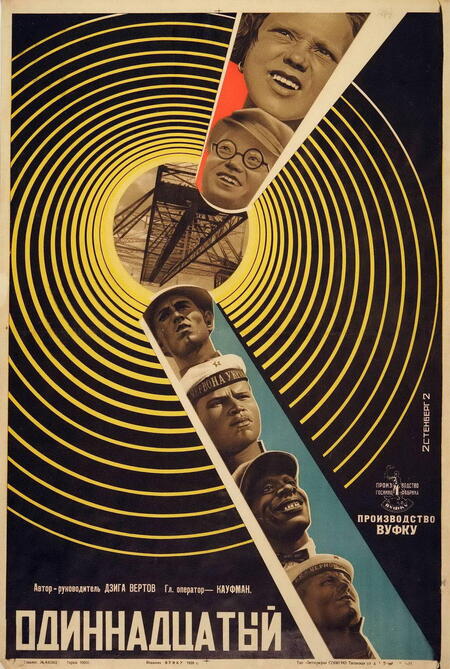
1. Poster for the film «Man with a Movie Camera» by Vladimir and Georgi Stenberg 2. Poster for the film «The Eleventh» by Vladimir and Georgi Stenberg
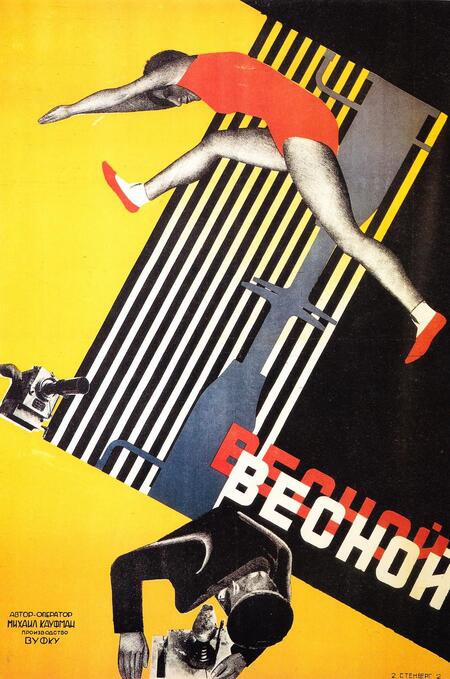
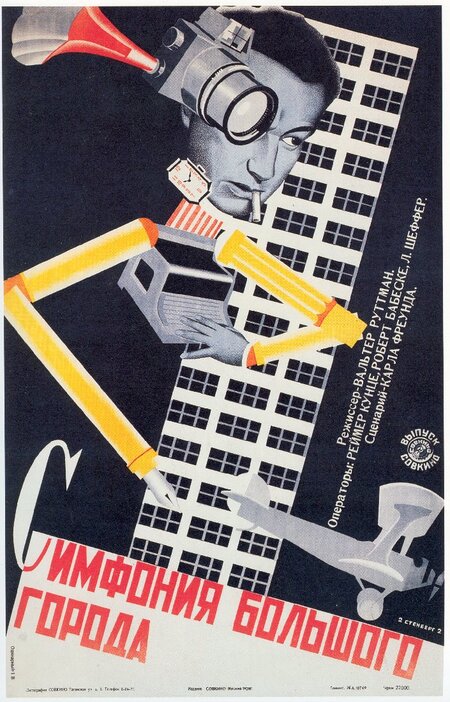
1. Poster for the film «Spring» by Vladimir and Georgy Stenberg 2. Poster for the film «Symphony of a Big City» by Vladimir and Georgy Stenberg
Through vibrant imagery and unconventional forms, the Stenberg brothers demonstrated how cinema can influence public sentiment and disseminate ideas. Each of their movie posters can be considered a standalone work of art, brimming with deep symbolism and striking visuals.
Like the Stenberg brothers, Andrei Rodchenko actively used photomontage, creating collages from photographs that were far from simple illustrations for films. He combined photographs with geometric shapes, symbols, and text, allowing him to create more than just advertising posters.
He used dynamic lines, sharp angles, and active textual elements, which gave his posters an expressive quality.