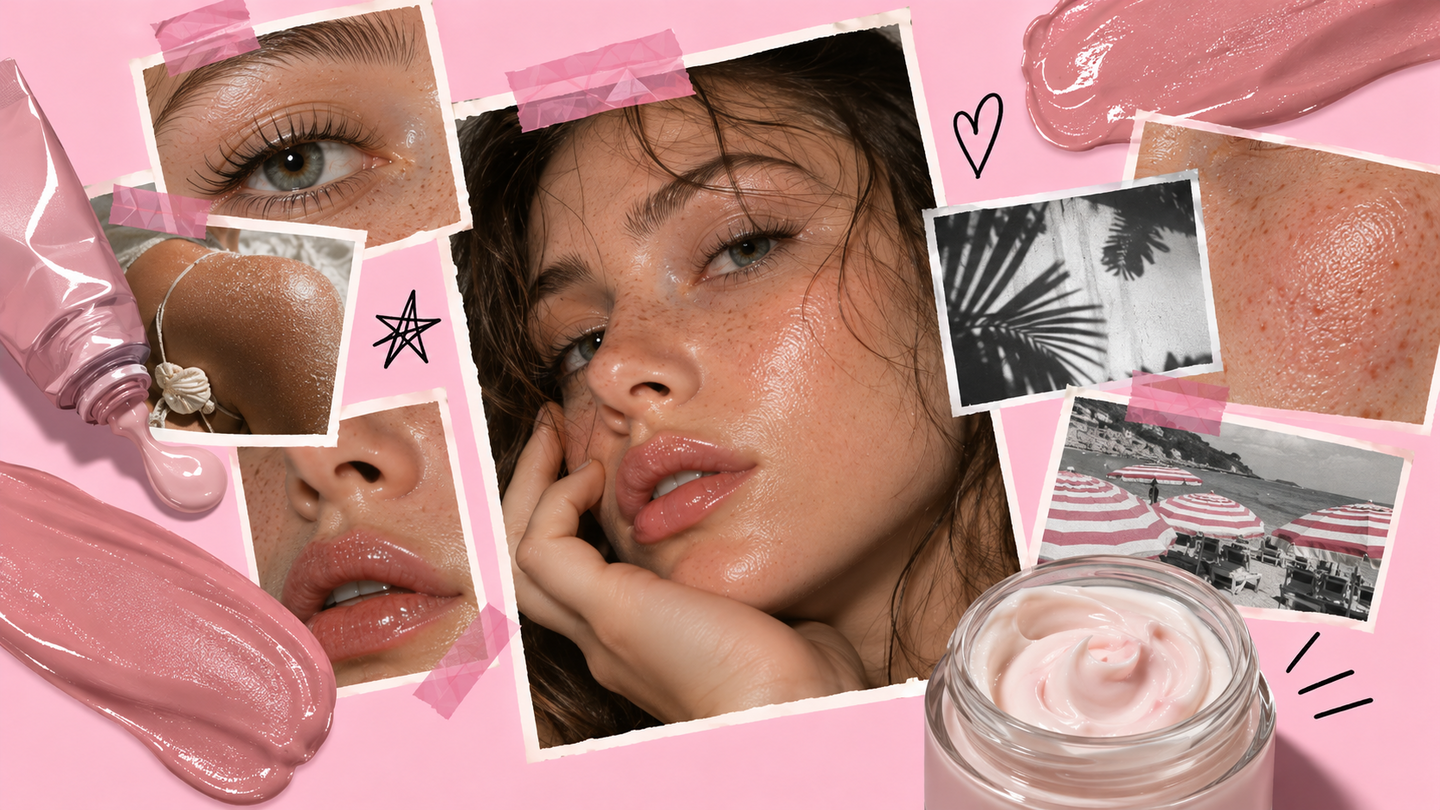
BEAUTY WITHOUT RULES — a media outlet exploring how concepts of beauty are formed and why appearance constantly becomes the subject of new demands.
BEAUTY WITHOUT RULES explores the origins of beauty standards and their influence on daily life. The project addresses the history of popular aesthetics and examines the mechanisms by which they proliferate. Particular attention is paid to how advertising imagery shapes expectations of one’s own appearance.Main Platform: Telegram. Additional Platforms: Pinterest and VKontakte. Target Audience: Women aged 18 to 30 who are interested in contemporary beauty culture and track trend shifts. Goal: To help the audience critically perceive beauty standards and autonomously shape their attitude toward their own appearance.
Investigating Trend Origins Every popular aesthetic emerges within a specific cultural context. This project will examine the reasons behind the rise of beauty trends and trace the evolution of ideas about attractiveness. Comparing images from different eras will help us understand why certain physical traits become desirable while others lose popularity.Analyzing Industry Influence Advertising frequently links attractiveness to the need to purchase specific products. In our publications, we will explore methods of cosmetic promotion and pay close attention to the promises used to shape consumer demand. Readers will learn how the beauty industry influences perceptions of appearance.Discussing Beauty Without Judgment One’s self-perception is shaped by one’s social environment and information landscape. The project will draw upon psychological studies and the experiences of individuals facing the pressure of standards. The materials will help readers approach their own preferences with greater awareness, without the need to conform to the latest ideal.
Semester Thematic Plan
The thematic plan begins by examining current trends and gradually moves toward broader questions. After familiarizing themselves with popular aesthetics, readers will learn how advertising imagery is formed and why social media amplifies focus on appearance. The final months will be dedicated to historical shifts in standards and contemporary concepts of individuality.Frequency: 2 publications per week. Main Platform: Telegram. Formats: Visual explorations with photography, comparative cards, short analytical texts, collages, polls, and video materials.
Publication Distribution During the Week
Tuesday. «Where Do Trends Come From?» / «Beauty Sells» The publications will explore the origins of beauty trends and the industry’s influence on perceptions of attractiveness. The sections will alternate each week. The materials will uncover the reasons behind the popularity of certain aesthetics and examine the advertising mechanisms that form new standards of appearance.Friday. «No Filters» / «The New Normal» The materials focus on the perception of one’s own appearance and shifts in modern beauty culture. The sections will also alternate. The publications will address the impact of social media on self-esteem and society’s attitude toward individual physical traits.Approximately 52 publications are planned over a six-month period.
Month 1. Aesthetics That Have Captured the Internet
Theme: «Who Invented How to Look Beautiful?»
The first month is dedicated to popular social media aesthetics. Their proliferation is often accompanied by the emergence of recognizable archetypes that thousands of users begin to replicate.
We will explore the origins of the «clean girl» aesthetic and the reasons behind the popularity of the «mob wife.» We will examine how the perception of naturalness changes depending on the trend. A separate piece will address why aesthetics cycle so rapidly. We will focus primarily on the visual characteristics of these trends and the circumstances of their spread.
Month 2. Beauty as a Commodity
Topic: «How We Are Sold the Ideal Look»
The second month is dedicated to the influence of marketing on perceptions of attractiveness. Cosmetics advertising frequently taps into audience desires, offering products as a means to approach a certain ideal.
We will explore how the perception of a need for a new product is created and why viral products quickly gain mass appeal. We will examine the nuances of anti-aging cosmetic advertising and the influence of blogger recommendations on purchasing decisions. These materials will help readers better understand the mechanisms of beauty product promotion.
Month 3. The Face in the Age of Filters Theme: «Why Do We Compare Ourselves to the Screen?»
The third month explores the influence of the digital environment on one’s perception of their own appearance. Social media platforms offer users a constant stream of images that have often been altered through digital processing.
We will examine how beauty filters function and why edited photographs are sometimes perceived as natural. We will discuss the impact of constantly comparing oneself to others and the reasons for dissatisfaction with one’s appearance after scrolling through social media. The visual materials will focus on the differences between the real image and its digital manipulation.
Month 4. The History of Ideal Beauty
Theme: «Beauty in Constant Flux»
The fourth month is dedicated to the historical shifts in attractiveness standards. Perceptions of beautiful faces varied significantly across different eras, meaning that contemporary ideals cannot be considered universal.
We will compare the makeup trends of different decades and trace the evolution of eyebrow shapes in fashion. We will examine how attitudes toward tanning have changed and why certain facial features periodically re-enter fashion. The featured materials for the month will be built upon comparing archival images with contemporary examples.
Month 5. Appearance and Self-Esteem
Topic: «Why do we feel the need to fix something?»
The fifth month is dedicated to the psychological aspects of beauty perception. Constant focus on one’s appearance can affect a person’s self-image and cultivate unrealistic expectations.
We will explore why compliments sometimes become an important source of self-confidence and how social comparison affects self-esteem. We will also pay special attention to the fear of aging and the pervasive notion that continuous physical perfection is necessary.
The posts will be based on psychological research and situations familiar to the readers.
Month 6. Beauty Without a Single Standard
Theme: «Who Decides What is Beautiful?»
The final month is dedicated to the diversity of views on attractiveness. Modern beauty culture is gradually broadening the range of images presented in advertising and media.
We will explore how perspectives on natural physical features are evolving and why certain brands are opting out of excessive retouching. We will discuss the boundary between personal choice and the influence of societal expectations. This month’s materials will focus on the individual approach to beauty and the right of a person to define their own preferences.
Content Samples
Content Sample #1 «Why Did Everyone Want to Look Like a ‘Clean Girl’?» Format: Telegram post with a visual comparison of the clean girl aesthetic versus other popular styles.Sleek, brushed-back hair, glowing skin, and almost invisible makeup. A few years ago, this exact look became one of the most recognizable trends on social media. The aesthetic was named the «clean girl.» Its popularity is largely tied to TikTok, where users began posting videos featuring everyday makeup and minimalist hairstyles. The core characteristic of this trend is the pursuit of conveying natural beauty. However, behind the outward simplicity often lies a meticulously curated image. Achieving the signature effect requires specific cosmetic products and makeup application techniques. As a result, «naturalness» has gradually evolved into a distinct beauty standard. It is interesting to note that many elements of the clean girl look existed long before the term itself. Similar hairstyles and makeup techniques appeared in various cultural contexts. Social media unified them into a recognizable aesthetic and transformed them into a mass trend. Over time, the popularity of the clean girl aesthetic began to draw criticism. Users pointed out that the look implies specific physical characteristics and is often connected to ideals of perfect skin. It turns out that even a trend focused on naturalness can create new expectations about appearance.Do you like the clean girl aesthetic, or do you find it too uniform?
Content Sample #2 «Why Has Bright Makeup Re-emerged After Minimalism?» Format: Telegram post featuring collages of clean girl and mob wife aesthetics.
Not long ago, social media was flooded with images showcasing minimal makeup. But then, dense eyeliner and vibrant lipstick shades started appearing in recommendations. A more expressive style replaced the reserved aesthetic. One noticeable trend has been the mob wife aesthetic. Its visual language is connected to the images of heroines from crime films and television series. Social media played a crucial role in popularizing this aesthetic, as users began replicating the characteristic traits of this style. Unlike the clean girl look, the mob wife aesthetic is built on overt expressiveness. Makeup here becomes a noticeable part of the persona and emphasizes confidence. But why can such different aesthetics become popular one after another? One reason relates to the cyclical nature of fashion. After a specific visual style has been prevalent for a long time, the audience begins searching for alternatives. A contrasting look attracts attention precisely because it differs from the familiar. Social media algorithms further accelerate the spread of new aesthetics. Recognizable images are easy to reproduce in short videos, which allows the trend to quickly gain numerous interpretations. The story of clean girl and mob wife reminds us how transient perceptions of fashionable beauty can be. What seems like an essential element of beauty today might be replaced by a completely different look within a few months.
Content Sample #3 «How does a standard lip gloss go viral?» Format: Telegram post featuring a visual scheme of beauty trend propagation.You open TikTok and see a video featuring a new lip gloss. A few minutes later, a similar product appears with another influencer. A week later, it seems like everyone is using it. How does ordinary cosmetics transform into a mass desire item? Repetition plays a vital role. When one product consistently appears in recommendations, it becomes recognizable. The user begins to perceive it as a relevant part of beauty culture. Emotional reactions from influencers add to the interest. Videos with enthusiastic reviews build an anticipation of an extraordinary result, even if the product itself is not significantly different from its counterparts. Sometimes, popularity is amplified by limited availability. Announcements about sold-out shades create the feeling that a purchase must be made as soon as possible. However, high popularity does not guarantee that a product will suit every person. The perception of cosmetics depends on individual preferences and usage characteristics. Therefore, before buying, it is useful to ask yourself a simple question: Do I truly need this product, or did I become interested in it after seeing it multiple times in my recommendations? Viral cosmetics demonstrate well how quickly social media can transform an ordinary item into an object of mass demand.
Content Sample #4 «Why Does Cosmetics Promise to Stop Aging?» Format: Telegram post with a visual comparison of anti-aging cosmetic ad campaigns.
On cosmetic packaging, promises to maintain youth or reduce visible signs of aging are frequently found. It seems as though natural changes in the skin have gradually become a problem that must be solved.
But why is age so often used in advertising? The beauty industry deals with perceptions of desired appearance. Youth has long been associated with attractiveness, so advertising messages often appeal to the fear of losing one’s familiar look. This is particularly noticeable in the promotion of anti-aging products. Advertising may present wrinkles as a flaw and offer cosmetics as a way to eliminate them. However, the actual capabilities of cosmetic products are limited. Some products can improve the skin’s condition and reduce the prominence of certain aging signs. Yet, it is impossible to completely halt natural age-related changes. Interestingly, the attitude toward this type of advertising has been gradually changing in recent years. Some brands are starting to use more neutral phrasing and show natural skin features without mandatory retouching. This reflects a broader conversation about why youth must remain the primary criterion for attractiveness.
Skincare can be a personal choice. But the desire to use cosmetics does not necessarily have to stem from the fear of aging.
Content Example #5 «Why Does My Face Look Different After Using a Beauty Filter?» Format: A Telegram post featuring a visual comparison of a face before and after digital enhancement.You turn on your phone camera and accidentally select a beauty filter. Your skin becomes smoother, and your facial features subtly shift. After a few minutes, you turn the effect off and unexpectedly notice that your familiar reflection looks unfamiliar. Why does this happen? Beauty filters can alter facial images in real time. Some effects smooth skin texture, while others adjust the proportions of individual features. With regular use, a person becomes accustomed to seeing a specific version of their appearance. Because of this, the natural image can sometimes be perceived differently. Social comparison also plays a role. When filtered photos constantly appear in your recommendations, they can shape perceptions of what an average appearance should look like. Furthermore, the digital image does not always reflect a person’s real features. Even subtle retouching can significantly change how a face is perceived. It is important to remember that the influence of filters is individual. For some users, they remain mere entertainment, but for others, they can intensify dissatisfaction with their own appearance. Try paying attention to the changes your favorite filter introduces. You might find that some of your ingrained ideas about ideal beauty were shaped specifically by these digital images.