
Данный проект является учебной работой студента Школы дизайна или исследовательской работой преподавателя Школы дизайна. Данный проект не является коммерческим и служит образовательным целям
Проект принимает участие в конкурсе
big
Исходный размер 2524x1684

brand logo

List of content

  1. Introduction: the brand and its positioning
  2. Communication channels
  3. Theoretical optics
  4. Applying theories and how they work: the case of SHEEP Harajuku
  5. Conclusion and recommendations
  6. List of literature and sources of images

Introduction: the brand and its positioning

SHEEP Harajuku is a multi-brand select shop located on the first floor of the iconic Laforet Harajuku shopping complex in Tokyo. Unlike a classic single-brand label, SHEEP does not produce its own clothing line as its main product; instead, it acts as a curator, bringing together Japanese and international young designers (MIKIOSAKABE, Jenny Fax, yusho kobayashi, Five year old, hisakanao, KIDILL, NON TOKYO, BODYSONG. and others) and forming a unified showcase for so-called «emerging,» experimental fashion.

announcement of the new collection «ウサギアイランド Usagi Island», 2023

The brand’s positioning is built around the idea of discovering and promoting new design talent («発掘と発信» — «discovery and broadcasting»). SHEEP presents itself not simply as a store, but as an entry point into the current Tokyo alternative fashion scene — a space where punk, kawaii aesthetics, doll-like decorativeness, gothic and street style all mix together. The brand’s visual symbol is a sheep, which appears in the logo, social media design and packaging, creating a recognisable, slightly ironic and «soft» image that contrasts with the more aggressive aesthetics of many of the featured designers.

announcement of the new collection «ウサギアイランド Usagi Island», 2023

The target audience of SHEEP Harajuku is mainly young people (roughly 16–30 years old) interested in Japanese alternative fashion, K-pop and J-fashion culture, visitors to the Harajuku district, and followers of the global fashion scene on social media. A significant part of the audience consists of foreign tourists and fans of Japanese fashion outside Japan, as confirmed by the brand profile’s claim of worldwide shipping («SHIP WORLDWIDE»).

The audience therefore splits into two overlapping groups: local visitors to Laforet Harajuku, who come for the offline experience and exclusive finds, and an international online audience that follows the brand through Instagram, TikTok and the online store, treating SHEEP as a «window» into Tokyo street fashion.

Communication channels

SHEEP Harajuku builds its communication primarily in the digital environment, complemented by a strong offline presence. The brand does not use traditional TV or radio advertising — its public image is shaped through social media, its own e-commerce website, and a physical presence in well-known retail locations.

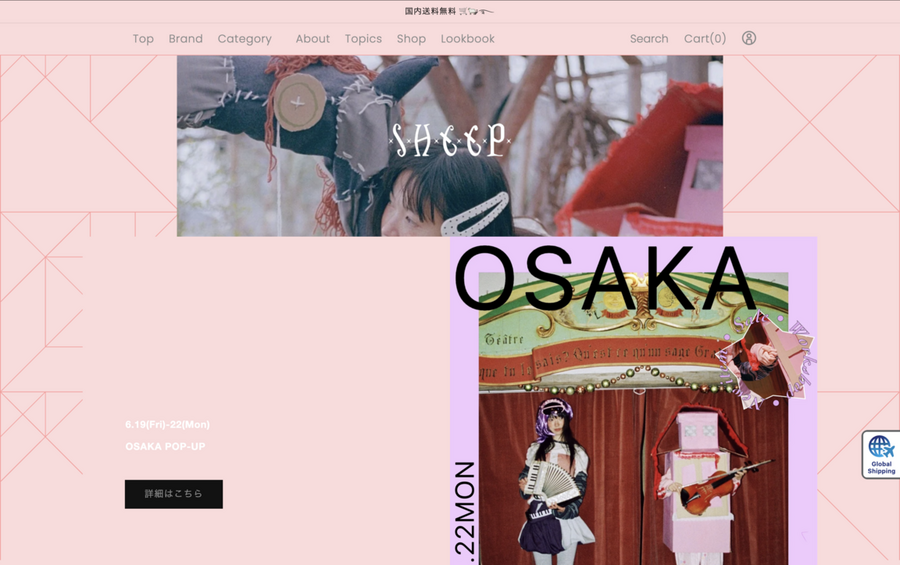
vertical brand commercials/ Pop-up event announcement in Osaka

post

Instagram (@sheep_harajuku) is the main communication channel, with around 62,000 followers and more than 5,800 posts at the time of analysis. The feed functions as a showcase: announcements of new designer collections, lookbooks, photos from fittings, announcements of pop-up events in other Japanese cities, and information about the store’s opening hours at Laforet. The posting style is dense and «collage-like,» with numerous hashtags in both Japanese and English, which helps the content reach an international audience.
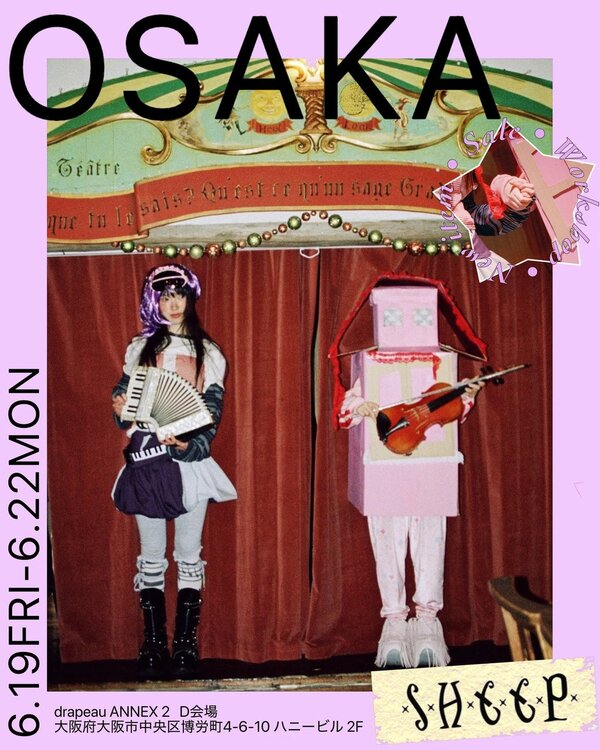
Pop-up event announcement in Osaka/ vertical brand commercials

post

TikTok (@sheep.harajuku) and YouTube (@SHEEP_Harajuku) add a dynamic video format to the visual communication — short clips about the store, fittings and the atmosphere of Harajuku — but activity on these platforms is noticeably lower than on Instagram, indicating an uneven distribution of effort across channels.

examples of creative vertical advertising

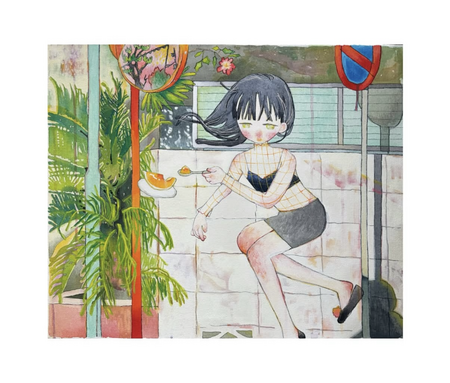
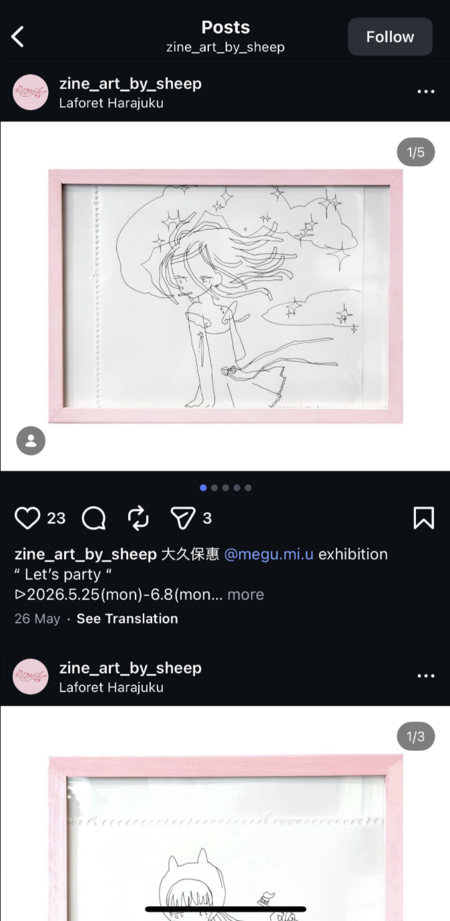
The website sheep-shop.jp serves both as an online store and as a media outlet: the «News» section («ニュース») regularly publishes announcements of pop-up events (Osaka, Fukuoka, Umeda, etc.), turning the site into a PR communication tool rather than just a sales platform. A separate project, @zine_art_by_sheep — a printed zine dedicated to art and visual culture — extends the brand’s image beyond retail toward publishing and curatorial activity.
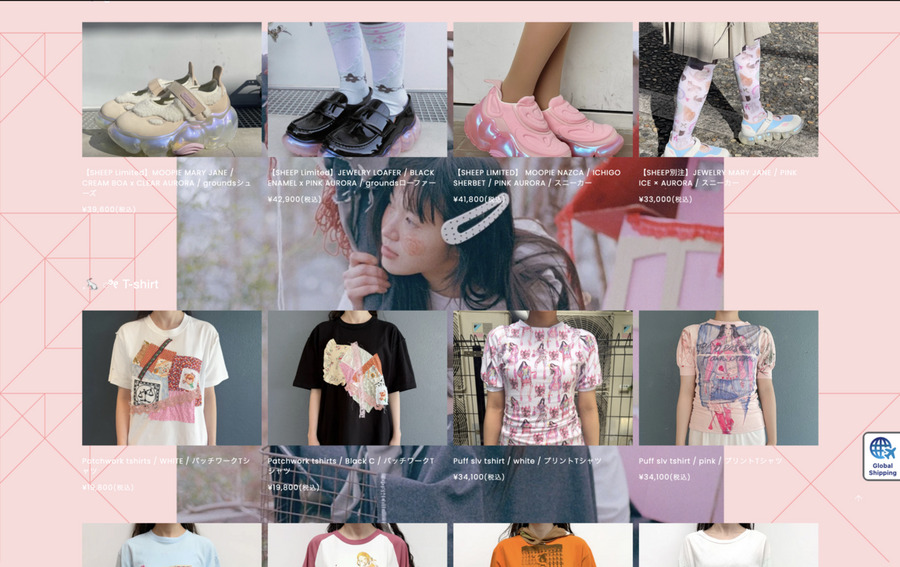
0

brand website design

post

SHEEP’s PR strategy rests on three pillars:

  1. curation and collaborations — a constant rotation of young designer brands creates the impression of a «living scene» and generates news hooks without the need for paid advertising;

artwork from the @zine_art_by_sheep

Исходный размер 2940x1848

brand website design // list of designers

  1. offline events as a media agenda — regular pop-ups in major shopping centres (PARCO, LUCUA, Hankyu Umeda) in different Japanese cities function as regional PR campaigns that extend the brand’s reach beyond Tokyo;
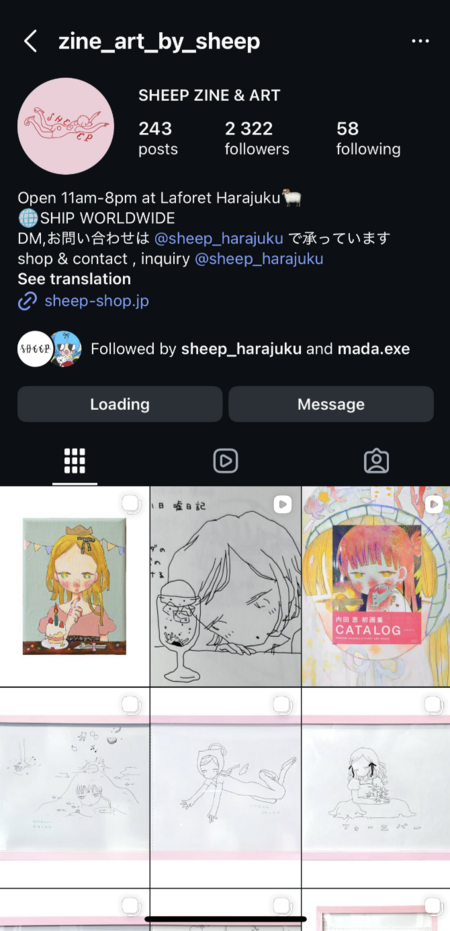
art zine by SHEEP

  1. a direct sales channel via DM — the brand accepts orders for items not listed in the online store through Instagram direct messages, creating the effect of a «closed club» and personalised service, which increases audience loyalty.

Theoretical optics

Two interrelated theories from the course were chosen to analyse SHEEP Harajuku’s communication: Group Communication Theory (Defining Group Communication) and Symbolic Convergence Theory (E. Bormann).

Group Communication Theory describes how people come together in groups based on shared interests, values and a similar worldview, and how such groups develop their own norms, language and channels of interaction. This theory was chosen because SHEEP Harajuku does not, at its core, sell «clothing for everyone» — it serves a fairly narrow yet international community of people drawn to a specific segment of Japanese alternative fashion. The brand’s behaviour (DM sales, curated selection, pop-ups only in certain locations) is a direct consequence of orienting itself toward a tight-knit reference group rather than a mass market.
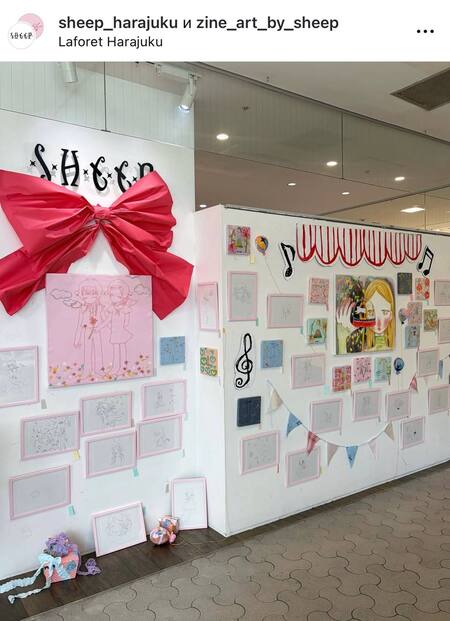
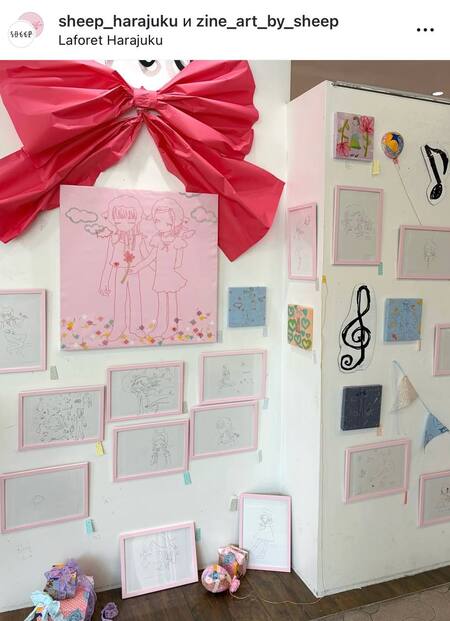
SHEEP exhibition

Symbolic Convergence Theory complements the first: according to Bormann, stable groups form around shared images, stories and «fantasy themes» that are repeated over and over and eventually combine into a common symbolic reality (a «rhetorical vision»). This theory was chosen because SHEEP has a stable and easily recognisable symbolic world — the image of the sheep, the Harajuku aesthetic, and a recurring circle of designers and their «stories» (for example, the constant participation of yusho kobayashi and MIKIOSAKABE in every pop-up) — which makes the audience perceive SHEEP not merely as a point of sale, but as part of a shared cultural story that it is interesting to be «included» in.

Исходный размер 3499x1557

Examples of looks from SHEEP’s social media

The combination of these two theories makes it possible to look at SHEEP from two angles at once: as a structure (who this audience is and why it is cohesive) and as a process (which symbols and recurring narratives sustain and transmit that cohesion to the outside world through communication channels).

Applying theories and how they work: the case of SHEEP Harajuku

The group as a reference community. From the perspective of Group Communication Theory, SHEEP Harajuku functions as an «assembly point» for a community united not by geography but by aesthetics. Followers of the brand from Tokyo, Osaka, Fukuoka and abroad are not a single social group in the usual sense, but they share a common code: an interest in a specific layer of Japanese designer fashion (punk-kawaii, gothic lolita, avant-garde streetwear). SHEEP’s communication reinforces this code through a recurring set of designer names — the audience learns to «recognise its own» by which brands appear on SHEEP’s page, forming an internal system of reference points that only insiders fully understand.

Исходный размер 3499x996

artwork from the @zine_art_by_sheep

Exclusivity as a mechanism of group identity. Selling items that are not listed in the online store through direct messages is a classic example of a group creating internal «rules of access.» Those who know that they need to message the account gain access to a product unavailable to the «ordinary» website visitor. This creates a hierarchy within the audience (regular customers vs. casual visitors) and strengthens the sense of belonging to a community of brand «insiders» — exactly as Group Communication Theory describes the formation of in-group norms and language.

Исходный размер 3499x1362

Pop-ups as group rituals. Regular pop-up events in different Japanese cities are not merely a sales expansion but a re-enactment of a group ritual: the same set of designers (MIKIOSAKABE, Jenny Fax, yusho kobayashi, hisakanao) «travels» from city to city, and an audience already familiar with this lineup from Tokyo can encounter «its own» community in Osaka or Fukuoka. This is a literal, physical embodiment of a group united by a shared visual language, consistent with the theory’s core claim that a group exists wherever there are shared symbols and practices, not merely a shared physical space.

Исходный размер 3499x1359

The sheep as a central symbol of convergence. Through the lens of Symbolic Convergence Theory, the sheep image in the logo and profile design can be read as the brand’s key «rhetorical artifact.» It is a simple, friendly, slightly comic sign that contrasts with the often radical, sometimes dark aesthetics of the featured designers (gothic, punk, deconstruction). This contrast works as a unifying metaphor: SHEEP as a «shepherd» gathering scattered, bright and unusual «sheep» — independent designers — into a single flock/community. Followers who repeatedly see this symbol alongside collections of very different styles gradually associate the sheep symbol itself with the idea of «discovering something new and unusual,» regardless of the specific designer involved.

Recurring narratives («fantasy themes») as the «fabric» of communication. According to Bormann, symbolic convergence is built on the repeated retelling of small narrative scripts. For SHEEP, such scripts include: a pop-up announcement → a lookbook from a specific designer → a post from the pop-up itself showing queues and atmosphere → a thank-you post after closing. This cycle repeats in nearly every city and season with almost the same structure, but with new protagonists (new collections, new faces). As a result, the loyal audience develops a «shared memory» of the brand — it recognises SHEEP’s communication rhythm and anticipates the next cycle, creating an effect of seriality and ongoing «continuation of the story» that is characteristic of convergent symbolic worlds.

exhibition announcement

The zine as an extension of the symbolic world. The @zine_art_by_sheep project takes symbolic convergence beyond commerce: a printed publication about art allows the audience to engage with the «SHEEP universe» not as a shop, but as a cultural medium. This reinforces the brand’s rhetorical vision — SHEEP is not just selling things but is part of a broader creative ecosystem of Harajuku, one that is interesting to be involved in at different levels (as a buyer, a reader, a pop-up visitor, or a follower).

Taken together, both theories show that the communicative strength of SHEEP Harajuku is built not on individual advertising messages but on a stable, repeating structure (the same designers, the same announcement formats, the same sheep symbol), which turns a scattered international audience into a community with a shared symbolic language — exactly as described by Group Communication Theory and Symbolic Convergence Theory.

Conclusion and recommendations

The communication strategy of SHEEP Harajuku is generally effective for its core objective — maintaining the status of a «place for discovering new names» in Japanese alternative fashion. Strengths: a stable visual identity, active offline expansion through pop-ups beyond Tokyo, formation of a loyal community via exclusive DM sales, and a regular publishing rhythm on Instagram.

Weaknesses become visible when comparing activity across channels: Instagram is significantly more developed than TikTok and YouTube, even though these platforms now drive the main influx of new, younger audiences outside Japan. Most textual content and descriptions remain in Japanese, which limits engagement with an international audience despite the claimed worldwide shipping. The website functions primarily as a news feed and store, but makes little use of storytelling — for example, stories of specific designers or the «life» of each collaboration are hardly developed into separate content.

We can say that SHEEP’s strategy has not «lost» effectiveness, but it has not evolved proportionally to the growing interest in Japanese alternative fashion within TikTok culture in recent years. Growth occurs more through organic interest in Harajuku and individual designers than through a targeted adaptation of SHEEP’s communication to new platforms and audiences.

Recommendations: 1// Develop TikTok as an independent channel, not a duplicate of Instagram: short formats such as «a day at SHEEP, ” backstage dressing sessions, and buyers’ reactions to exclusive finds — this naturally extends the brand’s existing aesthetic and attracts a younger, international audience.

2// Add an English (and possibly Korean/Chinese) layer of communication — duplicate captions for key posts and pop-up news, since a significant portion of the audience follows the brand from abroad and is interested in shipping.

3//Transform the zine into a regular media project with digital presence — for example, a separate account or a section on the website with content previews and designer interviews, strengthening SHEEP’s image as a cultural curator, not only a seller.

4//Consider a light personalization of positioning for the new target audience — collaborations with influencers outside Japan (order unboxings delivered via worldwide shipping), which transfers SHEEP’s symbolic world from the physical space of Laforet into the global digital field without losing its curatorial identity.

Библиография
Показать полностью
1.

Bormann, E. G. Symbolic Convergence Theory: A Communication Formulation. Online course materials on communication theory (section on symbolic convergence and rhetorical vision). Available at: [online course platform]. Accessed: 23.05.2026.

2.

Defining Group Communication. Online course materials on communication theory (section on group communication and formation of reference groups). Available at: [online course platform]. Accessed: 01.06.2026.

3.

Brand information sources:

4.

Official brand website: SHEEP. Available at: https://sheep-shop.jp/ (news section: https://sheep-shop.jp/blogs/news, including announcement: https://sheep-shop.jp/blogs/news/61922osakapopup). Accessed: 20.05.2026.

5.

Brand Instagram account: SHEEP Harajuku. Available at: https://www.instagram.com/sheep_harajuku/. Accessed: 27.05.2026.

6.

Brand TikTok account: SHEEP Harajuku. Available at: https://www.tiktok.com/@sheep.harajuku. Accessed: 03.06.2026.

7.

Brand YouTube account: SHEEP Harajuku. Available at: https://www.youtube.com/@SHEEP_Harajuku. Accessed: 31.05.2026.

8.

Brand X (Twitter) account: SHEEP Harajuku. Available at: https://x.com/sheep_harajuku. Accessed: 07.06.2026.

9.

Laforet Harajuku shopping center brand list page. Available at: https://www.laforet.ne.jp/en/shop_search/brand/. Accessed: 10.06.2026.

Источники изображений
Показать полностью
1.

SHEEP [Official website images]. — 2026. — https://sheep-shop.jp/. — Electronic image. — Free access. — Accessed: 20.05.2026.

2.

>SHEEP [Official website images]. — 2026. — https://sheep-shop.jp/. — Electronic image. — Free access. — Accessed: 20.05.2026.

3.

4.

SHEEP Harajuku [Instagram posts]. — 2026. — https://www.instagram.com/sheep_harajuku. — Electronic image. — Free access. — Accessed: 25.05.2026.

5.

SHEEP Harajuku [Instagram posts]. — 2026. — https://www.instagram.com/sheep_harajuku. — Electronic image. — Free access. — Accessed: 25.05.2026.

6.

7.

SHEEP Harajuku [Video announcement of new collection]. — 2026. — https://youtu.be/2mI1dbBBN9o?si=k2J_zm7aG5h1i0zU. — Electronic video. — Free access. — Accessed: 02.06.2026.

8.

SHEEP Harajuku [Video announcement of new collection]. — 2026. — https://youtu.be/2mI1dbBBN9o?si=k2J_zm7aG5h1i0zU. — Electronic video. — Free access. — Accessed: 02.06.2026.

9.

10.

SHEEP Harajuku [Pink photos with clothing]. Instagram post. — 2026. — https://www.instagram.com/p/DY6x0Zik7HQ/?img_index=4&igsh=MWxxeHZnd2tvamg5Mw==. — Electronic image. — Free access. — Accessed: 28.05.2026.

11.

SHEEP Harajuku [Pink photos with clothing]. Instagram post. — 2026. — https://www.instagram.com/p/DY6x0Zik7HQ/?img_index=4&igsh=MWxxeHZnd2tvamg5Mw==. — Electronic image. — Free access. — Accessed: 28.05.2026.

12.

13.

SHEEP Harajuku [Exhibition photos]. Instagram post. — 2026. — https://www.instagram.com/p/DYwD9kTk1lN/?img_index=1&igsh=MW1zcGI3YXhqb2FrMw==. — Electronic image. — Free access. — Accessed: 05.06.2026.

14.

SHEEP Harajuku [Exhibition photos]. Instagram post. — 2026. — https://www.instagram.com/p/DYwD9kTk1lN/?img_index=1&igsh=MW1zcGI3YXhqb2FrMw==. — Electronic image. — Free access. — Accessed: 05.06.2026.

15.

16.

SHEEP Harajuku [Announcement post]. Instagram post. — 2026. — https://www.instagram.com/p/DYeXRIwEzN3/?igsh=MWMwOTY4dGZvZjhyOA==. — Electronic image. — Free access. — Accessed: 10.06.2026.

17.

SHEEP Harajuku [Announcement post]. Instagram post. — 2026. — https://www.instagram.com/p/DYeXRIwEzN3/?igsh

Мы используем файлы cookies для улучшения работы сайта НИУ ВШЭ и большего удобства его использования. Более подробную...
Показать больше