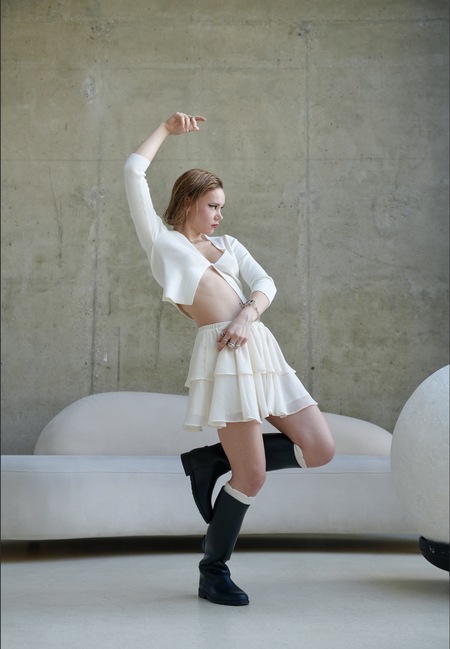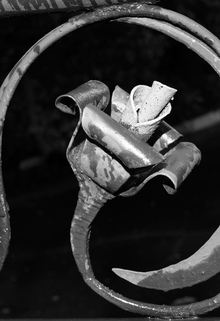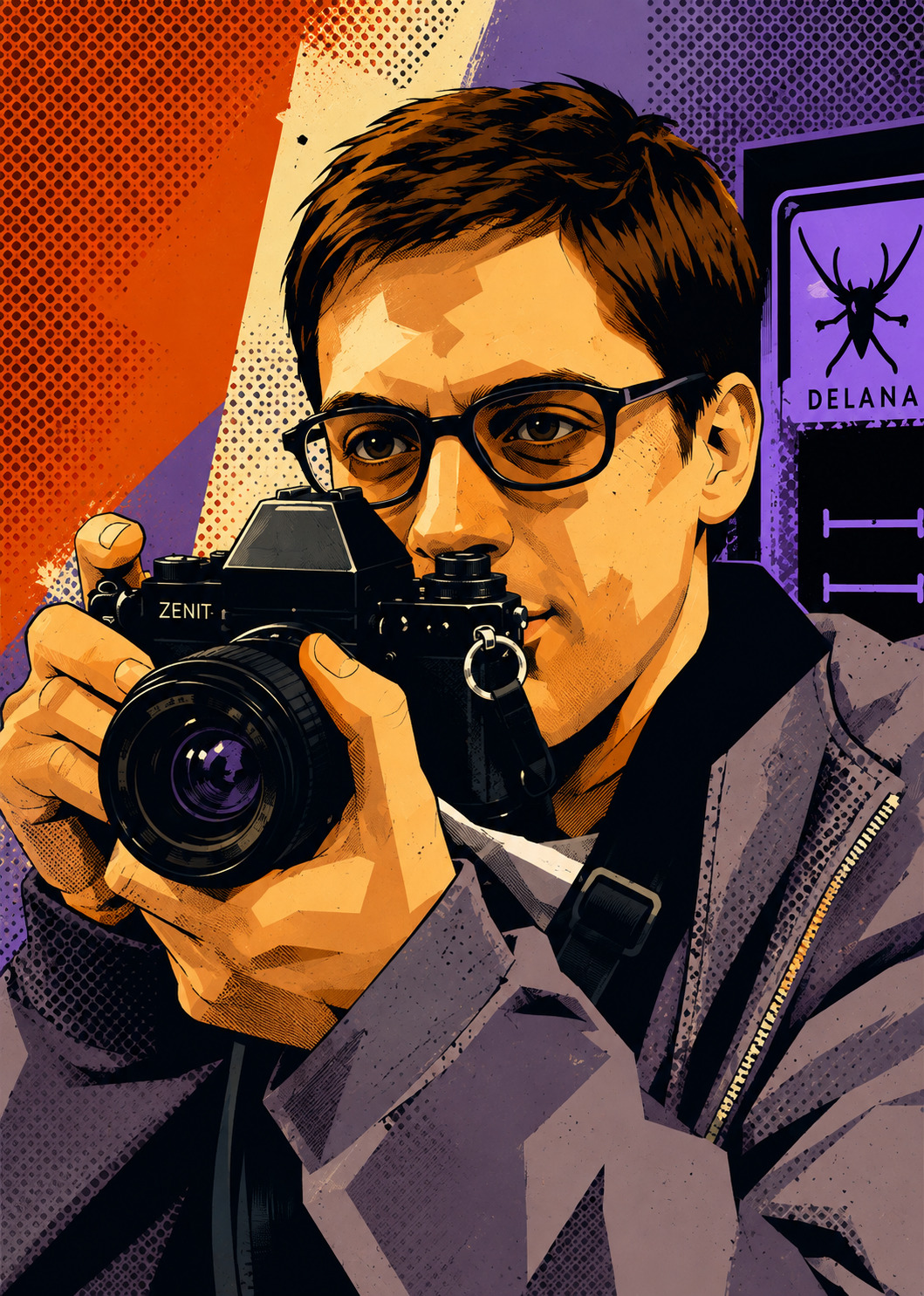
Another technological revolution is underway, including in the world of photography. Smartphones, digital cameras, and, of course, neural networks have made image creation accessible to almost everyone. It is logical to assume that in such a situation, analog processes should finally yield to digital ones. However, the opposite is happening.
More and more young artists are turning to film, manual printing, photobooks, and other tangible practices. In a world where images appear and vanish in seconds, the slow process, the physical engagement with the material, and the sense of authorial presence take on special value. The future of photography will likely not be about choosing between digital and analog, but about their coexistence. Technology expands the photographer’s possibilities, but it does not define the value of their work.
Author’s footprint
The more images exist only on screens, the higher the value of their physical embodiment becomes. Prints, negatives, photo books, and so forth—these cease to be mere auxiliary objects and become integral parts of the artistic statement.Photography changes when it leaves the screen. A printed photograph transforms from an infinitely reproducible digital file into an autonomous object—possessing its own texture, scale, and sense of presence. It is in the material form that the memory is preserved, not only of the image itself but also of the process of its creation.
Analog and digital no longer argue
A renewed interest in analog technologies does not imply an abandonment of digital ones. On the contrary, they increasingly coexist today.
Film demands time and discipline, while digital technologies allow us to preserve, reproduce, and explore images. Paper prints and negatives inevitably degrade over time, so digitization becomes a way to extend their lifespan and make them accessible to future generations.
This combination has long been the norm in other creative practices. Photographers shoot on film and work with scans; musicians record sound using analog equipment but edit it in a digital environment; artists translate digital images into tangible objects.
As art critic Dmitry Nikishov notes: «Musicians record through analog pedals, and photographers digitize film—the quality improves. Even a CD recorded from a cassette can feel more soulful.»
Technology does not replace the author
New tools have significantly expanded the artist’s capabilities. However, with them comes the illusion that the act of image creation itself is already an act of creativity. In reality, the technology remains merely a means. The artistic value of a work is lent not by algorithms, cameras, or software, but by the author’s perspective, the underlying idea, and the ability to transform an image into a statement. Art history shows that every new technology first inspires apprehension, and then becomes integrated into artistic practice. This happened with photography, cinema, and digital graphics. Today, neural networks are following the same trajectory. The tools change, but the fundamental question remains: what precisely does the artist wish to convey? As the artist and researcher of visual communication, Arseniy Popov, noted, «progress always tears culture apart.» Perhaps it is precisely in this tension between technology and human experience that the most compelling artistic solutions are born.
As long as an artist can transform a tool into a statement and an image into a dialogue with the viewer, technology will remain a tool—not a substitute for creativity.