









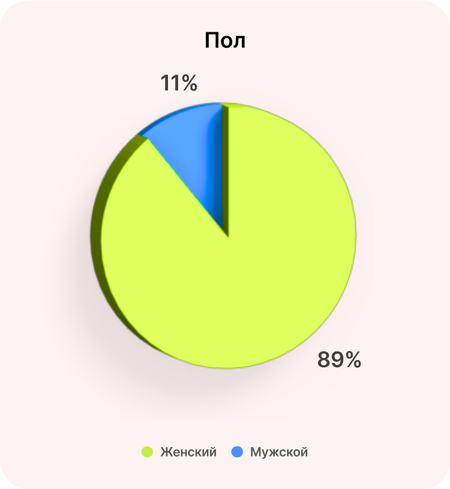
The majority of students are women rather than men.
The majority of respondents were in the 18–24 age range, with the fewest responses coming from those under 18 and those over 45.
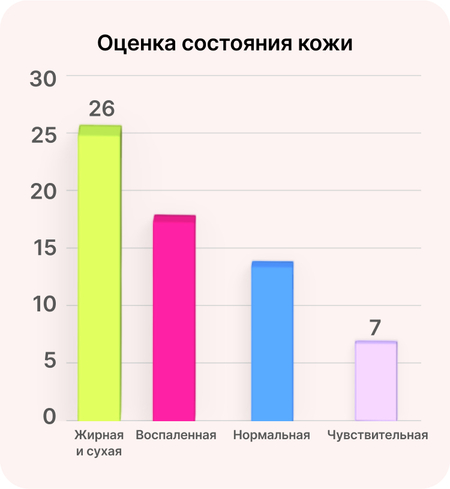
Statistics show that most people’s skin tends to be oily or dry, and fewest people reported that their skin is sensitive.
As can be seen, respondents from rural areas prefer online and offline stores equally, while respondents from cities tend to purchase more goods online than in physical stores.
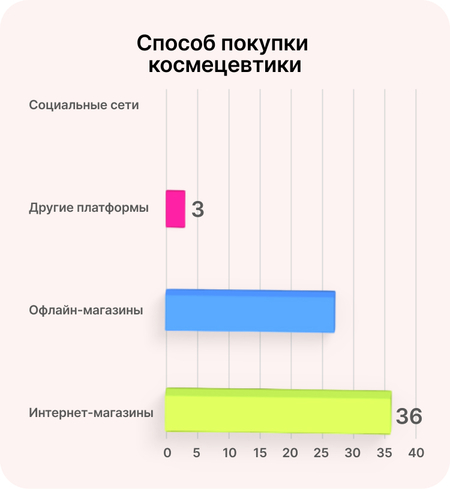
Online stores are the most popular option among all respondents, and the chart shows that people have the least trust in social media when purchasing skincare products.
Many people use mobile applications, and an absolute minority does not.
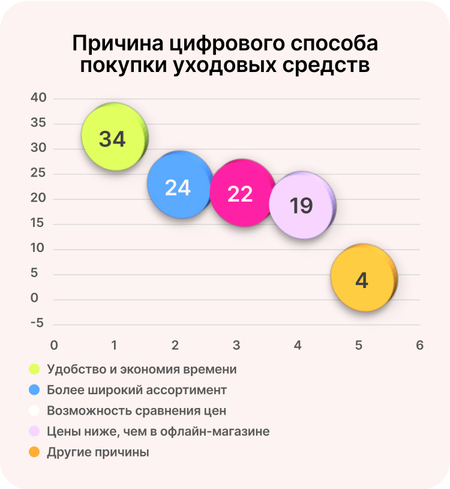
Primarily, respondents prefer online shopping due to convenience and time savings.
Most respondents prefer Golden Apple. The Letual online store was the least requested option, with its metrics comparable to the response from those who do not use apps and prefer brick-and-mortar stores.
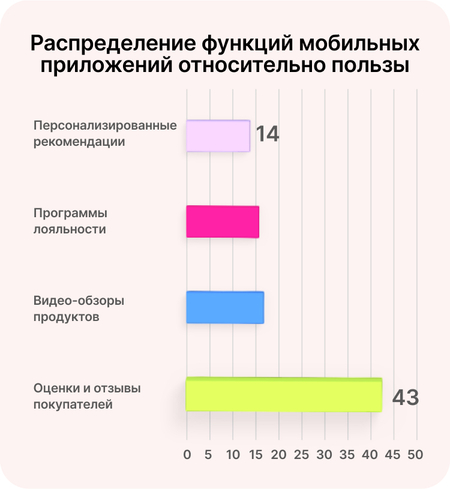
The diagram illustrates that when selecting skincare products, the surveyed audience relies primarily on the reviews and ratings of other buyers, with loyalty programs being the least influential factor.
Out of all respondents, most stated that they were partially satisfied with the level of consultation and support during online purchases, and very few were completely unsatisfied.
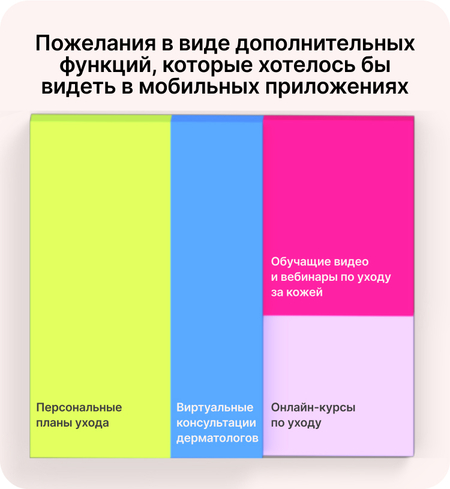
According to the chart, people most wanted to see personalized skincare routines and least wanted online courses.