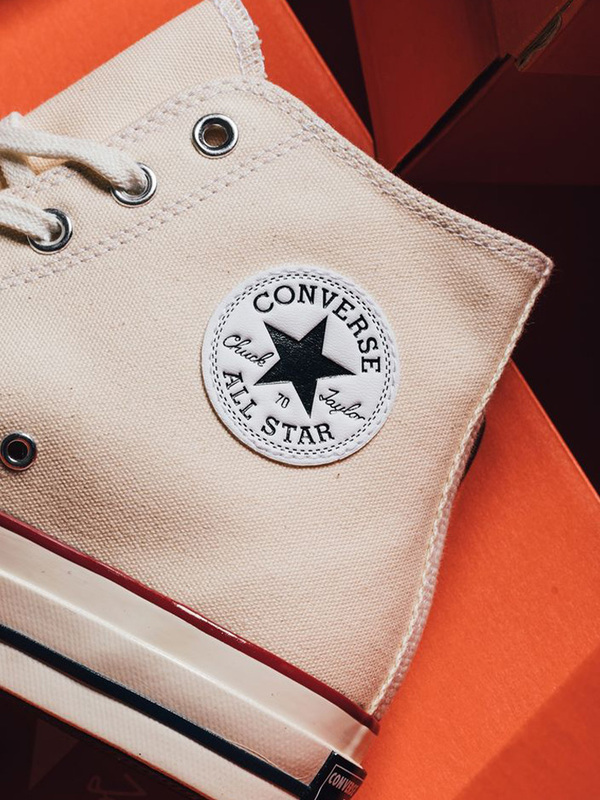
Shoes are boring. Wear sneakers.
01 — Introduction

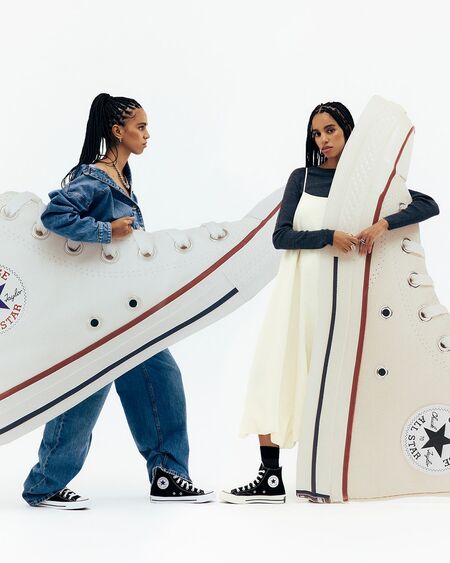
Converse’s communication strategy examined through the Elaboration Likelihood Model and Uses and Gratifications Theory
A Brand that became culture
Converse is one of those rare brands that turned footwear into a symbol of self-expression. Founded in 1908 in Malden, Massachusetts, the company evolved from basketball equipment into a global cultural icon.
Since 2003, Converse has been part of Nike, Inc., yet it maintains a distinct identity and positioning — deliberately distancing itself from athletic performance in favour of creativity, rebellion, and authenticity.
Brand Positioning
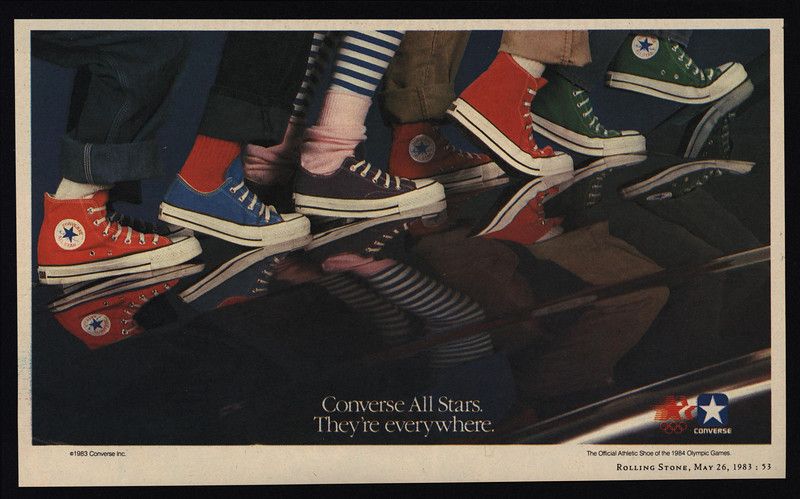
Converse positions itself not as a sportswear brand, but as a cultural and creative institution. Its core promise: self-expression matters more than function. The slogan «Shoes are boring. Wear sneakers.» is a manifesto against conformity. Converse doesn’t sell footwear — it sells membership in a tribe of creators.
1908 Year founded ≈$2B Annual revenue 170+ Countries of presence #1 Chuck Taylor — best-selling sneaker in US history
Target Audience
1. Age: 15–30 / Gen Z & Millennials Young people who value authenticity, anti-mainstream aesthetics, and belonging to subcultures. The core consumer base of the brand.
2. Profile: Creatives & Artists Musicians, visual artists, skaters, street-culture enthusiasts. These people bring the brand to life through their own lives and work.
3. Geography: Global Urban Youth Urban audiences across North America, Europe, and Asia. A shared value — individuality — transcends cultural differences worldwide.
4. Values: Heritage Seekers Consumers who appreciate authentic design with history and are willing to pay for cultural meaning, not just function.
02 — Communication Channels
Public Presence
Converse employs a multi-channel strategy, adapting tone and format to each platform while maintaining a single consistent voice: bold, honest, and community-driven.
Instagram: 10M+ followers Visual storytelling: artist collaborations, user-generated content (UGC), and Converse Custom campaigns. The primary image-building channel.
TikTok: 5M+ followers Musicians, visual artists, skaters, street-culture enthusiasts. These people bring the brand to life through their own lives and work.
YouTube: Long-form content Urban audiences across North America, Europe, and Asia. A shared value — individuality — transcends cultural differences worldwide.
Facebook: Mature audience Consumers who appreciate authentic design with history and are willing to pay for cultural meaning, not just function.
Twitter/X: Brand voice Cultural commentary, real-time trend participation, and direct dialogue with consumers and the press.
Pinterest: Inspiration Visual mood boards for styling, DIY customisation ideas, and lookbooks. A key channel for discovery and organic traffic.
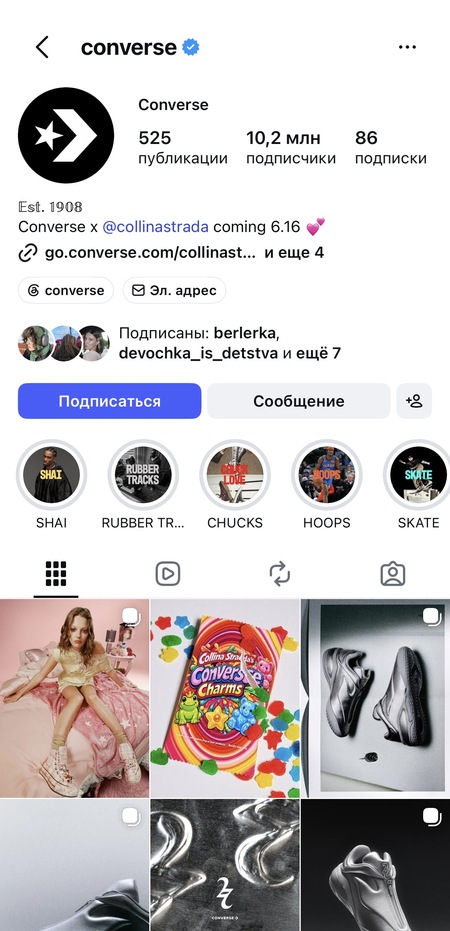

converse instagaram
converse youtube
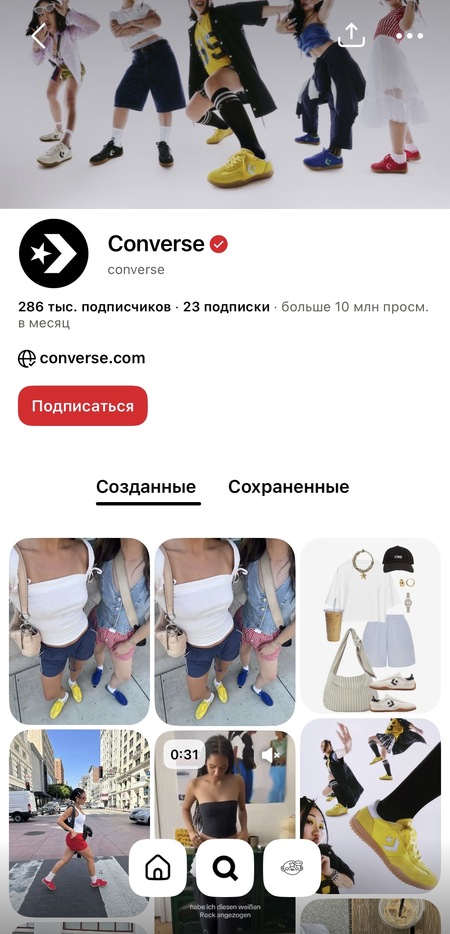
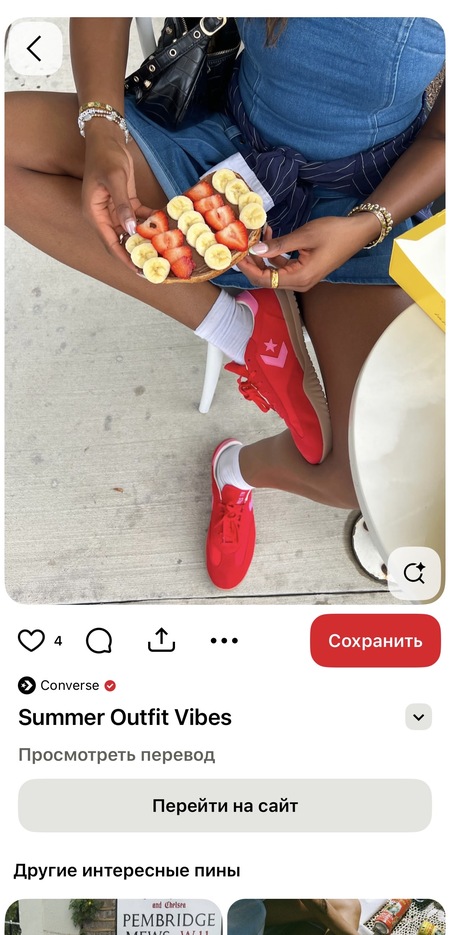
converse pinterest
PR Strategies
1. Co-Creation Campaigns The «Made by You» campaign turned consumers into brand co-authors. Over 7 million fan-submitted photos became the advertising itself. The brand disappeared — the people remained.
2. Artist & Celebrity Collaborations Tyler the Creator, Billie Eilish, A$AP Rocky, Joy Division. Each partnership is not just a limited release — it is a cultural event in its own right.
3. Limited-Edition Drops A scarcity strategy that generates hype and drives organic conversation — replacing conventional advertising with demand-driven buzz.
4. Cultural Event Sponsorship Music festivals, art exhibitions, skate events. The brand appears where its audience already lives — not in gyms, but at concerts and galleries.
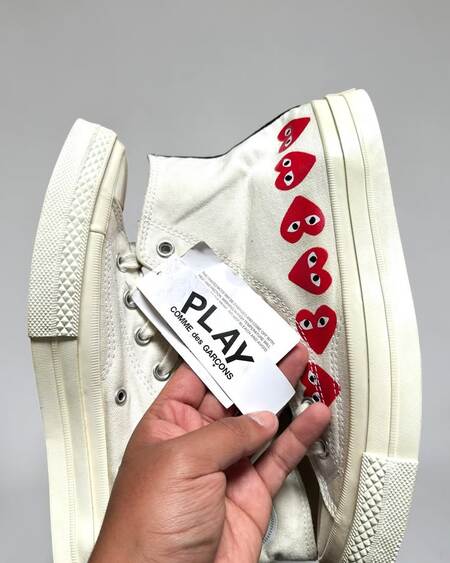
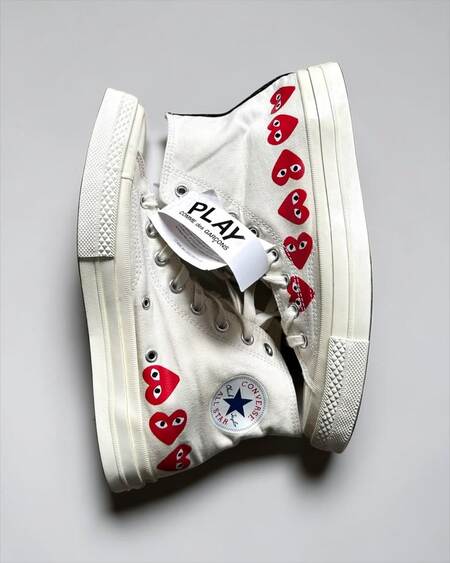
Converse x Comme des Garcons Play Chuck, 70 Multi Heart Hi
03 — Theoretical Framework
Two complementary theories form the analytical backbone of this study: ELM — to understand the mechanics of persuasion, and UGT — to explain the logic of audience engagement across social media platforms.
Elaboration Likelihood Model (ELM) Petty & Cacioppo, 1986
The model describes two routes of persuasion: the central route (deep cognitive processing of arguments) and the peripheral route (fast decision-making based on emotional cues — visuals, authority, aesthetics). ELM allows us to analyse how Converse persuades different audience segments through different tools.
Uses and Gratifications Theory (UGT) Katz, Blumler & Gurevitch, 1973
UGT frames audiences as active agents who consciously choose media and content to satisfy specific needs: information, identity, entertainment, social integration, participation, and escapism. The theory explains WHY people follow Converse, interact with its content, and share it with others.


ELM: Two Persuasion Routes in Converse Communication
Central Route
High involvement — the consumer actively evaluates arguments Authenticity — real fan stories build long-term conviction Format — long-form films, documentary series, artist interviews Example — «Made by You»: 7M+ consumer stories as the argument Outcome — deep loyalty and durable brand attitude
Peripheral Route
Low involvement — fast decisions driven by emotional cues Association — trust in the artist transfers to the product Format — TikTok videos, Instagram aesthetics, collabs Example — Tyler the Creator × Converse: artist’s audience becomes brand’s audience Outcome — rapid reach, new audience acquisition
converse official website
UGT: Six Audience Needs and Converse’s Response