RED Conference is a professional event for individuals involved in the video game industry: developers, publishers, game designers, artists, business developers, recruiters, producers, and many other specialists.

Every time I play a game and it makes me happy, I mark it in my emotion journal. Then I note why it made me happy. Maybe it was because I got a purple outfit, and it had three times more stats than my blue one. If I felt bad, I also had to write down why. The interface here is awkward; I struggled with it for a long time. I spent so long trying to figure out what I was supposed to do in the quest. This character is infuriating—he just drives me crazy, I hate him, I want to kill him.
Don’t forget about trash games. Even trash games with bad reviews and other issues are very important because they illustrate what not to do. If a game is technically well-realized but simultaneously has poor ratings, low online presence, or weak sales—that’s a flag that requires investigation to understand why that happened. Go in, play it, and figure out what you shouldn’t be doing in your own work.
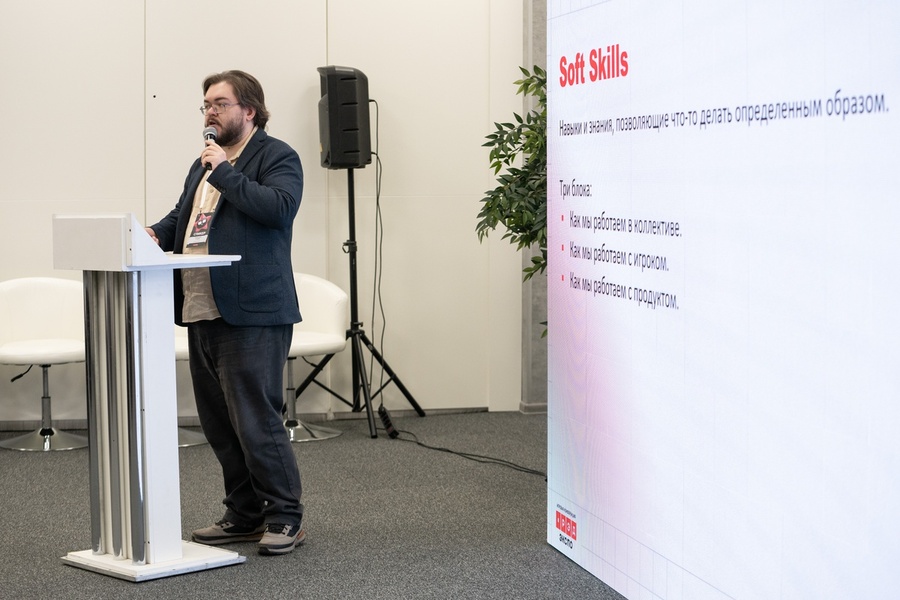
When a gamer plays a game, their primary goal is simply to pass the time, derive some pleasure, get a little dopamine—that’s it. When a game designer plays a game, their task is to analyze why they like this particular game, what elements provide them with positive emotions, and why they get so absorbed in it. So, you can just play a game like Civilization until 4 AM, and everything will be fine. Or, you can play Civilization until 4 AM and try to understand why you stayed playing it until 4 AM. This is what is known as the flow state. What created this flow state for you? At what moment did it appear?
Game designers are obligated to play the game they are creating—even if they’ve become tired of it, even if they know it inside and out. They still have to play their own game.
You still have to play your own game. I remember when I worked at ITT, there was a poster up: «Game Designers are obligated to play the game they create.» Yes, it’s hard. Playing through the tutorial of your own game for the 850th time isn’t fun, but it’s necessary.
«Coming up with many unique features is quite difficult. You can’t just cram ten things into a game that didn’t exist before. But take the Nintendo example: they take roughly the same game formula, but just add one feature that strongly impacts everything else. In Legend of Zelda, they added crafting—it’s still an open-world game, but now you have the ability to create items, which adds a new layer of strategy.»


Watch the full version of the presentation below.