Index
00. Concept
01. Sound as Ornamentation
02. Musical Object as Decoration
03. Sounding Garments
04. Material as Sound Source
05. Music as Sculpture
00. Conclusion
00. Concept
Musical instruments are typically perceived primarily through their core function: they are necessary for creating and performing music. However, beyond the sound, they possess another significant dimension related to design. Each instrument has a specific aesthetic—its own form, proportions, and character. Its construction adheres not only to technical requirements but also to aesthetic decisions shaped by time and culture. Therefore, a musical instrument can be viewed not just as a functional object, but as an independent design entity.In this study, I aim to explore whether the visual language of musical instruments can influence fashion, and how this connection manifests in clothing. I am interested in why objects originally created for one purpose can become sources of inspiration for designers. What exactly captures their attention: the recognizable appearance, the structural features, the nature of the materials, or the very idea of merging aesthetics and function?
At first glance, music and fashion belong to disparate fields. One is connected to sound and auditory perception, while the other relates to appearance, the body, and visual culture. Yet, both engage with rhythm, form, movement, and emotional impact. They share fundamental principles that allow for the exploration of intersections even where a direct connection is not immediately apparent. A musical instrument, for example, can serve as a starting point for creating a new visual identity, even if its original function is completely transformed in the process.
It is particularly interesting to note that this influence does not have to be direct. A designer might reinterpret the visual aspects of a musical object, draw upon specific details of its construction, or use it as a basis for their own concept. As a result, the initial image may become less recognizable, yet it will retain certain visual principles. This transition from one design idiom to another becomes the central theme of the research.
The title «Decorative Music» reflects an interest in musical instruments not just as sound sources, but as objects possessing expressive aesthetics. Here, music is examined through its material and visual aspects. It is crucial to understand at what point a functional object begins to be perceived as an artistic form, and how that form can exist outside of its original context.The main objective of this research is to trace the connection between the design of musical instruments and the visual language of fashion. It is important not to limit oneself to searching for obvious borrowings, but rather to examine more subtle intersections and modes of interpretation. The visual study answers the question of whether instrument design can influence fashion and how ideas transition from one domain to another, acquiring new meaning.
01. Sound as Ornamentation
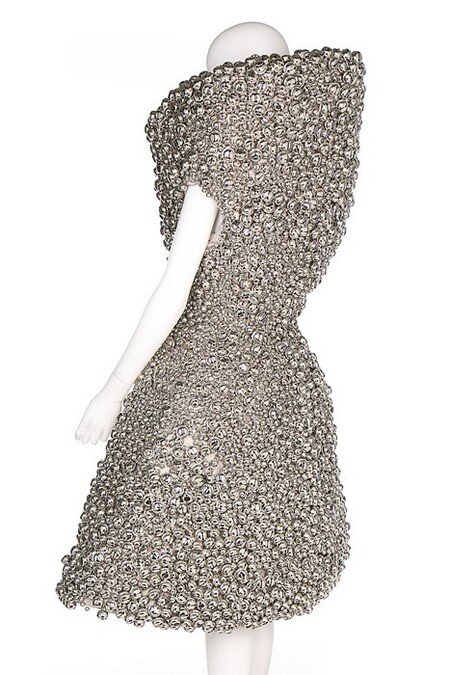
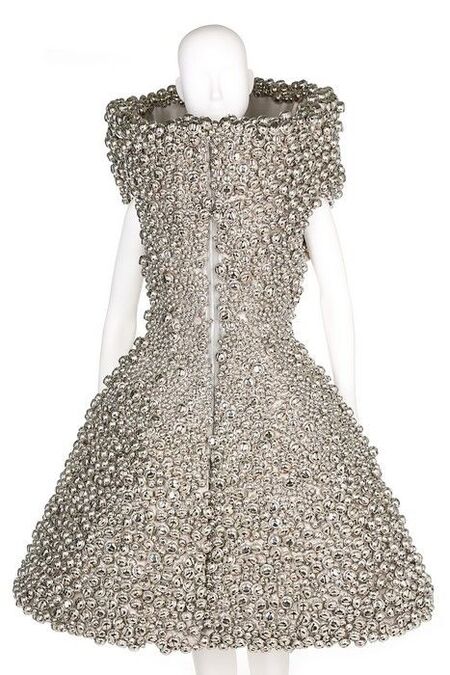
Björk × Alexander McQueen, Bell Dress, 2004
The dress is entirely covered in tiny metal bells. It not only resembles a bell in its shape but also chimes when in motion.
Björk × Alexander McQueen, Bell Dress, 2004
The dress was created for Schiaparelli’s 1939 musical collection. A functional music box was situated at the waist, and musical notation was embroidered onto the fabric using metallic thread. The musical theme becomes an integral part of the evening dress’s structure and decoration.
A historical example of the direct intersection of musical artifacts and fashion.
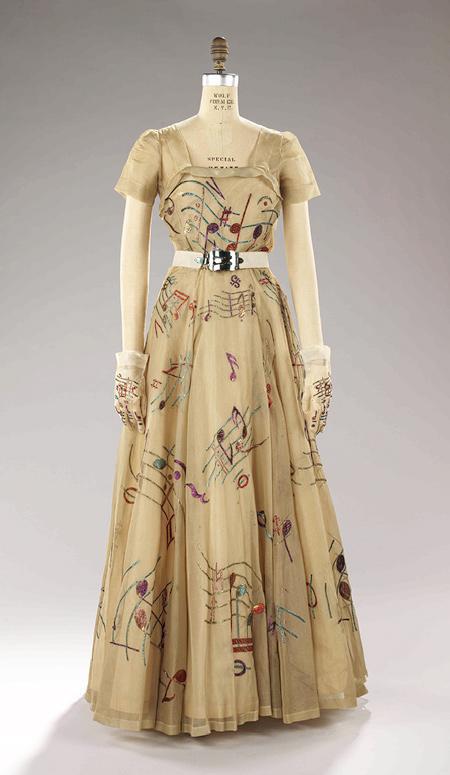
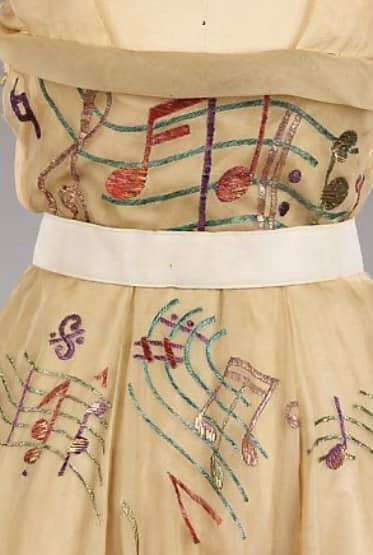
Elsa Schiaparelli, evening gown, Autumn 1939 collection
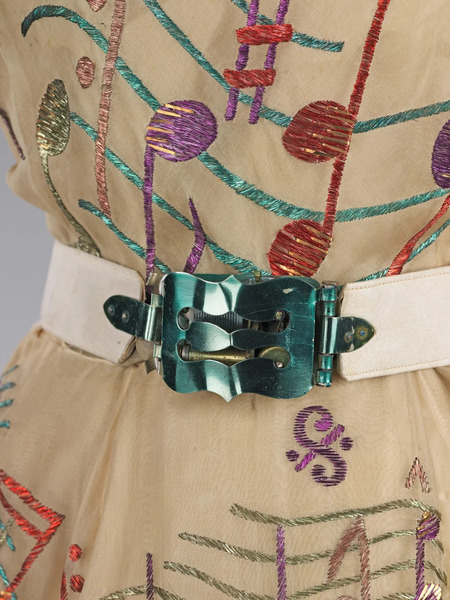
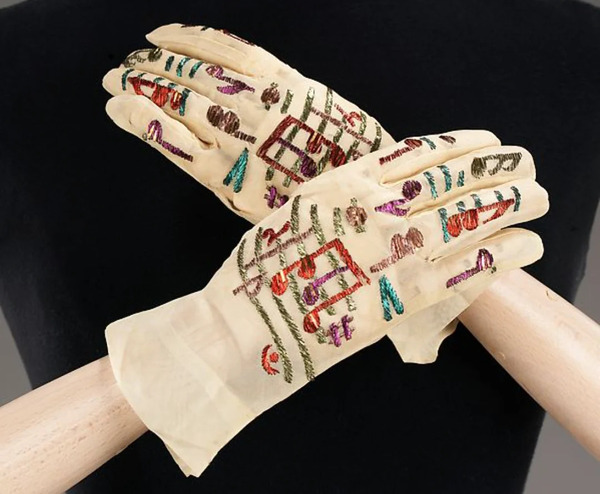
Elsa Schiaparelli, evening gown, Autumn 1939 collection
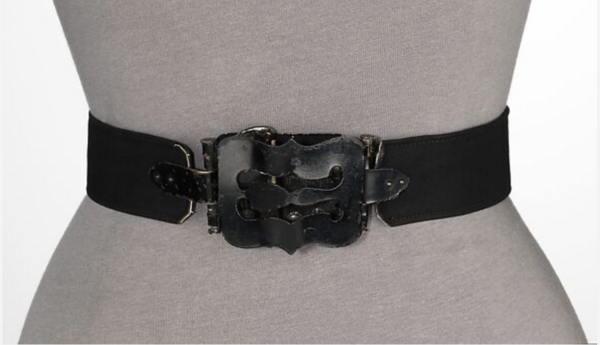
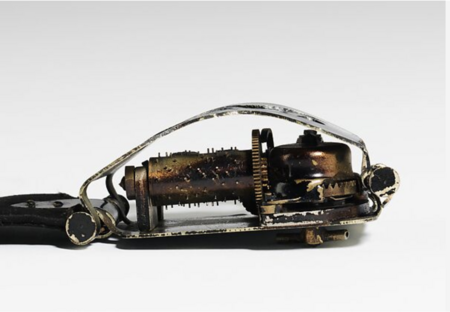
Elsa Schiaparelli, evening gown, Autumn 1939 collection
02. Musical Object as Decorative Item
Björk, Music Box for Vespertine, 2001
For the Vespertine album, Björk utilized specialized music boxes with transparent Plexiglas casings instead of the traditional wooden ones. She was interested in how the material influenced not only the appearance but also the sound of the instrument. This object is interesting for study because the aesthetics of the musical item become part of its construction: the transparency doesn’t merely decorate the box; it is intrinsically linked to its sound and artistic concept.
Björk, music box for Vespertine, 2001
03. Clothing That Speaks
This is an interdisciplinary project at the intersection of fashion, dance, and interactive technology, which transforms the movements of the human body into music. The device is worn on the body and allows sounds to be created and the soundscape to be manipulated through the dancer’s touch, gestures, and movements. The project authors are Dee Mainstone (artist) and Tim Murray-Brown (sound and technology developer), with the participation of researchers from Queen Mary University of London.
Di Mainstone, Serendiptichord, 2009
Di Mainstone, Serendiptichord, 2009
04. Material as a Source of Sound
Sonic Fabric — a material created from 50% recycled audio cassette tape and 50% cotton. Its unique feature is that the fabric not only looks unusual but also reproduces sounds recorded on it when exposed to a special magnetic head.
The idea for the material was inspired by Tibetan prayer flags and wind indicator ribbons on sailboats. The fabric is used in fashion, accessories, interior design, and art. In 2004, a dress was created from it for musician Jon Fishman—a piece that could literally be «played» during a performance.
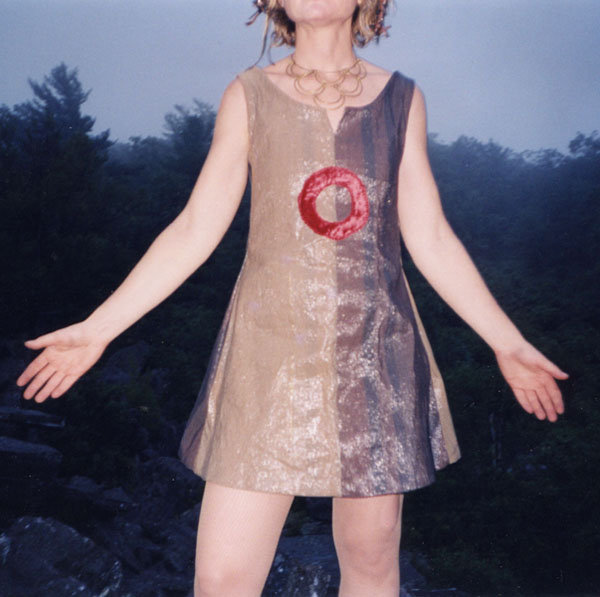
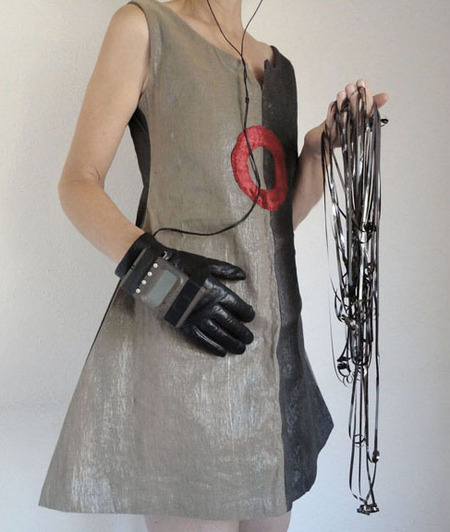
Alyce Santoro, Sonic Fabric, 2000–Present
Alyce Santoro, Sonic Fabric, 2000–Present
05. Music as Sculpture
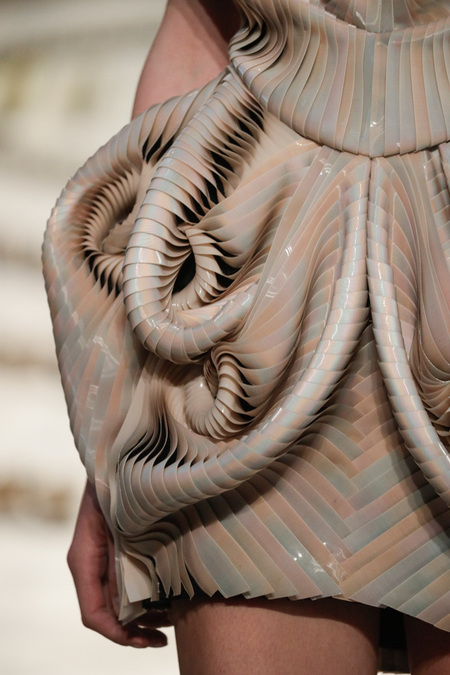
The Seijaku collection is inspired by cymatics—the study of visible patterns formed by sound waves. Iris van Herpen translated these structures into fashion: radial lines, repeating geometric motifs, and voluminous surfaces evoke frozen vibrations. The show was accompanied by a live sound installation by Japanese musician Kazuya Nagaya, who performed on singing bowls. Thus, sound was present simultaneously in the visual form of the collection and in the space of the show itself.
Iris van Herpen. Seijaku, Haute Couture Fall-Winter 2016
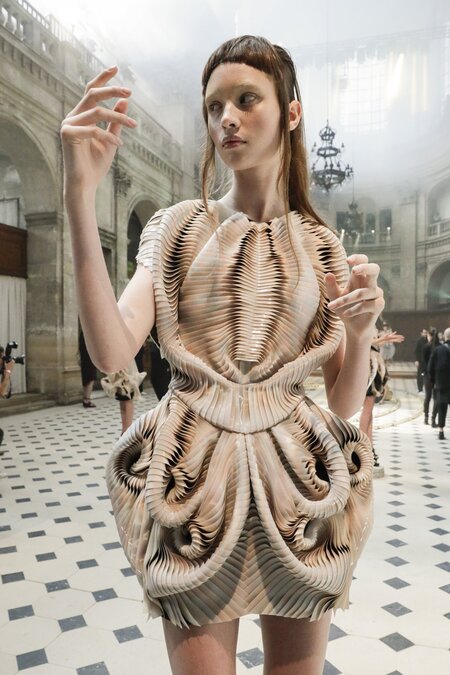
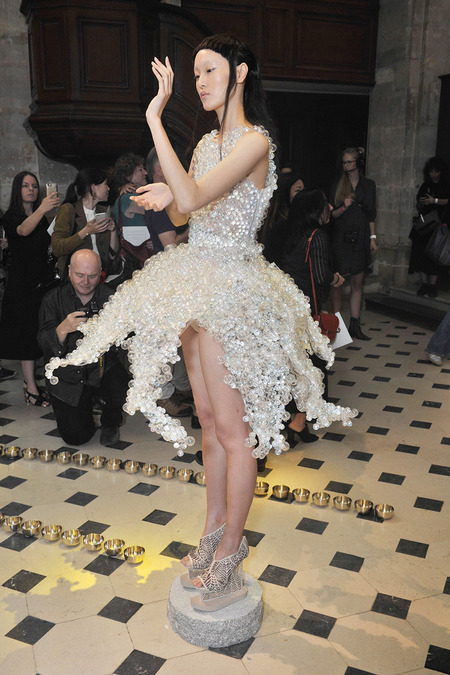
Iris van Herpen. Seijaku, Haute Couture Fall/Winter 2016
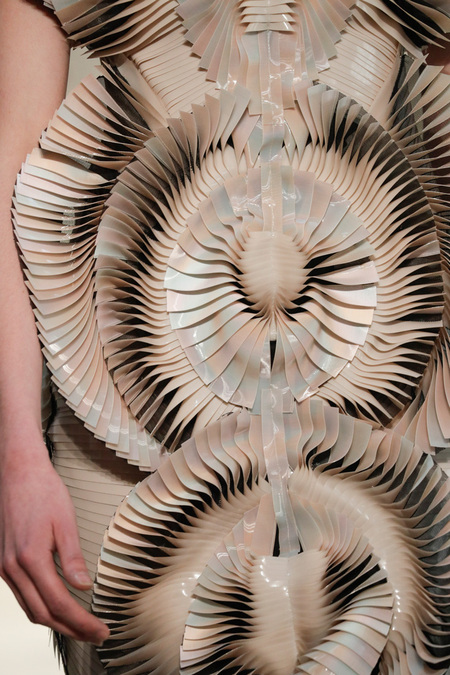
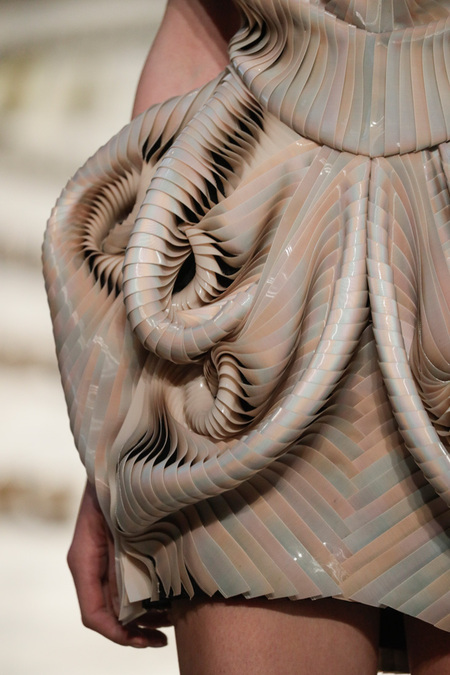
Iris van Herpen. Seijaku, Haute Couture Fall-Winter 2016