Navigator
— Concept; — (1) Vector; — (2) Surface; — (3) Threshold; — Conclusion; — Bibliography; — Image Sources.
Concept
The Yugoslav «Black Wave» developed against the backdrop of transformations within a socialist society where modernization coexisted with uneven development. The 1965 economic reform and the expansion of market mechanisms formed a crucial part of this context; cinema addressed unemployment, housing insecurity, and limitations on social mobility. Referencing the road allows us to connect this context with an analysis of form.
In the study of the space of trajectory, the system of relationships between departure, movement, stopping, and arrival is understood.
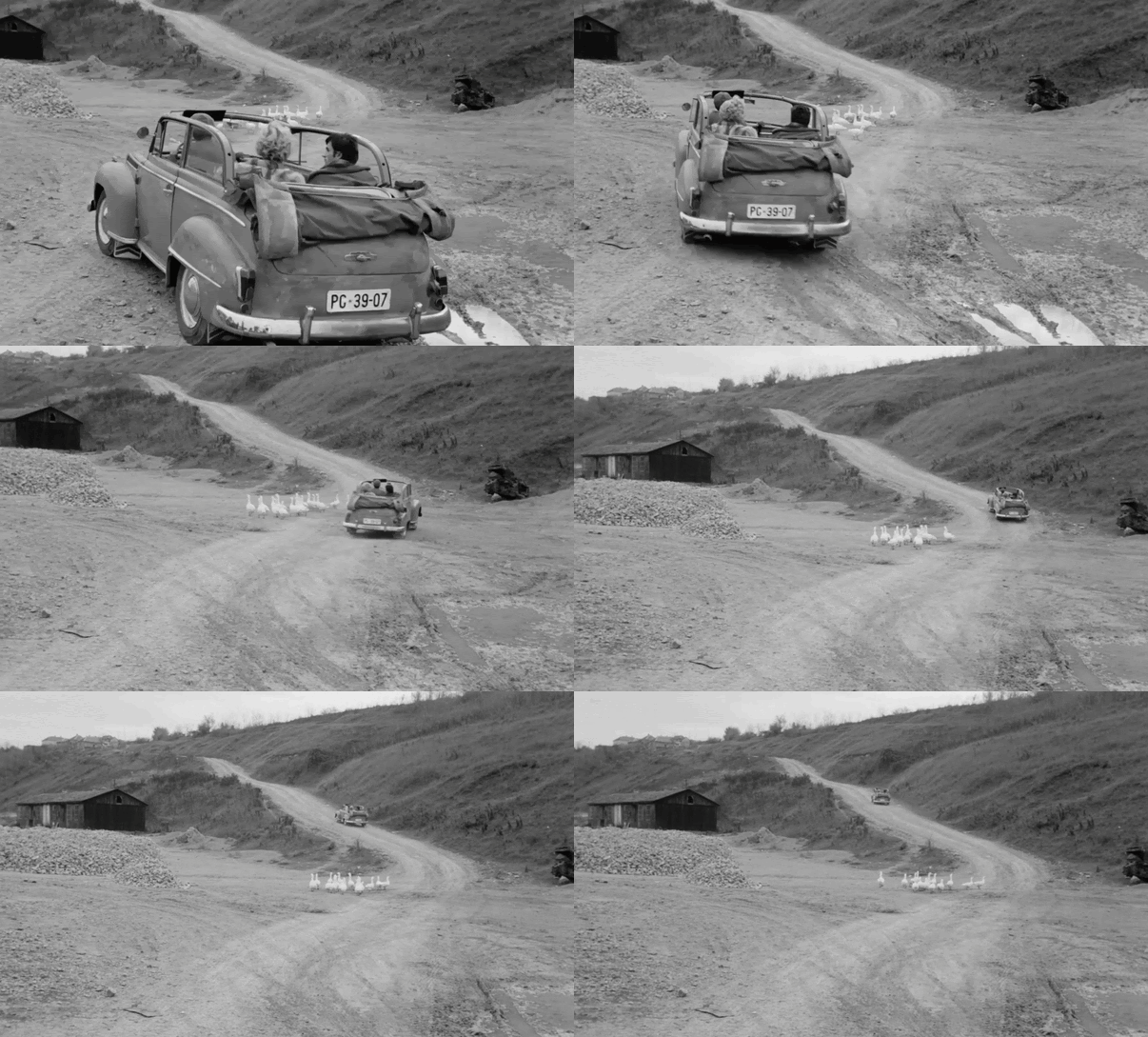
«When I Am Dead and White» («Kad budem mrtav i beo»), dir. Zhivoi Pavlovich, 1967
The journey to the cinema typically foreshadows change. Extended routes, flat landscapes, suburban scrubland, and the constant shift in natural locations were perceived in post-war art as a visual sign of freedom and a break from studio convention. The organization of frame depth, optical distance, environmental texture, and editing boundaries establish a direction traditionally read as progress toward a goal; however, in films of the Yugoslavian «Black Wave,» these techniques transform the geography of movement into a form of spatial impasse. The divergence between the directionality of the image and its immutability suggests a stylistic characteristic for consideration.
In the road sequences of selected films, two complexes of techniques diverge. The first—the system of directionality—creates a sense of movement and includes perspective, frame depth, object trajectory, and editing that connects locations. The system of environment, however, prevents external movement from becoming a change in spatial relationships. It incorporates texture, figure scale, compositional scheme, and the method of presenting different locations.
This divergence proves to be the sustaining method: moving from one place to another does not alter the construction of the frame, nor the relationship between the figure and space. Furthermore, the objective is to investigate the conditions under which movement becomes a promise of change, a delay, or a reproduction of former constraints.
It should be noted that the proposed hypothesis does not claim to provide an exhaustive description of all Yugoslavian cinema of this period, but rather identifies a persistent formal principle in films from a genre where the complete natural space remains the carrier of meaning.
The section is organized around three stylistic cross-sections of space. The first block explores the genesis of the promise of change, analyzing perspective, depth, and trajectory. The second part examines what specifically opposes this promise: optical distance and frame texture. The final module argues that the characters' stasis is not solely due to a narrative obstacle.
«When I Am Dead and White» («Kad budem mrtav i beo»), Dir. Zhivoi Pavlovich, 1967
The visual sequence is based on a series of frames that allow one to trace the changes in spatial situation. The material used consists of spatially-oriented films that share a common characteristic but differ in execution, such as «When I am Dead and White» («Kad budem mrtav i bel», dir. Živojin Pavlović, 1967), «Feather Peddlers» («Skupljači perja», dir. Aleksandar Petrović, 1967), «Rat Rising» («Buđenje patova», dir. Živojin Pavlović, 1967), «Early Works» («Rani radovi», dir. Želimir Žilnik, 1969), and «Three» («Tri», dir. Aleksandar Petrović, 1965). The selection criterion is the potential to depict the direction of movement, an obstacle, a boundary, or an editing transition.
(1) Vector
This section analyzes the depth of the mise-en-scène, the axes of roads and transport routes, as well as the duration of movement shots, tracking how a set route perspective is neutralized by trajectory cyclicality or compositional reversal. Furthermore, the contrasts between episodes from different films are not eliminated—varying directorial choices offer diverse ways to convey directionality.
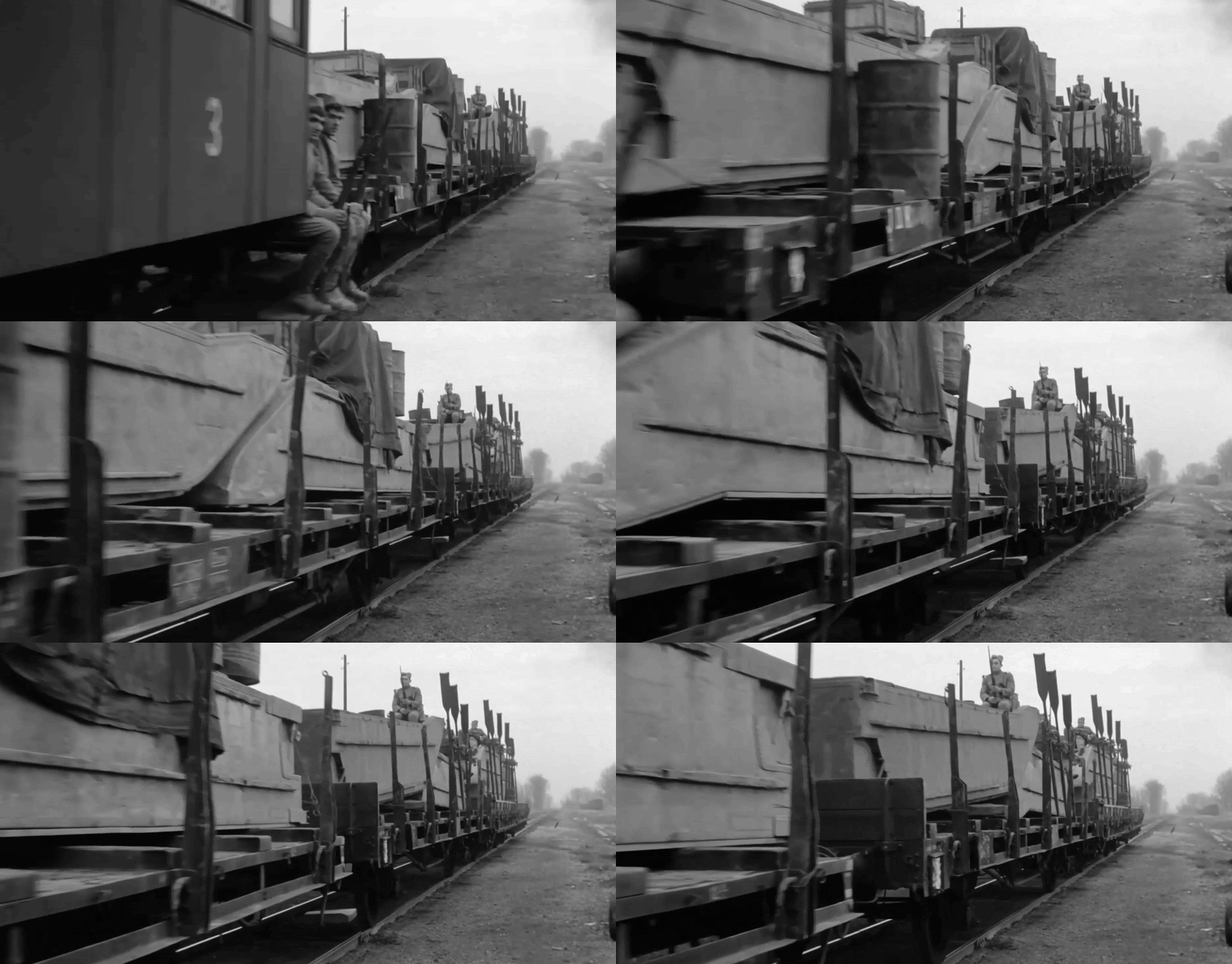
«When I Am Dead and White» (Kad budem mrtav i beo), dir. Zhivoin Pavlovich, 1967
«When I Am Dead and White» (Kad budem mrtav i beo), dir. Zhivoin Pavlovich, 1967
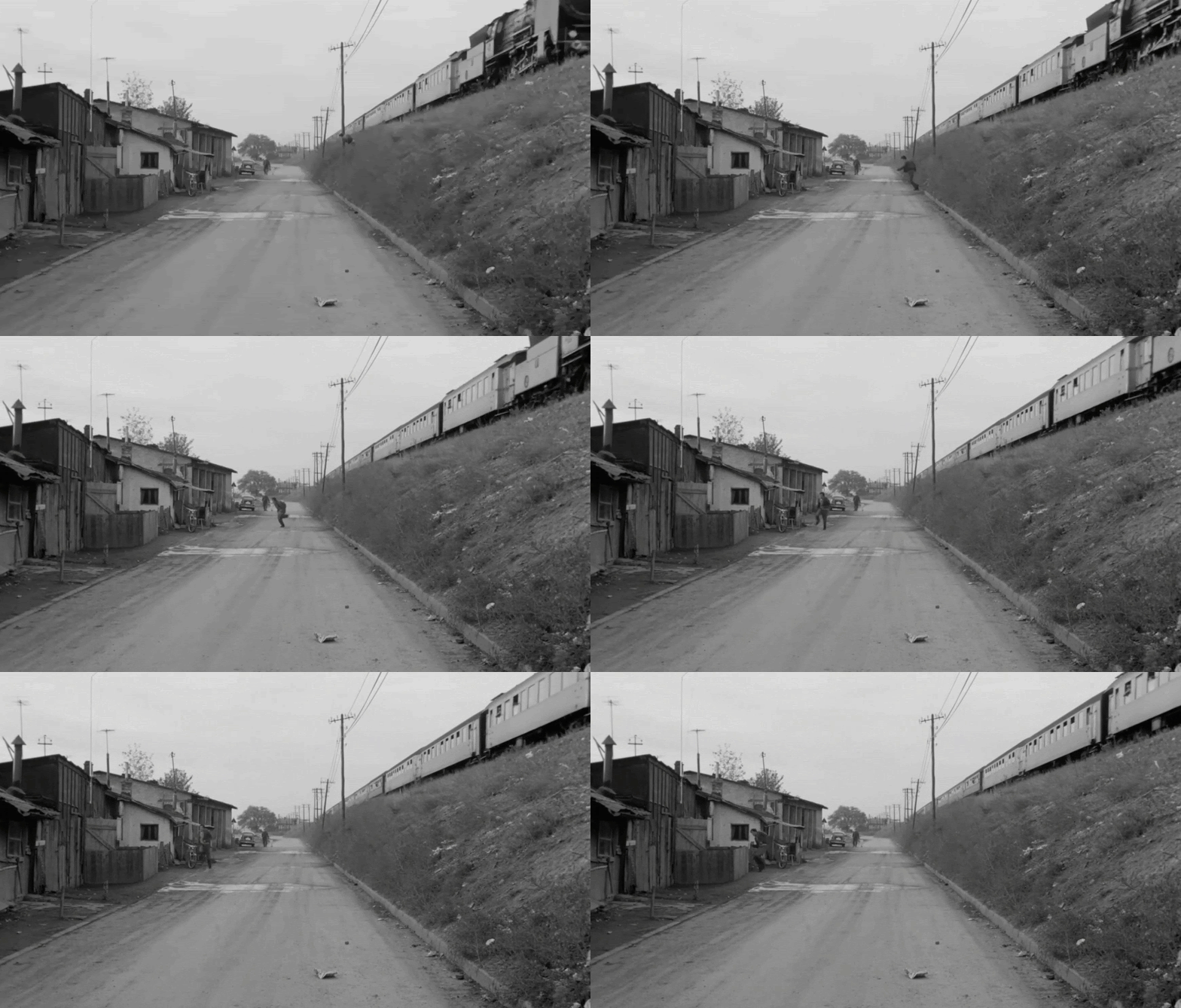
«When I Am Dead and White» («Kad Budem Mrtav i Beo»), directed by Zhivoi Pavlovich, 1967
The promise of the journey is created in the frame before the plot speaks of it: perspective recedes into the depth, the horizon establishes the line, and the figure or car moves along a trajectory. In the film «When I Am Dead and White,» direction is often structured using a similar linear perspective scheme, where the street is divided into two parts—the road—and recedes toward a vanishing point.
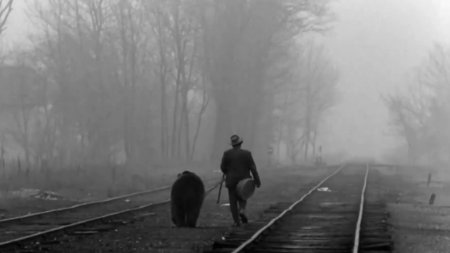
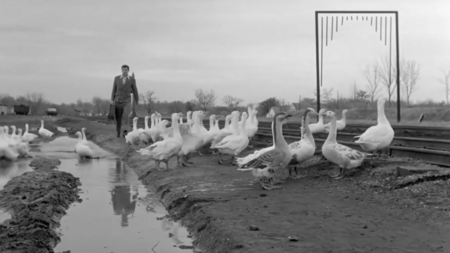
«Tri, ” directed by Alexandr Petrovich, 1965
«Feather Collectors» («Skupljači perja»), directed by Alexander Petrovich, 1967
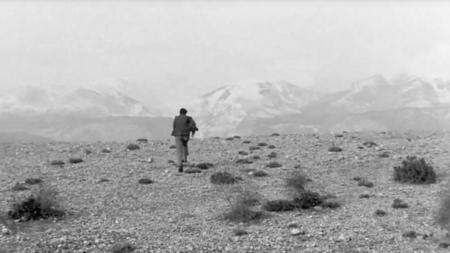
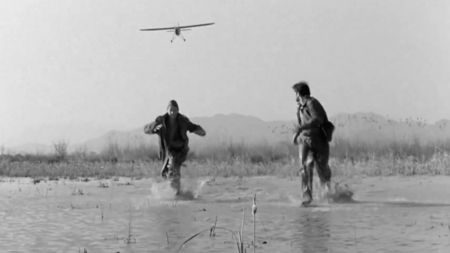
«Tri, ” directed by Alexander Petrovich, 1965
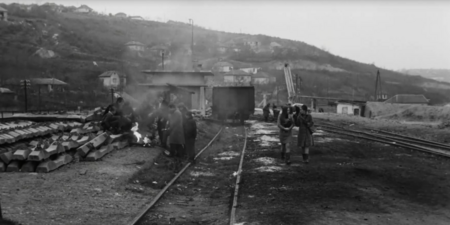
In shots from the film «Three,» the tracks also establish a classic central perspective, directing the gaze strictly into the depth of the frame; however, the mist and low contrast of the background dissolve the vanishing point—the vector of movement loses its visible goal before the figure covers the distance. On a rocky hillside in another scene, like in the painting «Feather Buyers,» the open space transforms into a void without landmarks, where the scale of the human figure shrinks to a solitary point in the middle of a uniform surface.
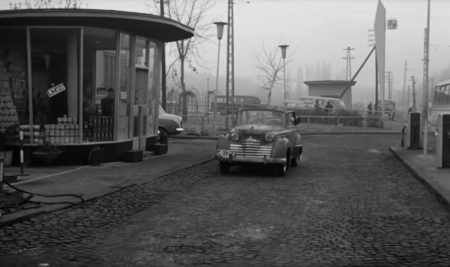
«When I Am Dead and White» (Kad budem mrtav i beo), dir. Zhivoin Pavlovich, 1967
Thus, comparing the frames of the first group shows that within the perspective direction, there is a kind of closed guide: the direction is neutralized either by the dissolution of the horizon and the rarefaction of space, or by the deflection of the trajectory and the lateral compression of the street from both sides.
(2) Surface
If the orientation of the image dictates movement, the surrounding environment can weaken that promise. This block will discuss optical distance and the tangible texture of the frame (dirt, peripheral urban development, dense monochrome masses), which demonstrate the environment’s physical resistance to change and deny the path an easy passage.
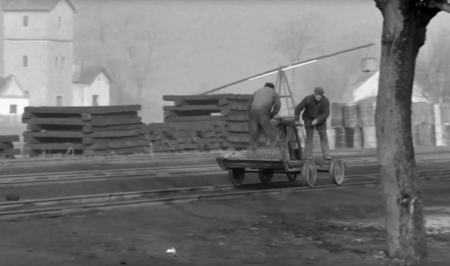
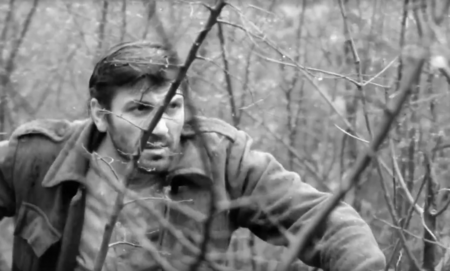
«Tri, ” directed by Alexandar Petrovich, 1965
«Feather Collectors» («Skupljači perja»), directed by Alexander Petrovich, 1967
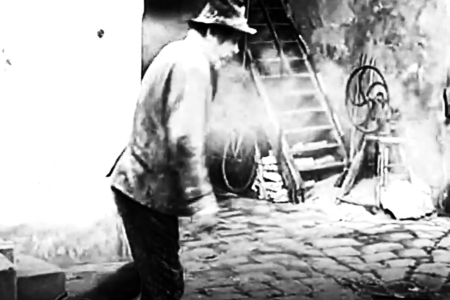
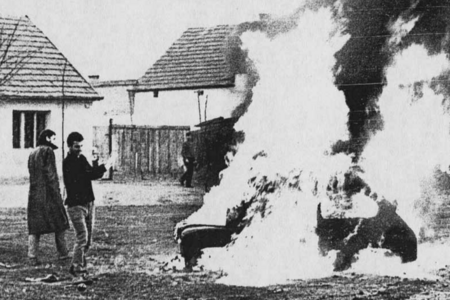
«Early Works» («Rani Radovi»), directed by Zelimir Zilnik, 1969