ConceptThis study compares four ways of aestheticizing the horrific in painting: the grandeur of catastrophe, the elevation of war, the theatricality of nightmare, and the beauty of the demonic character. The works are compared based on light, scale, composition, and the depiction of the body. General views are used to compare composition, while close-ups help examine gestures, light, and texture. The comparison covers examples from the 16th century to the early 20th century.
Navigator01 / Aestheticization of Disasters 02 / The Sublime Image of War 03 / Poetics of Nightmare 04 / Romantic Demonism
01 / Aestheticizing Catastrophes
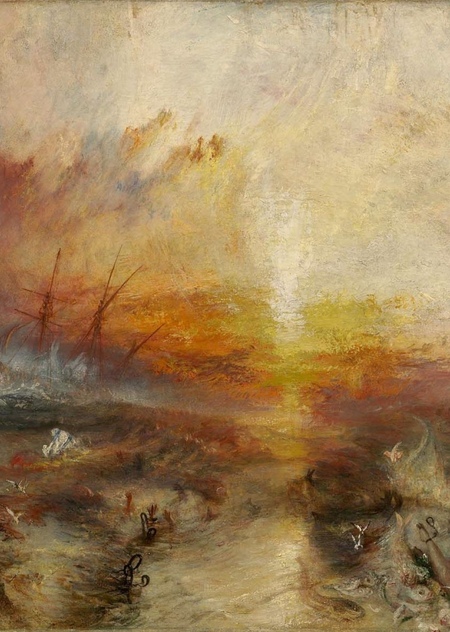
Fire organizes color and light; a vortex organizes movement; glacial blocks organize geometry. The grandeur of a natural force juxtaposed with the small scale of human figures transforms destruction into spectacle. This work compares natural disasters, urban fires, apocalypse, and the violence concealed within a seascape.
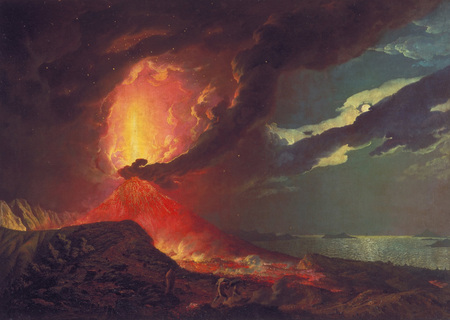
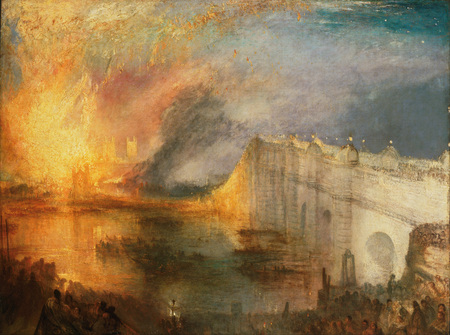
Left: Joseph Wright of Derby. Vesuvius in eruption overlooking the islands of the Bay of Naples. Circa 1776–1780. Tate, London. Right: William Turner. The Fire in the Houses of Lords and Commons, October 16, 1834. 1834–1835. Philadelphia Museum of Art.
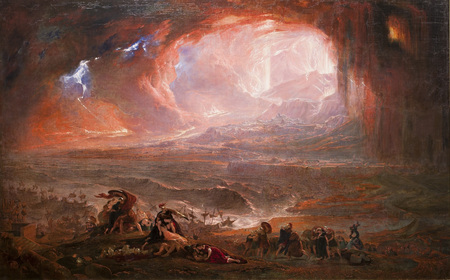
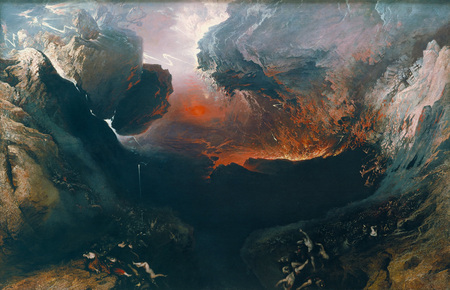
Left: John Martin. The Destruction of Pompeii and Herculaneum. 1822. Tate, London. Right: John Martin. The Great Day of Wrath. 1851–1853. Tate, London.
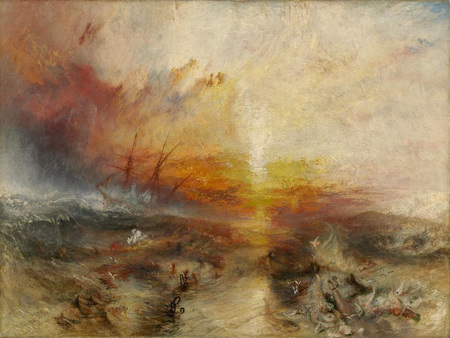
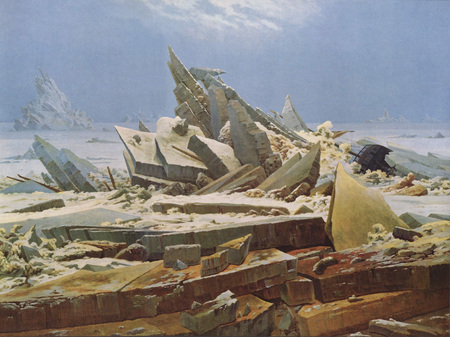
Left: J.M.W. Turner. Slaves' Ship. 1840. Museum of Fine Arts, Boston. Right: Caspar David Friedrich. Sea of Ice. 1823–1824. Hamburger Kunsthalle.
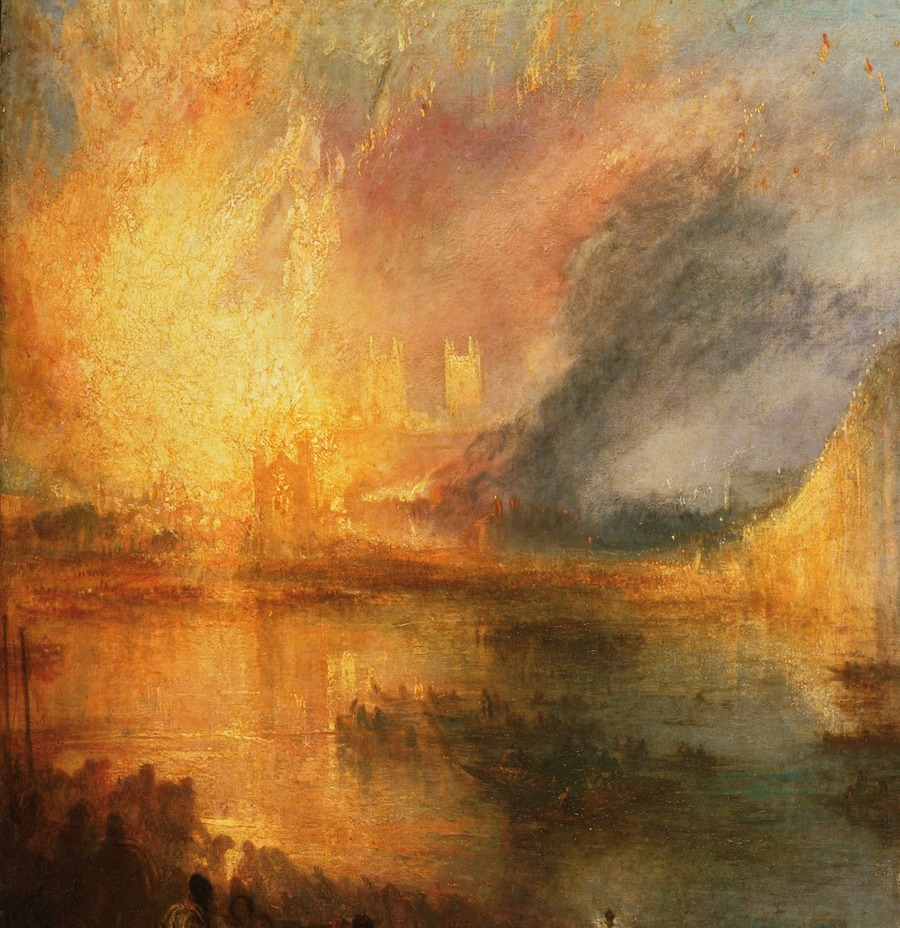
Turner. Fire in the Lords' and Commons' chambers. Fragment. Warm light reflects off the river, doubling the expanse of the fire.
Turner. Fire in the Lords' and Commons' chambers. Fragment. The bright arch of the bridge provides a stable support to the composition next to the smoke.
Kaspar David Friedrich. Ice Sea. Fragment. The remnants of the ship almost merge with the slanted ice layers.
John Martin. The Destruction of Pompeii and Herculaneum. Fragment. Small figures in the foreground establish the scale of the disaster.
John Martin. Great Day of Wrath. Fragment. A red band of light separates masses of crumbling rock.
Hubert Robert. Imaginary View of the Louvre in Ruins. 1796. Louvre, Paris. Light and perspective transform the ruins into a contemplative space.
02 / The Sublime Image of WarThe panoramic scale transforms the battle into a pattern; the heroic pose highlights the commander. In Grant, the dead and wounded are integrated into the scene of imperial grandeur. In Turner, however, the army is swallowed by an overarching storm: the scale of the threat becomes majestic.
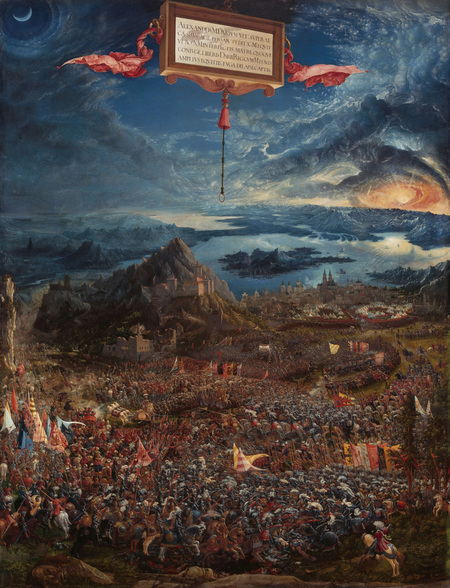
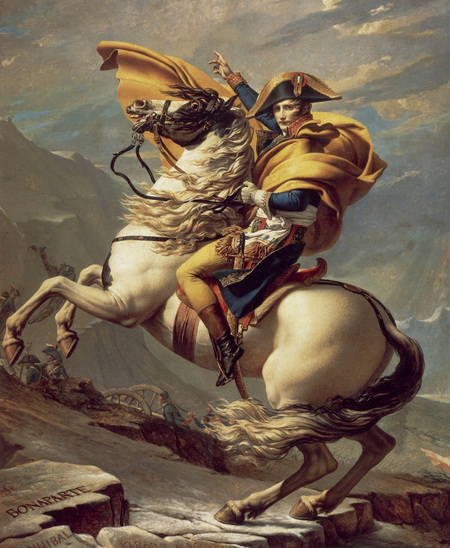
Left: Albrecht Altdorfer. The Battle of Alexander and Darius at Issus. 1529. Old Pinakothek, Munich. Right: Jacques-Louis David. Bonaparte on the Col de Saint-Bernard. 1800–1801. Malmaison Museum version.
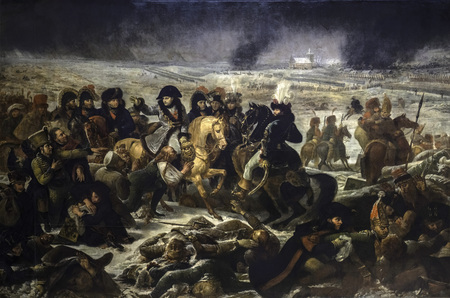
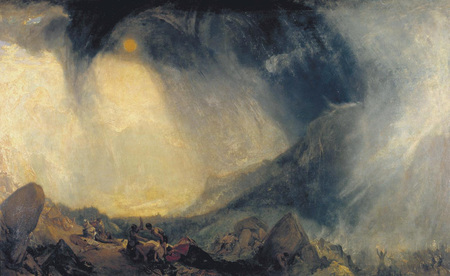
Left: Jean-Antoine Gros. Napoleon on the Battlefield of Eylau. 1808. Louvre, Paris. Right: William Turner. Snow Storm: Hannibal and His Army Crossing the Alps. 1812. Tate, London.
Altdorfer. The Battle of Alexander against Darius at Isse. A fragment. The sky and distant horizon set the scale of the event.
Altdorfer. Alexander’s Battle with Darius at Issus. Fragment. Spears, banners, and figures gather the troops into a dense pattern.
Gro. Napoleon on the battlefield of Eylau. Fragment. Bodies in the foreground occupy the space between the viewer and the commander.
Turner. Hannibal and his army cross the Alps. Fragment. A dark arc of storm dominates the canvas.
David. Bonaparte on the Col du Saint-Bernard. Fragment. The gesture of the hand and the diagonal of the cape establish the direction of movement.
Vasily Vereshchagin. Apotheosis of War. 1871. Tretyakov Gallery, Moscow. The clear silhouette and empty space emphasize the scale of the devastation.
Paul Nash. We are creating a new world. 1918. Imperial War Museum, London. Dawn illuminates a landscape scarred by craters.
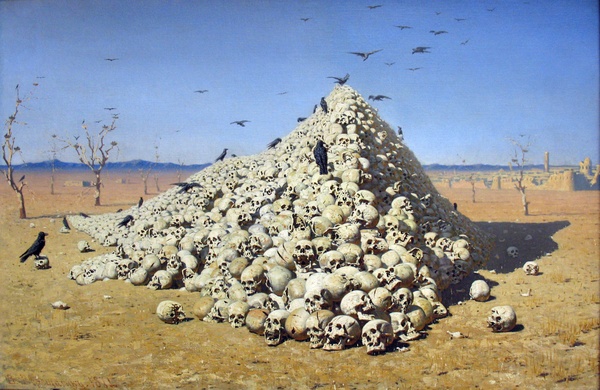
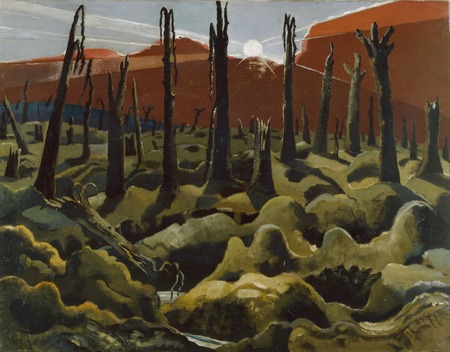
Vasily Vereshchagin. Apotheosis of War (1871). Paul Nash. We Are Creating a New World (1918). Vereshchagin gathers the traces of death in the center, while Nash distributes the marks of destruction across the landscape.
03 / The Poetics of HorrorThe pictorial origins of horror: the dark room, the illuminated body, the sudden appearance of a monster. In two versions of «Nightmare,» the format and positioning of the figures change, but the motif of helplessness remains constant. In «Lady Macbeth,» fear is created through ghostly figures and gestures.
Henry Fuseli. Nightmare. 1781. Detroit Institute of Art.
Henry Fuseli. Nightmare. 1790–1791. Goethe Museum in Frankfurt.
Henry Fuseli. Lady Macbeth Taking the Daggers. 1812. Tate, London.
William Blake. Flea Phantom. Circa 1819–1820. Tate, London. Human musculature and animal profile converge in a single figure.
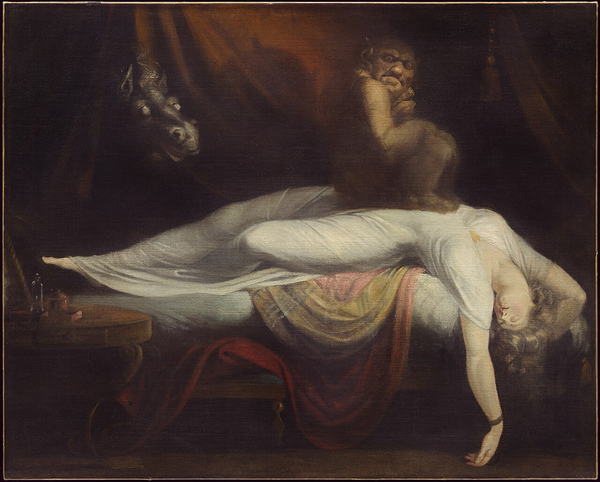
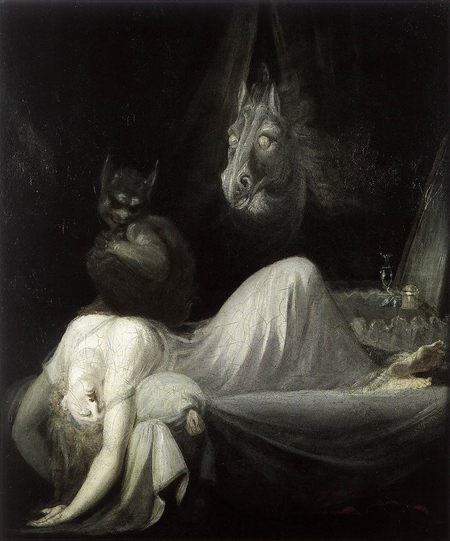
Henry Fuseli. Two versions of «The Nightmare.» On the left—1781, Detroit Institute of Arts. On the right—1790–1791, Goethe Museum, Frankfurt. The comparison demonstrates how a shift in format alters the distance between the sleeping figure and the monsters.
Fuseli. Nightmare. Version from 1781. Fragment. The head of a horse emerges from behind a curtain, like from a theatrical wing.