Frame by Frame. Content Plan
Breaking down pipelines, showing the evolution of a shot.
Frame by Frame — a Russian-language educational media platform focused on 3D and VFX production. We analyze real-world pipelines and show how an abstract idea transforms into a finished frame.
Previous chapter:
Media Concept:
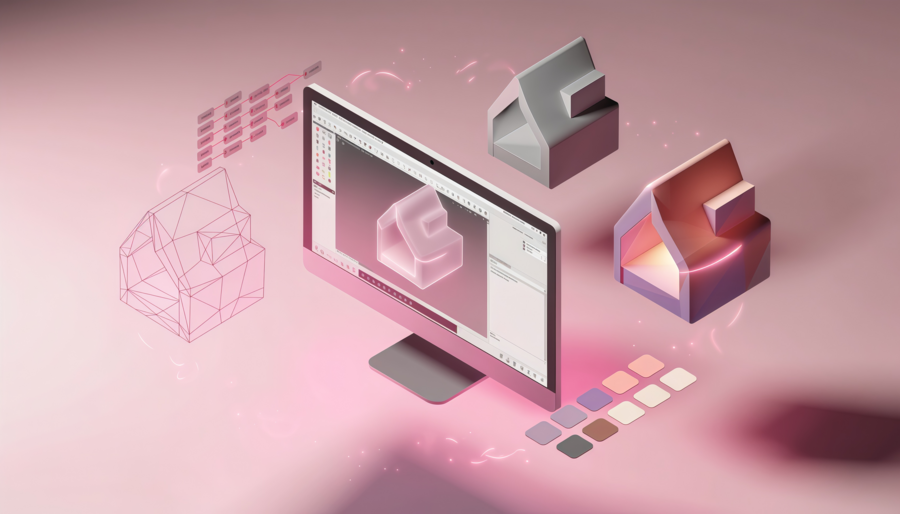
The market is saturated with tutorials answering the question, «how do I click the button to make it look pretty?» We focus on the logic of production and answer the question, «why did this work in a real-world project?»The core of our approach is this: We dissect the evolution of a frame—from initial blocking and gray box prototyping to the final render. We reveal the technical limitations that studios encountered and the alternatives they ultimately rejected.
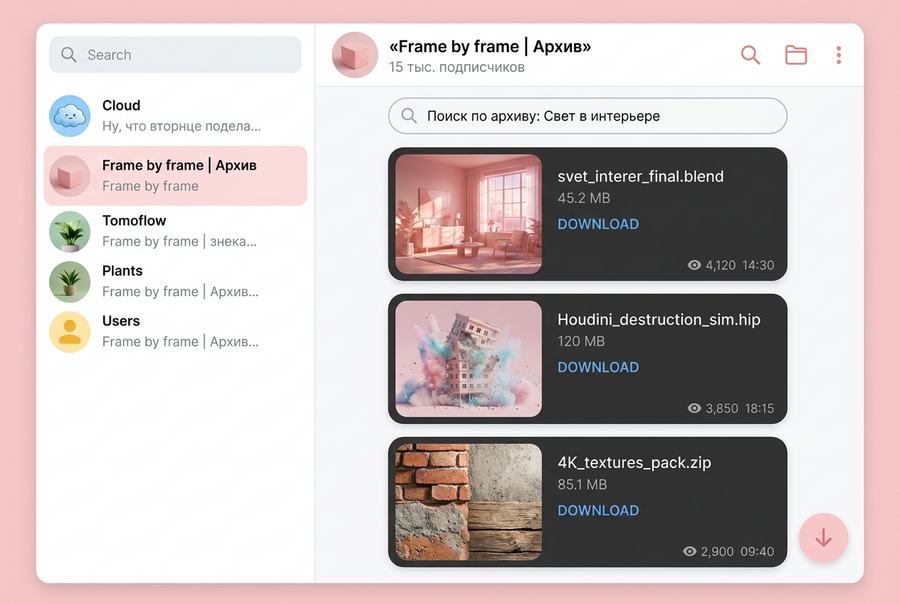
Students and indie developers don’t just receive dry theory; they gain a ready-made framework for thinking like a production artist. We compile visual case studies into a structured archive where you can find solutions to specific problems—such as «geometry optimization» or «interior lighting”—and apply that experience to your own projects.
Six-Month Thematic Plan
The six-month period is broken down into three two-month cycles. Each cycle has a thematic focus that sets the rhythm. Within each month, there is a fixed grid of topics by day of the week, plus one major event (stream, competition, or collaboration).
10 content samples
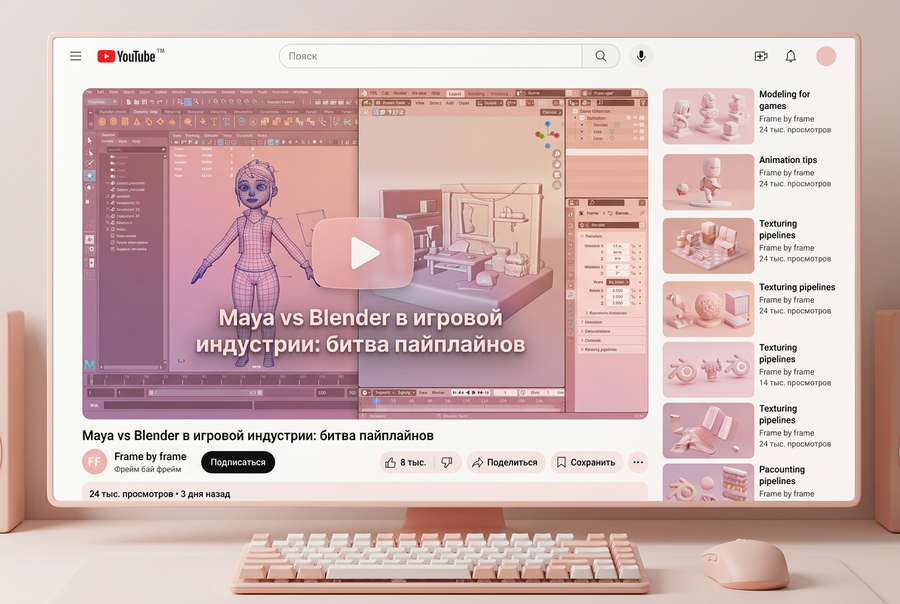
- Video Explanation (YouTube / VK Video)«The Evolution of a Single Shot: From Cube to Hollywood.»Format: 10–15 minute video essay.Synopsis: A recognizable VFX shot (from a film or trailer) is selected. The video demonstrates its progression from the gray blocking stage to the clay render, and finally to the finished product. It explains the tools utilized and the time commitment required for each step.
- Tutorial (Telegram / Website)
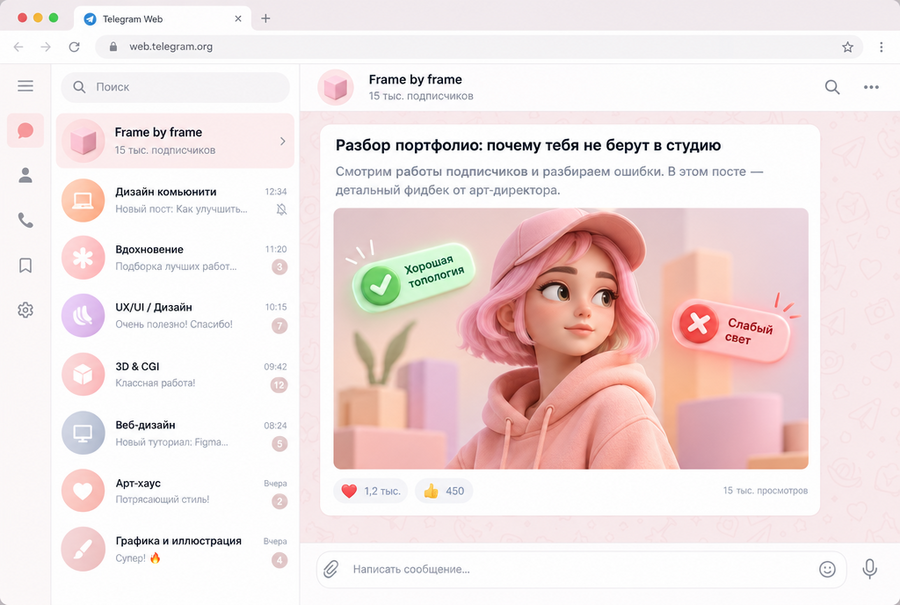
“Why does your lighting look boring?»
Format: A text post with images (carousel) or a short video tutorial.
Concept: An analysis of errors in 3D scene lighting. Demonstrating with examples how flat lighting kills volume, and how to make an image look «high-end» using HDRI and supplementary light sources.
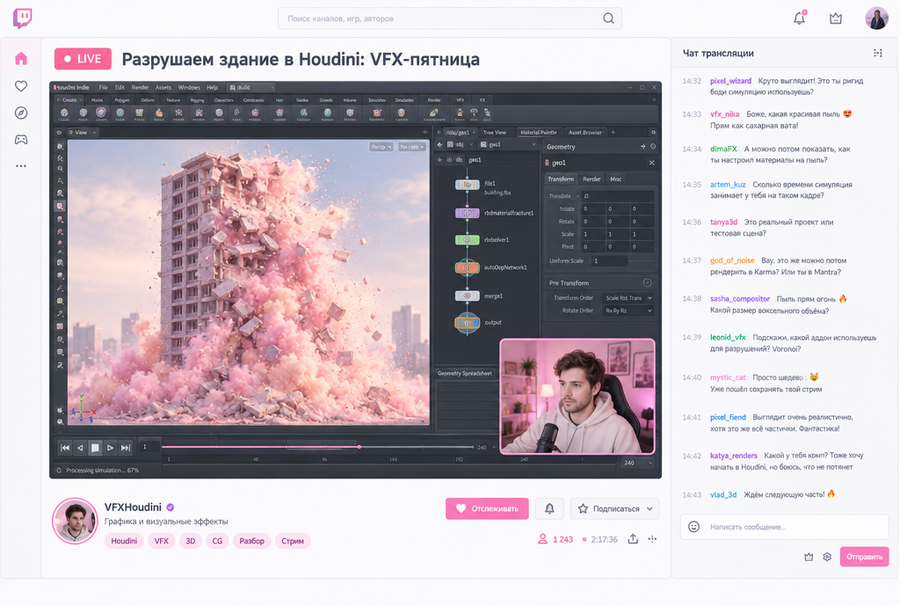
- Studio Live Stream (Twitch / YouTube Live)«In the Workshop: Assembling a Scene for a Render in 2 Hours»Format: Live Broadcast (2 hours). Concept: An invited 3D artist performs blocking and basic lighting for a mini-scene live. Viewers ask questions in the chat and vote on the color palette.
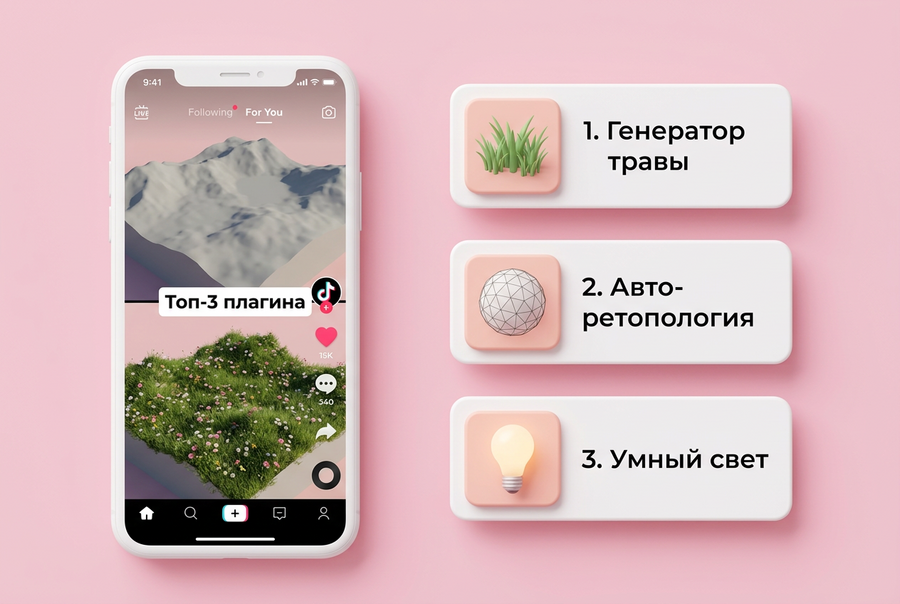
- Entertaining Vertical Video (TikTok / Reels)«Expectation vs. Reality: A 3D Artist at Work.»Format: Vertical video (15–30 seconds). Concept: A humorous short. Expectation: You’re chilling in a café with a MacBook, creating art. Reality: Five hours fixing topology, drinking cold coffee, eyes burning.
- Images and Text (Telegram Post)
«Texturing Without Pain: 5 Nodes That Will Change Everything.»
Format: Visual infographic roundup. Essence: A quick guide to basic nodes in Blender/Substance Painter. Each node includes a brief description of its purpose and a «before/after» example.
Content Plan Summary
Why will this system work?
Synergy of Formats: Short TikToks attract a new audience (reach), in-depth video explanations retain them (trust), and live streams and tutorials build a loyal community.
Rhythm and Predictability: A clear content schedule (Mon–Sun) creates a habit of returning to us.
Archiving: Every post, broadcast, and video is converted into an article on our archive website, forming a knowledge base (our unique selling proposition).
Visual Language: A unified 3D style (pink palette, isometric perspective) makes the media instantly recognizable, even within the TikTok feed.