Source Images
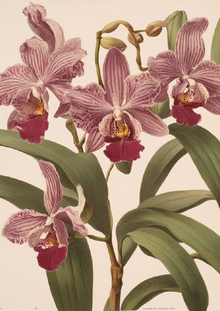
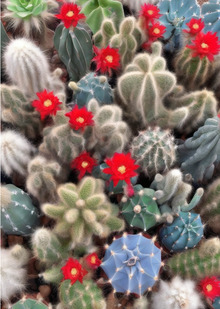
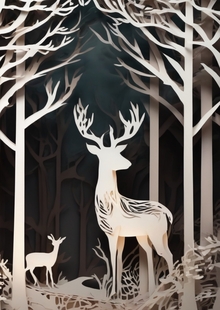
For this project, I decided to use a mosaic pattern as the foundation. I was interested to see how the neural network would generate images in this style.


I have selected 20 images from Unsplash stock to train the model. All images are under the «Unsplash License, ” which permits free use for any purpose.


For convenient operation with the neural network, I resized the images to a 1:1 aspect ratio.
The Learning Process
As part of the project, instruction was conducted in the Google Colab cloud environment using the LoRA (Low-Rank Adaptation) method. This approach allows for fine-tuning a large foundational model (such as Stable Diffusion) by updating only a small portion of the algorithms, making the process fast and efficient.
Dataset Upload
Entering the token «photo in M style»
Launching Neural Network Training
Final Images
To test the model and unlock its potential, specific prompts were developed that examine various stylistic aspects:
Prompts:
1/ A surreal human face shown in profile, looking at a stylized bird, photo in Mosaic style, tesserae carefully following the contours of the cheek and eye, highly textured.
2/ A macro shot of a large human eye, showing exactly how individual square tiles of blue and brown make up the iris, photo in Mosaic style, distinct grout lines visible.
3/ Close-up of a curved archway decorated with intricate floral mosaic patterns, photo in Mosaic style, curved tile placement following the architectural shape.
4/ A crescent moon and swirling stars in a deep night sky, photo in Mosaic style, deep blue smalt and shimmering silver tiles, thick dark grout separating the pieces.
5/ A stylized medieval dragon breathing fire, photo in Mosaic style, rigid stone tiles, medieval floor mosaic aesthetic, earthy red, ochre, and black palette.
6/ A stylized, stark human skull against a dark red background, photo in Mosaic style, made of small pale square stones, ancient Roman mosaic aesthetic.
6/ Abstract organic shapes and sunburst patterns, photographed in Mosaic style, using the trencadís technique, made from large, irregularly broken pieces of glossy, colorful ceramic plates.
7/ A bold, chaotic arrangement of large colorful glass fragments forming a dynamic abstract composition, photographed in Mosaic style, with heavy textured cement filling the large gaps.
8/ A classic still life featuring a basket of fruit and grapes, photographed in a Mosaic style, constructed with tiny micro-mosaic stones, utilizing subtle color gradation to create volume.
9/ A vibrant, smiling sun with stylized radiating rays, photographed in a Mosaic style, crafted from small square ceramic tiles with clear cement grout lines, featuring warm orange and yellow tones.
Conclusion
It seems to me that neural networks have managed to approach and reproduce the unique mosaic technique. In the images, you can perceive the characteristic «patchwork» texture, attempts to divide the colors with grout, and an imitation of chipped stone or glossy enamel. However, one cannot help but note that the neural network often generates «pieces» that, upon closer inspection, merge into one another. The logic of the tiling suffers: the AI frequently arranges the rows of stones in a chaotic grid, as if it were merely a filter superimposed on a photograph. The seams between the stones sometimes disappear or, conversely, turn into meaningless black smudges.