Concept and Theme Selection
When we look at paintings by Jan van Eyck, our attention is usually drawn to the faces, clothing, and the precise, lifelike rendering of details. But if we look closely at what surrounds the figures, it becomes clear that the interior in the artist’s works holds as much semantic weight as the figures themselves.

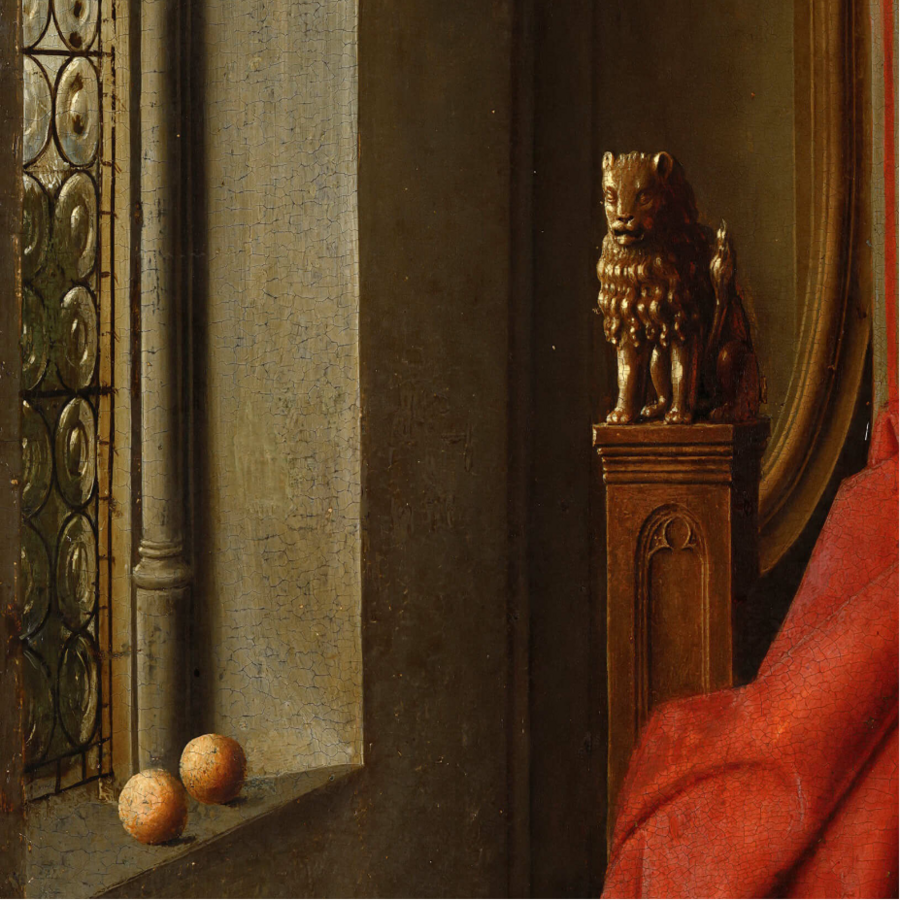
The depiction of furniture, mirror optics, windows, tableware, fabrics, and subtle background objects—those elements the viewer doesn’t immediately assign significance to—helps us understand not only the characters' way of life, their social standing, and their values, but also the narrative unfolding in the painting and the history of its subjects. Furthermore, the particular attention given to the interior and the surrounding environment creates a sense of «presence» for the viewer.