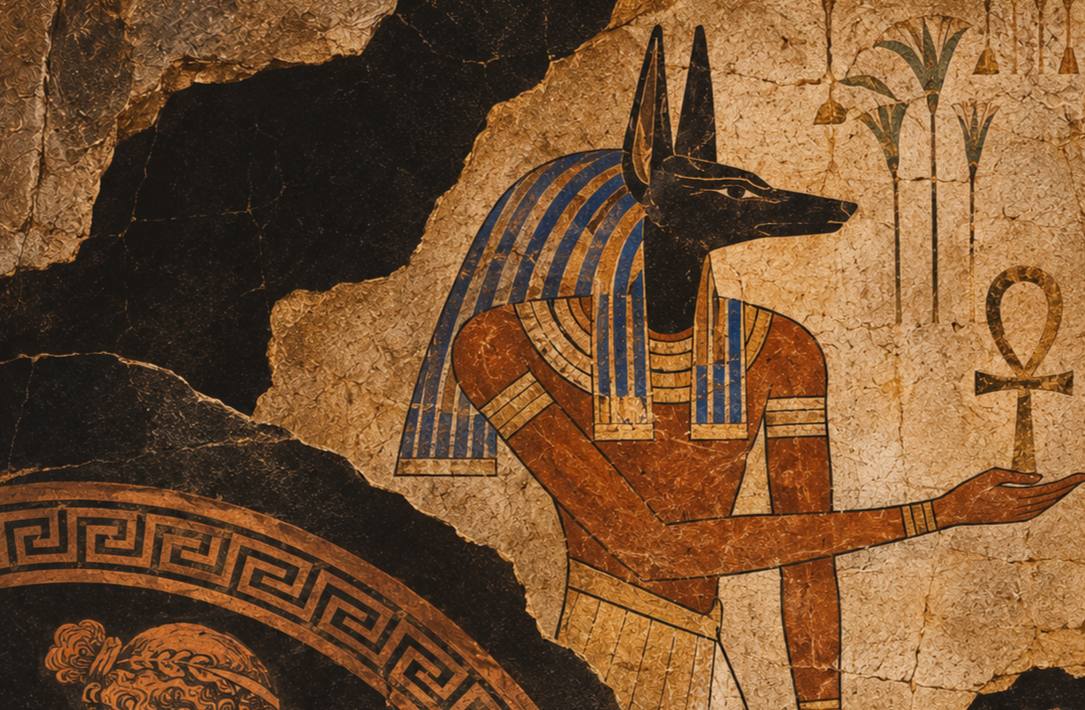
Concept
The death event—a moment impossible to observe from the perspective of the deceased. We can witness the dying process, the motionless body, the burial, and the grief, but not the transition from life to death itself.
Art from various eras has attempted to give a visible form to this invisible process. Artists depicted roads, rivers, doors, scales, celestial spaces, divine guides, and scenes of resurrection. Thus, death transformed from an incomprehensible event into a sequence of images accessible to the human eye.
What visual means did artists use, from prehistoric times through the 15th century, to represent the transition of humans from the world of the living to the world of the dead?
To answer, one must analyze the composition, gestures, spatial boundaries, scale of figures, color, and symbolic objects within specific works.
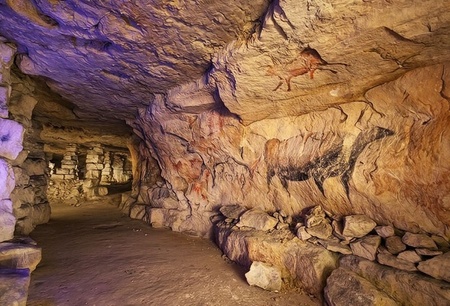
Scene in the Lasco Cave Mine
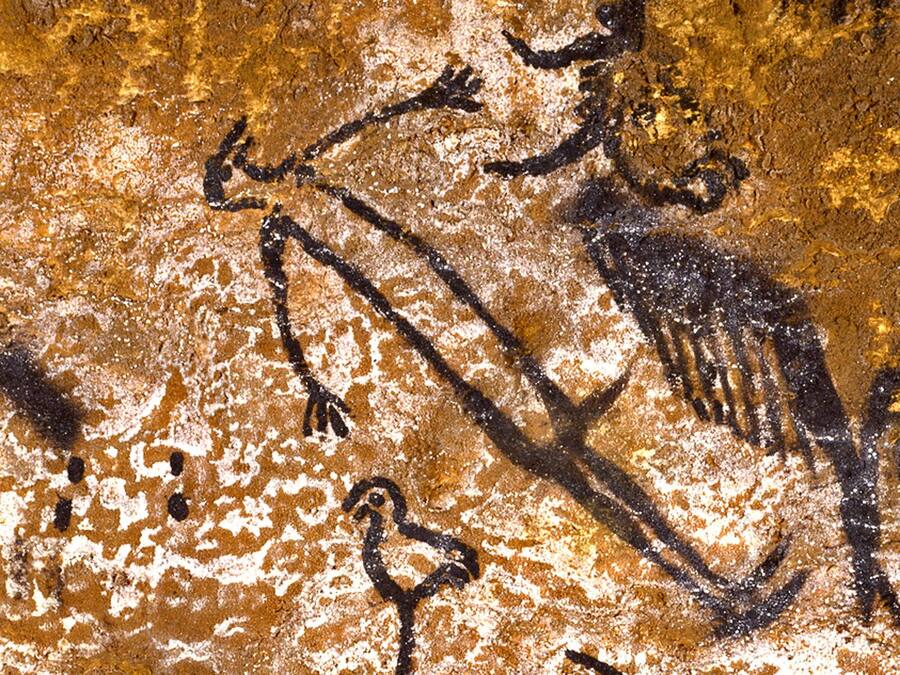
«The Hunt Scene» Rock Painting
The main visual contrast emerges between the bison’s massive body and the small human figure. The bison is depicted dynamically—its body is tensed, and its viscera spill outward. The person, conversely, is schematic and almost static. This creates a juxtaposition of action and arrested motion. Within the scope of my theme, this composition is interesting as an early example of how a liminal state of the human being might be represented.
Ancient Egypt: Death as a Journey
«Osiris Trial» scene from the Book of the Dead
Anubis weighs the scales, Thoth records the result, and Osiris awaits the verdict. The deceased becomes a participant in an organized process. Death is presented not as an erasure, but as a transition to a trial.
«The Weighing of the Heart of the Deceased in the Judgment of Osiris» from the Book of the Dead
In ancient Egyptian art, death acquired a developed visual language. Images depict the deceased surrounded by gods, before the scales of judgment, in a barge, or among idealized fields.
Nauni is depicted before the scales, where her heart is weighed against the symbol of Ma’at. The trial’s result is favorable: the deceased
is granted the chance to continue existing in the afterlife.
«Harvesting and Grain Collection» modern illustration
In the afterlife, the deceased engage in familiar earthly activities. There are no signs of suffering. Figures calmly work among plants and water. Posthumous existence is represented through recognizable ways of life.
Transition as Cyclical Rebirth
«The Journey of the Sun Boat Through the Afterlife» scene from the Book of the Dead
The sun-chariot moves through the afterlife to allow the sun to reappear after its nocturnal journey. Here, death is tied to the cycle of disappearance and return. The chariot becomes a medium for visualizing movement between various states of existence.
«Anubis Burial Couch» Ancient Egyptian Tomb Painting
«Pharaoh before the god Anubis» relief depicting a ritual scene