Introduction
Nike is a global leader in sportswear, footwear, and equipment. Founded in 1964 (originally as Blue Ribbon Sports), it has operated under the name Nike since 1971.
Brand logo
Just Do It
The company’s philosophy centers on self-transcendence, movement, self-realization, and overcoming obstacles. Nike positions itself not merely as a retailer of goods, but as a source of inspiration and a partner in achieving personal greatness. Its core values include innovation, athleticism, inclusivity, equality, and sustainability.
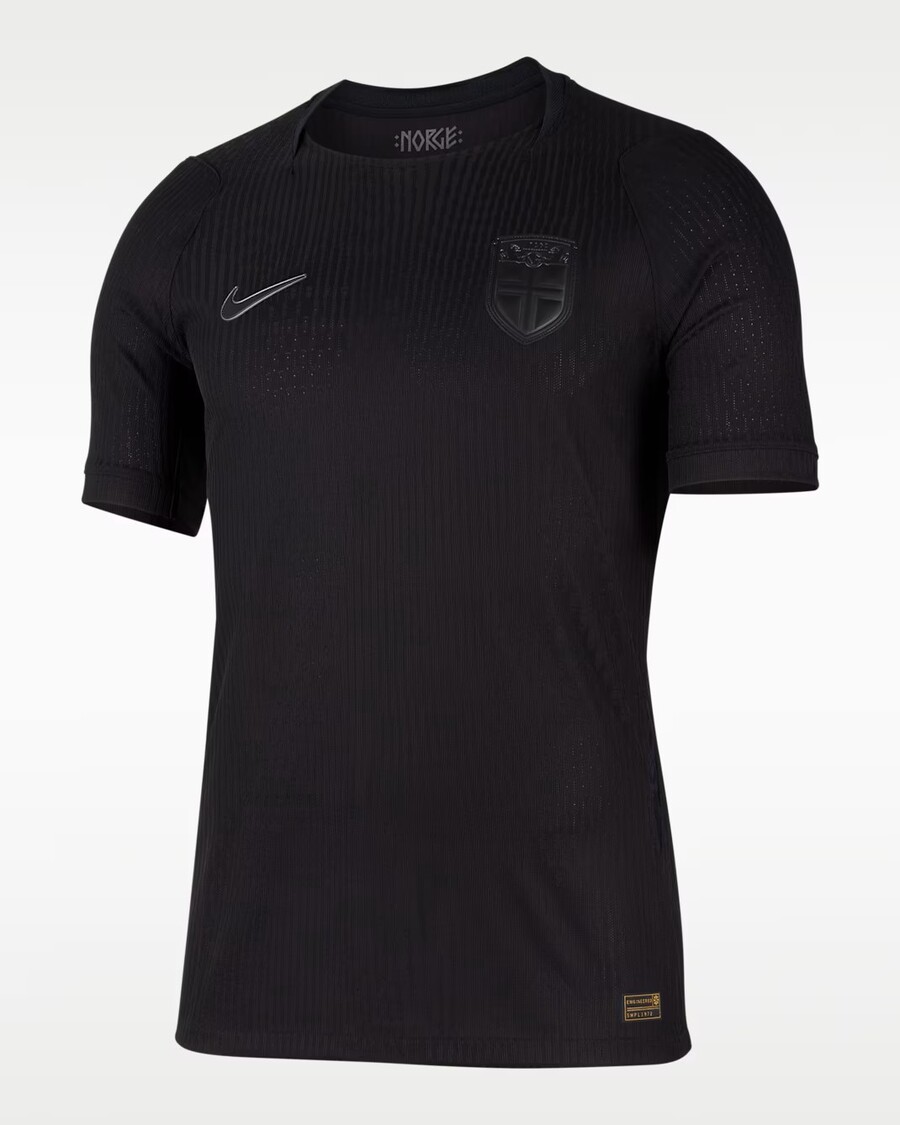
Men’s Nike Aero-FIT Football Shirt
Its target audience — spanning the 15–40 age range — includes professional and amateur athletes, fitness enthusiasts, and urban youth. The brand emphasizes universality: «If you have a body, you are an athlete.»
Communication Channels
(The activities of Meta (owner of Instagram, Facebook, and WhatsApp) have been designated as extremist and banned within the Russian Federation. Access to Instagram, TikTok (regarding objectionable content), and X/Twitter within the Russian Federation may be restricted or blocked. The text below is for informational purposes only and does not encourage the use of banned services).
Nike employs a comprehensive multi-channel strategy that encompasses both global social platforms and its own digital products. This enables the brand to maintain a constant presence in its audience’s lives, combining mass reach with personalized engagement.
Official account Nike
Social media remains a primary tool for visual and emotional communication. Instagram* is the key platform, with the official @nike account boasting over 292 million followers (as of 2026); the brand uses it to share photos and videos.
*TikTok, *YouTube, and *X (Twitter) are also actively utilized. This multi-platform approach allows Nike to tailor content formats to the specific characteristics of each network while maintaining a consistent, recognizable brand style and voice.
*The activities of Meta (owner of Instagram, Facebook, and WhatsApp) have been designated as extremist and banned within the Russian Federation. Access to Instagram, TikTok (regarding objectionable content), and X/Twitter within the Russian Federation may be restricted or blocked. The text below is for informational purposes only and does not encourage the use of banned services.
In addition to social media, Nike utilizes its own digital platforms, which play a key role in building long-term relationships with consumers. The Nike App serves as a central hub for shopping, personalized recommendations, and exclusive content. Nike Run Club and Nike Training Club transform the use of the brand’s products into a genuine community experience: users track workouts, participate in challenges, receive advice from professional coaches, and share their achievements. These apps strengthen the sense of belonging to the brand and shift the nature of communication from one-off interactions to daily engagement.
Nike’s PR strategies extend far beyond traditional advertising. The brand actively engages in sponsoring major international sporting events—such as the Olympic Games and the FIFA World Cup—and collaborates with top athletes (including Cristiano Ronaldo, Serena Williams, and LeBron James) as well as influencers. Large-scale social campaigns promoting values of inclusivity, gender equality, and social justice play a pivotal role.
Overall, Nike’s PR strategies are built around emotional storytelling inspiring tales of overcoming obstacles, achieving success, and self-realization. The brand actively encourages user-generated content through branded hashtags (such as JustDoIt and NikeWomen), thereby transforming consumers into co-creators of the brand. Such a multi-channel ecosystem enables Nike not only to inform and sell but also to forge a deep emotional connection, build a community, and uphold its reputation as a socially responsible industry leader.
Theoretical Framework
To conduct an in-depth analysis of Nike’s brand communication strategy, three key theories from the communication theory course were selected for the project. These theories complement one another, allowing for a multifaceted examination of Nike’s communication: specifically, how the brand persuades its audience, why people actively consume its content, and how Nike shapes a particular perception of reality through its messaging.
The Elaboration Likelihood Model (ELM), proposed by Richard Petty and John Cacioppo, explains the persuasion process through two primary routes. The central route involves deep processing of the message: the audience carefully analyzes arguments, facts, and logical evidence (such as product specifications). The peripheral route operates when involvement is low; in this case, decisions are influenced by superficial yet striking cues—such as emotions, source attractiveness (e.g., celebrities), visual aesthetics, music, and the overall tone of the message. The model helps explain how Nike combines rational and emotional appeals to target different audience segments.
Uses and Gratifications Theory (UGT), developed in the 1970s by Elihu Katz, Jay Blumler, and Michael Gurevitch, shifts the focus from «what media do to people» to «what people do with media.» According to the theory, audiences actively select the media and content that best satisfy their psychological and social needs. Key needs include the desire for information, entertainment, personal identity, social integration, and escape (getting away from routine). This theory is particularly useful for analyzing why users voluntarily follow Nike, participate in challenges, and install the brand’s apps.
Framing Theory rooted in the work of Erving Goffman (1974) and significantly expanded by Robert Entman (1993) describes how communicators (in this case, a brand) select and emphasize specific aspects of reality, thereby enhancing their salience. Framing does not merely convey information but actively constructs meaning: it defines a problem, explains its causes, offers a moral evaluation, and proposes a solution. Visual framing (the choice of shots, angles, and subjects) plays a particularly important role in this process. This theory makes it possible to analyze how Nike shapes the audience’s perceptions of the «athlete,» «success,» «inclusivity,» and «overcoming obstacles.»
The combined application of these three theories provides a comprehensive understanding: ELM reveals the mechanisms of persuasion, UGT addresses audience motivation, and Framing Theory elucidates how Nike constructs a desired image of the world and its own place within it.
Analysis
Application of the ELM: Nike effectively utilizes both routes. The peripheral route—through emotional videos featuring top athletes (Ronaldo, Serena Williams, LeBron), powerful soundtracks, and inspiring imagery. The central route—through detailed descriptions of technologies (Air, React, Flyknit) on the website and in the app.
Application of UGT: Audiences choose Nike to meet their needs for identity («I am an athlete»), motivation, social connection (in-app communities), entertainment (Reels), and practical information (workouts).
Application of Framing Theory: Nike frames key concepts:
«Athlete» — an expanded frame: not just a professional, but anyone with a body who overcomes challenges (encompassing inclusivity, people with disabilities, diverse cultures, and genders).
«Success / Victory» — not defined by results (medals), but by the process of overcoming obstacles («Just Do It,» «Dream Crazy»). The frame emphasizes resilience, choice, and inner strength rather than external rewards.
«Inclusivity and equality» — conveyed through campaigns featuring Colin Kaepernick, «Dream Crazier» (women), and «You Can’t Stop Us.» The issue is framed in terms of social barriers and stereotypes, while the solution lies in action and brand support.
Visual framing: dynamic shots of movement, diverse faces and bodies, heroic angles, and emotional close-ups. This renders the frame inspiring and motivating.
Conclusion & Recommendations