CATEGORIES
1. Hypothesis
— Observation
— Problem Statement
2. Concept
— History of Children’s Toys
— Psychology of Children’s Toys
4. Justification of Choice
— Why Hasbro?
— History of Hasbro
6. Franchise Creation
— Success of the «Star Wars» Saga
— «Transformers»
7. 1990–2010 Competition
— Raising the Stakes
— Toy Meta
8. «Kidult»
— Shift in Target Audience
9. Conclusion
OBSERVATION
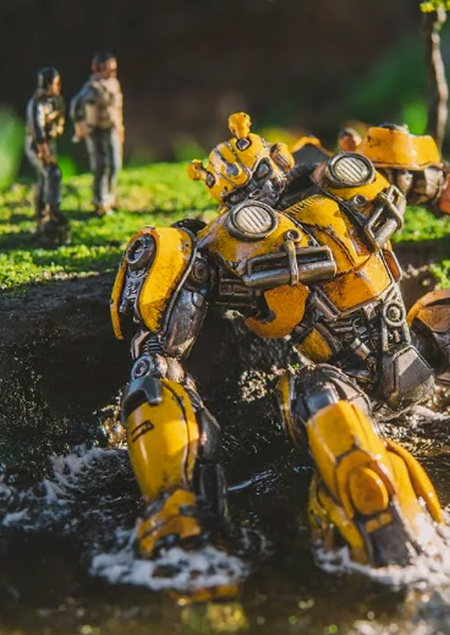
Lately, adults are actively returning to tactile and spatial play, while children are increasingly retreating into gadgets. The modern market survives through large franchises. Toys are less and less leaving room for free narrative invention, as was the case with figures of the past. The consumer is no longer just receiving an actor for play, but a ready-made script from a film or game. The item itself transforms into fan merchandise.
THE PROBLEM STATEMENT
In the modern world, the children’s toy is transforming—it is no longer merely a tool for a child’s maturation but has become a means for an adult’s psychological release and self-identification.
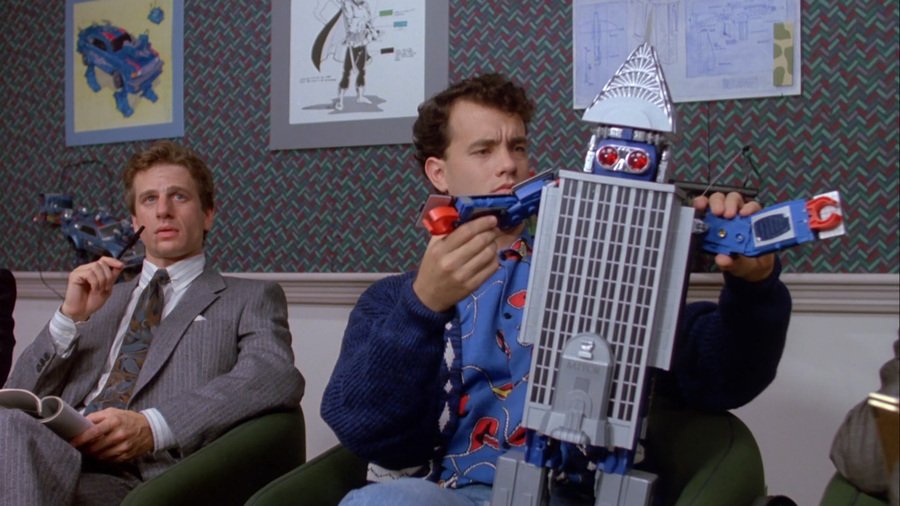
«Big,» Penny Marshall, 1988
THE HISTORY OF TOYS
Children’s toys appeared at the dawn of humanity. Archaeological findings point to an age of around 4,000–5,000 years.Initially, toys did not have an exclusively recreational function. They were items from daily life that served as trainers before adulthood.
«The Adventures of Tom Sawyer and Huckleberry Finn,» Stanislav Govorukhin, 1981
Throughout different stages of human development, similar forms to toys—miniatures—have appeared. However, often these served as indicators of social status rather than as forms of childhood leisure.
Pirates of the Caribbean: At the Edge of the World, Gor Verbinsky, 2007
Much of this is connected to the concept of childhood itself. It emerged relatively recently, along with the rules governing care, education, and upbringing.
The availability of safe and accessible toys began in the mid-20th century, following the advent and mass production of plastics and the post-war «Baby Boom.»
It was during this period that the major players in the modern market emerged:
— Hasbro — Lego Group — Mattel — Hot Wheels — Bandai
The Importance of Kids' Toys
Interaction with toys is important during a child’s development. It is believed that play itself develops visuospatial working memory. Kids aged 6–7 prefer role-playing with figures based on scenes from movies and cartoons. This allows them to develop empathy and understanding of others' intentions while safely exploring the categories of good and evil.
Why Hasbro?
Hasbro is one of the leading manufacturers of children’s toys. Its innovative strategy has long shaped the toy market.
Initially founded in 1923 by Hassenfeld Brothers, Polish émigrés, the company dealt in textile resale, and by 1935, it was manufacturing school stationery. In 1940, the company released a toy set featuring two dolls: a doctor and a nurse. «Mr. Potato Head» was also one of its early toys. Toys quickly surpassed pencils and pencil cases in profitability.
In 1964, following the success of Mattel’s Barbie dolls, Hasbro decided to create a similar toy, but for boys—the «G.I. Joe» soldier. To ensure that both parents and boys would not view the soldier as a doll, marketers introduced the new term: «action figure.»
The G.I. Joe line proved to be highly successful, and many companies continue to produce action figures to this day.
In 1968, the company was renamed «Hasbro.»
STAR WARS
The Star Wars cosmic odyssey is considered one of the first and most successful examples of creating a toy as merchandise.
The saga was initially conceived as a franchise from which merchandise could be released.
In 1978, following the success of the first episode, action figures based on the film were put up for sale. These featured the film’s main characters. Kenner developed a specific scale—3.75 inches. Prior to this, 12 inches (30 cm) had been considered the standard size.
(The size was determined by the need to produce figures and vehicles from the film in a unified scale.)
The toy line was deemed extremely successful. Over the course of a year, more than 40 million figures were sold.