Introduction
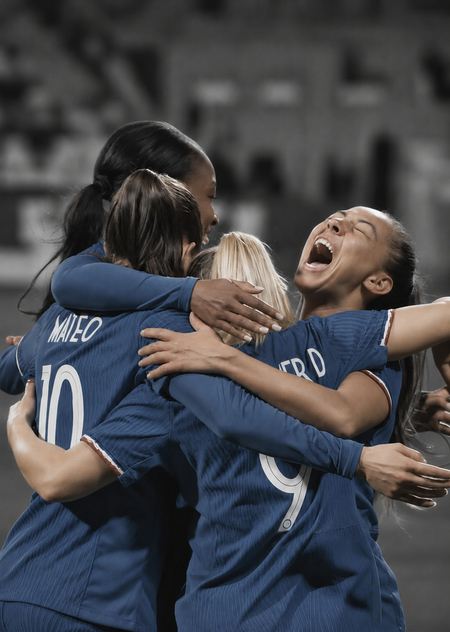
Women’s soccer is often perceived as less spectacular. But what is this assessment based on? To challenge this view, Orange and the agency Marcel released the «La Compil’ des Bleues» video ahead of the 2023 Women’s World Cup. The creators described the campaign’s objective as striving to «change the biased perception that soccer players too often face.»The video begins as a montage of the best moments from the men’s French national team. Then, the viewer learns that these actions were performed by female soccer players, and the appearance of the players in the first segment was altered using visual effects.
Concept
In this study, I examine how the perception of who is on the field can influence the perception of soccer skill. I chose «La Compil’ des Bleues» because the video allows for a comparison of two versions of the same in-game action. In both versions, the movement of the player and the ball can be tracked, and the reveal of the substitution changes who the viewer attributes the action to.My hypothesis is that repeating the episode after the substitution is revealed prompts the viewer to reconsider their initial assessment of the play. The format of the soccer compilation and the recognizable faces shape expectations, while the initial footage provides an opportunity to revisit the same action and re-evaluate it. The reveal of the substitution immediately changes two attributes. The viewer learns that a woman performed the action and understands that the appearance of the famous football player was part of the manipulation. I will explore how the video utilizes both attributes and what conclusions about viewer reactions can be drawn from this campaign.
Why did the campaign appear in France in 2023? How does the video form the first impression of the game? How is the visual substitution revealed? What changes between the two versions of the episode? What is known about audience reaction? These are the questions that formed the basis of my visual study.
The primary source for this study is the official video from Orange France [1]. I have selected clips where one phase of movement can be compared between the original and processed frames. My selection criteria include the player’s visibility, the ball’s visibility, and the possibility of aligning the frames based on pose or angle. Freeze frames help compare details, while short GIFs allow me to track movement and the moment the substitution is made. For each segment, I provide a timestamp.
To describe the context, I am using materials from the creators and the tournament calendar [2; 3]. I analyze the reaction to the video using data from the competition case [4]. I utilize independent research on assessing football skills to discuss the role of information about the player’s field presence [5]. When analyzing the campaign results, I examine reach, stated intention to watch matches, and actual viewership separately.
Categories
pu pu pu
pp pp pp