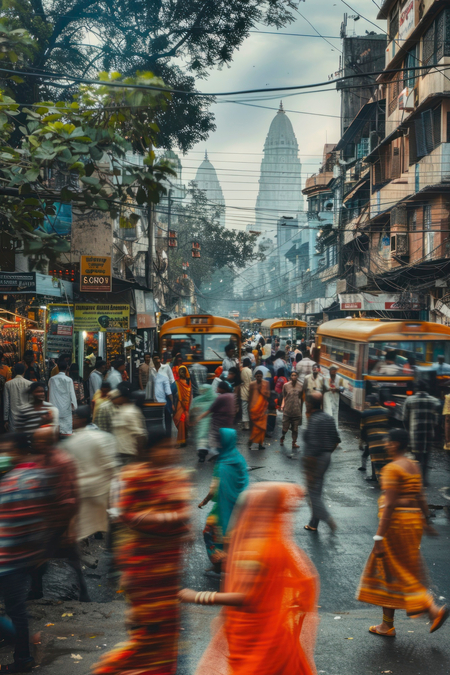
In India, residential neighborhoods often spring up before anyone decides what the area will be—houses are built, and roads, sewage systems, and schools arrive later, if they arrive at all.

magnific.com
The master plan—a document drafted for the next twenty years that dictates where housing, employment centers, and infrastructure development will occur—is determined in advance. However, according to NITI Aayog’s estimates, this plan is completely absent in two-thirds of India’s urban settlements. The current arrangement dates back 130 years and evolved from a cholera epidemic. We explain how the system works and where responsibility lies.
The Plague from Which Planning Emerged
The plague arrived in Bombay via the port in the autumn of 1896 and killed about six percent of the population over several years. Those who could afford the journey moved to the northern suburbs: by March 1898, about 45,000 people had relocated there. Forced sanitation, including door-to-door inspections, street surveys, and isolation camps, met with resistance, leading to the murder of the plague commissioner in Pune and a riot in Bombay resulting in two soldier deaths—prompting the city administration to undertake the complete restructuring of the city.
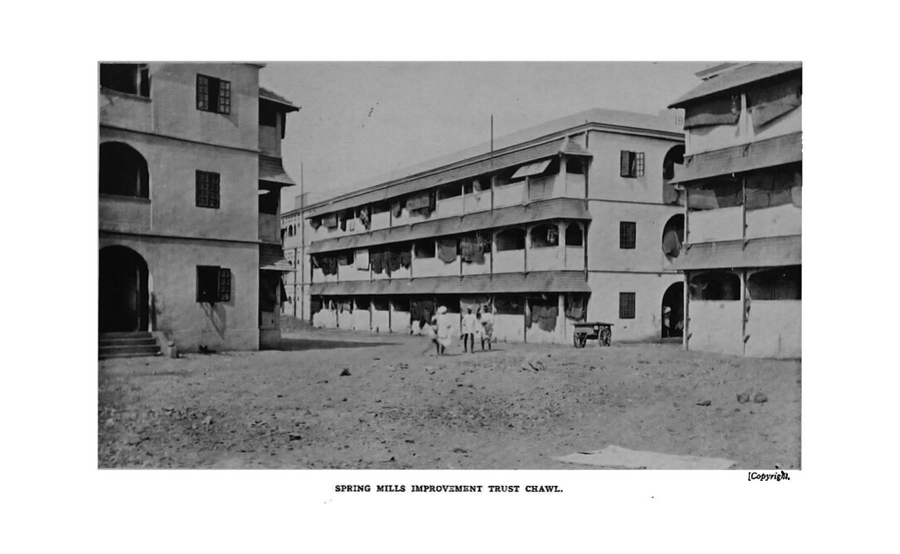
Working mule, built by the Bombay Trust near the Spring Mills factory
In 1898, the Bombay City Improvement Trust was established—the first municipal body in India with jurisdiction over an entire city. It expanded streets, laid sewage systems, and cleared blocks through systematic eminent domain and demolition. By the start of World War I, the trust controlled nearly nine-tenths of the city’s land, yet the promised housing for fifty thousand people remained only on paper. On the sites of former plague camps, the middle class gained planned suburbs, while the residents displaced from the demolished slums were pushed to the outskirts, remaining packed into the same cramped conditions. The experience was deemed a success, and similar authorities, modeled after the Bombay Trust, were established in Calcutta, Mysore, and other cities of British India.
A Scot who suggested a different approach
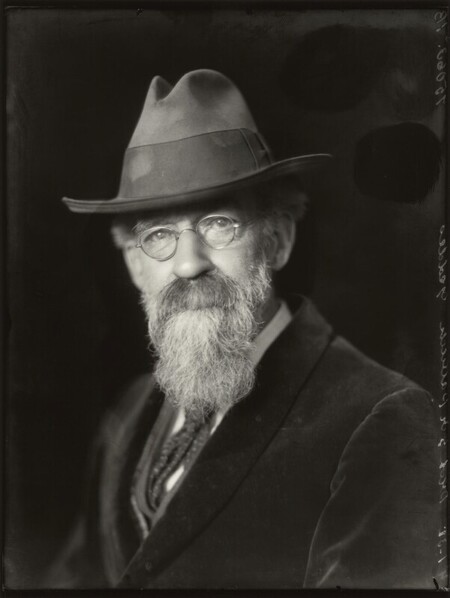
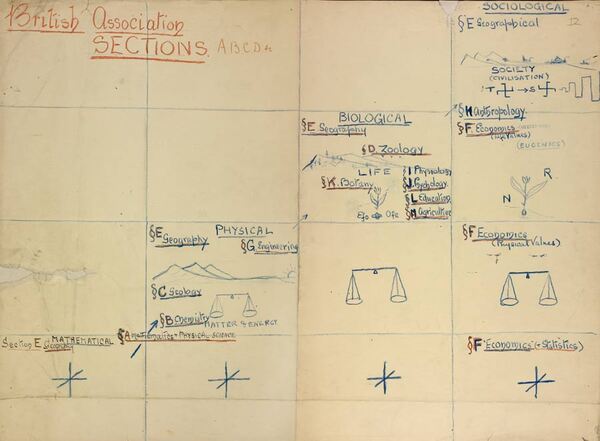
«Thinking Machine» by Patrick Geddes
In 1915, Patrick Geddes, a Scottish biologist and city planner, came to India. Over several years, he wrote more than thirty planning reports, covering areas from Madurai and Lucknow to Indore and Balrampur. His method was called «conservative surgery»: walking through a quarter, understanding its structure, removing a single dilapidated building to achieve the desired space, rather than cutting a boulevard through an established neighborhood. To administrators in Broach who were planning another street straightening project, he explained that streets exist for the houses, not the other way around. The broad-authority trust model was adopted into legislation and practice, but Geddes’s reports remained just that—reports.
Master Plan as a Governmental Procedure
Map of Delhi and New Delhi after World War I, 1931
After India gained independence, local authorities seriously began planning. Albert Meyer and Matthew Novitsky started Chandigarh, the new capital of divided Punjab; after Novitsky’s death, the project passed to Le Corbusier. The first master plan for Delhi was unveiled on September 1, 1962, prepared by a Ford Foundation team led by Meyer. Simultaneously, the legal framework was established: in 1960, a central agency developed a model planning act, adapted from the British Town and Country Planning Act of 1947, which the states then customized. In this system, the master plan is imposed from above—determining where housing, where industry, what density is permissible, and what areas cannot be developed at all.
Five years at the Ministry
According to the Janaagraha 2023 survey, 39 percent of state capitals lack an active spatial plan. Delhi is operating under a document approved in February 2007; the next DDA plan was approved in 2021, gathered 33,000 resident comments, and was submitted to the ministry, where it remains. In Bengaluru, the 2015 plan has expired, the pre-2031 version was canceled, and the 2041 version is still under development.
By © Vyacheslav Argenberg, CC BY 4.0
Since there is no master plan, decisions are made one by one, tailored to a specific area and a specific demand. Furthermore, across different cities, everything tends to follow the same mold: housing ends up far from jobs, roads are expanded only after traffic jams have already occurred, and flooding from heavy rains engulfs homes simply because their natural drainage routes have long been built over.
There is no one to draw; the unselected decide.
The Institute of Town Planners of India, the country’s principal professional organization, reports 6,530 registered members. Membership is voluntary, and certification is not required to work as a planner. According to NITI Aayog estimates, states require over 12,000 urban planner positions—roughly four thousand have been officially sanctioned, half of which are vacant—and in several states, a relevant professional degree is not among the mandatory job requirements.
magnific.com
Development agencies, state government departments, and direct successors of the Bombay Trust draft these plans, even though the 74th Amendment to the Constitution transferred planning to local elected self-government back in 1992. A resident may submit an objection during the public discussion phase; afterward, the document’s fate is decided within the department and in court. He will not discuss the next revision of the plan for about twenty years.