Navigation
1. Research Concept
2. Etruscan Dwelling
3. Vitruvius and Architectural Theory
4. Pompeii, Domus, View Axis
5. Late Antiquity and the Middle Ages
6. The Renaissance
7. Baroque
8. Reflection in Contemporary Architecture
9. Conclusion
1 | Research Concept
What is an ideal dwelling? For everyone, the answer is likely personal, but for most, the response will be interconnected with the word «comfort, ” regardless of individual preferences in architectural styles, color, or form. People have been building and furnishing their ideal homes since ancient times; the concept of „comfort“ has always persisted, though its interpretation, the methods of its creation, and the resulting architecture—as an expression of who, how, or for whom the dwelling is designed—have changed. This includes the client, passersby, or important guests who must be impressed by the plasterwork and mosaics presented to them.
At different times, people understood housing in various ways. At one point, it could be about protection and sanctuary; at another, it could be a demonstration of social status and elevation among others.
I believe that the evolution of private housing, the contrast between eras and styles, is most vividly apparent in Italy. There, one can witness the entire history of the private home—from antiquity and the Etruscans to the Renaissance and modernity—and draw parallels between these periods to analyze how perceptions of the ideal, comfort, and the architecture itself have radically transformed over time.
In this study, I aim to trace how the concept of the ideal private dwelling has changed throughout history: which architectural principles were preserved, and which gradually disappeared or acquired new significance. This can be observed by analyzing the internal structure, various architectural design techniques, façades, floor plans, as well as the historical context of each specific era and the influence of particular figures.
Research Hypothesis:
I hypothesize that the concept of the ideal private dwelling in Italy has never been static or immutable. Throughout history, it has evolved in tandem with shifts in people’s lifestyles, societal structures, technological advancements, and cultural perceptions of the world around them. What was considered convenient and necessary in one era could lose its relevance or take on an entirely new interpretation in another. For example, while antiquity emphasized the courtyard and the organization of family life around it, the Middle Ages increasingly prioritized security and the home’s suitability for dense urban development. In the Renaissance, the focus shifted toward symmetry, proportion, and spatial harmony.
Furthermore, despite these noticeable changes, I propose that common threads exist between the architecture of different eras, allowing us to trace the development of underlying principles.
2 | Etruscan Dwelling
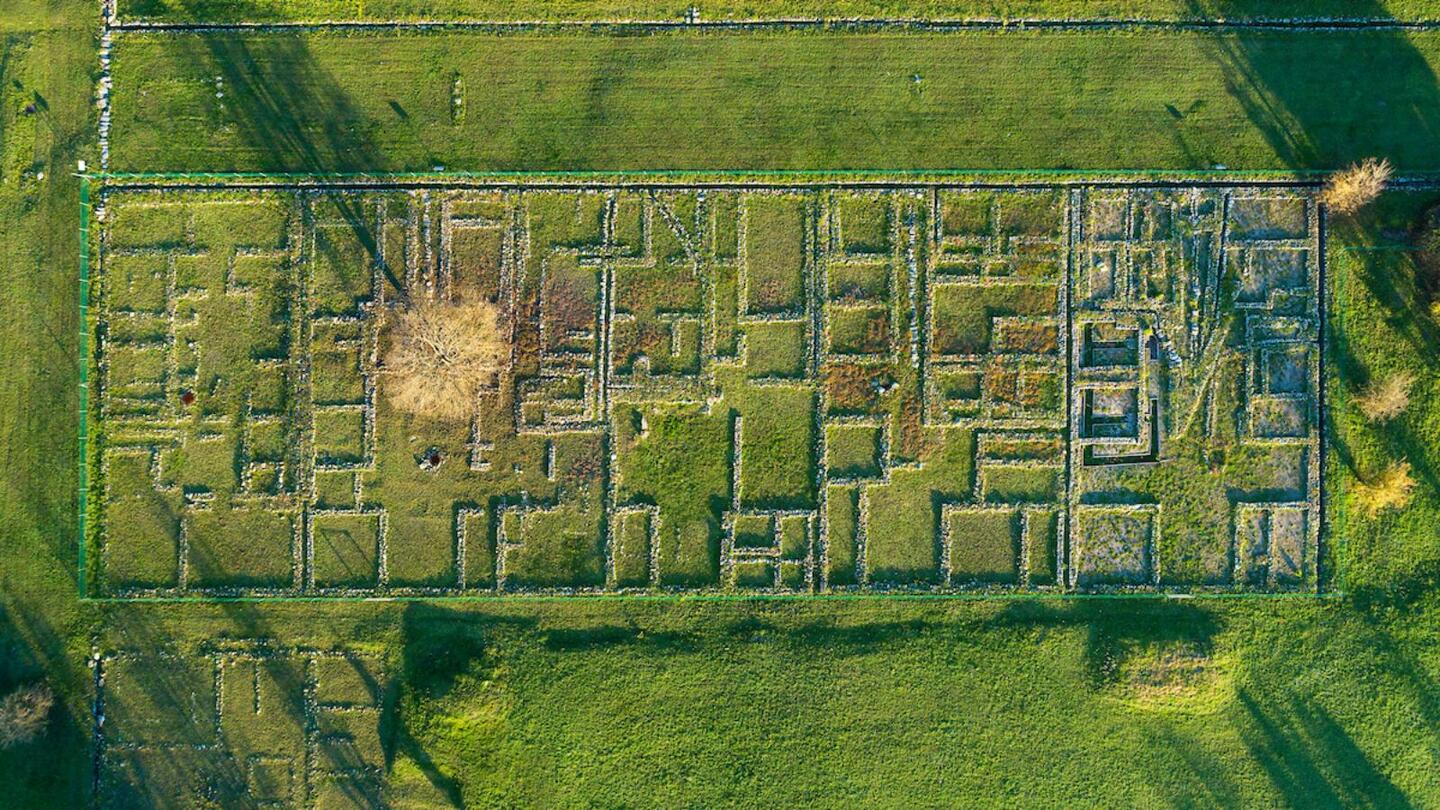
Etruscans were an ancient civilization that lived from approximately the 12th to 6th centuries BCE in the territory of modern Italy.
Etruscan architecture is interesting because its early forms differed significantly from the conventional image of an ancient stone house. Initially, dwellings were constructed from wood, clay, and other readily available materials, and the roofs were covered with straw or vegetal thatch. Their external appearance can be discerned from archaeological remains and so-called funerary urns shaped like huts, which reproduced the outlines of actual structures.
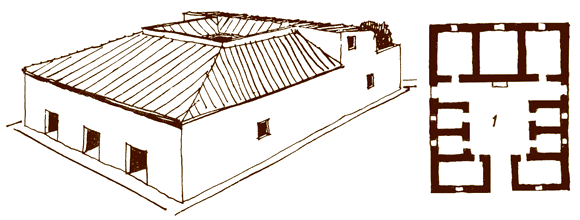
It was here that this architectural element—the atrium—was first implemented, performing multiple functions, from a central connector to a source of natural light, and later, a collection point for rainwater.
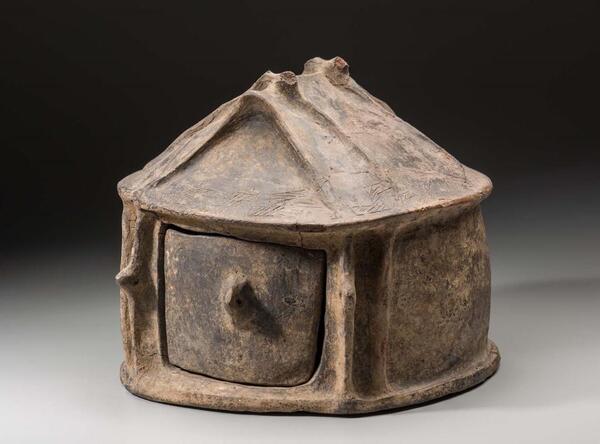
Image of an Etruscan urn, which is a miniature of a small hut, symbolizing the «home of eternal rest» for the soul.
3 | Vitruvius and the Theory of Architecture
Marcus Vitruvius Pollio — a Roman architect and theorist from the 1st century BCE. During his lifetime, he sought to systematize knowledge about architecture in general, using clear principles of mathematics and geometry to identify the proportions that should guide the design of any space.
He identified three core qualities of architecture:Firmitas — durability and structural integrity.Utilitas — functionality and usability.Venustas — beauty and aesthetic harmony.
His treatise, «Ten Books on Architecture, ” became one of the most significant surviving written sources on ancient architecture, later serving as the primary guide for designing homes in later eras. Vitruvius viewed architecture as a system in which proportions and geometry play a leading role.
The sixth book of Vitruvius’s treatise, dedicated to residential buildings, holds particular importance for the study of private housing. It examines the structure of atriums and peristyles, the placement and dimensions of rooms, and how they align with the owner’s lifestyle.
Despite his contributions, Vitruvius himself did not receive recognition during his lifetime.
4 | Pompeii, domus, line of sight
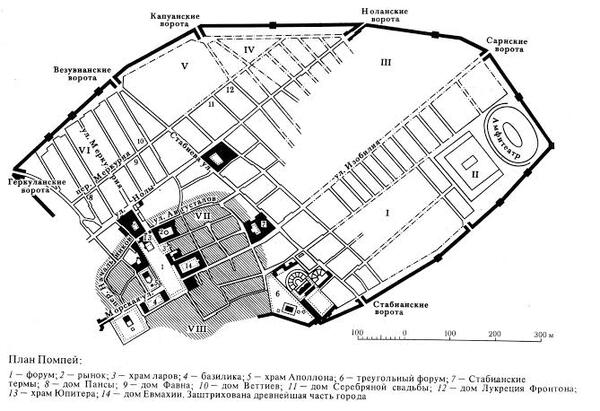
In the 2nd century BCE, the city of Pompeii became a center for the development of architecture, town planning, and private construction—a city tragically destroyed in the 1st century CE. Moreover, the Pompeian houses allow us to trace how ancient concepts of comfort and the owner’s social standing influenced architectural design.
Interior design and layout of a domus featuring an atrium, impluvium, and compluvium.
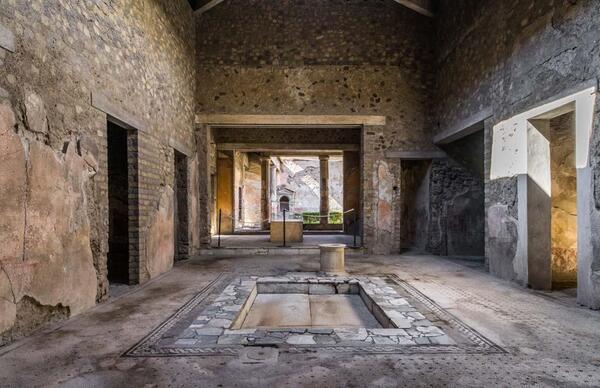
The defining characteristic of the domus is the emergence of a visual axis. When a guest enters the property from the street, their gaze immediately travels straight through the entire house, encompassing the atrium, the reception hall, and other rooms, thereby creating a sense of «unveiling» for the visitor. This is precisely where the connection between layout, social status, and the perception of one’s own space is most clearly traced.
5 | Late Antiquity and the Middle Ages
The 3rd and 4th centuries CE were a difficult period in the history of the Roman Empire. The human perception of the private home and its purpose underwent a fundamental transformation.
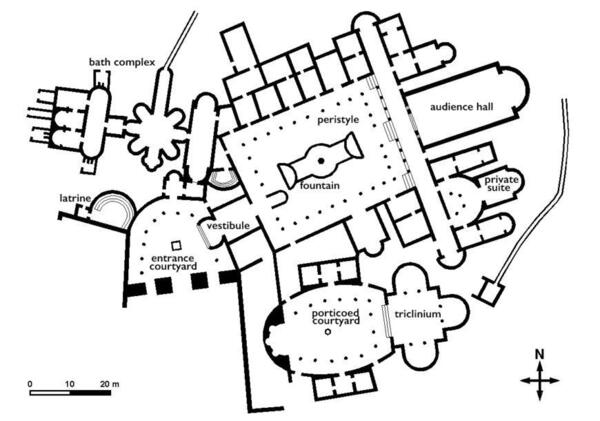
The classical Roman house was not originally exclusively a residential structure, but in the Late Antique period, multifunctionality reached its absolute peak, and security was added to the needs of the inhabitant. Military conflicts and changes in territorial governance influenced the organization of daily life. Owners sought to make their properties more autonomous and protected.
As society moved into the Middle Ages, people again developed a need to display their status, leading to the emergence of architectural elements such as the tower.
Polghetto Castle
6 | The Renaissance and the Renewed Interest in Classical Heritage
Proportion, harmony, rationality. In early Renaissance architecture, the aspiration toward clear proportions, symmetry, and geometric order gradually takes hold. The facade transitions from being a secondary component to being perceived as a unified composition.
Palazzo Medici
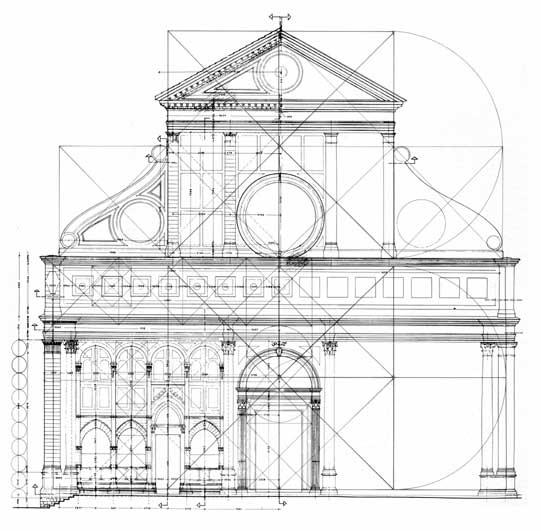
After the fall of the Western Roman Empire, Vitruvius’s treatise «Ten Books on Architecture» did not disappear, but throughout the Middle Ages, it remained accessible only to a limited circle of educated individuals. Its text was interpreted differently because all the illustrations were lost, and its theories were attempted to be reconstructed blindly.
Palazzo