Concept
«At This Place» — an interactive media project exploring personal events and memories connected to specific locations in Moscow.We are accustomed to perceiving the city through its streets, architecture, transit, and landmarks. But the personal map of Moscow is structured differently. It is composed of courtyards where childhood unfolded, bus stops where someone waited, apartments from which one once moved, and streets to which one returned home for years.These places may lack historical or architectural significance. Their importance is defined by the events that occurred in the lives of specific individuals.The project collects these memories and places them on an interactive map of Moscow. Each pinpoint links real urban space to a personal event. Furthermore, a single location can unite stories from several people who perceive it in vastly different ways.«At This Place» investigates urban memory through daily experience, demonstrating how the history of a city is woven from individual human biographies.
Editorial Concept
At the core of the textual style is a combination of two voices: the literary voice of the editorial staff and the lively speech of the protagonist.
Editor’s Voice
The editorial team establishes a context, observes the nuances of daily city life, and connects individual memories to broader themes: growing up, memory, the sense of home, change, and human relationships.
The texts possess the qualities of a magazine essay—evocative titles, keen observations, expressive details, and a calmly analytical narrative.
The editorial language is literary, yet it avoids being overly laden with complex constructions.
Hero Voice
The subject recounts the event in their own words.
Here, natural intonation, everyday details, and the individual’s distinct voice are crucial. The recollection must not become a piece of stylized fiction written on the subject’s behalf.
The editorial team may structure the narrative and condense repetitions, but they preserve the original meaning and coordinate any changes with the author.
The Principle of Combining Two Voices
The editorial text helps reveal a broader meaning within a personal story, while the character’s direct speech pulls the reader back into the personal experience. For instance, the editorial might begin with a reflection on how moving changes a person’s relationship with a city. Following this, the protagonist recounts their first rented apartment—its furniture, neighbors, and familiar sounds. Finally, the editorial ties the memory back to the theme of searching for one’s own home. The central emotional anchor is warmth and the ability to recognize oneself in the stories of others. The media does not seek to artificially provoke sadness or nostalgia. It makes room for humor, joy, awkward situations, and the most ordinary events.
Visual Concept
The visual language of the project is built upon the aesthetics of the personal photo archive and documentary urban photography.
Key Visual Motifs: — Moscow courtyards, residential buildings, and entryways. — Windows illuminated with warm evening light. — Trams, bus stops, and familiar routes. — Winter streets, twilight, snow, and wet asphalt. — Old family snapshots and photographs from personal archives. — Ordinary urban details, untouched by a tourist’s gaze.
Distribution Platforms
Telegram — the main media platform Telegram is becoming the primary space for publishing and engaging with our audience.Personal memories, editorial notes, photo stories, audio clips, and short videos are featured here. Readers can discuss the materials and suggest their own stories. The channel operates like a regularly updated, independent city magazine.Website — an interactive archive The website unites all the stories on the map of Moscow.On it, you can find memories associated with a specific geographic point or theme, view multiple stories from a single location, and read in-depth editorial features.Telegram helps readers discover the stories, while the website archives them and allows them to explore the connections between people and the city.
Principles of Material Work
Stories are published with the authors' consent. Personal accounts are not substituted with fictional quotes. If a story touches upon the private lives of others, the editorial staff considers issues of confidentiality.
Artistic narratives are permissible for educational prototypes, but they are designated as demonstrations.
Six-Month Thematic Plan
November 2026 — April 2027The inaugural editorial season is divided into six thematic chapters. Each explores specific relationships between people and the city.
Regular Features
«At This Place» A full-fledged story of one person tied to a specific point «In Different Windows» Several people share stories about life within the same urban space «Ordinary Places» Editorial essays on the daily life of the city «What Remains in the Photo» Personal archive photographs and memories «On the Way Home» Short audio stories and video sketches about familiar routes «Your Spot» Open questions, memory collection, and reader stories
November — «The City of the Everyday»
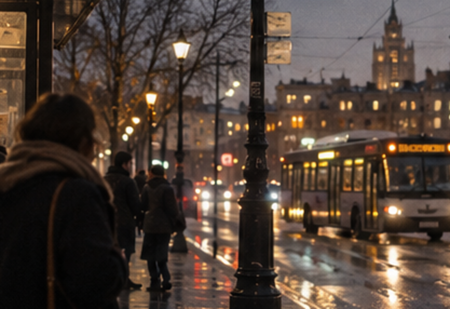
Theme: Familiar media, the routines we follow, and the ordinary places we rarely notice. Editorial Question: Why do certain courtyards, entrances, or bus stops remain in memory for years? Key Materials: «Everyone Had a Courtyard»; «Light in the Opposite Window»; Audio «The Last Stop»; Project Manifesto.
December. «The City Where We Grew Up»
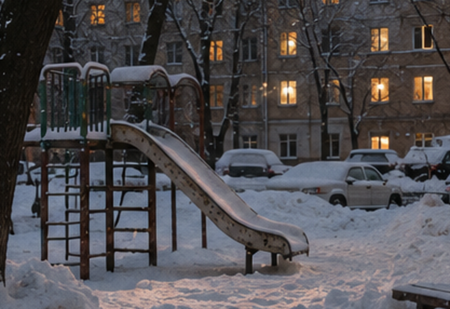
Theme: childhood, school routes, winter courtyards, family photos, and places that have changed or disappeared over time.Editorial Question: how does the city preserve memories of our childhood, even when familiar places change?Key Materials: the photo album «Winters We Remember»; «A Snapshot Against the Entranceway»; «The Courtyard That Became a Parking Lot»; a collection of family archives.
January. «When a Foreign City Becomes Home»
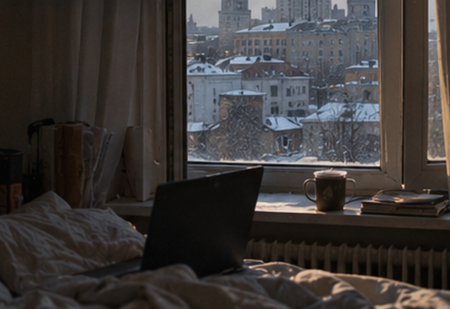
Theme: moving to Moscow, first apartments, unfamiliar neighborhoods, loneliness, and the gradual emergence of a sense of home.Editorial Question: at what point does an unfamiliar city become a place one wants to return to?Key Materials: essay «My First Winter in Moscow»; audio «To the End»; «The Apartment with Someone Else’s Furniture»; map of first Moscow addresses.
February. «The Spaces of Other People»
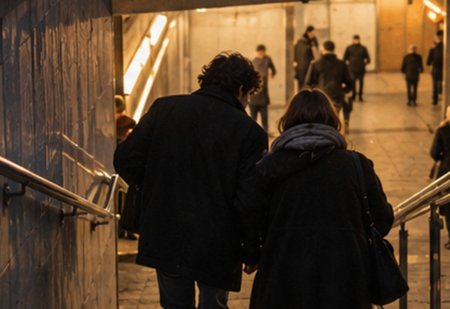
Theme: love, friendship, chance encounters, significant meetings and partings that permanently alter the perception of urban spaces. Editorial Question: why do some places remain mundane to most passersby, yet become special to those who once met an important person there? Key Features: «We Met by the Metro»; «One Bench—Three Lives»; video «Five Minutes Before the Meeting»; a collection of places associated with love and friendship.
March. «The City That Evolves With Us»