NIKE INC.
Nike logo
The topic under discussion is the brand known worldwide as Nike Inc. This firm appeared way back in 1964 and since then managed to transform significantly and currently cannot be considered only as a company manufacturing sport shoes; it is the global sport and fashion brand. What is more impressive about Nike is the progress this company has made so far that it became the multinational corporation offering its services worldwide with a diverse line of products like shoes, apparel, gear, and fitness. The reasons why Nike is successful apart from having high-quality items lie in the creation by the brand of unique style not confined by sport and based on concepts of aspiration and self-improvement as well as the message that anyone can succeed regardless of his or her skill level or age.
CORE POSITIONING: «JUST DO IT»
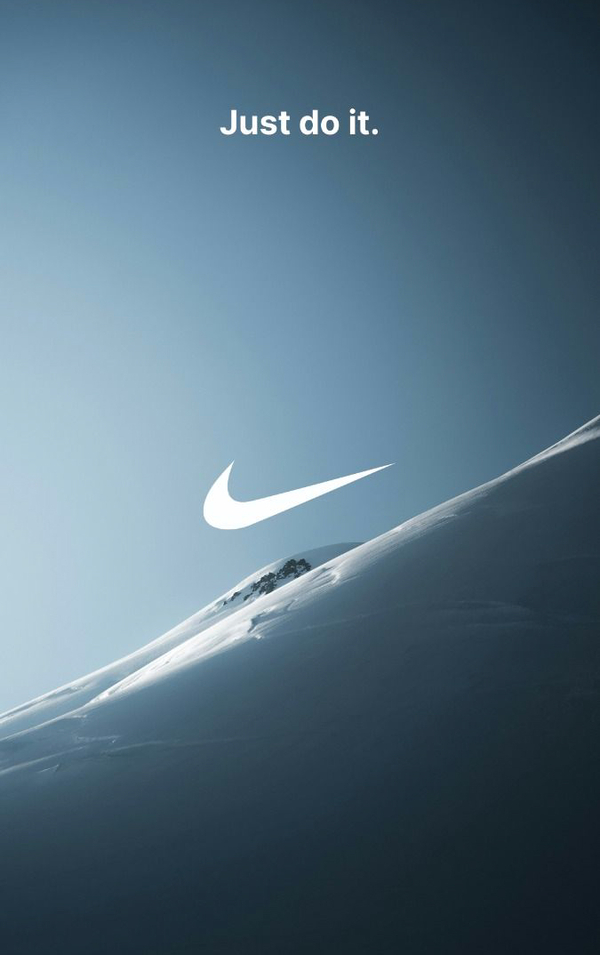
The core message used in Nike’s slogan is «Just do it». This slogan was coined back in 1988, and up to date, it forms the foundation of communication policy at Nike. The slogan is clear, easy to understand and remember and fits any person, and when Nike talks about its products, it encourages people to engage in actions.
In fact, what Nike sells besides shoes and garments is the idea that one can break all barriers and reach his goal when he works hard. Whether it comes to athletes or beginners in a sport, the essence of Nike’s idea is the same — if one starts, everything can be achieved.
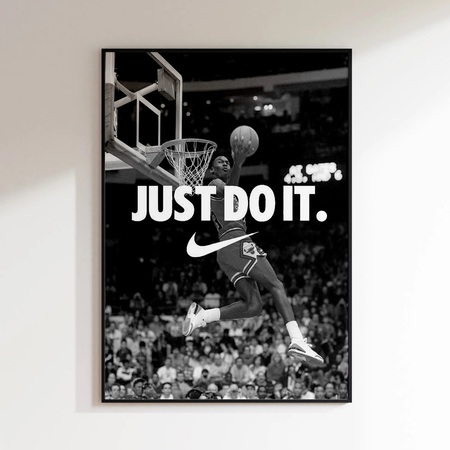
This strategy proves highly effective since it ties sports with common human experiences. Even though not everyone may have an opportunity to become a professional athlete, most people could identify with feelings like lack of confidence, fear of failing, or desire for self-betterment. In doing so, Nike creates a communication channel that will feel personal to many consumers. Consequently, customers begin to see Nike as a brand which inspires and empowers them, rather than a company selling sporting goods.
The next feature of the position taken by the company relates to its emphasis on inclusivity. No matter how old a person is, what gender he or she has, what ethnicity they belong to, how they look, or whether they are fit or not, everyone should be able to join and take part in sports. The use of diverse imagery in advertisements sends such a message to people.
TARGET AUDIENCE
Core Audience (18–35 years old)
The main target group of Nike is young people who are active sports fans and engage in different physical activities like running, exercising at gyms, crossfit, basketball, football, etc. Exercise is a way of life for such people, who are involved in the sports culture, watch sport stars in social networks, and always search for something that could improve their physical activity.
These people are especially ready for innovations. They know everything about the latest technologies in the field of manufacturing shoes and clothing — from innovative materials to various cushioning systems, performance measurement, and sustainability issues. For these people, the purchase of Nike sneakers is also symbolic.
Moreover, the digital generation pays much attention to online communications. Young people communicate with brands via social networks, use fitness apps and websites, and are influenced by various influencers' content. This fact makes the presence of Nike in these media even more beneficial.
Peripheral Audience (25–45 years old)
Moreover, this company appeals to those individuals who are currently not very active in doing sports but who seek leading an active lifestyle. These individuals may understand the advantages of physical exercise and set their own goals concerning fitness, weight loss, etc.
With the help of motivation through advertisement, use of fitness apps and training programs, Nike helps you overcome all the obstacles that you face when starting to do exercises. The philosophy of Nike implies progress rather than perfection, which means accessibility for everyone.
Such consumers are vital for Nike since there is a huge potential for further development. While other audiences may consist of people who are already engaged in different kinds of sports, this one includes people who can develop certain behavioral habits and make purchase decisions.
Social Media & PR Strategies
The company employs the integrated communication strategy, which involves the use of social media along with public relations activities in order to sustain strong connections with its customers and create a strong brand identity. Communication of Nike is based on the ideas of inspiration, self-improvement, and determination that are constantly conveyed through all the channels. Instead of concentrating solely on product advertising, the company creates inspiring stories that motivate people to become active and join the world of sport.
One of the key instruments used by Nike to convey its messages and establish communications is social media. Instagram becomes the company’s primary means for storytelling, which includes athlete portraits, inspirational quotes, and user-generated stories with «justdoit» and «nike» hashtags. Nike also uses YouTube to publish video content, which includes documentaries, inspirational movies, and stories about athletes and their perseverance, sacrifices, and accomplishments. On TikTok, Nike communicates with its younger audience through challenges and trends, whereas Twitter (X) becomes a channel for instant communication, information about new products, sports news, and communication with consumers and athletes.
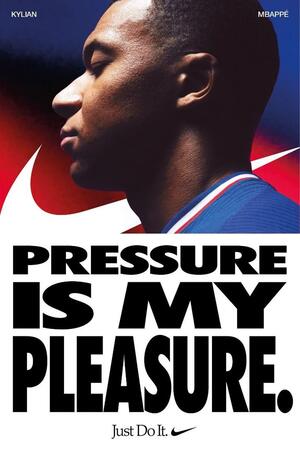
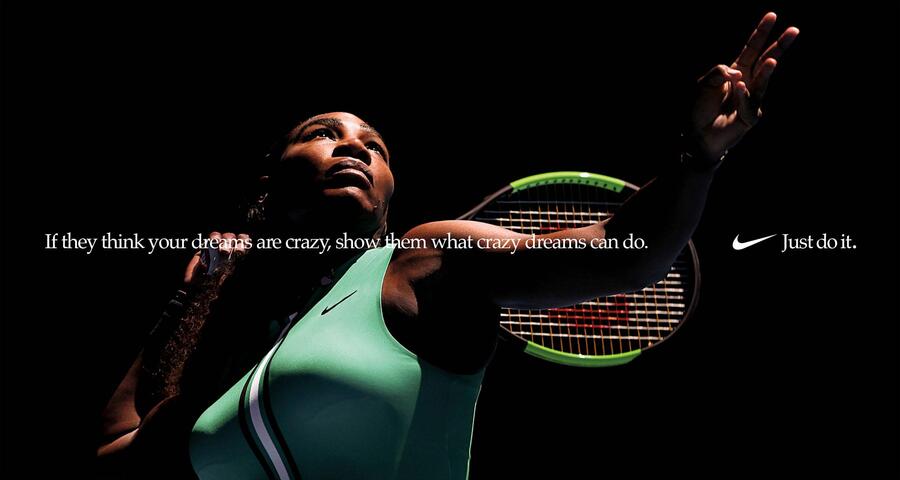
Nike advertising posters
Next to the use of social media, public relations also plays an important role for Nike in the building up of credibility and cultural relevancy. The company has found success through the creation of long-lasting partnerships with top athletes like LeBron James, Serena Williams, and Kylian Mbappé. The values that these athletes embody, such as discipline, resilience, ambition, and excellence, correspond to the image that Nike projects. The PR activities include engaging in social issues and cultural matters. For instance, the company has been involved in the promotion of initiatives addressing the matter of race equality, diversity, inclusion, and mental health. Such actions can sometimes raise a controversy but will eventually foster stronger customer loyalty in terms of brand identity.
Nike also collaborates with cultural figures, artists, and musicians by organizing limited edition releases. This creates hype and buzz around their products. In addition, these special products have a rather limited supply, which creates urgency and a desire for customers to buy and wear them. Digital communication, partnerships with elite athletes, support for social initiatives, and collaborations with various cultural personalities make Nike a very successful brand in the sports and pop culture sphere.
Own Platforms
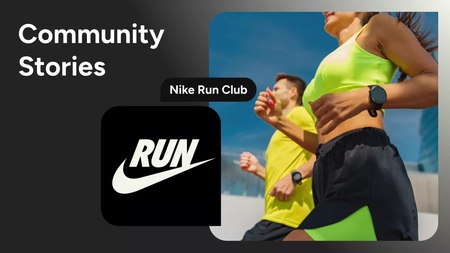
Apart from the external communications tools, Nike has created its own online environment that enables Nike to sustain direct and lasting contacts with customers. These online channels do more than just provide benefits for purchasing products; they also allow Nike to become an integral part of consumers' daily life.
Nike Run Club (NRC) mobile application motivates users to run on a regular basis by providing personalized training programs, performance tracking, and community challenges among other features. Running becomes a social activity that helps people to motivate themselves. With every use of the platform, the message of Nike becomes clear to users — success comes from consistency.
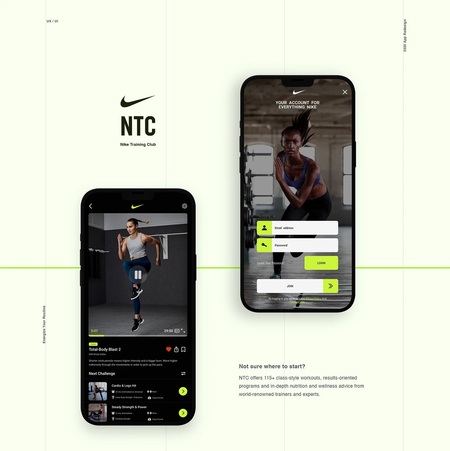
Similarly, the Nike Training Club (NTC) app works as a platform to help users work out and develop themselves. By downloading the application, users can get access to various workout plans, coaches' instructions, educational materials, and even personalized advice. With the help of this application, Nike positions itself not just as a manufacturer of sportswear but also as an ally in people’s efforts to develop physically.
Thus, proprietary platforms have several advantages for Nike. Firstly, the use of proprietary platforms enables Nike to establish contact with its clients regularly, creating loyalty among them. Secondly, through proprietary platforms, Nike can collect valuable information on users and their preferences, which allows them to conduct personalized communication and create appropriate campaigns. Therefore, in addition to being marketing instruments, proprietary platforms play the role of a part of Nike’s relationship building strategy.
THEORETICAL FRAMEWORK
2 theories
The Theory of Planned Behavior (Week 4, Lecture 4.3)
This theory was developed by Icek Ajzen. It states that behavior does not directly follow from attitude. Behavior is preceded by intention, and intention is formed by three factors:
Attitude — whether the person sees the action as beneficial or not.
Subjective norm — what significant other people think about the action.
Perceived behavioral control — the person’s belief in their ability to perform the action.
This theory is useful for Nike because the brand does not just sell a love for sport. It sells the willingness to go out and run. The Theory of Planned Behavior helps us see how Nike works with psychological barriers like «I cannot do it».
However, the Theory of Planned Behavior focuses mainly on rational reasoning. What about the emotional, irrational side of persuasion?
This is where the second theory comes in.
The Narrative Paradigm (Week 4, Lecture 4.4)
This theory was proposed by Walter Fisher. Fisher argues that humans are «storytelling animals» (homo narrans). We are not persuaded by logic and facts alone. Instead, we are persuaded by good stories that have:
Narrative coherence — the story is internally consistent and makes sense.
Narrative fidelity — the story matches our own values and life experiences.
This theory fits Nike perfectly. Nike rarely talks about sewing technology or shoe materials. Instead, it tells stories of athletes who fell, stood up, and won. Fisher explains why such stories are more powerful than product specifications.
Accordingly, the following section will analyze the Nike brand by applying the theoretical frameworks introduced here.
ANALYSIS
Visual evidence 1 Nike «Late Bloomer» campaign featuring Marjorie Kagan, a woman who ran her first marathon when she was 81 years old.
In 2018, Nike launched the «Late Bloomer» campaign featuring Marjorie Kagan, an 81-year-old woman who ran her first marathon in New York. After a friend encouraged her, she trained for seven months and finished the race, despite falling during the run. This campaign inspired viewers by showing that age is not a barrier to achieving ambitious goals.
Analysis Through the Theory of Planned Behavior ⠀ 1. Attitude
Nike creates a positive attitude toward starting sport at any age. Sport is presented not as punishment or a risk of injury, but as an act of self-love and proof of inner strength. Marjorie says in the video: «People said I was crazy to run my first marathon at 81». Nike changes this perception: what others call «craziness» is actually strength. Sport becomes desirable, not frightening.
2. Subjective norm
Nike shows an ordinary person (an elderly woman, not a professional athlete) to create social proof. Marjorie admits: «I said to her, 'Do you think I could do the marathon? ' And she said, 'sure.'» The message is: «People I respect approve of being active. This is normal and even cool.» In addition, Nike uses contrast: friends and family doubted Marjorie, but she proved them wrong. This creates a social norm: «Do not listen to those who doubt you — listen to those who have already done it.» ⠀ ⠀ ⠀ ⠀ 3. Perceived behavioral control
The campaign’s tagline «It’s only crazy until you do it» directly works on perceived behavioral control. Nike lowers the barrier: «You do not need to be a professional. Just start. You can do it, because this 81-year-old woman did it.» Marjorie herself adds: «If you want to do something and you really want to do it, give it a try. If you think carry on, just do it… because that’s what I did.» The brand removes objections like «it is too late for me» or «I am not in good shape.»
Nike campaign «Late Bloomer»
Analysis Through the Narrative Paradigm ⠀ 1. Narrative coherence
Marjorie’s story is internally consistent. Hero: an 81-year-old woman (an unexpected protagonist). Obstacle: age, physical decline, and the social expectation that elderly people should rest. Plot: it begins with a conversation in the park with a friend. She then trains for seven months. During the race, she faces obstacles — she fell face down at the 400-meter mark after colliding with another runner. Finally, she reaches the finish line. Resolution: «I ran across the finish line, and I said, 'I did it! '» The logic is clear: weakness leads to effort, and effort leads to victory. This is understandable to anyone who has ever doubted their own abilities.
2. Narrative fidelity
This story resonates with deep human values: perseverance, defying expectations, and the belief that it is never too late. Marjorie says: «But that’s the great thing about being old… I can just pretend to not hear them.» The consumer thinks: «If she could do it at 81, I have no excuse now. This story is about my own fear of aging and my desire to prove something to myself.» According to Fisher (1984), when a story has fidelity to the listener’s values, it persuades without arguments. The consumer does not need data about the health benefits of running — the story is enough. ⠀ ⠀ ⠀ ⠀ 3. Storytelling instead of argumentation
Nike does not say, «Our sneakers have special cushioning for old knees.» Instead, Nike shows the triumph of one woman. Nike’s message is: «There are no limits to human determination — not physical ability, not gender, and certainly not age.» The consumer does not buy a product, but an identity: «I am someone who, like Marjorie, is stronger than I think.»
Visual evidence 2 Nike «Dream Crazy» campaign featuring Colin Kaepernick.
In 2018, Nike chose Colin Kaepernick — a former NFL quarterback who began protesting against police brutality and racism by kneeling during the US national anthem — as the face of the «Dream Crazy» campaign. This protest cost him his NFL career. The campaign sparked a national controversy: some consumers burned Nike shoes and called for a boycott, while others praised the brand for its courage.
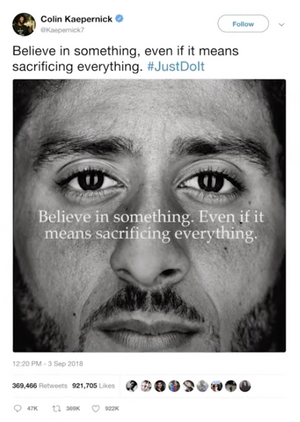
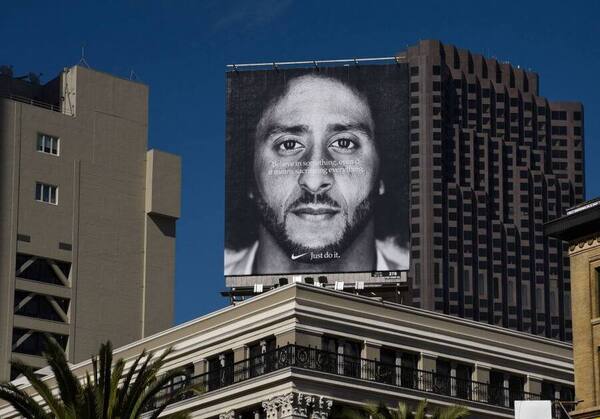
Colin Kaepernick’s official X post / Nike advertising poster with Colin Kaepernick