Navigation:
1. Introduction
2. Home in Everyday Life
3. Home as Memory
4. Fanciful Home
5. Conclusion
Introduction
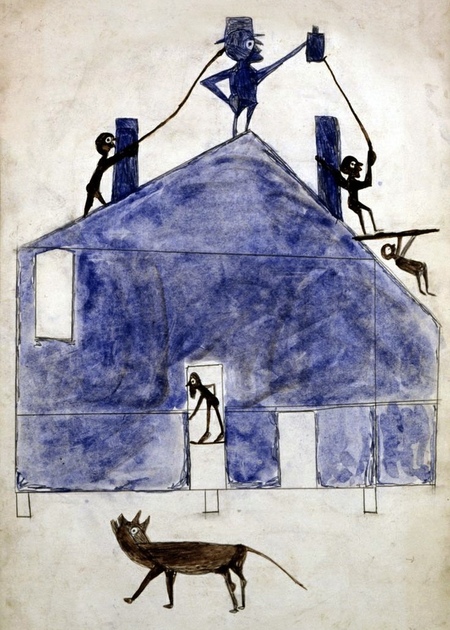
The image of a house—one of the most familiar symbols in art—is incredibly multi-layered. The same space can carry vastly different meanings for different people. To one, it may symbolize warmth and comfort; to another, it might signify coldness and violence. What matters less is the external appearance and more is the personal experience associated with that space. Interestingly, to depict a house, the artist does not necessarily need to refer to a specific building. Sometimes, a familiar landscape, an interior element, or even a completely imagined space imbued with the feelings of home suffices.
Naturally, the theme of the home is also explored in American Outsider Art. This is particularly true considering that the United States is a nation of immigrants—making home and homeland among the most potent symbols. Sometimes the depiction of a house is just mundane reality: a chair is here, a closet is there. Other times, it is a memory of childhood and homeland. But sometimes, the real home holds memories that one absolutely does not want to depict. Instead, there is a yearning to immerse oneself in a fantastical, magical world where the image of home is constructed from real elements yet remains pure imagination.
Home—a reflection of the inner world. Through this image, one can trace how real space gradually changes under the influence of memories and fantasy.
While it is certainly impossible to assert that every depicted house hides some deep emotion, sometimes artists simply enjoyed rendering buildings. But even in that case, it is fascinating to observe which houses they chose and what details they deemed significant.
In this study, the image of the house will be examined from three perspectives. First, as a part of daily life—meaning the real houses, sheds, streets, and other structures that surrounded the artists. Second, as a memory, when the house is far away—in another country, on another continent, perhaps it no longer even exists—yet the artist continues to return to it in their work. And finally, as a fantasy, when real architecture becomes merely a starting point for creating an entirely different world.
Home in Everyday Life
The house serves as a subject for depicting the ordinary, a subject for observing everyday life. By depicting the space around them, the artist doesn’t just draw a literal house; they demonstrate how they perceive it and what they deem important.
James Charles Castle (1899–1977)
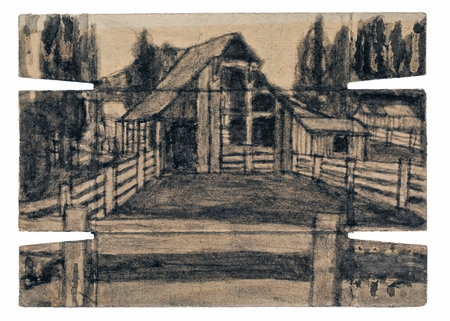
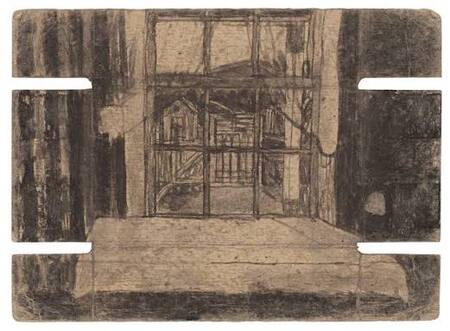
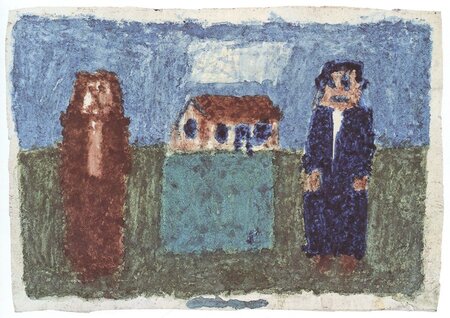
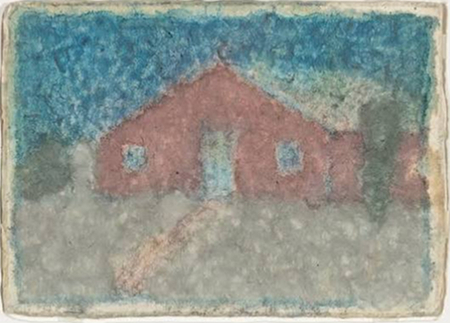
It is impossible to discuss the image of a house in isolation from the artist’s personality, because even the depiction of a commonplace building can be deeply tied to the life of its creator. For example, James Castle, who spent almost his entire life in rural Idaho, constantly returned to depicting familiar houses, barns, sheds, and interiors.
In his works, houses become the central protagonists of the composition. He rarely depicts people, so some interiors may appear even empty. But in reality, they are brimming with details of everyday life and domestic routines.
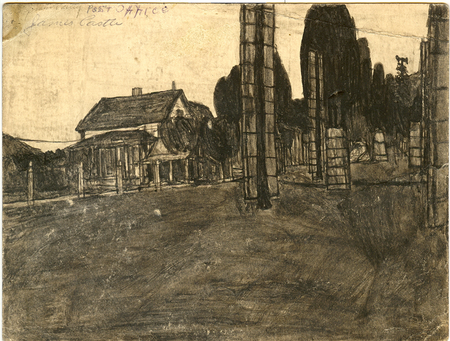
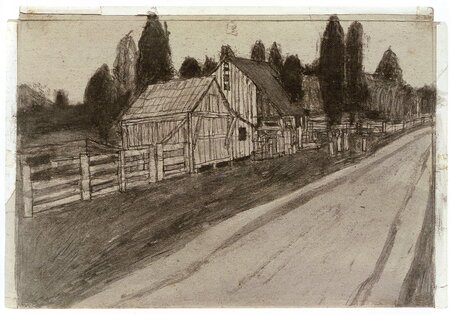
James Charles Castle (1899–1977)
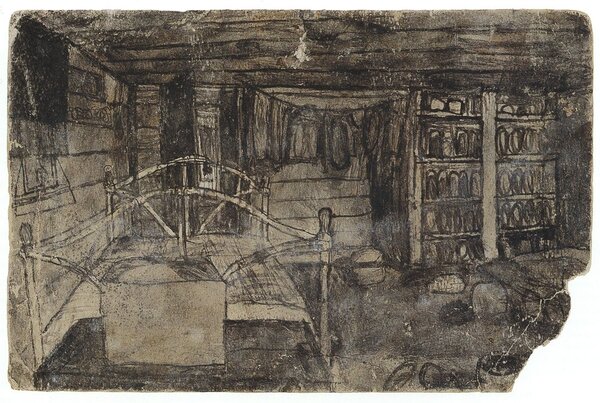
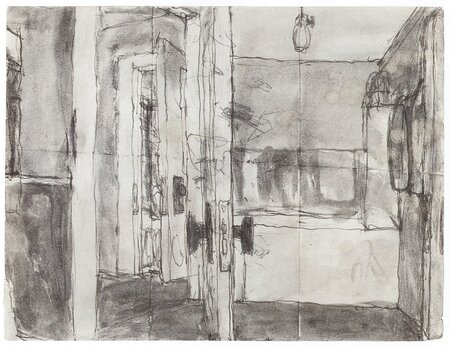
James Charles Castle (1899–1977)
We are also interested in the materials Castle worked with. Like many outsider artists, he used whatever he could find instead of conventional art supplies. He painted on salvaged cardboard, paper packaging, scraps of letters, and often used a homemade mixture made of soot.
James Charles Castle (1899–1977)
James Charles Castle (1899–1977)
Jimmy Lee Saddat (1910–2007)
A distinctive feature of Jimmy Lee Saddat’s work is his experimentation with materials. He consciously incorporated mud, clay, and «pigment stones» into his paintings. While he certainly worked with conventional materials, such as acrylic, he always began by sketching a rough outline onto a board with a stone. This creates an image of a house that is connected to its location not only visually but also physically.
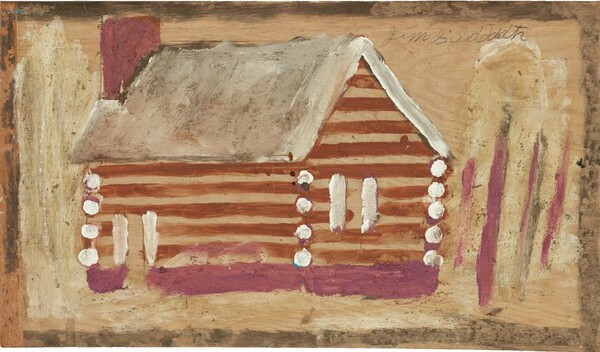
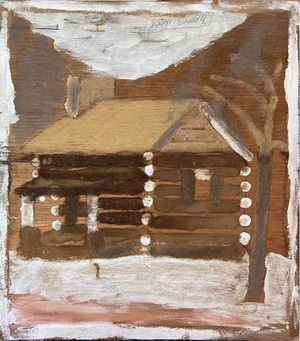
Jimmy Lee Sadat (1910–2007)
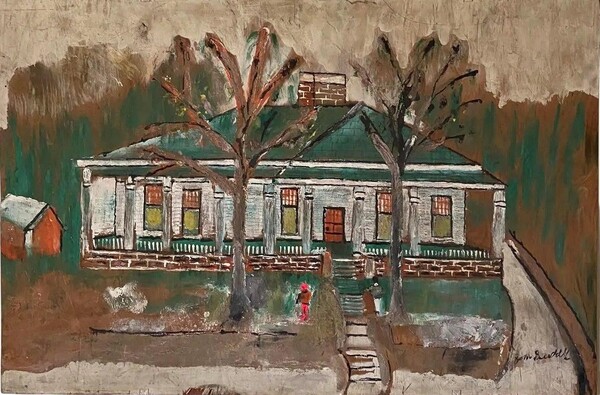
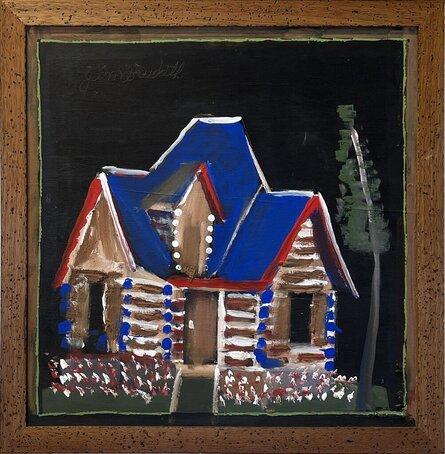
Jimmy Lee Sadat (1910–2007)
He depicted not only barns and wooden buildings, but also industrial structures and high-rises.
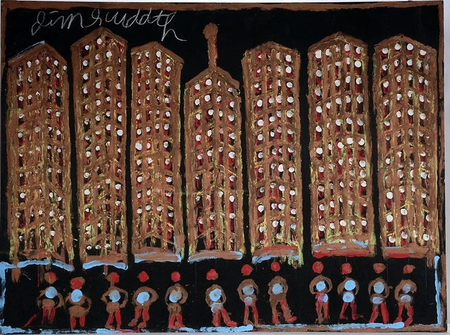
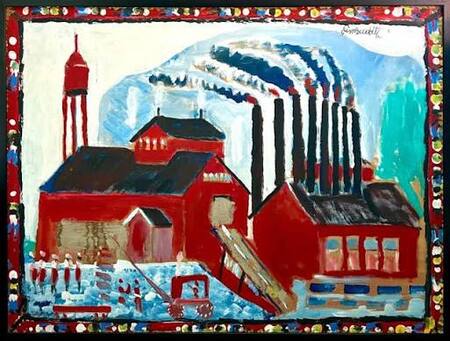
Jimmy Lee Saddat (1910–2007)
But it cannot be said that domestic scenes were the sole subject of his work. In his paintings, he depicted everyday life in general: people, animals, interior objects, and everything that surrounded him on a daily basis.
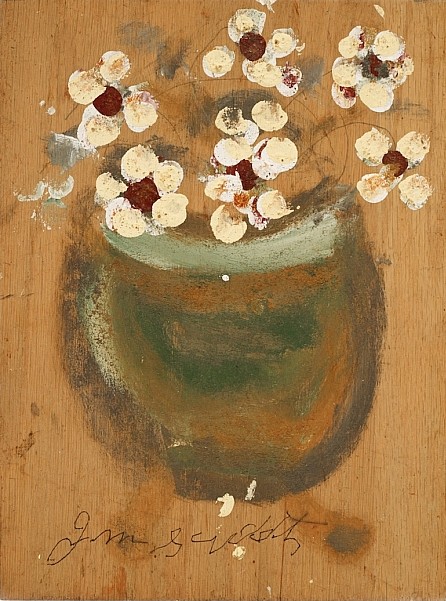
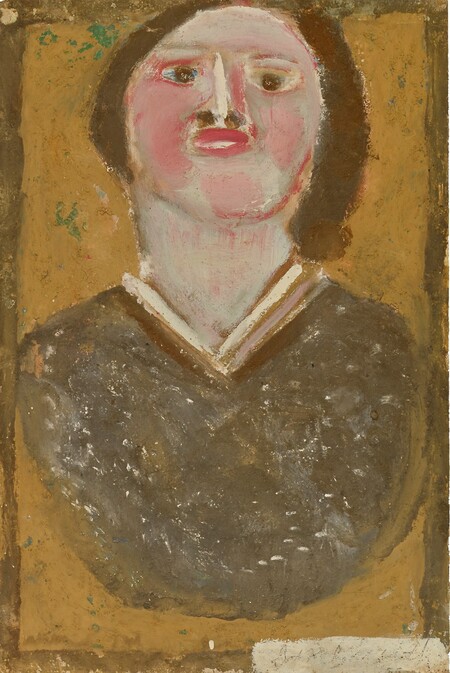
William L. Hawkins (1895–1990)
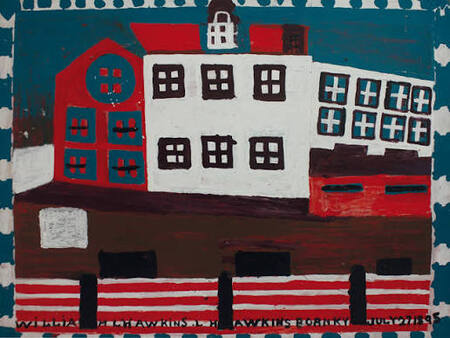
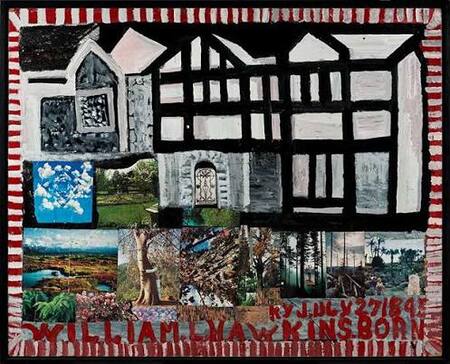
William L. Hawkins, even though he depicted the space around him, did not strive to reproduce everything with strict accuracy. His works are full of experimentation and reflect his personal vision. They are vivid, saturated, and often lack realistic proportions. Yet, they still remain a reflection of his daily life and perception of the world around him. This is no longer mere observation—it is a certain reinterpretation of space.
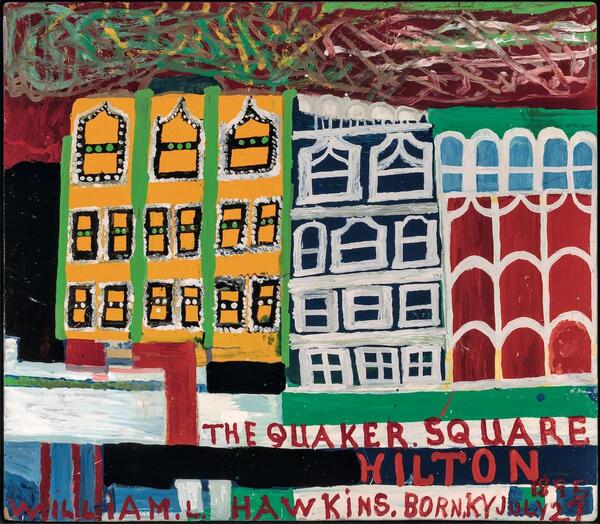
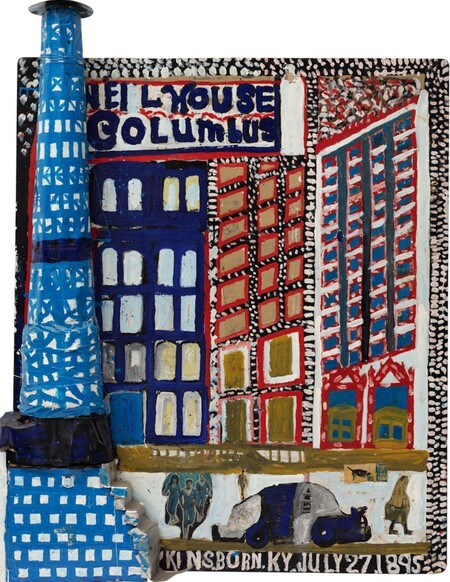
Attach Card William L. Hawkins (1895–1990)
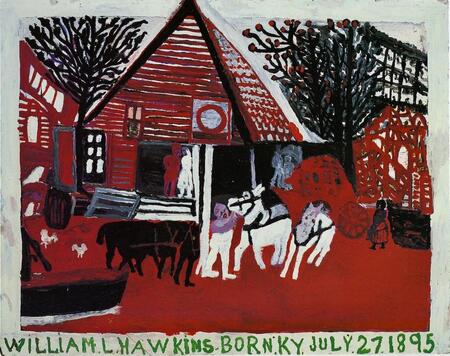
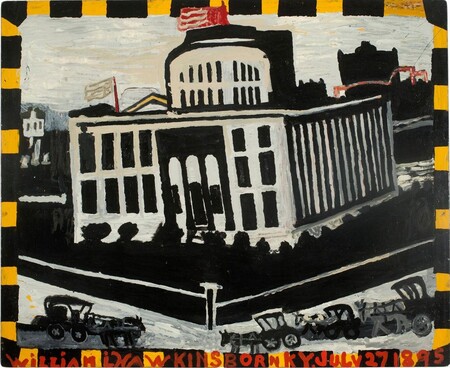
Attach Card William L. Hawkins (1895–1990)
An interesting characteristic of Hockney’s work is his use of vibrant decorative frames.Hockney also experimented with collage, incorporating photographs and magazine clippings directly onto his paintings.
Memory House
The house in memory becomes a kind of reconstruction of the place—a place intertwined with a person’s feelings and experiences. Over time, the details of the space recede into the background, and the feelings it once evoked become what matters most.